
Quick Answer: Summer weed control comes down to knowing what's safe in the heat. Once air temperatures pass 80–85°F, most post-emergent broadleaf herbicides can injure your grass, so skip blanket sprays and weed-and-feed entirely. Spot-treat crabgrass with quinclorac and nutsedge with halosulfuron or sulfentrazone early in the morning, pull spurge before it seeds, and lean on tall mowing and deep, infrequent watering to do the heavy lifting until fall.
Key Takeaways
- Herbicides work best between 70–85°F; above 80–85°F many broadleaf products damage turf, per University of Nebraska turf scientists
- Post-emergent crabgrass and nutsedge products are the exception — they still perform acceptably in heat as targeted spot treatments
- Treat nutsedge before its fifth-leaf stage or the herbicide never reaches the tubers and it grows right back
- Skip weed and feed in summer: heat-stressed grass tolerates herbicide poorly and cool-season lawns can't use the nitrogen
- Mowing tall is the real herbicide: in an NC State trial, 1-inch turf ended summer 95% crabgrass while 4-inch turf had virtually none
Why Summer Changes the Weed Control Rules
The products that worked fine in May can wreck your lawn in July, and the reason is temperature on both sides of the equation.
On the turf side, cool-season grasses like Kentucky bluegrass and tall fescue are already struggling. Purdue turf scientists note that at temperatures above 87°F these grasses shift into photorespiration — burning energy instead of making it — so roots and shoots essentially stop growing. A lawn that can't grow can't recover from herbicide stress.
On the weed side, heat works against you too. According to University of Nebraska–Lincoln turfgrass specialists, herbicides are most effective on vigorously growing plants at 70–85°F. In hot weather, weeds build thicker wax layers on their leaves that block herbicide uptake, and their internal transport slows, so less product reaches the roots. The same UNL guidance is blunt about the risk: when air temperatures exceed 80–85°F, many post-emergent broadleaf herbicides can injure the turf and should not be applied. That caution applies especially to the common three-way mixes built on 2,4-D and dicamba — and ester formulations of 2,4-D add volatility risk, drifting as vapor onto plants you never sprayed.
So the summer rule is simple: no blanket applications of broadleaf herbicide during hot weather. That doesn't mean doing nothing — it means being surgical.
What You Can Safely Do Right Now
Not every product is off the table. UNL notes that post-emergent crabgrass and nutsedge herbicides are the exceptions that still perform acceptably at higher temperatures. Combine that with three habits and you can keep treating through July:
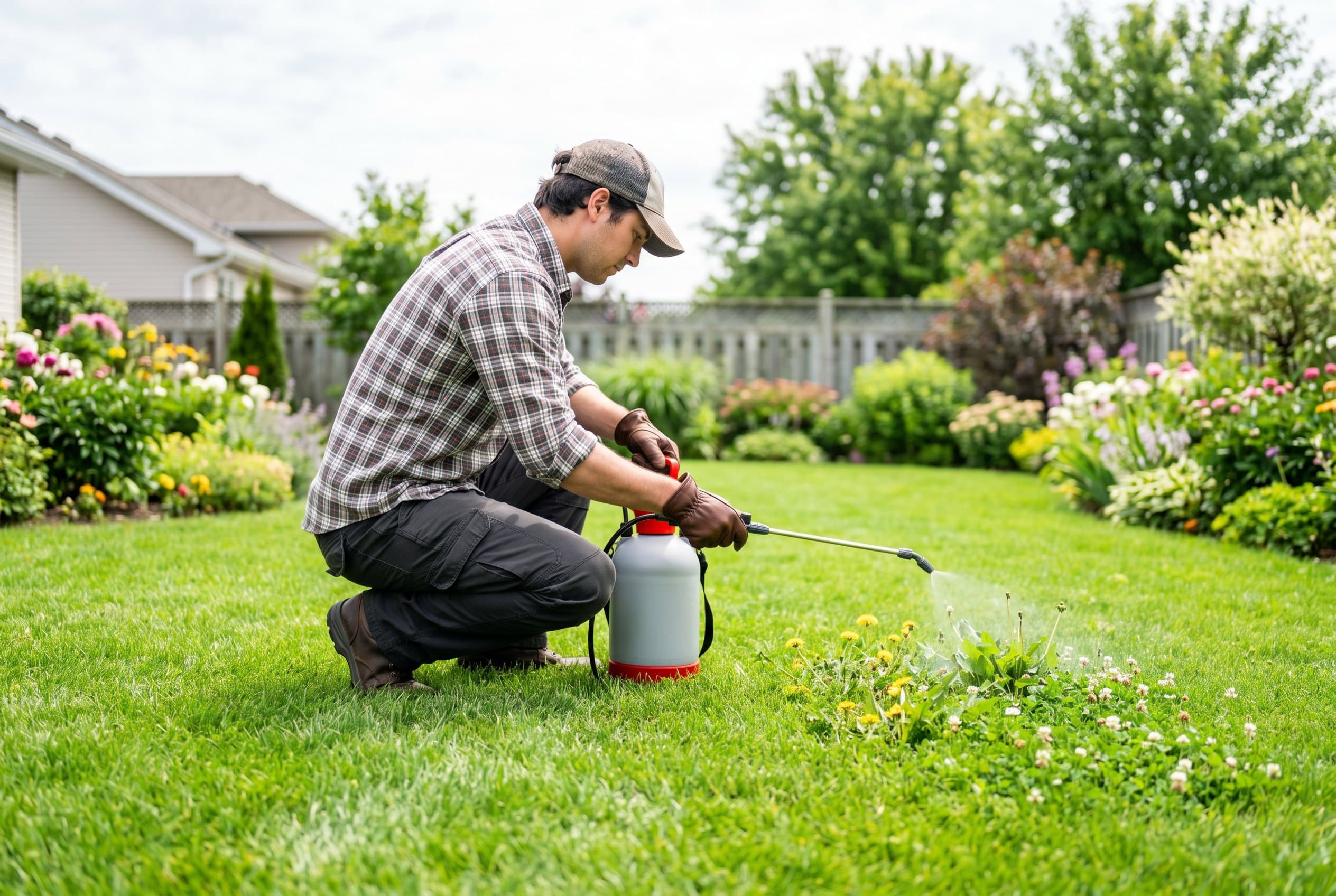
- Spot-treat only. A hand sprayer aimed at individual weeds puts a fraction of the chemical load on your lawn compared to a hose-end blanket app.
- Spray early in the morning. UNL recommends applying systemic herbicides early in the day, after plants have recovered from the previous day's heat, rather than in the afternoon or evening.
- Read the label's temperature restrictions. Most product labels cap application around 85–90°F — the label is the law, and in summer it's also your lawn insurance.
If you're shopping for products, our weed control methods guide covers the pre- vs post-emergent basics, and warm-season lawn owners should check the southern lawns weed control guide for grass-specific product safety.
Crabgrass: Spot-Treat Now, Don't Wait
Crabgrass is a warm-season annual, which means July heat is its happy place. The good news: it's one of the few weeds with post-emergent options that hold up in summer.
Michigan State University Extension recommends three active ingredients for cool-season lawns: quinclorac (Drive), fenoxaprop (Acclaim Extra), and mesotrione (Tenacity). Quinclorac is the workhorse — MSU describes it as effective on crabgrass "at almost any growth stage," from seedling to what they call gorilla-sized. Fenoxaprop and mesotrione work best on younger plants that haven't tillered yet.
Timing matters more than product choice. Once crabgrass matures and tillers out, expect to need multiple applications spaced two to three weeks apart. Every week you wait in July makes the job harder, so treat plants while they're small. If you're dealing with a full-blown breakout, our guide to killing crabgrass without pre-emergent walks through the post-emergent playbook in detail.
And no — it's too late for crabgrass preventer. Pre-emergent herbicides stop seeds from establishing; they do nothing to crabgrass that's already up. Save that money for next spring.
Nutsedge: The One Weed You Can't Procrastinate On
That glossy, fast-growing "grass" that stands taller than your lawn two days after mowing is probably yellow nutsedge — and it's on a clock.
UC IPM's nutsedge guidance is specific: selective herbicides like halosulfuron (Sedgehammer) and sulfentrazone (Dismiss, Ortho Nutsedge Killer) must be applied before the fifth-leaf stage, while the plant is still building energy reserves and will carry the herbicide down into its underground tubers. Spray a mature plant in late summer and the chemical never reaches the tubers — you burn the tops, feel productive, and the same nutsedge returns from the survivors.
Expect repeat treatments, and fix the conditions that invited it: nutsedge thrives in waterlogged soil, so its presence usually signals overwatering, a leaky sprinkler head, or poor drainage. If you're pulling by hand, UC IPM suggests removing plants at less than five to six leaves, repeating every two to three weeks to starve the tubers.
Spurge and the Mat-Formers: Pull, Don't Spray
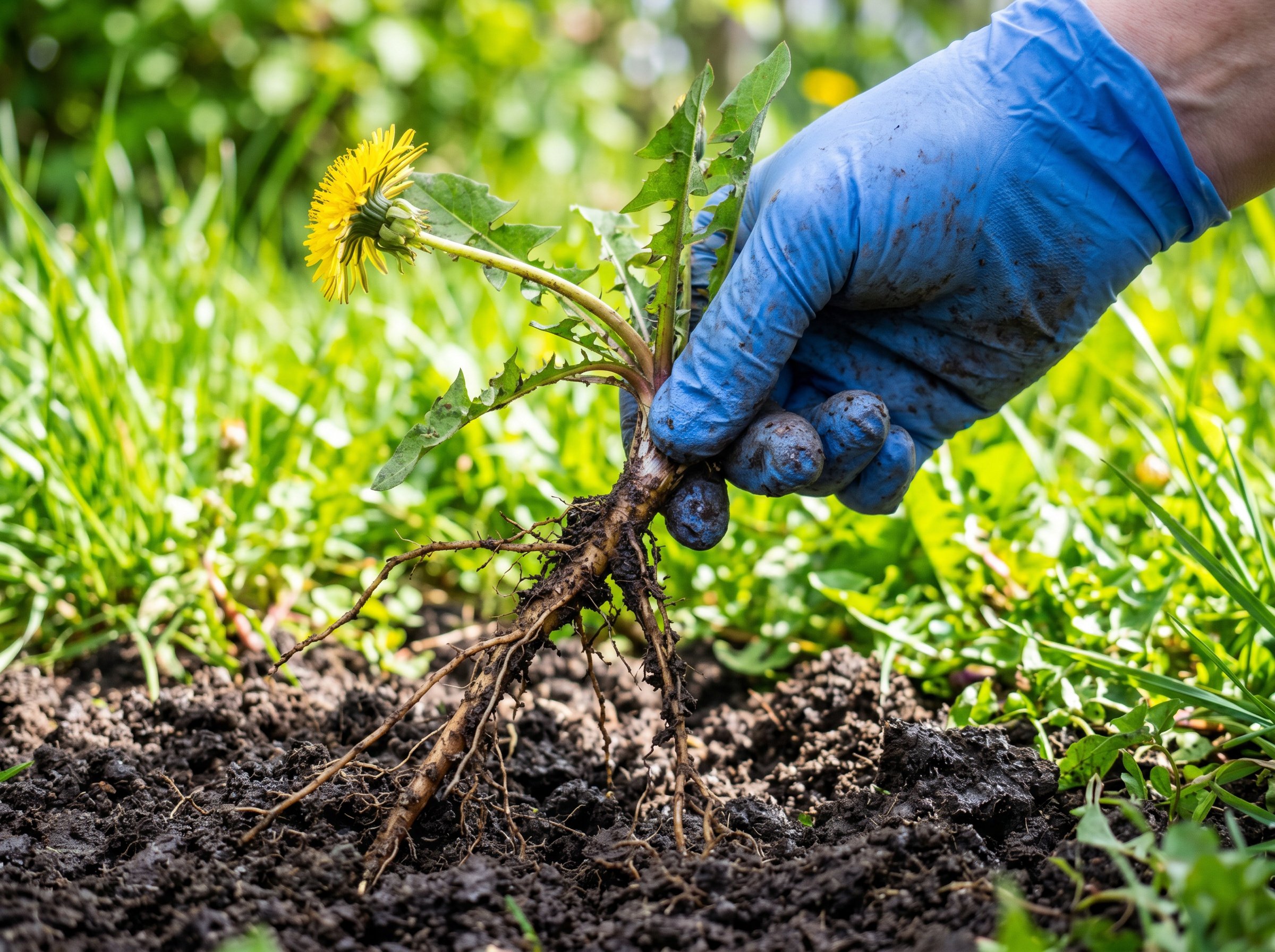
Spotted spurge hugs the ground in fast-spreading mats, loves hot weather, and germinates all summer long. Because a single plant can set thousands of seeds, UC IPM's lawn weed guidance emphasizes removing plants young, before they seed — and notes spurge invades exactly where turf is mowed short, thin, and underfed. Hand-pulling is genuinely effective here because spurge has a shallow taproot, and it avoids putting broadleaf herbicide on heat-stressed grass. For identification photos and a full control plan, see our spurge control guide.
The Best Summer Herbicide Is Your Mower
Here's the stat that should change your routine: in an N.C. Cooperative Extension field trial, tall fescue plots mowed at 1, 2, 3, and 4 inches ended the season at 95%, 48%, 13%, and 0% crabgrass cover respectively — the 4-inch turf suppressed crabgrass almost completely without a drop of herbicide. That matches the broader record: University of Missouri Extension points to more than 10 studies since 1958 linking mowing below 3.5 inches to significant increases in crabgrass, dandelion, and clover, and recommends 3.5 to 4 inches for tall fescue and Kentucky bluegrass. Michigan State University explains the mechanism: tall grass shades the soil surface, and shaded weed seeds don't germinate.
Watering works the same way. Water deeply enough to wet the soil 6 to 8 inches down, then let it partially dry before watering again — shallow daily sprinkling keeps the surface moist, which is exactly what germinating crabgrass and spurge seeds want. Purdue's benchmark for keeping cool-season turf green through heat is about 1 inch of water per week; if you're letting the lawn go dormant instead, a half inch every 2 to 4 weeks keeps the crowns alive. Our guide to the best time to water in summer covers scheduling, and the summer lawn myths article sorts out what's actually safe to apply in the heat.
What to Save for Fall
The blanket broadleaf application you're tempted to make now works dramatically better in September. Cooler air puts you back in the 70–85°F effectiveness window, perennial weeds like dandelion and clover are moving energy to their roots (and carry herbicide down with it), and your recovering lawn can fill the gaps dead weeds leave behind. Put the three-way herbicide, the weed and feed, and any full-lawn projects on the calendar for early fall — our fall weed control strategy lays out the exact sequence.
The Bottom Line
Summer weed control is a discipline of restraint. Spot-treat crabgrass with quinclorac and young nutsedge with halosulfuron in the cool of the morning, pull spurge before it seeds, and refuse to blanket-spray anything while temperatures sit above 85°F. Meanwhile, let your mower and irrigation schedule do the real work: 3.5 inches tall, watered deep and infrequent. Hold the aggressive chemistry for fall, when it works better and your lawn can take it.