Quick Answer
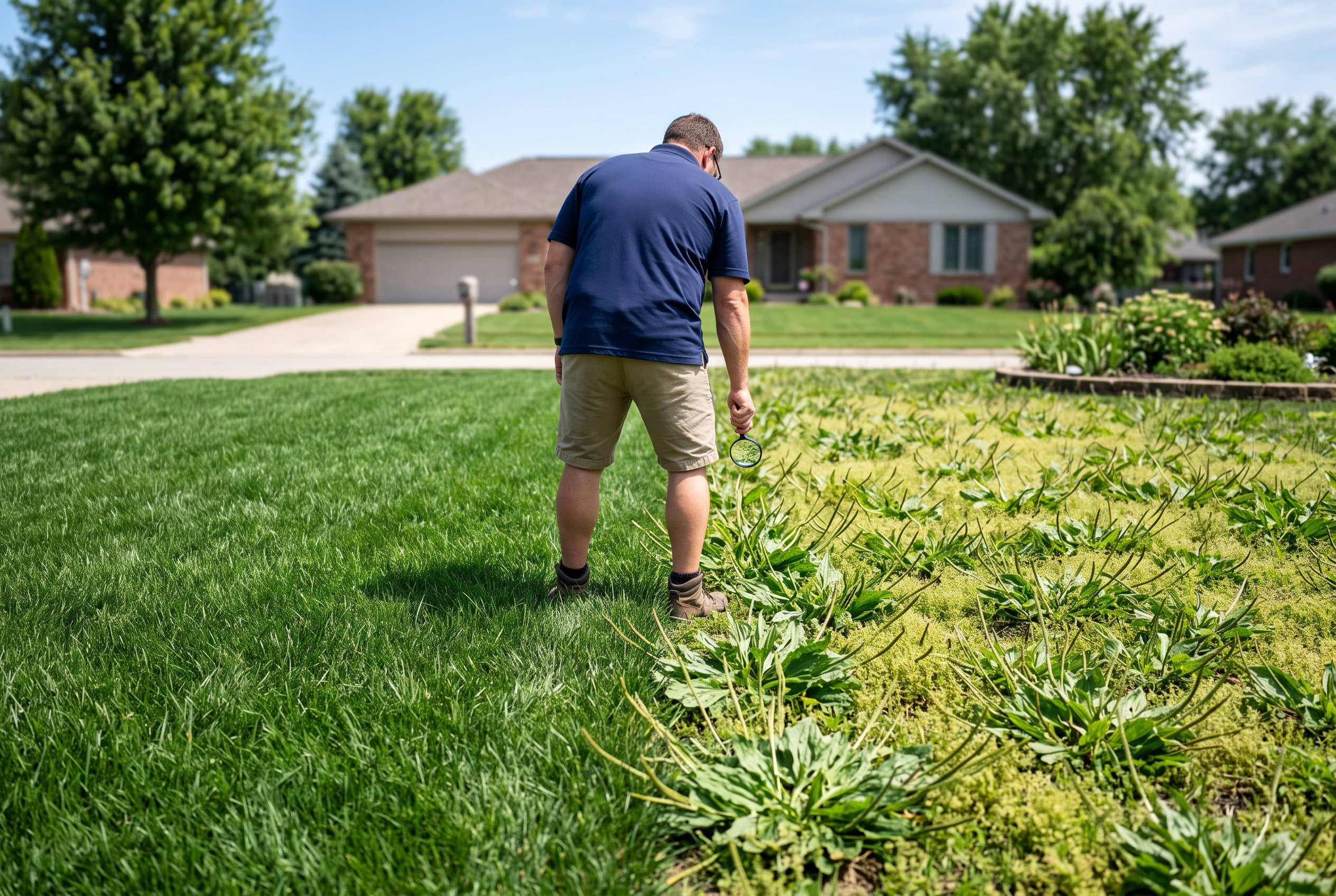
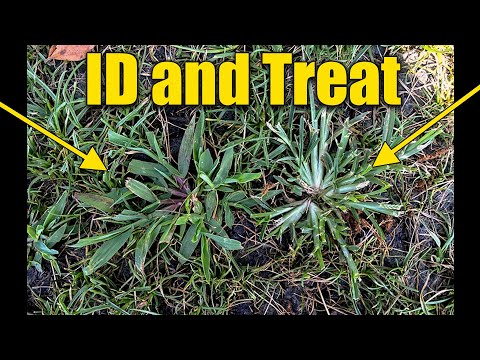
Goosegrass and crabgrass are both warm-season annual grassy weeds, but they look and behave differently. Goosegrass has a distinctive silvery-white center and flat, rosette-like growth, while crabgrass spreads outward with a more open, finger-like pattern and light green color. Identifying which weed you have matters because control timing and methods can differ[1].
Key Takeaways
- Goosegrass has a flattened, star-shaped base with a silver center; crabgrass grows in a looser, sprawling clump
- Both are summer annuals that thrive in compacted, hot soil and thin turf areas
- Goosegrass germinates later in spring than crabgrass, making timing critical for pre-emergent herbicide applications
- Crabgrass is light green and hairy; goosegrass is darker green with smoother, more rigid stems
- Correct identification helps you choose the right herbicide and application window
Introduction
If you've noticed grassy weeds taking over bare or thin spots in your lawn, chances are you're dealing with crabgrass, goosegrass, or possibly both. These two weeds are often confused because they share similar habits — both love heat, compaction, and neglected turf — but they're distinct plants that require slightly different management strategies[2]. Knowing which one you're fighting gives you a real advantage.
What Are the Visual Differences Between Goosegrass and Crabgrass?
The easiest way to tell these weeds apart is by looking closely at the plant's base and leaf texture.
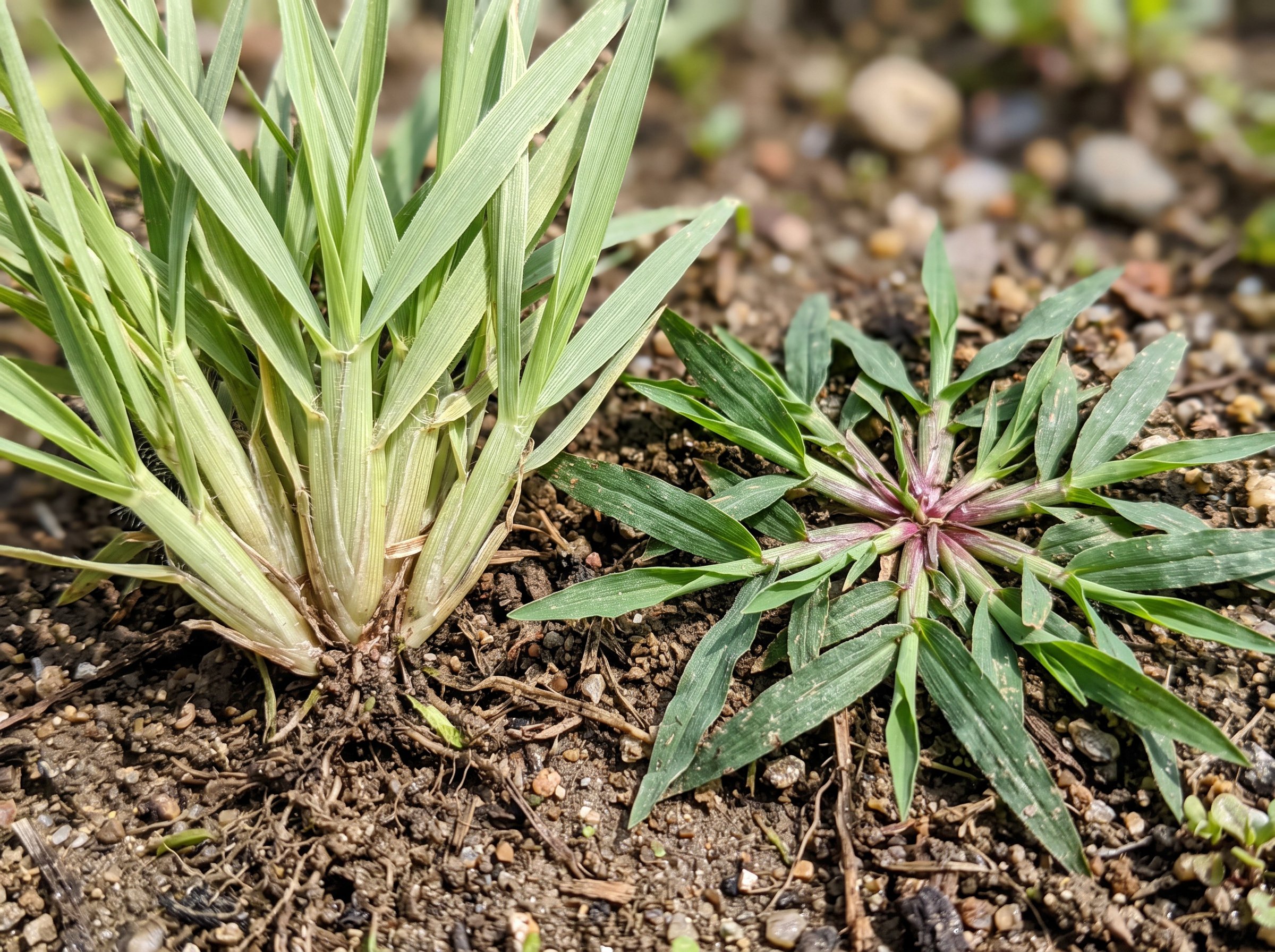
Goosegrass (Eleusine indica) grows in a flat, low rosette that's almost pressed against the soil. Its most distinctive feature is the silvery-white or pale center where the stems meet the ground. The leaves are smooth, dark green, and folded — not hairy[3].
Crabgrass (Digitaria spp.) grows more openly and upright before flopping outward. Its leaves are light green, wider, and covered in fine hairs — you can feel the roughness when you rub them. It spreads with creeping stems that root at the nodes[4].
Goosegrass vs Crabgrass at a Glance
| Feature | Goosegrass | Crabgrass |
|---|---|---|
| Base appearance | Flat rosette, silver-white center | Open, sprawling clump |
| Leaf texture | Smooth, folded, dark green | Hairy, light to medium green |
| Stem color | Whitish at base | Green to reddish |
| Germination timing | Later (soil 60–65°F+) | Earlier (soil 55–60°F) |
| Growth habit | Low, mat-forming | Spreading with rooting nodes |
How to Spot Each Weed Up Close
Getting on your hands and knees pays off here. Here's what to look for in the field:
Identifying Goosegrass
- Pull back surrounding grass and look for a flattened, wheel-spoke arrangement of stems
- Check the center — if it's white or silvery, that's your confirmation
- Stems are tough and fibrous; they're hard to pull by hand once established
- Seedheads look like a zipper — two to several finger-like spikes radiating from one point[3]
Identifying Crabgrass
- Look for wider blades with visible hair on the upper leaf surface
- The plant tends to spread outward in a crab-like pattern (hence the name)
- Seedheads form multiple finger-like spikes but from a longer central stem than goosegrass
- Young crabgrass plants are often light lime-green and appear in sunny, thin areas first[4]
When Do These Weeds Appear — and Why Does It Matter?
Both weeds are warm-season annuals, meaning they germinate from seed each spring, grow through summer, set seed in fall, and die at first frost. But their germination windows differ, which is crucial for pre-emergent herbicide timing[1][5].
- Crabgrass germinates when soil temperatures reach 55–60°F consistently — typically early to mid-spring
- Goosegrass germinates later, needing soil temps of 60–65°F or higher — often two to four weeks after crabgrass
If you applied a pre-emergent early for crabgrass and goosegrass still appeared, this timing gap is likely why. Some pre-emergent herbicides also have better efficacy on one species than the other, so reading labels carefully matters[5].
Both weeds thrive in areas with:
- Compacted soil that limits healthy turf root development
- Thin or bare turf from heat, drought, or disease damage
- High foot traffic areas and along driveways or sidewalks
Improving turf density through overseeding, aeration, and proper fertilization is your best long-term defense against both weeds[2].
How Should You Control Goosegrass and Crabgrass?
Pre-Emergent Herbicides
For both weeds, a pre-emergent herbicide applied in early spring is the most effective control method. Apply when soil temperatures at 2-inch depth are consistently approaching 50–55°F for crabgrass prevention. For goosegrass, a second application or extended-release product may be needed to cover the later germination window[5].
Post-Emergent Options
If the weeds are already growing, post-emergent herbicides labeled for grassy weeds can help — but they work best on young plants. Goosegrass tends to be more herbicide-resistant than crabgrass, particularly to certain active ingredients, so always check product labels for efficacy on each species[1][3].
Cultural Controls
- Mow at the correct height for your grass type to promote dense turf
- Aerate compacted areas each fall to reduce the favorable conditions both weeds prefer
- Overseed thin spots in fall to crowd out future weed seedlings
- Hand-pull small infestations before seedheads form — this prevents next year's problem[2]
Conclusion
The silver-white center of goosegrass and the hairy, lime-green blades of crabgrass are your two fastest identification clues. Once you know which weed you're dealing with, adjust your pre-emergent timing, choose the right herbicide, and back it all up with better lawn care practices. A thick, healthy lawn is the most reliable defense against both of these summer invaders. If you're unsure, take a sample to your local cooperative extension office — they can confirm the weed and recommend regionally appropriate controls.