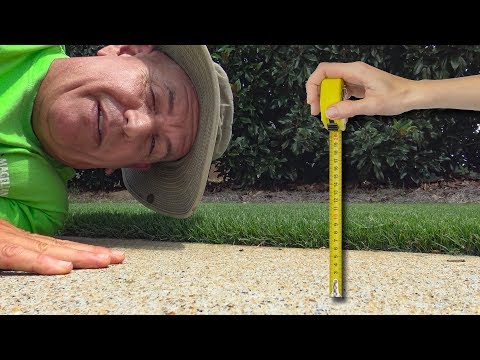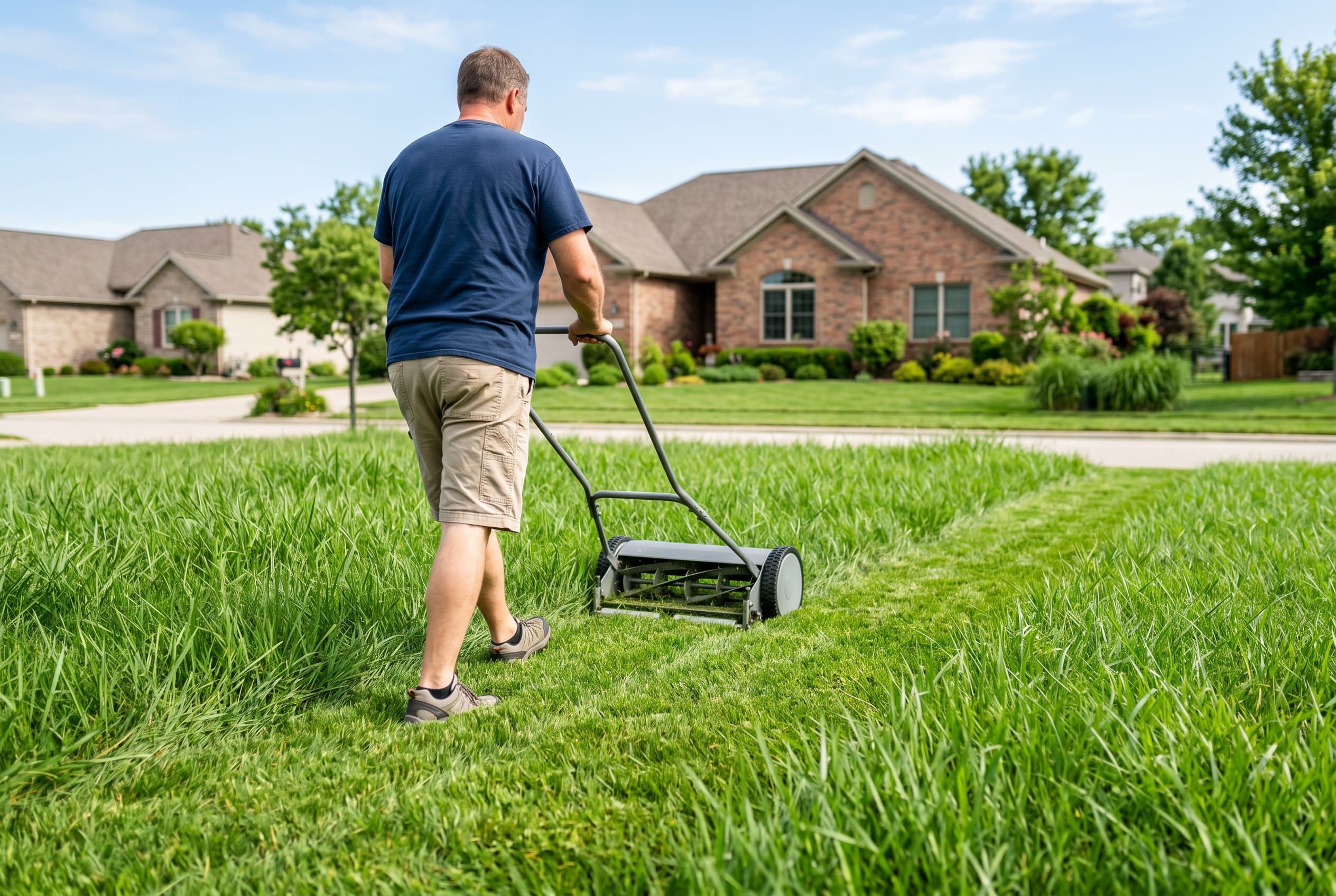
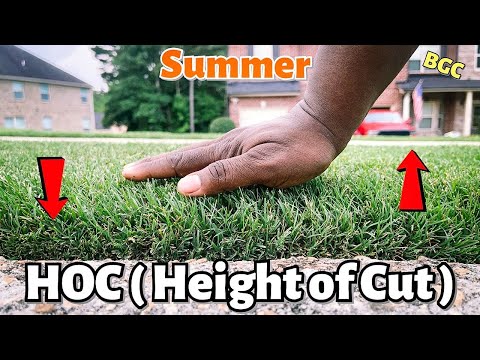
Quick Answer: In summer, mow at the tall end of your grass type's recommended range: 3–4 inches for tall fescue, 3–3.5 inches for Kentucky bluegrass, 2.5–3 inches for St. Augustine, 1–2 inches for zoysia, and the upper half of bermuda's 0.5–1.5 inch range. Extension turf programs recommend raising the deck about a half inch to a full inch above your spring setting — taller grass shades the soil, grows deeper roots, and handles heat and drought dramatically better.
Key Takeaways
- Raise your cutting height 0.5–1 inch above your spring setting once summer heat arrives
- Tall fescue (3–4 in.) and Kentucky bluegrass (3–3.5 in.) take the tallest summer cuts; bermuda and zoysia stay short but should ride the top of their ranges
- Never remove more than one-third of the blade in a single mowing — the rule matters most in summer
- Taller grass shades and cools the crowns, suppresses crabgrass, and supports deeper, more drought-tolerant roots
- Skip mowing entirely during drought dormancy — even green grass can be too stressed to cut safely
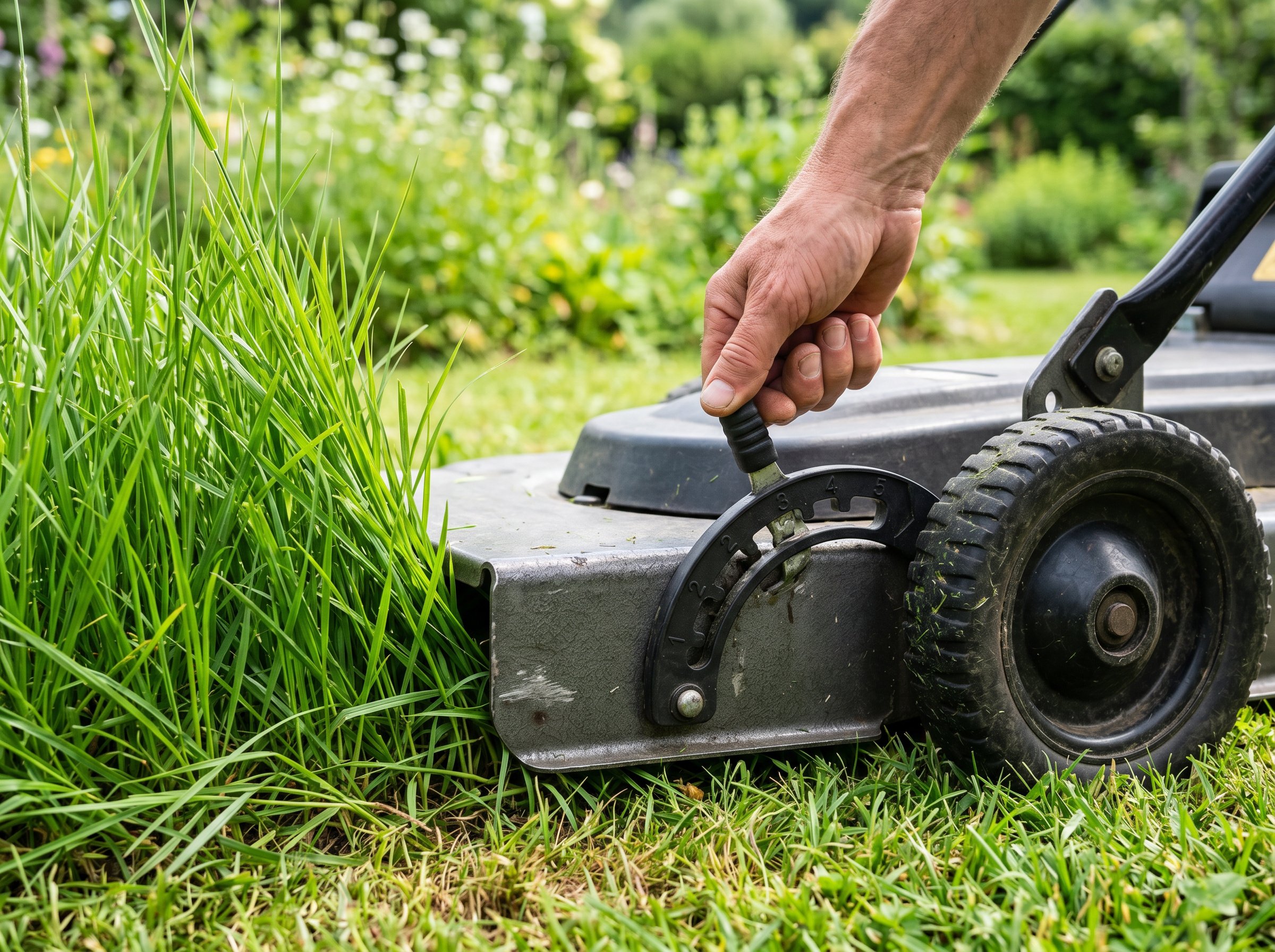
Summer Mowing Height by Grass Type
Your mower's "right" setting changes with the season. These are the extension-recommended summer heights for the most common US lawn grasses:
| Grass type | Summer mowing height | Notes |
|---|---|---|
| Tall fescue | 3–4 inches | Tallest cut of any common lawn grass; stay near 4 in. during heat waves[[2]](#user-content-fn-2) |
| Kentucky bluegrass | 3–3.5 inches | Up from 2.5–3 in. in spring and fall[[1]](#user-content-fn-1) |
| Fine fescue mixes | 3–3.5 inches | Handle like bluegrass; very drought-sensitive to mowing stress[[6]](#user-content-fn-6) |
| St. Augustine | 2.5–3 inches | Hold the top of the range in full sun and heat[[4]](#user-content-fn-4) |
| Zoysia | 1–2 inches | Favor the upper end in midsummer[[3]](#user-content-fn-3) |
| Bermuda | 0.5–1.5 inches | Low by nature, but raise toward 1.5 in. when heat and drought set in[[3]](#user-content-fn-3) |
| Centipede | 1.5–2 inches | Slow grower; avoid scalping[[3]](#user-content-fn-3) |
Two patterns to notice. Cool-season grasses (fescue, bluegrass) are the ones that suffer most in summer, so they get the biggest height bump — Iowa State University Extension recommends 3 to 3.5 inches for bluegrass lawns in summer versus 2.5 to 3 inches in the milder spring and fall months[1]. Warm-season grasses (bermuda, zoysia, St. Augustine) actually love the heat, but they still benefit from riding the top of their range when rain gets scarce.
If you're not sure which grass you have, the height your lawn "wants" is a clue: bermuda and zoysia tolerate — and look best at — cuts that would scalp a fescue lawn to death.
Why Taller Grass Beats the Heat
Raising the deck isn't a folk remedy; the physiology is well documented by university turf programs.
Shade and cooler crowns. The extra leaf area shades and cools the crowns of the grass plants — the growing point at soil level where recovery happens. Iowa State Extension cites this crown-cooling effect as the core reason for the taller summer cut[1].
Deeper roots. More leaf surface means more photosynthesis, which feeds deeper root growth. University of Minnesota Extension notes that lawns kept at 3 inches or higher develop deeper roots and need noticeably less irrigation than short-cut lawns[5]. Deeper roots reach moisture a scalped lawn simply can't.
Fewer weeds. A tall, dense canopy shades the soil surface, which blocks the light that crabgrass and other weed seeds need to germinate[5]. Every scalped strip in July is an open invitation to crabgrass.
Minnesota Extension puts a number on the seasonal adjustment: raise the mowing height by an inch in midsummer to help the lawn tolerate heat and drying winds[5]. If your spring setting was 2.5 inches on a bluegrass lawn, summer is 3 to 3.5.
The One-Third Rule Matters Most in July
Whatever your target height, never remove more than one-third of the leaf blade in a single mowing. Iowa State warns that exceeding it can severely damage grass and reduce its stress tolerance[1] — and summer is exactly when your lawn has no stress tolerance to spare. LSU AgCenter gives warm-season lawns the identical rule[4].
In practice, the rule sets your mowing frequency, not the calendar. To keep tall fescue at 3.5 inches, mow before it reaches about 5 inches. Growth slows in heat, so that might mean every 10–14 days in July instead of weekly — our guide to how often to mow your lawn breaks down intervals by season. If a vacation or heat wave lets the grass get away from you, bring it back down in two passes several days apart rather than one brutal scalping.
Sharp Blades and Smarter Timing
A dull blade tears grass instead of cutting it, leaving jagged, frayed tips that lose extra water and open the plant to disease[5] — a minor problem in May, a real one in 95°F weather. Sharpen the blade at least once mid-season; a clean cut heals fast and conserves moisture.
Timing helps too. Mow when the grass is dry but the day is not at its hottest — early evening or mid-morning after the dew burns off. Mowing is a controlled injury, and injuring turf during peak afternoon heat compounds the stress it's already under. (Water is its own topic: see the best time to water your lawn in summer.) Leave the clippings down — they return nutrients equivalent to roughly one fertilizer application per year[5]. For blade care, patterns, and technique details, our lawn mowing tips guide goes deeper, and the best time to mow covers daily timing year-round.
When Not to Mow at All
Here's the summer rule most homeowners miss: sometimes the best mowing height is none.
Cool-season grasses naturally go semi-dormant in high heat and drought — they brown out to survive, not because they're dying[2]. A dormant lawn is barely growing, so there's little to cut, and mower traffic damages turf that can't repair itself.
It gets subtler than that. University of Minnesota turf researchers found that grass can look green and healthy while measurably heat-stressed, and recommend delaying mowing during periods of heat and drought stress even when the lawn appears fine[6]. Mowing stimulates regrowth — mechanical damage forces the plant to spend energy on new leaves — which works directly against the water-conserving survival mode drought triggers.
So during a true July scorcher: raise the deck, stretch the interval, and if the lawn has browned out and stopped growing, park the mower until rain returns and growth restarts. A dormant lawn that's left alone typically greens back up within weeks of real rainfall — more on that in our guide to keeping your lawn green in summer.
Conclusion
Set your summer mowing height at the top of your grass type's range — 3–4 inches for tall fescue, 3–3.5 for bluegrass, 2.5–3 for St. Augustine, and the upper end of the short ranges for bermuda and zoysia. Move the deck up half an inch to an inch from your spring setting, obey the one-third rule even when that means mowing less often, keep the blade sharp, and stop mowing entirely once drought dormancy sets in. Height is the one summer lawn decision that costs nothing and pays off in deeper roots, fewer weeds, and a lawn that's still alive in September.