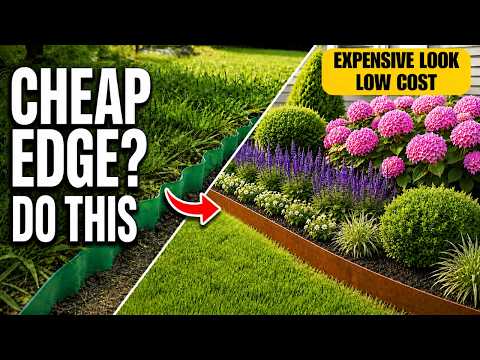
Quick Answer: Lawn edging costs $1–$15+ per linear foot depending on the material. No-dig plastic runs $1–$3.50 per foot in materials, steel and aluminum $2–$11, brick and pavers $2.50–$14, and poured concrete curbing $8–$20 per foot professionally installed. A typical 100–200 linear foot border costs $350–$1,800 done by a pro — while a trenched natural edge cut with a half-moon edger costs nothing but an afternoon.
Key Takeaways
- Materials range from $1 per linear foot (plastic) to $15+ (stone and poured concrete curbing)
- Labor adds $1.50–$10 per linear foot, so DIY installation cuts most project totals nearly in half
- A 100-foot border averages $350–$880 installed; 180 feet runs $630–$1,584
- Steel and aluminum offer the best cost-per-year — 15 to 25+ years versus 3–10 for plastic
- A trenched natural edge is the $0 option and delivers the same crisp turf-to-bed line, re-cut once or twice a season
Introduction
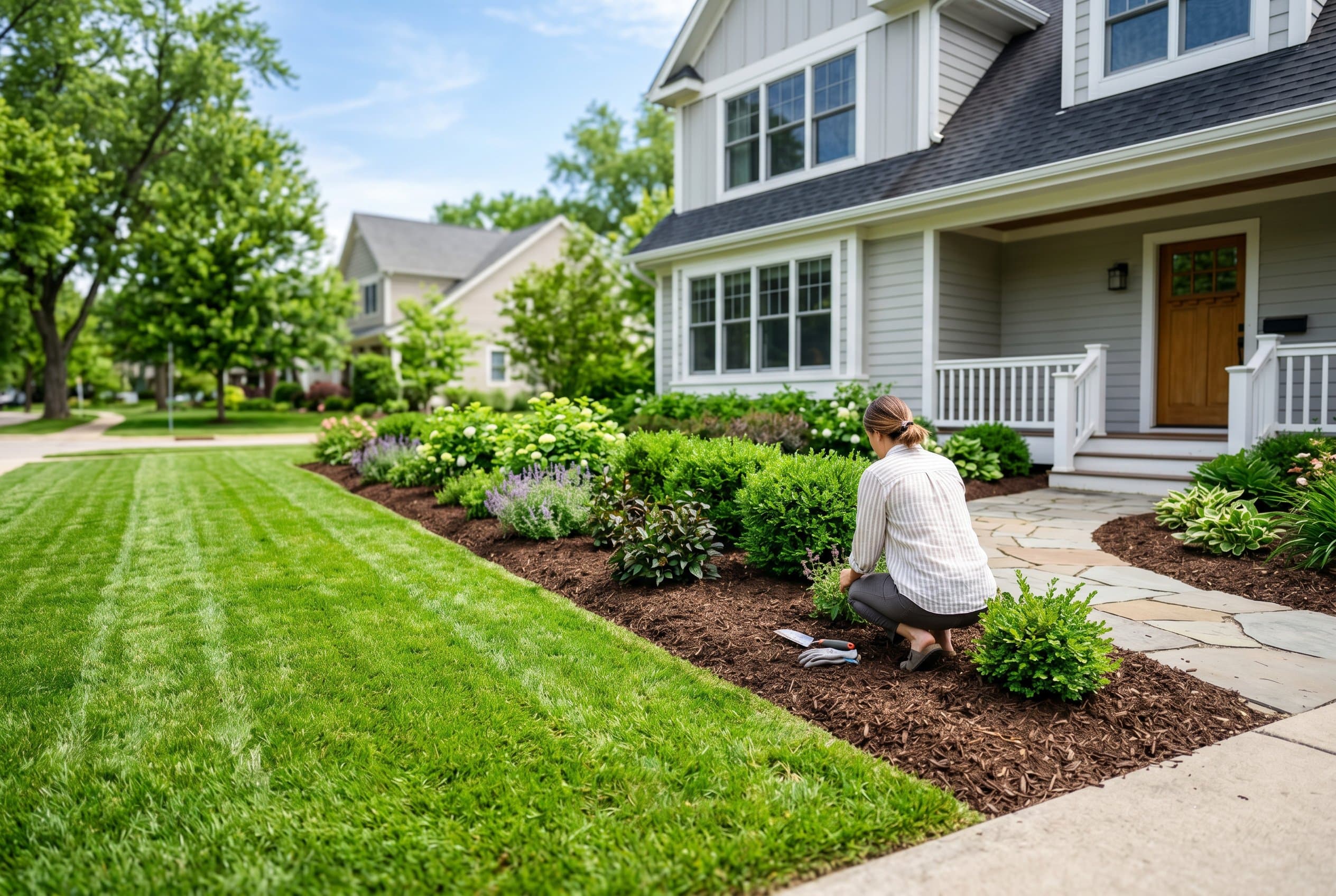
Edging is the border that separates your turf from everything that isn't turf — flower beds, mulch rings, walkways, and driveways. A crisp edge is what makes a lawn read as "maintained" from the curb, and it does real agronomic work too: it stops grass stolons and rhizomes from creeping into beds and keeps mulch from washing onto the lawn[3]. The good news is that edging is one of the widest-priced projects in lawn care, from literally free to $20 per linear foot. Here's how the 2026 numbers break down.
What Does Lawn Edging Cost Per Linear Foot?
Most homeowners pay $3.50–$11.50 per linear foot installed, with material choice driving the spread[1] — cost-calculator benchmarks put a typical install at $3.61–$9.38 per foot[5]. Measure the border you want to edge (a garden hose laid along the line works well for curves), then use this table to rough out a budget:
| Material | Materials (per ln ft) | Installed (per ln ft) | Typical lifespan |
|---|---|---|---|
| Trenched natural edge | $0 | DIY only | Re-cut 1–2× per season |
| No-dig plastic | $1 – $3.50 | $5 – $12 | 3–10 years |
| Steel / aluminum | $2 – $11 | $5 – $15 | 15–25+ years |
| Brick / pavers | $2.50 – $14 | $6 – $15+ | 10–20 years |
| Poured concrete curbing | $3 – $8 | $8 – $20 | 15–30 years |
| Natural stone | $3 – $21.50 | $12 – $26 | Decades |
For whole-project math: 100 linear feet of professionally installed edging averages $350–$880, and 180 feet runs $630–$1,584[1]. Landscape curbing projects as a whole average around $1,170 nationally, with most falling between $630 and $1,710[2].
Which Edging Material Fits Your Lawn?
No-Dig Plastic: The Budget Starter
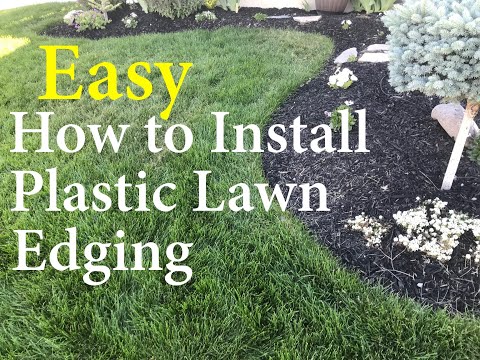
Plastic edging is the cheapest manufactured option at $1–$3.50 per foot in materials[1]. No-dig versions anchor with spikes driven through the turf line rather than a trench, so a 100-foot run is a half-day job. The trade-off is longevity: freeze-thaw cycles heave it, mower decks scuff it, and most plastic needs replacing within 3–10 years. It's a sensible choice for renters, new beds you may reshape, or testing a border layout before committing to metal.
Steel and Aluminum: The Durability Sweet Spot
Metal edging costs $2–$11 per foot in materials[1] and disappears visually into a thin line between turf and mulch — the look most golf courses and botanical gardens use. Galvanized steel lasts 15–20 years; aluminum won't rust at all and commonly runs 25+ years. Because the top edge sits nearly flush with the soil, a mower wheel can ride right along it, which shrinks your string-trimmer workload every single mow. If you're chasing that manicured, golf-course look for your lawn, metal is the material that gets you there.
Brick and Pavers: The Mowing-Strip Upgrade
Brick runs $2.50–$6.50 per foot in materials and concrete pavers $6–$14, with installed costs of $6–$15+ per foot depending on pattern[1]. Their killer feature for a turf site like yours: laid flat and flush with the soil as a mowing strip, they give your mower's outside wheels a track to ride on. The blade overhangs the border and cuts the edge cleanly in the same pass — no separate trimming trip. Set bricks on a compacted sand base, not bare soil, or frost will tilt them into mower-blade territory.
Poured Concrete Curbing: The Permanent Pro Job
Extruded concrete curbing is a professional-only install — a curbing machine extrudes a continuous ribbon of concrete along your bed lines. Expect $8–$20 per linear foot installed for typical residential work, more for stamped or colored finishes[2]. It's the most permanent barrier against creeping grasses and lasts 15–30 years, but it needs about 28 days to fully cure and periodic sealing every year or two[2]. Plan the layout carefully; "permanent" cuts both ways when you want to enlarge a bed later.
The $0 Option: A Trenched Natural Edge
Before you spend anything, know that the sharpest-looking edge in landscaping is free. A trenched (English) edge is simply a clean vertical cut where turf meets bed:
- Mark your line with a garden hose or string.
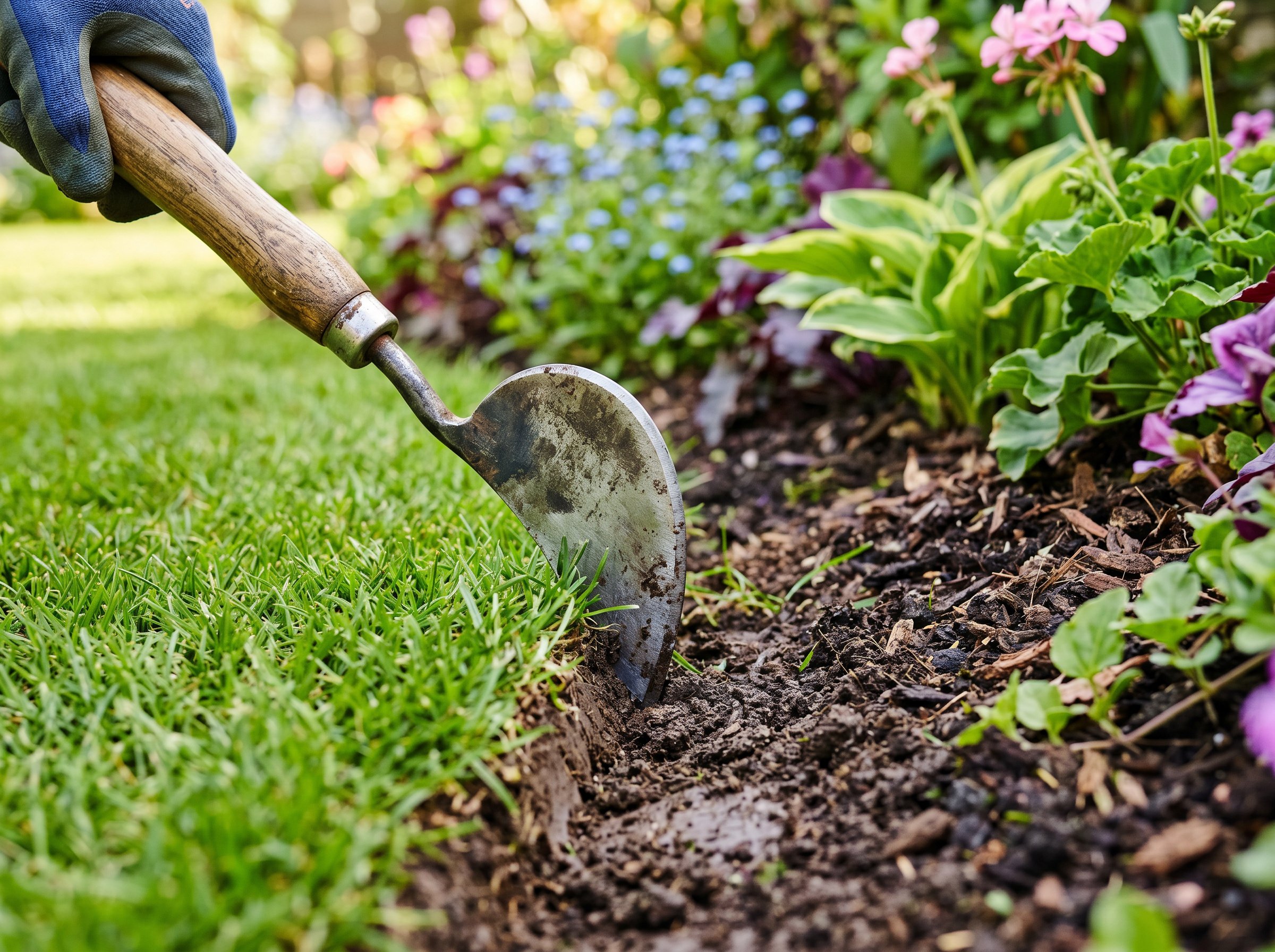
- Drive a half-moon edger or flat-backed spade straight down about 3 inches, taking small overlapping cuts[3].
- Angle the spade back toward the bed and remove a narrow wedge of soil, leaving a 90-degree turf wall and a shallow trench[4].
- Mulch the bed side; the trench catches mulch and stops runners.
Maintain it by running a string trimmer held vertically along the turf wall every few mows, and re-cut the full edge once or twice per growing season[4]. The same trench-edge technique is how greenskeepers define bunkers and collars — and how you'd border a backyard practice tee box without spending a dollar on materials.
DIY vs. Professional Installation
Labor runs $1.50–$10 per linear foot, or $30–$110 per hour depending on your market[2]. That means installation roughly doubles the cost of cheap materials: a 180-foot DIY project typically totals $340–$960 in materials and tools, versus $630–$1,584 hired out[1].
DIY makes sense for plastic, metal, and simple brick borders — the skills required are digging a straight trench and checking level. Hire a pro for poured concrete curbing (specialty equipment), mortared stone, or long runs with lots of curves and root obstructions. Whatever you install, keep the top edge at or below turf height so your mower can pass over it; edging that forces you to trim every foot by hand costs you time on every mow for the life of the border.
How a Clean Edge Pays You Back
Edging isn't purely cosmetic. A defined vertical edge physically interrupts the stolons and rhizomes that let grasses creep sideways into beds, which means less hand-weeding turf out of your mulch and fewer herbicide touch-ups along the border[3]. Flush metal edging and paver mowing strips also eliminate most string-trimmer work along beds — over a season of weekly mowing, that's hours back in your pocket. And because the edge holds mulch in the bed and soil off the turf, the lawn side stays cleaner and mows more evenly. Re-hone trenched edges with shears or a vertical trimmer pass two or three times during the growing season to keep the line crisp[4].
Conclusion
Budget $1–$3.50 per linear foot for plastic, $2–$11 for steel or aluminum, and $8–$20 installed for poured concrete curbing — with labor adding $1.50–$10 per foot if you hire out. For most lawns, the smart play is metal edging or a paver mowing strip on high-visibility borders and a free trenched edge everywhere else. Measure your linear footage, decide which borders earn the permanent treatment, and remember that the crispest edge on the block is as much about a sharp half-moon edger in fall as it is about what you buy.