Quick Answer
To use a string trimmer effectively, customize the handle height for comfort, keep the head level with the ground while trimming, and learn to flip it vertically for clean edging along sidewalks and driveways.

Key Takeaways
- Customize your trimmer's handle position and consider removing the head guard for better maneuverability
- Keep the trimmer head level with the ground to match your mower's cutting height
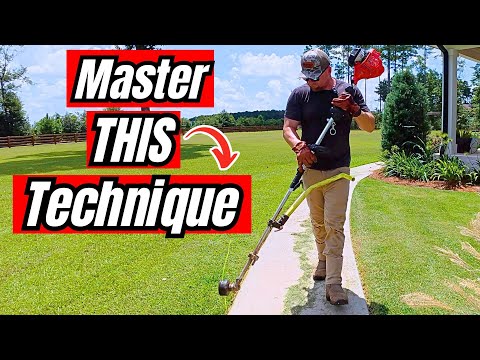
- Master the upside-down technique for edging by flipping the trimmer 180 degrees
- Practice the advanced forward-walking edge method for longer stretches and better efficiency
Set Up Your String Trimmer for Success
Before you even start your engine, proper trimmer setup makes the difference between fighting your equipment and working efficiently. Most homeowners use their trimmers exactly as they come from the store, but a few simple adjustments can transform your experience.
Start by adjusting the handle position to match your height and arm length. Look for the adjustment mechanism (usually a star-shaped bolt) on your trimmer's handle assembly. Position the handle so you can hold the trimmer comfortably without hunching over or straining your back. This simple change prevents fatigue and gives you better control.
Consider removing the plastic head guard if your trimmer has one. While manufacturers include these for safety, they can limit your precision and make detailed work around plants and obstacles more difficult. Professional landscapers typically remove them for better visibility and maneuverability, though you should weigh this against safety considerations for your specific situation.
For those serious about efficiency, aftermarket handles like ergonomic grips can provide even better comfort and control. These accessories distribute weight more evenly and reduce hand fatigue during longer trimming sessions.
Master the Basic Trimming Technique
The foundation of good string trimming is keeping your cutting head level and consistent. Think of your trimmer as an extension of your mower — you want to maintain the same cutting height throughout your yard. For more on getting your mow right before you trim, see our lawn mowing tips.
Hold the trimmer so the head stays parallel to the ground, not tilted left, right, or dug into the soil. This level approach ensures an even cut that blends seamlessly with your mowed grass. The string should lightly contact the grass tips, not scalp the ground or leave long, uneven patches.
Move at a steady, controlled pace. Rushing leads to missed spots and uneven results. Let the trimmer do the work – the spinning string cuts efficiently when you maintain proper speed and positioning. Overlap your passes slightly to avoid leaving thin strips of uncut grass.
Pay special attention to the trimmer's rotation direction. Most models spin counterclockwise, which means debris flies to the right. Position yourself accordingly and work from left to right when possible to keep clippings off walkways and out of flower beds.
Transform Your Trimmer into an Edger
One of the most valuable string trimmer skills is using it to create clean edges along sidewalks, driveways, and planting beds. There are two main techniques, starting with the simpler upside-down method.
For the flip technique, turn your trimmer completely upside down – 180 degrees from its normal position. Your throttle hand now grips lower on the shaft while your other hand holds where the throttle normally sits. Use your thumb to control the throttle in this reversed position.
Walk backwards along the edge you're cutting, keeping the trimmer head perfectly vertical. This straight up-and-down position creates a clean, sharp edge. Don't tilt the head away from or toward the pavement – vertical is key for professional results.
While walking backwards feels awkward initially, this technique works well for shorter edges and gives excellent control. Take your time and watch your footing, especially on uneven terrain.
Advanced Edging for Efficiency
Once you've mastered the basic flip method, try the forward-walking technique for longer edges like extended driveways or sidewalks. This method is more challenging but ultimately more comfortable and efficient.
Hold the trimmer vertically with your left hand on the main handle and your right hand gripping the shaft about halfway down. The cutting head points straight down, and you walk forward normally while guiding the trimmer along the edge.
This technique requires more coordination since you're managing the trimmer's weight differently, but it eliminates the awkwardness of walking backwards. You'll move faster and feel less strain on longer edging jobs. The forward view also helps you spot obstacles and plan your path better.
Start practicing this method on straight, clear edges before attempting it around curves or near delicate plants. With experience, you'll find it becomes your preferred edging technique for most situations.
Practice Makes Perfect
String trimming excellence comes from consistent practice and attention to technique. Start with these fundamental methods and gradually build your skills. Focus on smooth, controlled movements rather than speed – efficiency naturally follows good form.
Remember that different grass types and growing conditions may require slight technique adjustments. Trimming during the best time of day to mow — when grass is dry and temperatures are moderate — gives you cleaner results. Thick, wet grass needs a slower pace, while dry conditions allow faster movement. Pay attention to how your specific lawn responds and adapt accordingly.
With proper setup and these proven techniques, your string trimmer will become one of your most effective lawn care tools, helping you achieve that professional-quality finish that makes your yard stand out.