
Quick Answer
To overseed a lawn, mow short, dethatch or aerate the soil, spread grass seed at the recommended rate, and keep the area consistently moist until germination. The best time is late summer to early fall for cool-season grasses, or late spring for warm-season grasses. With proper prep and watering, you'll see results in 7–21 days.

Key Takeaways
- Timing matters — overseed cool-season grasses in fall, warm-season grasses in late spring
- Soil contact is critical — seed must touch bare soil to germinate successfully
- Aeration before overseeding dramatically improves seed-to-soil contact
- Consistent moisture is non-negotiable during the first 2–3 weeks after seeding
- Choose a grass seed that matches your existing lawn type and sun/shade conditions
Introduction
A patchy, thin lawn doesn't have to stay that way. Overseeding — spreading new grass seed over an existing lawn — is one of the most effective and affordable ways to restore density, fill in bare spots, and improve your lawn's overall health. Done correctly, it can transform a tired lawn in a single season without the cost of full renovation[1].
What's the Best Time to Overseed?
Timing your overseeding correctly is the single most important factor for success[2].
Cool-season grasses (Kentucky bluegrass, tall fescue, ryegrass) should be overseeded in late summer to early fall — typically late August through September. Soil temperatures are still warm enough to support germination, but cooler air reduces stress on new seedlings[3].
Warm-season grasses (bermuda, zoysia, centipede) do best when overseeded in late spring, once soil temperatures consistently reach 65–70°F. Avoid overseeding either grass type during summer heat stress or winter dormancy.
If you're in the transition zone — Missouri, Kansas, or similar states — consult your local extension for region-specific timing recommendations, as both grass types may be relevant[1][4].
How Do You Overseed a Lawn Step by Step?
This is where preparation makes or breaks your results. Follow these steps in order:
Step 1: Mow Low
Mow your existing lawn to 1.5–2 inches. This reduces competition and lets sunlight reach the new seed. Bag the clippings to remove excess debris.
Step 2: Dethatch or Aerate
If your lawn has more than ½ inch of thatch, dethatch it with a power rake. For compacted soil, core aeration is highly recommended before overseeding — it creates small holes that improve seed-to-soil contact and allows water and nutrients to penetrate more effectively[5].
Step 3: Choose the Right Seed
Select a seed blend that matches your existing grass type and your lawn's sun exposure. Look for high-germination-rate varieties suited to your region. Buying quality seed pays off — cheap seed often contains more filler and weed seed[2].
Step 4: Spread the Seed
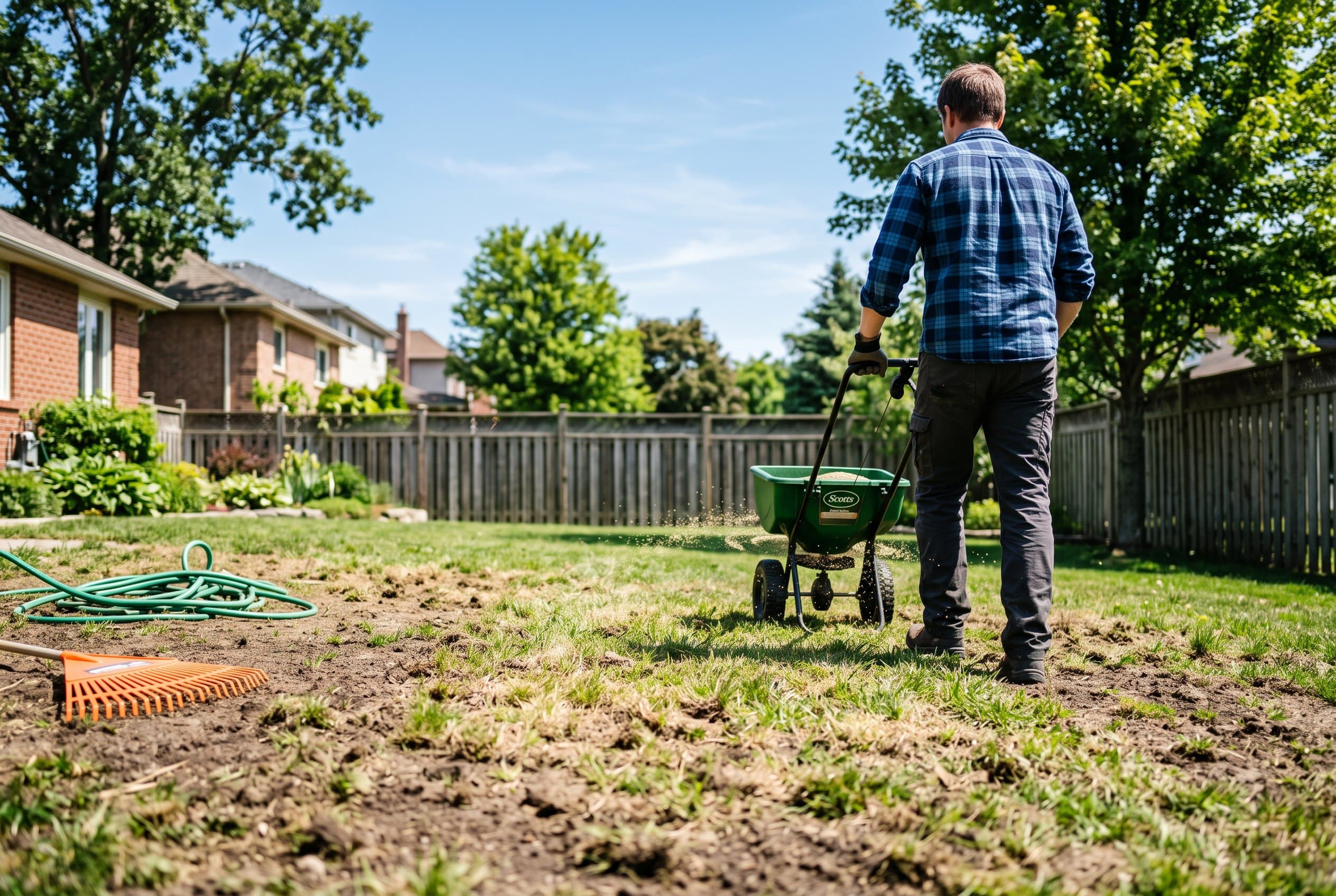
Use a broadcast or drop spreader for even coverage. Apply at the seeding rate recommended on the bag — typically half the rate used for a new lawn. Go in two directions (north-south, then east-west) for the most even distribution.
Step 5: Fertilize
Apply a starter fertilizer immediately after seeding. Starter fertilizers are higher in phosphorus, which supports root development in new seedlings[5].
Step 6: Water Consistently
Keep the top inch of soil moist until seeds germinate — this typically means light watering 2–3 times daily for the first 1–2 weeks. Once seedlings reach 1 inch tall, gradually reduce frequency and increase depth to encourage deeper root growth[3].
How Long Does It Take to See Results?
Germination timelines vary by grass type[2]:
- Perennial ryegrass: 5–10 days
- Tall fescue: 7–14 days
- Kentucky bluegrass: 14–21 days
- Bermudagrass: 10–30 days
Once seedlings are visible, avoid heavy foot traffic for at least 4 weeks. Hold off on herbicide applications until the new grass has been mowed at least 3–4 times[4].
What Can Go Wrong When Overseeding?
Even with good intentions, a few common mistakes can sabotage your results:
- Skipping aeration: Seed sitting on compacted soil or thick thatch rarely germinates well[5]
- Overwatering or underwatering: Inconsistent moisture is the top reason new seed fails to establish
- Wrong timing: Seeding during hot summer months stresses seedlings before they can establish
- Using weed killer too soon: Pre-emergent herbicides will prevent grass seed from germinating — wait until after seeding, or plan overseeding well after any pre-emergent application[4]
Conclusion
Overseeding is a straightforward process when you follow the right steps: mow low, improve soil contact through aeration, choose quality seed, and commit to consistent watering. Start by checking your soil temperature — it's the most reliable indicator of when to begin. Pick up a broadcast spreader and a bag of regionally appropriate seed, and you'll be on your way to a thicker, healthier lawn within a few weeks.
