
Quick Answer
Achieving a golf course-quality lawn requires consistent mowing at the proper height, regular fertilization, strategic watering, and meticulous maintenance practices like overseeding and dethatching. The key is maintaining grass at 2-3 inches tall, fertilizing every 6-8 weeks during growing season, and watering deeply but infrequently[1].
Key Takeaways
- Mow frequently with sharp blades, cutting no more than one-third of grass height
- Apply balanced fertilizer 3-4 times per year following soil test recommendations
- Water deeply 1-2 times per week in early morning hours
- Overseed thin areas annually and dethatch when thatch exceeds half an inch
- Edge borders weekly and maintain consistent grass density through proper seeding
Introduction
That pristine, carpet-like appearance of golf course fairways doesn't happen by accident. Professional groundskeepers follow specific maintenance schedules and techniques that homeowners can adapt for their own yards. While you may not have commercial-grade equipment, implementing these proven strategies will dramatically improve your lawn's appearance and health.
What's the Most Important Factor for Golf Course Appearance?
Mowing technique makes the biggest visual impact on your lawn's appearance. Golf course superintendents maintain fairway grass between 0.5-2 inches, but home lawns perform best at 2-3 inches[2]. The secret lies in frequency and precision rather than cutting height alone.
Recommended Mowing Heights by Grass Type
| Grass Type | Golf Course Height | Home Lawn Sweet Spot | Mowing Frequency |
|---|---|---|---|
| Kentucky bluegrass | 0.5–1.5 in | 2.5–3.5 in | Every 5–7 days |
| Perennial ryegrass | 0.5–1.5 in | 2–3 in | Every 5–7 days |
| Tall fescue | 1–2 in | 3–4 in | Every 5–7 days |
| Bermuda grass | 0.5–1 in | 1–2 in | Every 3–5 days |
| Zoysia | 0.5–1 in | 1.5–2.5 in | Every 5–7 days |
Sharp mower blades are essential – dull blades tear grass rather than cutting cleanly, creating brown tips that ruin the uniform green appearance[3]. Knowing the best time to mow your lawn also affects cut quality and recovery. Replace or sharpen blades at least twice per season, or after every 20-25 hours of use.
Never remove more than one-third of the grass blade in a single mowing. This means cutting every 4-7 days during peak growing season, adjusting frequency based on growth rate rather than calendar dates. For more detail, see our guide on how often you should mow your lawn.
Reel Mower vs. Rotary Mower
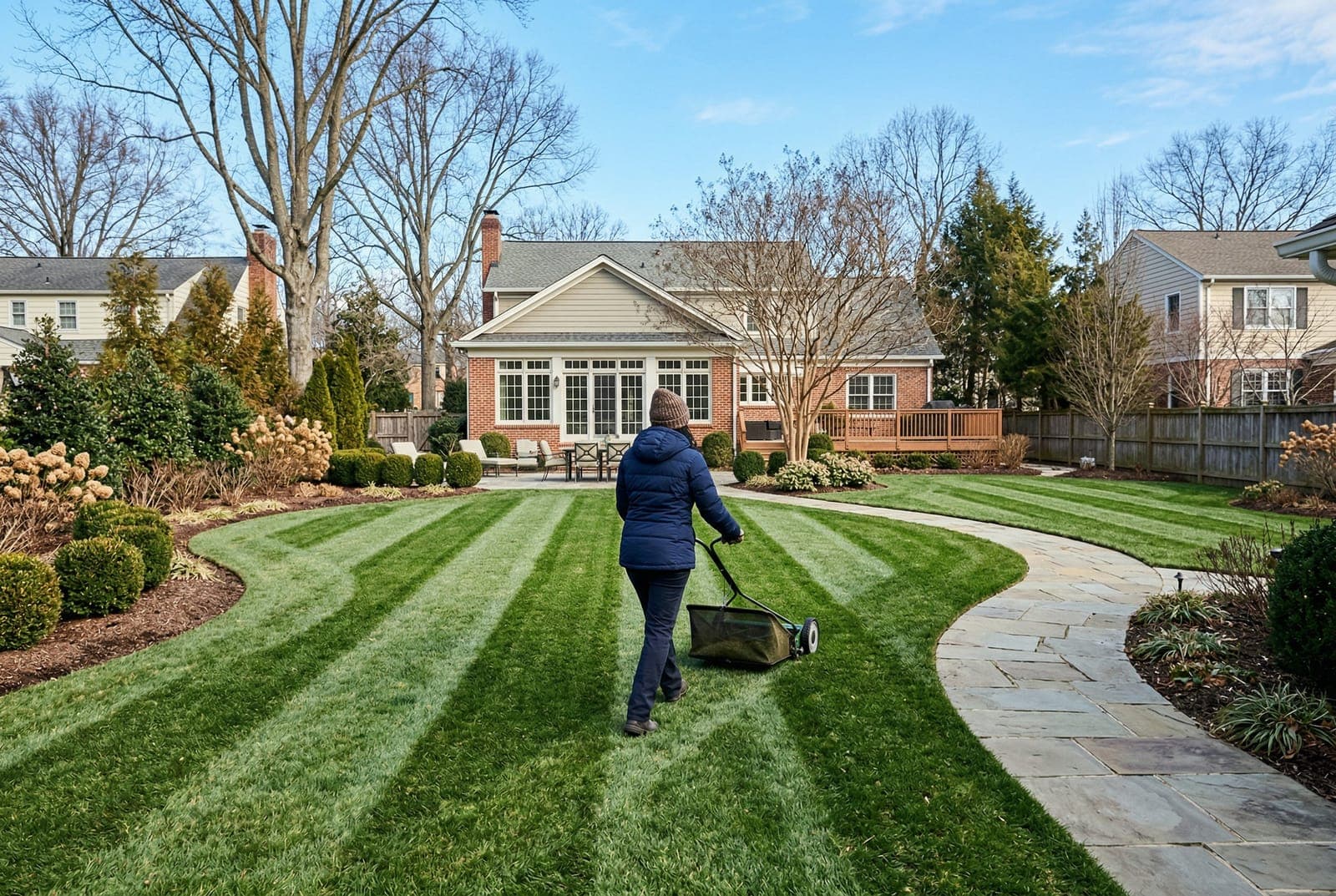
Golf courses use reel mowers that cut like scissors, producing a cleaner cut than rotary mowers that chop with a spinning blade. For homeowners committed to the golf course look, a manual or powered reel mower provides noticeably better cut quality. Test your reel mower's sharpness by cutting a piece of paper — it should slice cleanly without tearing.
How Do You Create Professional Striping Patterns?
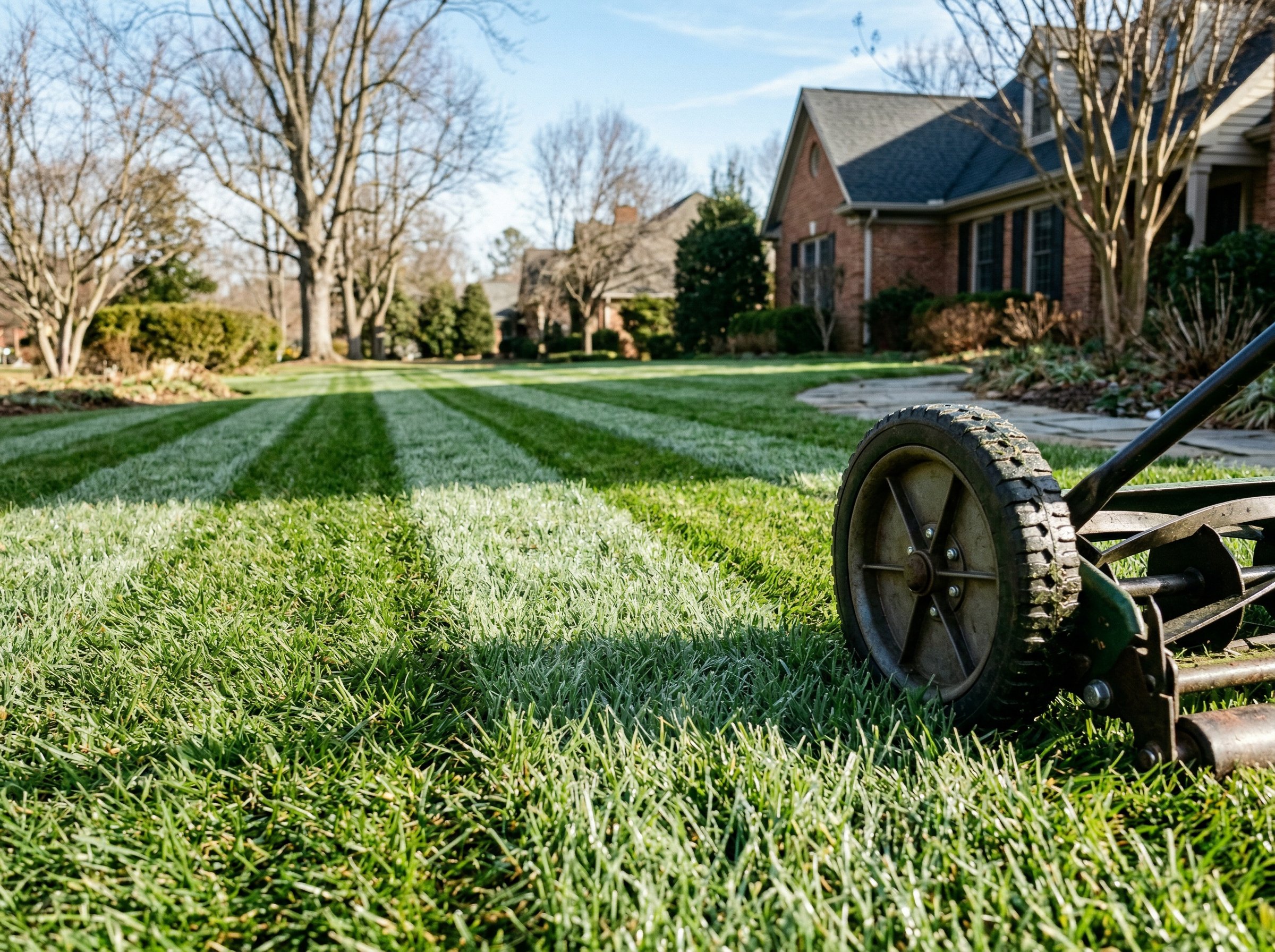
Professional-looking stripes come from bending grass blades in alternating directions, not from cutting at different heights. You can achieve this effect with a striping kit attachment for your mower or by simply changing direction with each pass.
Our detailed guide on how to stripe your lawn like a golf course covers equipment and patterns. Start by mowing your perimeter, then create straight, parallel lines across your lawn. Alternate the direction of these lines each week – if you mow north-south one week, go east-west the next[4]. This prevents soil compaction and promotes even growth.
For the sharpest stripes, mow when grass is dry but soil has adequate moisture. Wet grass won't hold the bend pattern, while drought-stressed grass appears less vibrant regardless of striping technique.
Key striping tip: The sun's position determines which stripes look light and which look dark. Mowing away from the sun creates light stripes, while mowing toward the sun creates dark stripes. Plan your pattern based on the angle you'll view the lawn from most often.
When Should You Fertilize for Maximum Results?
Golf course-quality nutrition requires strategic timing and proper product selection. Cool-season grasses need fertilization in early spring, late spring, early fall, and late fall. Warm-season varieties perform best with feeding from late spring through early fall[1]. Our fertilization frequency guide covers timing in more detail.
Golf Course Fertilization Schedule
| Timing | Cool-Season Lawns | Warm-Season Lawns | NPK Focus |
|---|---|---|---|
| Early spring | Light application (0.5 lb N/1,000 sq ft) | Skip — still dormant | High N, low P & K |
| Late spring | Full application (1 lb N/1,000 sq ft) | First application | Balanced |
| Early summer | Skip or light | Full application | High K for heat stress |
| Late summer | Skip | Full application | Balanced |
| Early fall | Full application — most important | Light, last feeding | Balanced |
| Late fall | Winterizer (1 lb N/1,000 sq ft) | Skip — entering dormancy | High K |
Start with a soil test to determine exact nutrient needs rather than guessing. Most university extensions offer affordable soil testing that reveals pH levels and nutrient deficiencies. Golf courses maintain soil pH between 6.0-7.0 for optimal nutrient uptake[5].
Apply slow-release nitrogen fertilizers for consistent feeding throughout the growing season. Quick-release fertilizers create rapid growth spurts that require more frequent mowing and can stress grass during hot weather. Learn the differences in our liquid vs. granular fertilizer comparison.
Water lightly after fertilizing to help nutrients reach root zones, but avoid heavy irrigation that could wash away surface applications. Timing your fertilizer and mowing correctly also makes a difference.
How Often Should You Water for Professional Results?
Deep, infrequent watering creates the strong root systems that give golf courses their resilience and uniform appearance. Most established lawns need 1-1.5 inches of water per week, including rainfall[3]. See our complete lawn watering schedule for detailed guidance.
Water early morning between 6-10 AM to minimize evaporation and allow grass blades to dry before evening. Wet grass overnight promotes fungal diseases that create brown patches and thin spots.
Use the "screwdriver test" to check water penetration – you should be able to easily push a long screwdriver 6 inches into the soil after watering. If you can't, water longer but less frequently to encourage deeper root growth[2].
Install rain gauges or use empty tuna cans to measure actual water application from your sprinkler system. Many homeowners overwater, which weakens grass and wastes resources.
How Do You Level Your Lawn Like a Golf Course?
The number one characteristic that gives golf courses their special look is that they're flat and smooth. Bumps, dips, and uneven areas make even well-maintained lawns look amateur. If your lawn has trouble spots, our guide on how to fix a bumpy, uneven lawn covers the full process.
Topdressing for a Smooth Surface
Topdressing is the golf course superintendent's secret weapon for creating a perfectly smooth surface over time. The process involves spreading a thin layer of sand or sand-soil mix over your lawn and working it into the grass canopy.
Best topdressing mix: Use a 50/50 blend of sterile potting mix and medium sand. Avoid play sand — it's too fine and washes away easily. Medium sand holds its position and creates better drainage.
Application method: Spread no more than 1/4 inch at a time. Work the material into the grass canopy using a push broom or lawn leveling rake, applying minimal pressure. Let the rake do the work naturally.
Frequency: Topdress 1-2 times per year during active growing season. Multiple light applications over several seasons produce the smoothest results without smothering grass.
What About Weed Control on a Golf Course Lawn?
No golf course has dandelions or crabgrass dotting the fairway. Weed control is non-negotiable for the golf course look, and it starts with prevention.
Pre-emergent herbicides prevent crabgrass and other annual weeds before they germinate. Our guide on when to apply crabgrass preventer covers the critical timing window that most homeowners miss.
Post-emergent spot treatments handle weeds that break through. Apply weed killer selectively to individual weeds rather than broadcasting across the entire lawn. This minimizes stress on desirable grass.
Thick turf is the best defense. A dense, healthy lawn naturally chokes out most weed pressure. Focus on proper mowing height, regular fertilization, and overseeding thin areas rather than relying solely on chemicals.
Conclusion
Transforming your lawn into a golf course showcase requires consistency rather than perfection. Start with proper mowing techniques and sharp blades, then work on achieving a dark green lawn through regular fertilization and strategic watering schedules. Focus on one improvement at a time – master your mowing routine before adding complex fertilization programs. Once your lawn is dialed in, consider adding a DIY backyard tee box or putting green to complete the golf course experience. A backyard putting green pairs well with drills to improve your speed control, and if you're serious about practicing golf at home, a golf course-quality lawn gives you the perfect foundation. With patient application of these professional techniques, your neighbors will wonder if you've hired a groundskeeping crew.