
Quick Answer
Fall is the most important season for lawn care. Cooler temperatures, morning dew, and softer soil create ideal conditions for aeration, overseeding, and fertilizing. Investing a few weekends in fall maintenance sets your lawn up for a stronger, healthier spring.
Key Takeaways
- Fall is the best time to aerate and overseed cool-season grasses like Kentucky bluegrass and tall fescue
- A late-season fertilizer application replenishes nutrients before winter dormancy
- Mowing height should be gradually lowered to 2–2.5 inches before the first frost
- Leaves left on the lawn can smother grass and create conditions for disease
- Warm-season grasses like bermudagrass and zoysia require a different fall approach — less is more
Introduction
As summer heat fades, your lawn shifts into recovery mode. Stressed, thinned-out turf from the summer can bounce back dramatically with the right fall care routine. Whether you have a cool-season lawn in the Midwest or a warm-season turf in the South, fall is the time to lock in your lawn's health for the year ahead[1].
What Fall Lawn Tasks Should I Do First?
Timing matters in fall lawn care. Start with aeration and overseeding in early fall (late August through September for most of the country), then move into fertilizing and leaf management as temperatures drop.
Aeration
Core aeration relieves soil compaction and improves water and nutrient penetration[2]. Rent or buy a core aerator and make two passes in perpendicular directions across your lawn. Aim to aerate when soil is moist but not waterlogged.
Overseeding
For cool-season grasses, overseed immediately after aeration. Soil-to-seed contact is critical — the holes left by the aerator provide perfect germination pockets[1]. Use a spreader to apply grass seed at the recommended rate for your grass type, and water lightly twice daily until seedlings are established.
Fertilizing
Apply a slow-release, high-potassium fertilizer in late fall (October–November). This "winterizer" feeds roots without pushing leafy growth that could be damaged by frost[3]. Potassium strengthens cell walls and improves cold tolerance.
How Should I Adjust My Mowing and Leaf Care?
Fall mowing and leaf removal are easy to overlook but make a real difference in spring turf quality.
Mowing Height
Gradually lower your mowing height over several cuts as fall progresses. Finish the season at 2–2.5 inches for cool-season turf. This prevents matting and reduces habitat for disease-causing fungi over winter[4]. Never remove more than one-third of the blade in a single mow.
Leaf Removal
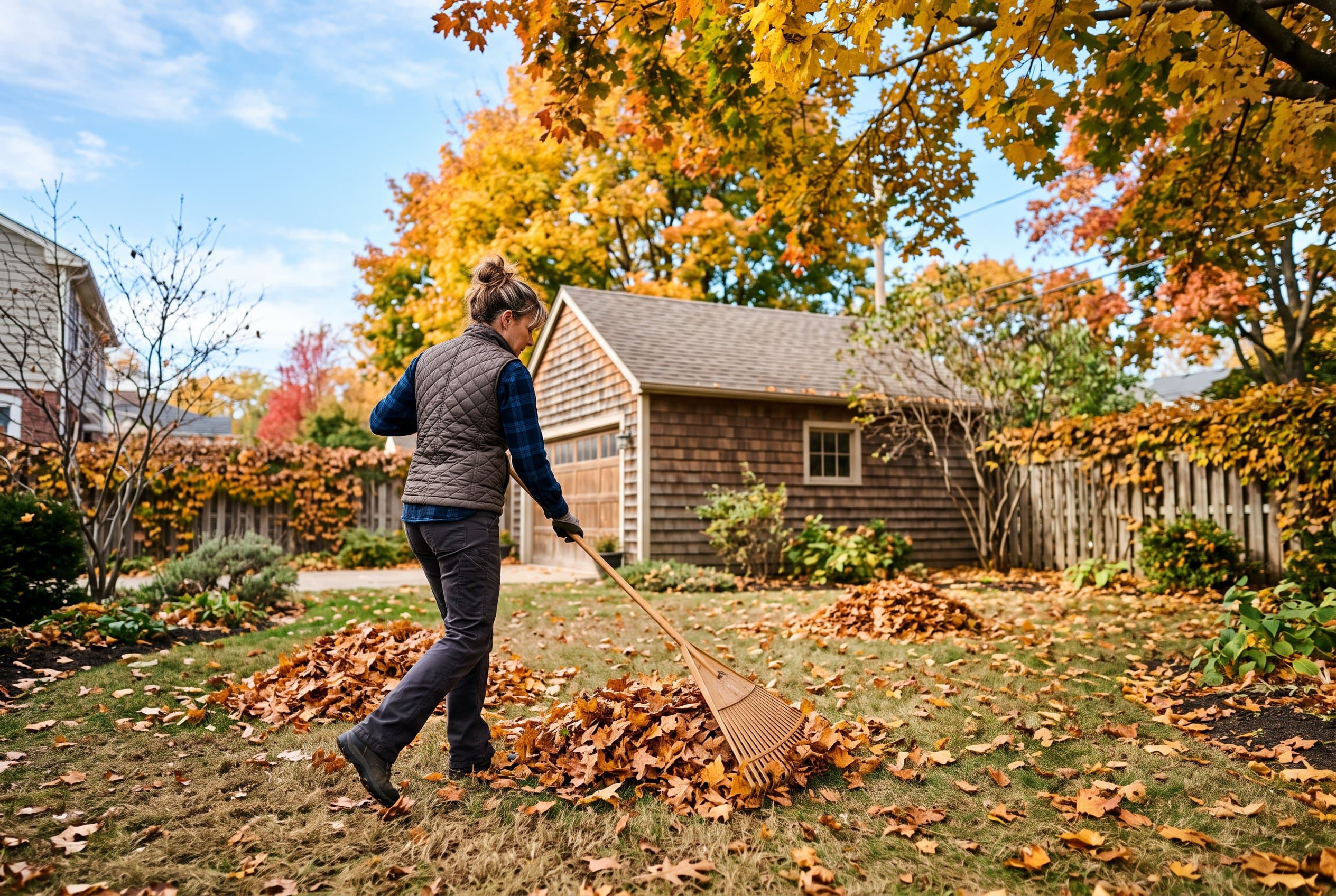
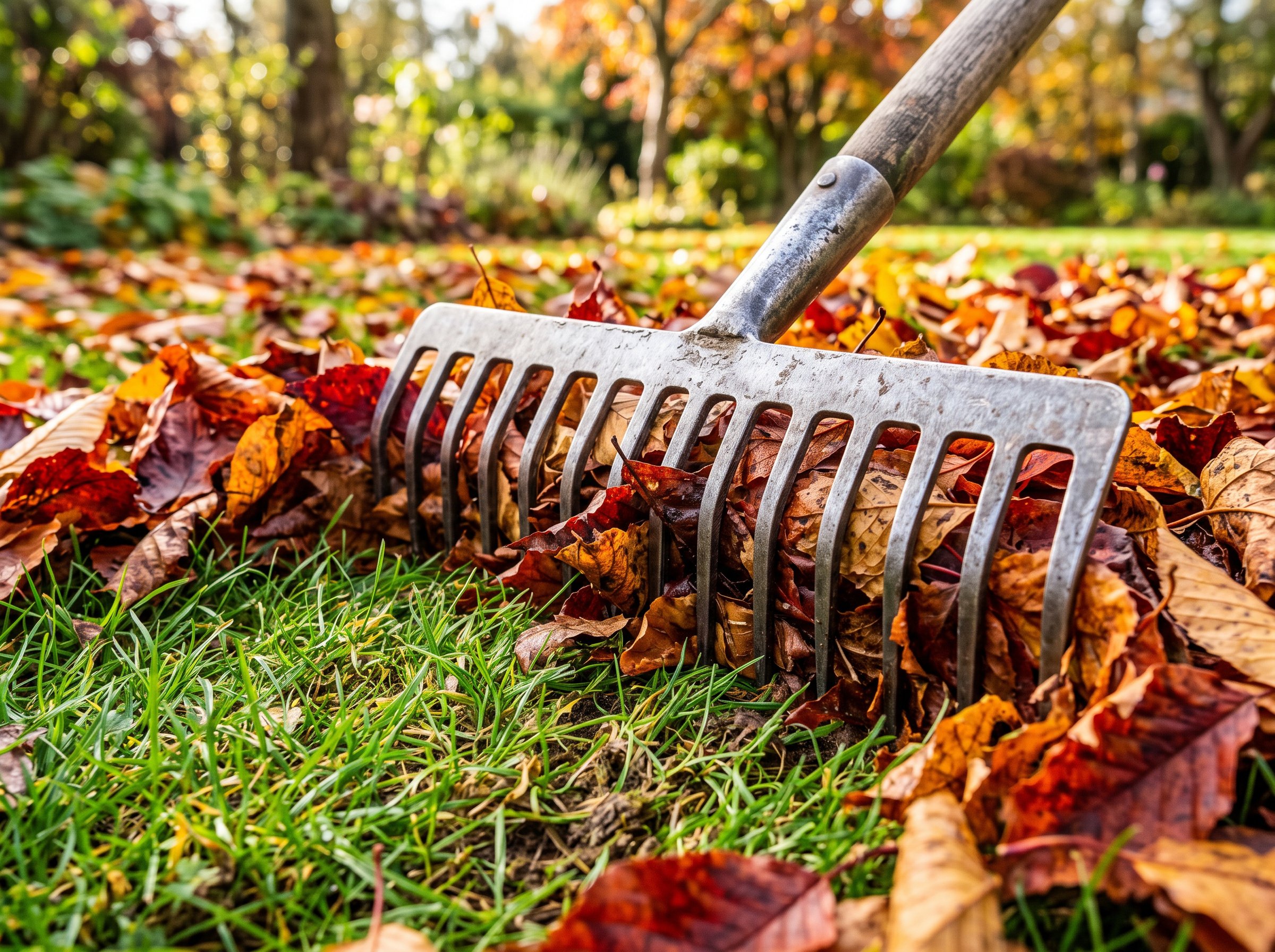
A thick layer of fallen leaves blocks sunlight, traps moisture, and encourages snow mold and other fungal diseases[3]. Rake or mulch-mow leaves regularly. Mulching mowers chop leaves into fine pieces that decompose and return nutrients to the soil — a time-saving and eco-friendly option.
How Is Fall Care Different for Warm-Season Grasses?
Homeowners with warm-season grasses — bermudagrass, St. Augustine, zoysia, or bahiagrass — should take a more restrained approach in fall[5].
- Stop fertilizing 6–8 weeks before the first expected frost to avoid tender growth that winter can kill
- Avoid overseeding the primary turf; if you want winter color, overseed with annual ryegrass
- Raise mowing height slightly before dormancy to protect root crowns
- Irrigate less as temperatures cool and growth slows
Warm-season grasses naturally go dormant in winter. Your fall job is to ease them into dormancy safely, not stimulate new growth[5][6].
Conclusion: Your Fall Lawn Action Plan
Don't let fall slip by without tackling these high-impact tasks:
- Aerate in early fall to relieve compaction
- Overseed cool-season lawns immediately after aerating
- Apply a winterizer fertilizer in late October or November
- Lower mowing height gradually and keep up with leaf removal
- Wind down care for warm-season grasses as dormancy approaches
Even completing two or three of these steps will give your lawn a measurable advantage come spring. Start with aeration and overseeding if you only have time for one thing — the results speak for themselves.