
Quick Answer
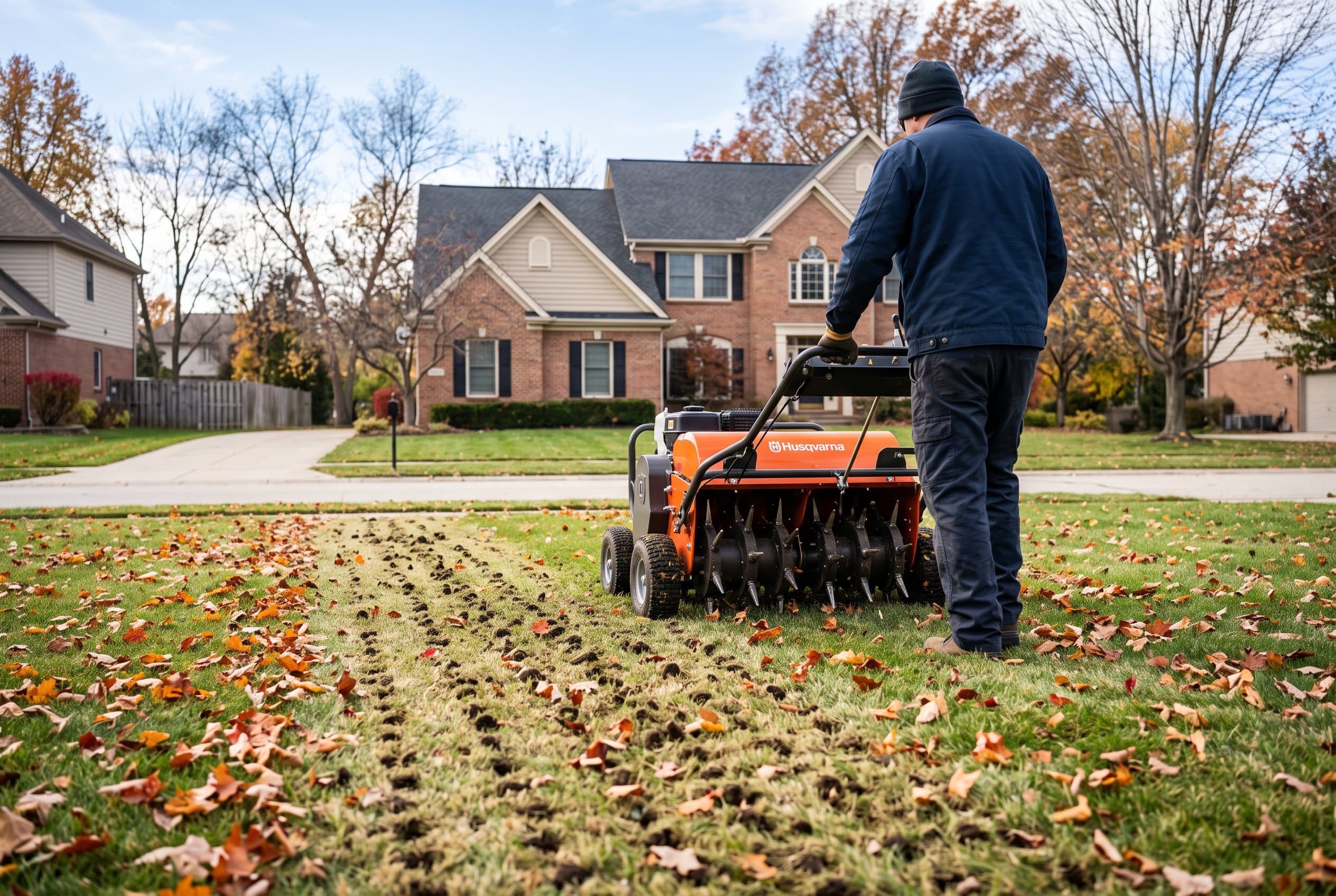
For cool-season grasses, the best time to aerate in fall is between late August and mid-October, when soil temperatures are still above 50°F and grass is actively growing. Warm-season grass lawns should be aerated in late spring to early summer instead, as fall aeration can stress them heading into dormancy.
Key Takeaways
- Cool-season grasses (Kentucky bluegrass, tall fescue, ryegrass) respond best to fall aeration
- Aim to aerate 4–8 weeks before your area's first expected frost date
- Soil should be moist but not waterlogged — aerate 1–2 days after rain or irrigation
- Pair aeration with overseeding and fertilizing for maximum lawn improvement
- Warm-season grasses (Bermuda, Zoysia, St. Augustine) should NOT be aerated in fall
Introduction
Compacted soil is one of the most common — and overlooked — reasons lawns struggle. When soil is too dense, grass roots can't access oxygen, water, or nutrients effectively. Core aeration fixes this by pulling small plugs of soil from the ground, opening up channels for resources to reach the root zone. Timing this task correctly in fall can make the difference between a lawn that recovers vigorously and one that stresses out before winter arrives[1].
When Is the Right Time to Aerate Cool-Season Lawns in Fall?
For lawns dominated by cool-season grasses, fall is the single best aeration window of the year[2]. Here's why timing matters:
- Late August through mid-October is the target window for most of the northern U.S.
- Grass is in an active growth phase after summer heat stress, so it recovers quickly from aeration
- Soil temperatures are still warm enough to support rapid root development
- Fall moisture and cooler air temperatures reduce the risk of drought stress post-aeration
A good rule of thumb: aerate at least 4–6 weeks before your region's average first frost date. This gives grass enough time to fill in aeration holes and strengthen roots before going dormant[3]. You can look up average frost dates for your zip code through NOAA's climate tools to plan precisely.
Avoid aerating during a drought or heat wave. If your soil is rock-hard and bone dry, water it thoroughly 1–2 days beforehand so tines can penetrate 2–3 inches deep.
How to Get the Most Out of Fall Aeration
Aeration is most effective when you pair it with complementary lawn care steps. Here's what to do in sequence:
1. Check Soil Moisture First
Aerate when soil is moist but not muddy. Soggy soil clogs hollow tines and reduces effectiveness. Dry soil resists full-depth penetration[4].
2. Choose the Right Aerator
Core (plug) aerators outperform spike aerators for compaction relief. Hollow tines physically remove soil, while spikes just push it aside — potentially increasing compaction around the holes. Rent a walk-behind core aerator for most residential lawns. Not sure whether DIY rental or hiring a pro makes more sense for your yard? Use our aeration cost calculator to compare the numbers before you decide.
3. Make Two Passes
For heavily compacted lawns, run the aerator in two directions (perpendicular to each other). This increases the number of holes per square foot and maximizes results.
4. Leave the Plugs
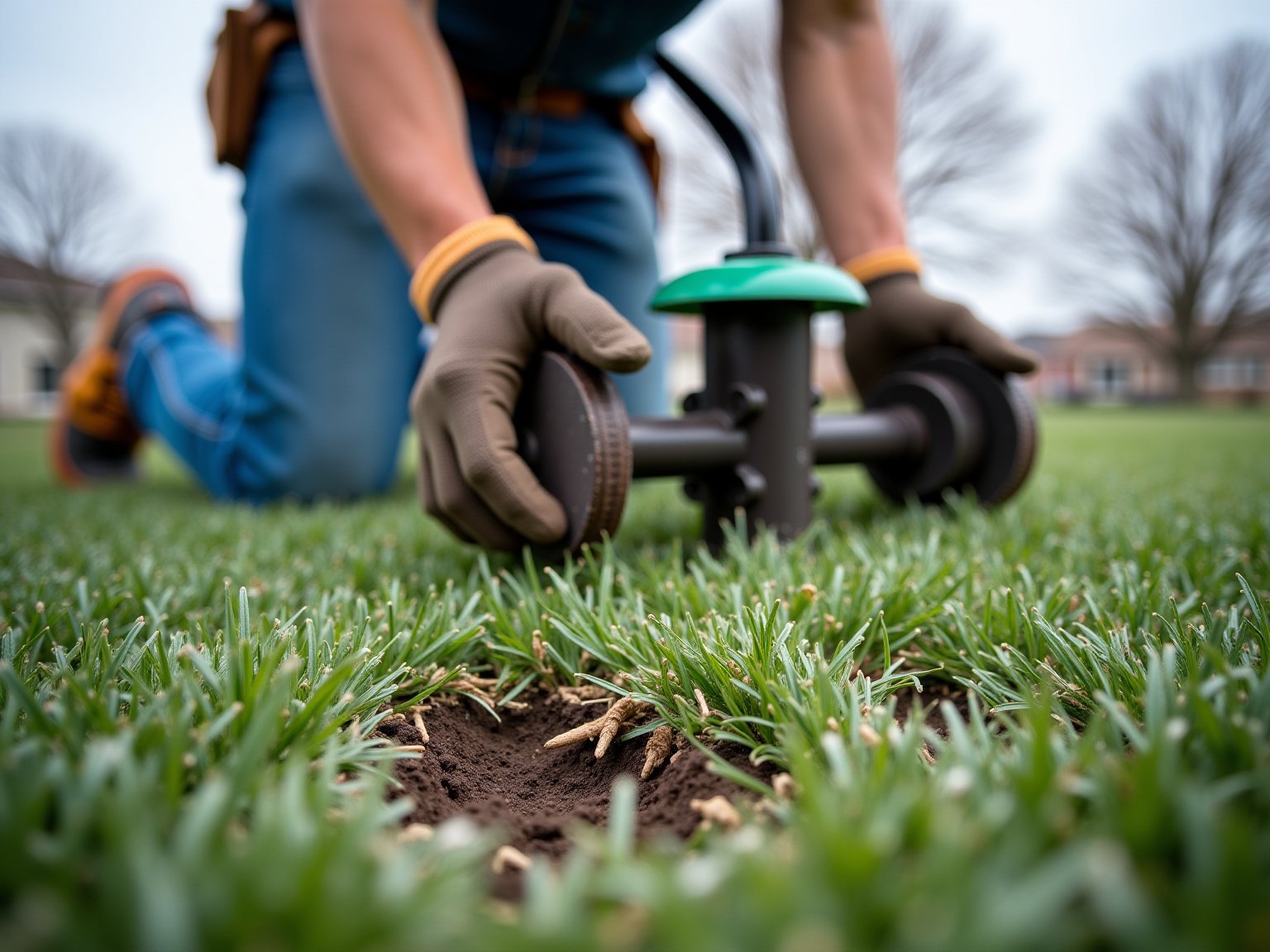
Don't rake up the soil cores. Let them break down naturally over 2–4 weeks — they return organic matter and microbes to the surface[1].
5. Overseed and Fertilize Immediately After
Aeration holes create ideal seed-to-soil contact. Spread grass seed right after aerating, then apply a starter fertilizer. Fall is also an excellent time for a slow-release nitrogen application to support root growth through autumn[2][5].
What About Warm-Season Grasses in Fall?
If your lawn is made up of warm-season grasses like Bermudagrass, Zoysiagrass, or St. Augustinegrass, fall aeration is not recommended[3]. These grasses go dormant as temperatures drop, and aerating during or just before dormancy:
- Leaves open wounds in the turf with no recovery time
- Increases the risk of winter injury to root zones
- Can invite weeds to establish in aeration holes
For warm-season lawns, schedule aeration in late spring (May–June) when the grass is entering its most vigorous growth phase. Soil temperatures should be consistently above 65°F[5].
Conclusion: Your Fall Aeration Action Plan
If you have a cool-season lawn, now is the time to act. Follow these steps:
- Check your first frost date using NOAA climate data and count back 6 weeks
- Water your lawn 1–2 days before aerating if soil is dry
- Rent or hire a core aerator — make two passes on compacted areas
- Overseed bare or thin spots immediately after
- Apply a fall fertilizer within a few days of aerating
Done right, fall aeration is one of the highest-return lawn care tasks you can do all year. A few hours of effort now sets your lawn up for a stronger, denser spring.