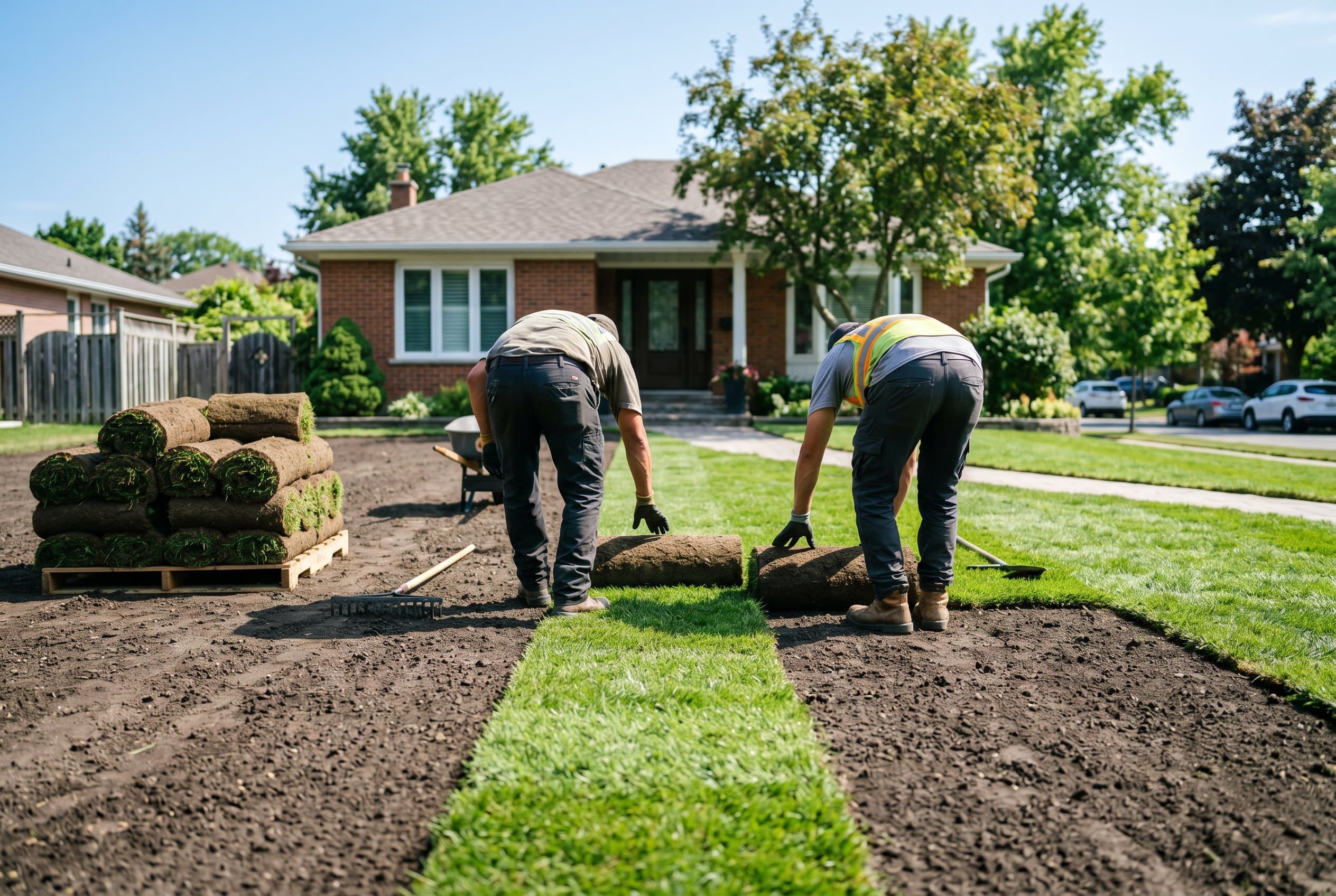
Quick Answer: Sod installation costs $1.00–$2.60 per square foot professionally installed in 2026, or about $1,000–$2,600 per 1,000 square feet. The sod itself runs $0.30–$0.85 per square foot ($150–$450 per pallet covering ~450 sq ft), with labor adding $0.50–$1.00 per square foot. Site prep — removing old grass, grading, and topsoil — is quoted separately and can add $0.70–$2.40 per square foot.
Key Takeaways
- Sod material costs $0.30–$0.85 per square foot; professional installation brings the total to $1.00–$2.60 per square foot
- A standard pallet covers 450–500 square feet and costs $150–$450, plus $50–$200 for delivery
- Grass type matters: fescue and bermuda are the cheapest; zoysia and St. Augustine cost 30–70% more per square foot
- Site preparation (old-lawn removal, grading, topsoil) is usually quoted separately and can rival the cost of the sod itself
- Sod costs 5–10× more than seed but produces a usable lawn in 2–3 weeks instead of 2–4 months
- Order 5–10% extra to cover cuts around curves, beds, and walkways
Introduction
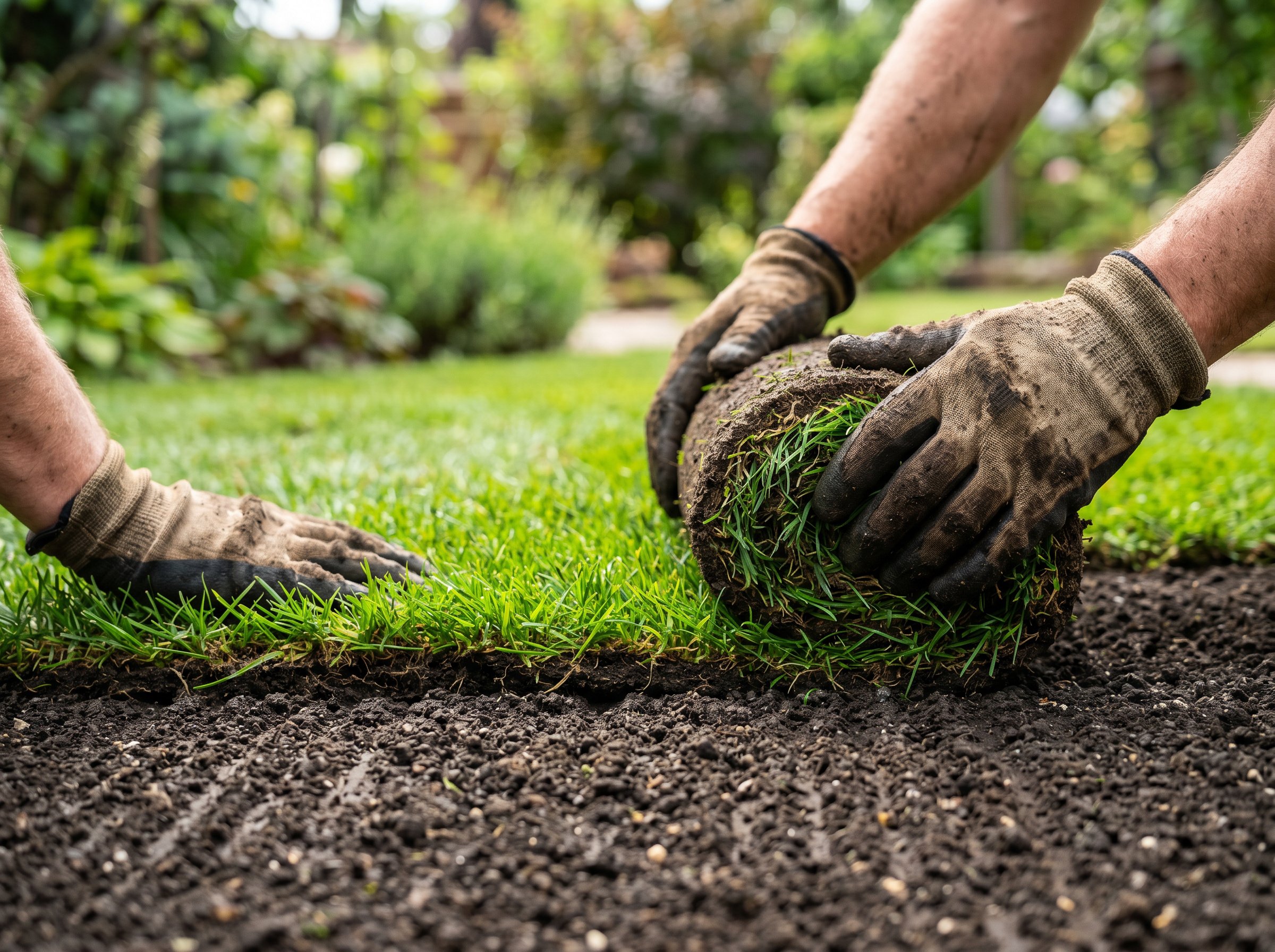
Sod is the fast lane to a finished lawn: mature turf, grown on a farm for 10–18 months, cut into rolls and unrolled over your prepared soil. That head start is exactly what you pay for. Where a bag of seed costs pennies per square foot, sod is a per-square-foot line item times your entire yard — and the prep work underneath it often costs as much as the grass. This guide breaks down 2026 pricing by grass species, walks through the site-prep costs that surprise most homeowners, and runs the sod-vs-seed math so you can decide whether instant lawn is worth the premium. Fall, it turns out, is one of the best times to do it — cool-season sod roots quickly in warm soil and mild air, right alongside the rest of your fall overseeding and renovation work.
What Does Sod Cost Per Square Foot in 2026?
Three numbers matter: material, installed price, and prep.
- Sod material only: $0.30–$0.85 per square foot for common varieties[1]. Wholesale farm prices confirm the range — the 2026 North Carolina sod producers' survey reports on-farm averages of $0.38–$0.60 per square foot depending on species, with delivered prices about $0.06 higher[2].
- Professionally installed: $1.00–$2.60 per square foot for most residential jobs, with labor accounting for $0.50–$1.00 of that[3]. High-cost metros and small, hard-to-access yards can push past $3 per square foot.
- By the pallet: $150–$450 per pallet, covering roughly 450–500 square feet[1]. Delivery adds $50–$200 per load, and buying in bulk can shave 15–40% off per-square-foot pricing.
For a typical 2,000-square-foot front yard, that works out to roughly $600–$1,700 in sod and $2,000–$5,200 professionally installed — before any prep work.
Sod Prices by Grass Type
Species is the biggest lever on material cost. Slow-growing grasses like zoysia take longer to produce on the farm, so they cost more per roll.
| Grass Type | Material ($/sq ft) | Per Pallet (~450 sq ft) | Best For |
|---|---|---|---|
| Kentucky bluegrass | $0.30–$0.45 | $135–$200 | Northern lawns, cold winters |
| Tall fescue | $0.35–$0.70 | $160–$315 | Transition zone, some shade |
| Bermudagrass | $0.40–$0.85 | $180–$380 | Southern sun, high traffic |
| Centipede | $0.35–$0.85 | $160–$380 | Low-maintenance Southeast lawns |
| St. Augustine | $0.55–$1.10 | $250–$495 | Gulf Coast heat, moderate shade |
| Zoysia | $0.50–$1.30 | $225–$585 | Dense, premium warm-season turf |
Ranges compiled from 2026 retail pricing guides and the NC State sod producers' report[1][2]. Regional availability moves these numbers — St. Augustine is cheap in Florida and expensive (or unavailable) elsewhere, and named premium cultivars can run well above the top of each range. Match the species to your site first, price second: sun-loving bermuda laid under mature trees is money wasted, so check our guide to growing grass in shade before ordering for a shaded yard.
Site Preparation: The Cost Most Estimates Leave Out
Sod only roots well into loose, graded, weed-free soil — and none of that is included in the per-square-foot install price. Typical add-ons[3]:
- Old lawn removal: $0.50–$2.00 per square foot, including hauling and disposal
- Grading and leveling: $0.40–$2.00 per square foot to fix drainage and smooth the surface
- Topsoil: $10–$50 per cubic yard delivered, to build a 4–6 inch rooting bed where soil is thin
- Soil testing and amendments: $15–$50 for the test, plus lime or fertilizer as recommended
Extension turf programs recommend testing the soil and tilling in amendments before any sod goes down, then firming the surface with a roller[4] — a $30 soil test is the cheapest insurance on a four-figure project (here's how to test lawn soil). On a neglected site, full prep can add $0.70–$2.40 per square foot, meaning ground work sometimes costs more than the grass laid on top of it.
How to Measure and Order Sod
Measure each lawn section (length × width), add the areas together, then add a waste factor: 5% for a simple rectangle, 10% for the typical suburban yard with curved beds and walkways, up to 15% for heavily obstructed layouts[5]. Divide by your supplier's pallet coverage (confirm it — pallets range from 400 to 700 square feet) and round up. Running out mid-job is worse than over-ordering, because sod from a second cutting can differ slightly in thickness and color.
Two logistics rules save the project: schedule delivery for the morning you install, and get every roll down within 24 hours. Sod is perishable — pallets heat up from the inside and the turf declines fast, especially in warm weather[6].
Sod vs. Seed: The Cost and Time Tradeoff
| Sod | Seed | |
|---|---|---|
| Material cost per sq ft | $0.30–$0.85 | $0.05–$0.30 |
| Installed / done-for-you | $1.00–$2.60 | $0.10–$0.25 |
| Usable lawn | 2–3 weeks | 2–4 months |
| Timing window | Most of the growing season | Narrow (late summer–early fall best) |
| Erosion control | Immediate | Weeks of vulnerability |
| Weed pressure during establishment | Low | High |
Seeding the same 2,000-square-foot yard might cost $100–$600 all-in — a fraction of sod — but University of Minnesota Extension notes the fundamental tradeoff: seed is cheaper and slower, sod is expensive and instant, and sod can be laid virtually any time during the growing season while seeding windows are tight[4]. Sod also skips the fragile germination stage entirely; if you'd rather take the slow, cheap route, start with our grass seed germination guide. And if you're weighing whether to keep natural grass at all, we've run the numbers on artificial turf vs. natural grass too.
Establishment Costs After Installation
The spending doesn't stop when the last roll goes down. New sod must stay consistently moist until it roots — typically daily watering for the first 10–14 days, then a gradual taper[4]. Depending on lawn size and local water rates, expect a noticeably higher water bill for the first month; budget roughly $30–$100 extra for a typical yard, more in arid regions. Do a tug test at two weeks: if the sod resists a gentle pull, roots have knitted in and you can shift to a normal deep-and-infrequent watering schedule. Add a starter fertilizer application ($20–$50) per your soil test, hold off on mowing until the turf is rooted, and keep foot traffic light for the first few weeks[6].
How to Keep Sod Installation Costs Down
- DIY the labor on small areas. Laying sod is unskilled but heavy work; doing it yourself saves $0.50–$1.00 per square foot.
- Sod the front, seed the back. Put instant curb appeal where it's seen and let seed do the cheap work behind the fence.
- Prep the site yourself. Renting a sod cutter (~$75–$100/day) and stripping the old lawn yourself removes the priciest line item from the contractor quote.
- Get three quotes and ask what's included. Prep, delivery, and disposal are quoted inconsistently — a "cheap" per-foot price with every add-on billed separately often totals more.
- Buy by the pallet from a local farm. Farm-direct pricing beats garden-center rolls by a wide margin, and fresher sod establishes better.
Conclusion
Budget $1.00–$2.60 per square foot for professionally installed sod in 2026, $0.30–$0.85 per square foot if you're supplying the labor, and be honest about site prep — on a rough or weedy lot, the ground work can cost as much as the grass. Choose the species for your climate and sun exposure, order 5–10% extra, install within 24 hours of delivery, and commit to two weeks of diligent watering. Do that, and sod's premium buys exactly what it promises: a finished lawn in weeks, in almost any month the grass is growing.