
Quick Answer
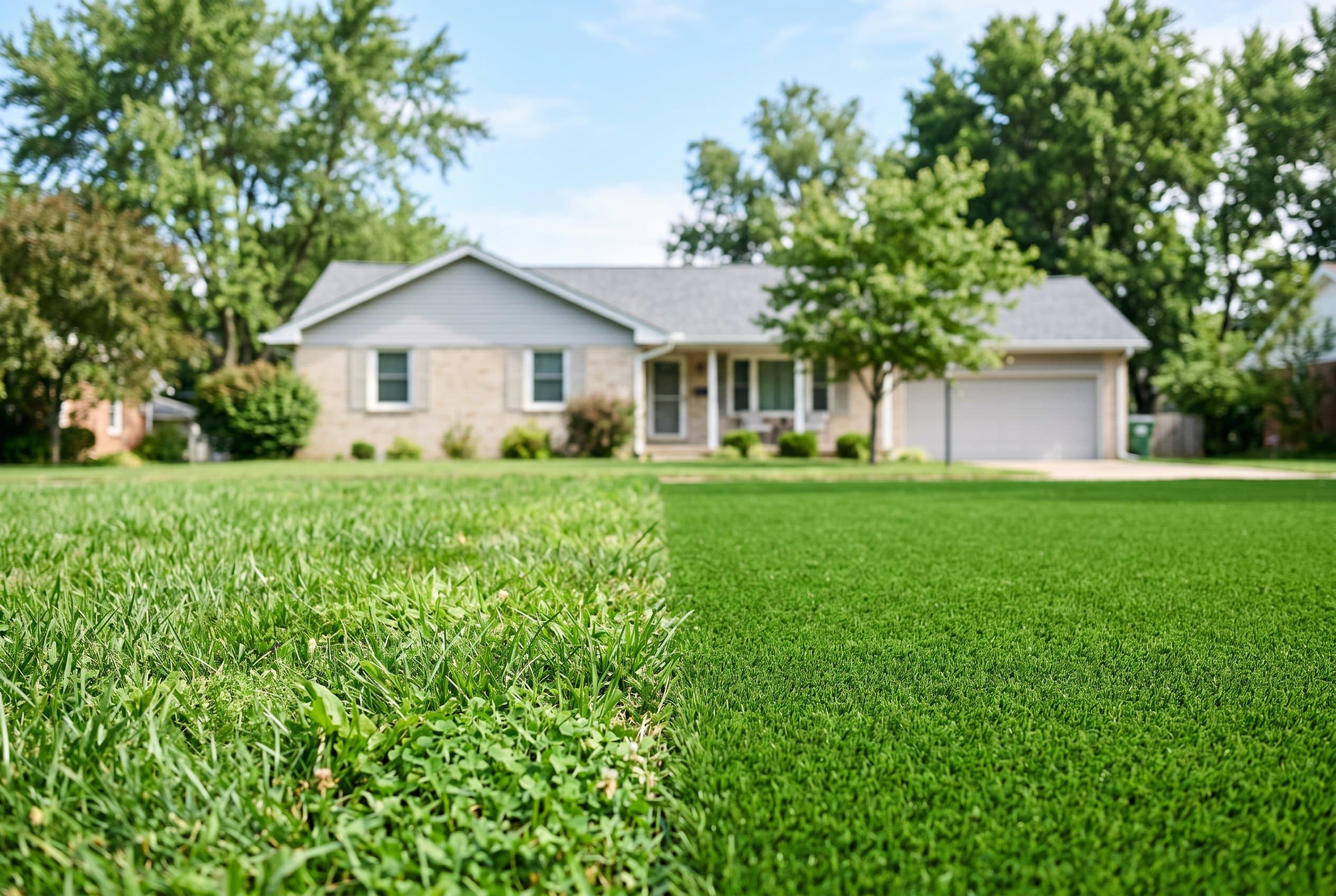
For most homeowners, natural grass is the more environmentally friendly and cost-effective upfront choice, while artificial turf wins on long-term maintenance savings and durability. The best option depends on your climate, budget, how you use your lawn, and your environmental priorities.
Key Takeaways
- Natural grass costs less to install but requires consistent watering, mowing, and fertilizing year-round
- Artificial turf has a higher upfront cost ($5–$20 per sq ft installed) but near-zero maintenance after installation
- Natural grass supports pollinators, improves soil health, and cools your yard naturally
- Artificial turf can retain heat — surface temps can exceed 150°F on hot days
- Your climate zone plays a major role: drought-prone regions often favor turf, while temperate zones suit natural grass well
Introduction
Deciding between artificial turf and natural grass is one of the bigger landscaping choices a homeowner can make. Both options have genuine advantages and real drawbacks. Understanding how each performs in your specific situation — your climate, lawn usage, water costs, and lifestyle — is the key to making the right call[1].
How Do the Costs Compare Over Time?
Upfront costs favor natural grass by a wide margin. Seeding or sodding a lawn typically runs $0.10–$2.00 per square foot depending on your method and grass type. Artificial turf installation averages $5–$20 per square foot once you factor in base preparation, infill, and labor[2].
However, long-term costs tell a different story. Natural grass requires:
- Regular irrigation (especially in dry months)
- Fertilizer applications 2–4 times per year
- Mowing equipment and fuel or a lawn service
- Occasional overseeding, aeration, and weed control
Artificial turf's main recurring costs are occasional rinsing, brushing, and infill replenishment. Most quality installations last 15–25 years. For homeowners in water-stressed areas paying high utility bills, artificial turf can pay for itself within 8–12 years[3].
Artificial Turf vs Natural Grass: Key Comparisons
| Feature | Artificial Turf | Natural Grass |
|---|---|---|
| Install Cost | $5–$20/sq ft | $0.10–$2/sq ft |
| Annual Maintenance | Low (minimal) | Moderate to High |
| Water Use | None | Significant |
| Heat Retention | High (150°F+) | Low (natural cooling) |
| Environmental Benefit | Low | High (supports wildlife) |
| Lifespan | 15–25 years | Indefinite with care |
What Are the Side-by-Side Performance Differences?
This is where personal priorities shape the decision most. Here's how each option performs across everyday concerns:
Appearance and Feel
Modern artificial turf has improved dramatically in texture and color variety, but it still can't fully replicate the look and feel of healthy natural grass. Natural grass varies beautifully with seasons — something many homeowners actually enjoy.
Heat and Comfort
Natural grass stays significantly cooler than artificial turf. On a sunny summer day, synthetic surfaces can reach 150–170°F, making them uncomfortable or even unsafe for pets and barefoot children[4]. Natural grass stays close to ambient air temperature through transpiration.
Durability and High-Traffic Zones
Artificial turf handles heavy foot traffic, play areas, and pet runs without developing worn patches. Natural grass in high-traffic zones often requires overseeding and resting periods, especially in cool-season lawns during summer stress[5].
Seasonal Considerations
- Spring/Summer: Natural grass greens up naturally; artificial turf heats up significantly
- Fall: Natural grass may need overseeding; turf stays consistent
- Winter: Natural grass goes dormant; turf remains green but may be slippery with frost
What Is the Environmental Impact of Each Option?
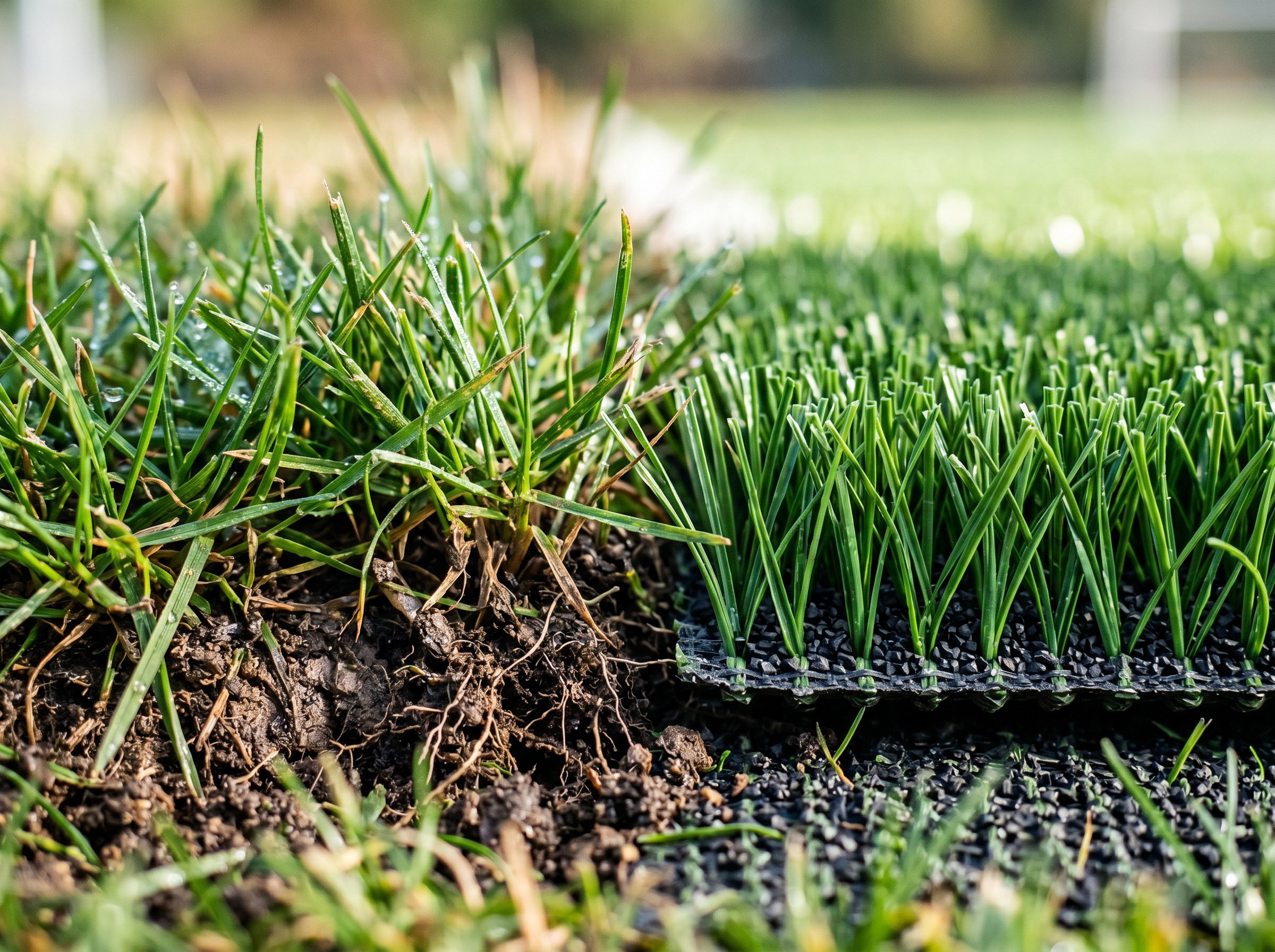
Natural grass provides measurable ecological benefits. It supports pollinators, captures carbon, filters stormwater runoff, and reduces urban heat island effect[6]. A healthy lawn also hosts beneficial soil microbes and earthworms that improve long-term soil health.
Artificial turf, by contrast, is made from petroleum-based plastics. It creates runoff rather than absorbing it, contributes to heat islands in urban areas, and eventually ends up in landfills at the end of its lifespan. Some infill materials have also raised health and water quality concerns[4].
That said, in drought-prone regions, the water savings from artificial turf can outweigh some of these concerns. Colorado and other arid-climate states have seen growing adoption as water conservation becomes a priority[1][3].
Conclusion: How to Make the Right Choice
Start by asking three questions:
- How much water does my lawn need each year, and what does it cost? High water bills often tip the scale toward turf.
- How is my lawn primarily used? Heavy pet or play traffic favors turf; relaxed family enjoyment favors grass.
- Do I care about ecological impact? Natural grass is clearly the greener choice from an environmental standpoint[6].
If you decide on natural grass, choose a variety suited to your climate zone and commit to a consistent maintenance calendar[5]. If artificial turf is your direction, get multiple installation quotes, ask about infill materials, and confirm the product's heat performance rating before committing[2].