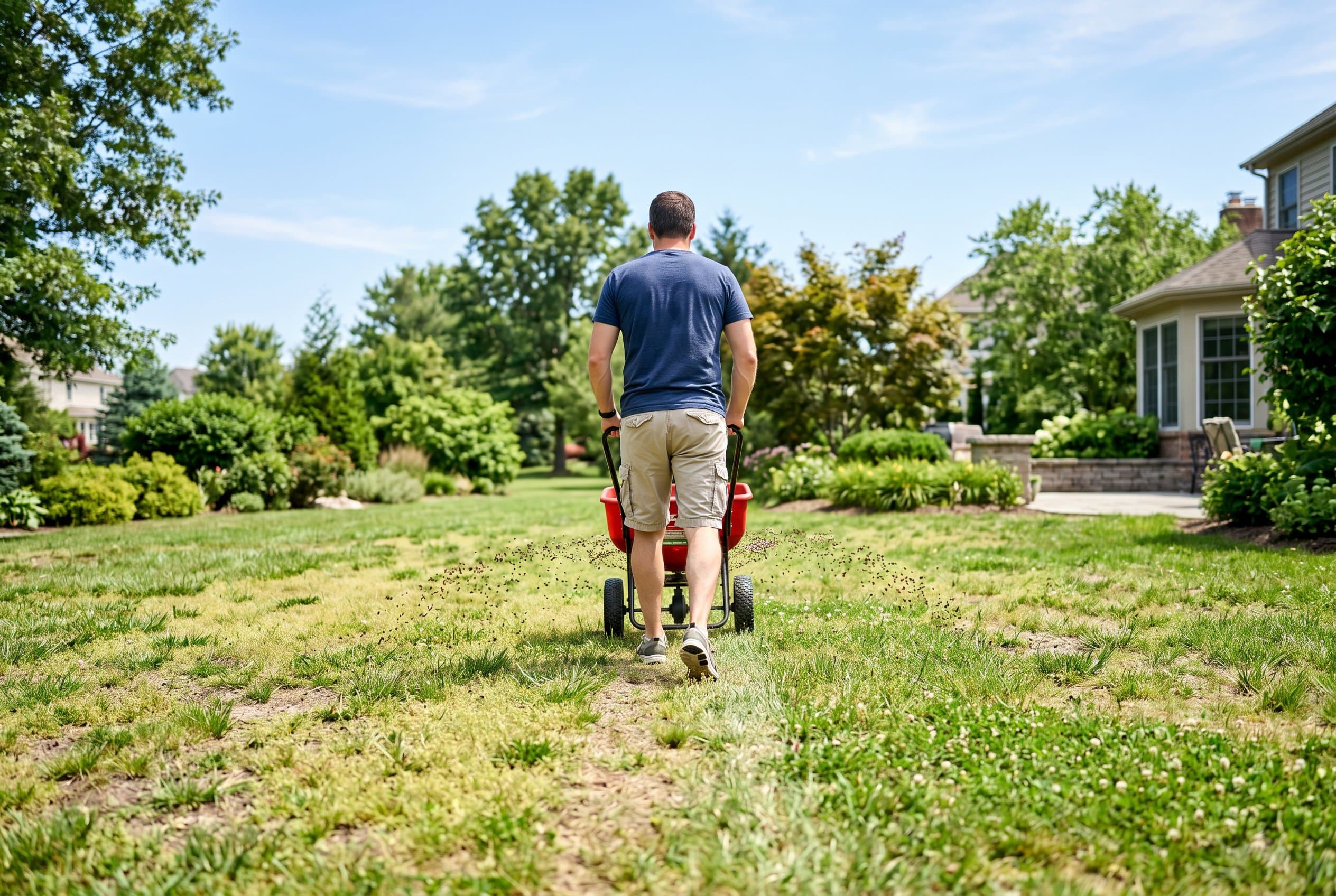
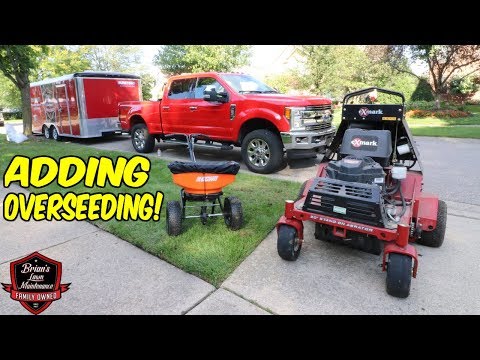
Quick Answer: Professional overseeding costs $0.04–$0.18 per square foot in 2026 — roughly $200–$450 for a typical 5,000 sq ft lawn, and more when core aeration is bundled in. Doing it yourself costs $50–$150 in grass seed plus $60–$150 for an optional slit-seeder rental. For most small-to-medium lawns, DIY delivers 60–75% savings; hiring out makes sense for large properties or aeration-plus-seed packages.
Key Takeaways
- Professional overseeding averages $0.04–$0.18 per square foot; most homeowners pay $200–$450 for an average lawn
- DIY seed costs $40–$150 for 5,000 sq ft, depending on species — tall fescue is cheapest per pound, Kentucky bluegrass the most expensive
- Aeration-plus-overseeding bundles run $0.07–$0.23 per square foot and are the best value in professional service
- A slit-seeder rental adds $60–$95 for four hours, or $90–$150 per day
- Mid-August through mid-September is the prime window for cool-season lawns — fall pricing and demand both peak then
Introduction
Overseeding — spreading new grass seed over an existing lawn to thicken thin turf — is one of the highest-return lawn projects you can do, and one of the cheapest to DIY. But quotes for professional overseeding vary wildly, and it's not always obvious what you're paying for. This guide breaks down real 2026 pricing for both routes, what pros actually include, and the situations where paying for service beats a Saturday with a spreader.
What Does Professional Overseeding Cost?
Professional overseeding runs $0.04–$0.18 per square foot in 2026[1], with full-service companies typically quoting $0.09–$0.15 per square foot[2]. On an average 5,000 sq ft suburban lawn, that works out to roughly $200–$450 for most jobs, with labor billed at $45–$95 per hour when priced hourly[2].
Three things move a quote up or down:
- Lawn size. Per-square-foot rates drop on larger lawns, but totals climb — a quarter acre can reach $500–$1,000+.
- What's bundled. Aeration-plus-overseeding packages run $0.07–$0.23 per square foot[2]. Because core aeration is the single best prep step for seed-to-soil contact, this bundle is usually the smartest way to spend on professional service. You can estimate a combined price for your lawn with our aeration cost calculator.
- Seed quality. Premium Kentucky bluegrass blends cost 2–4× more per pound than contractor-grade ryegrass mixes, and that difference passes through to your invoice.
Expect fall quotes to come in higher than spring ones — September and October are peak demand for cool-season overseeding, and crews book out weeks in advance.
What Does DIY Overseeding Cost?
The DIY math is dominated by one line item: seed. Per-pound prices in 2026 look like this[2]:
- Tall fescue: $2–$6 per lb
- Perennial ryegrass: $3–$8 per lb
- Kentucky bluegrass: $7–$15 per lb
How much you need depends on species. University seeding-rate tables put new-lawn rates at roughly 6–8 lbs per 1,000 sq ft for tall fescue, 4–6 lbs for perennial ryegrass, and just 1–3 lbs for Kentucky bluegrass, whose fine seed and spreading rhizomes go much further[3]. Overseeding into existing turf uses roughly half the new-lawn rate, since you're thickening a canopy rather than building one from bare soil.
For a 5,000 sq ft lawn, that means about 15–20 lbs of tall fescue ($40–$120), 10–15 lbs of ryegrass ($30–$120), or 5–8 lbs of bluegrass ($35–$120). Add a broadcast spreader ($30–$80 to buy) if you don't own one. All-in, most DIY overseeding projects with basic tools land between $149 and $449[2] — and repeat years cost seed only.
One buying tip: check the seed label for purity and germination percentages. Cornell's turf program notes you should buy about 20% more than the target rate to account for seed that won't sprout[3].
Equipment Rental: When a Slit Seeder Pays Off
For thin lawns with decent soil, a hand spreader plus a stiff rake is enough. For compacted or heavily thinned turf, a slit seeder (also called a slice seeder) cuts shallow grooves and drops seed directly into them — big-box rental counters charge roughly $60–$95 for four hours or $90–$150 per day. That single rental often makes the difference between patchy and uniform germination, and it's still far cheaper than a professional visit.
DIY vs Pro: Side-by-Side Comparison
| Factor | DIY | Hiring a Pro |
|---|---|---|
| Cost (5,000 sq ft) | $50–$150 seed; $150–$300 with rental | $200–$450 seed-only; $350–$900+ with aeration |
| Cost per sq ft | $0.01–$0.06 | $0.04–$0.18 ($0.07–$0.23 with aeration)[[1]](#user-content-fn-1)[[2]](#user-content-fn-2) |
| Time required | 3–5 hours plus daily watering | 1–2 hours on site; you still handle watering |
| Equipment | Spreader; optional slit-seeder rental | Commercial slit seeders and core aerators included |
| Prep included | You mow low, rake, and aerate yourself | Often bundles core aeration and starter fertilizer |
| Seed selection | Full control over species and cultivar quality | Varies — ask what blend is being used |
| Best for | Lawns under ~7,500 sq ft in fair condition | Large lawns, compacted soil, full renovations |
When Does Hiring a Pro Make Sense?
DIY is the clear value play, but professional overseeding earns its price in a few situations:
- You're bundling core aeration. Iowa State Extension recommends aggressive prep — 20 to 40 aeration holes per square foot, or several passes with a vertical mower — before seed goes down[4]. Pros own the machines and do both in one visit; see our lawn aeration tips for what good aeration looks like.
- Your lawn is large. Above roughly 10,000 sq ft, hauling rental equipment and 40+ lbs of seed becomes a real project, and per-square-foot pro rates get more competitive.
- The lawn needs renovation, not touch-up. If more than half the turf is thin or weedy, a pro can pair overseeding with weed control and starter fertilizer on a schedule.
- Timing is tight. The fall window is short. If you can't get to it by early October, a crew with a two-day turnaround protects the season — our fall overseeding guide covers the full timeline.
If none of those apply, keep your money: the technique itself is beginner-friendly, and our step-by-step how to overseed a lawn guide covers the process from mowing low to first germination.
Timing Affects Cost More Than You Think
For cool-season lawns, mid-August through mid-September is the agronomic sweet spot — warm soil, cooling air, and weak weed competition[4]. University of Missouri Extension puts the outer window at August 25 to October 10, and notes lawns seeded within a week of Labor Day fill in most completely by winter[5]. Miss the window and germination odds drop with the soil temperature; wait too long and you're into dormant-seeding territory, which Minnesota's turf program reserves for after soils fall below 45°F[6].
Seeding in the right window is free insurance on everything you spend. Germination speed also varies by species — perennial ryegrass sprouts in under a week while Kentucky bluegrass takes two to three weeks[5] — so build your watering plan around the slowest seed in your mix. Our guides on when to plant grass seed in fall and grass seed germination break down the windows by region and species.
Whichever route you choose, budget for aftercare: new seed needs light, frequent watering — usually at least once a day — until establishment, plus a nitrogen feeding about six weeks after germination[4]. That's your labor either way; no pro package waters your lawn for six weeks.
Conclusion
Overseeding is one of the rare lawn projects where the DIY discount is dramatic and the skill barrier is low. Budget $50–$150 in seed for a typical lawn if you do it yourself, or $200–$450 for professional service — $350–$900+ when core aeration is bundled in. Choose DIY for small-to-medium lawns in reasonable shape, and a pro for big properties, compacted soil, or a full aeration-and-seed renovation. Either way, hit the mid-August-to-early-October window, match the seeding rate to your species, and commit to daily watering — that's what turns seed spend into turf.
