
Quick Answer
Aerate cool-season grasses in early fall (August–October) and warm-season grasses in late spring (May–June) when they're actively growing. Use a core aerator — not a spike aerator — to pull 2–3 inch plugs from the soil, relieving compaction and improving root development. Aerate once per year for most lawns, or twice yearly for heavily used or heavily compacted areas.
Key Takeaways
- Core aeration outperforms spike aeration by removing soil plugs rather than pushing soil aside
- The best time to aerate aligns with your grass type's peak growing season
- Soil moisture matters: aerate when the ground is moist but not waterlogged
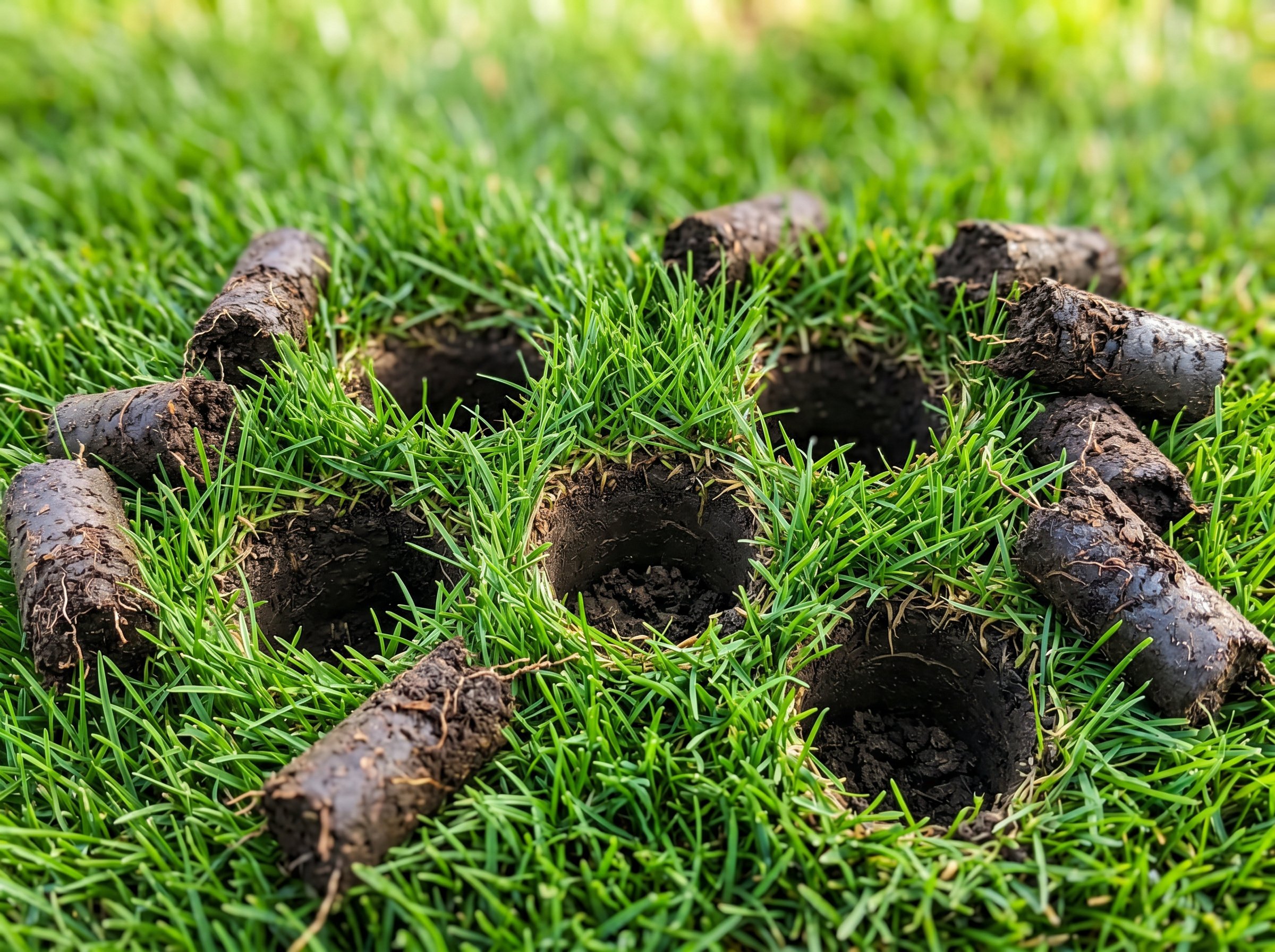
- Leave soil cores on the lawn surface — they break down naturally within 2–4 weeks
- Pair aeration with overseeding and fertilizing for maximum lawn improvement
Introduction
Over time, foot traffic, heavy rainfall, and regular mowing compact your lawn's soil, squeezing out the air pockets that grass roots need to thrive. Aeration is one of the most effective — and most overlooked — lawn care practices a homeowner can do. Done correctly and at the right time, it can dramatically improve turf density, drought tolerance, and fertilizer efficiency[1].
When Should You Aerate Your Lawn?
Timing is everything with aeration. Aerating at the wrong time stresses your grass rather than helping it recover.
Cool-Season Grasses (Fescue, Bluegrass, Ryegrass)
Aerate in late summer to early fall (August through October). Soil is still warm enough for strong root growth, and cooler air temperatures reduce stress. This timing also gives overseeded grass the best chance to establish before winter[2].
Warm-Season Grasses (Bermudagrass, Zoysia, St. Augustine)
Aerate in late spring through early summer (May through June) when the grass has fully greened up and is growing vigorously[3]. Avoid aerating warm-season turf in fall — it won't recover before dormancy.
Signs Your Lawn Needs Aeration
- Water pools or runs off instead of soaking in
- The lawn feels hard and spongy underfoot
- Grass looks thin despite regular fertilizing
- You can barely push a screwdriver 2 inches into the soil
How to Aerate Your Lawn Step by Step
Getting the process right makes the difference between a lawn that rebounds quickly and one that struggles.
Step 1: Water 1–2 days before. The soil should be moist to a depth of 3–4 inches. Dry, hard soil prevents the aerator tines from penetrating deeply enough to be effective[4].
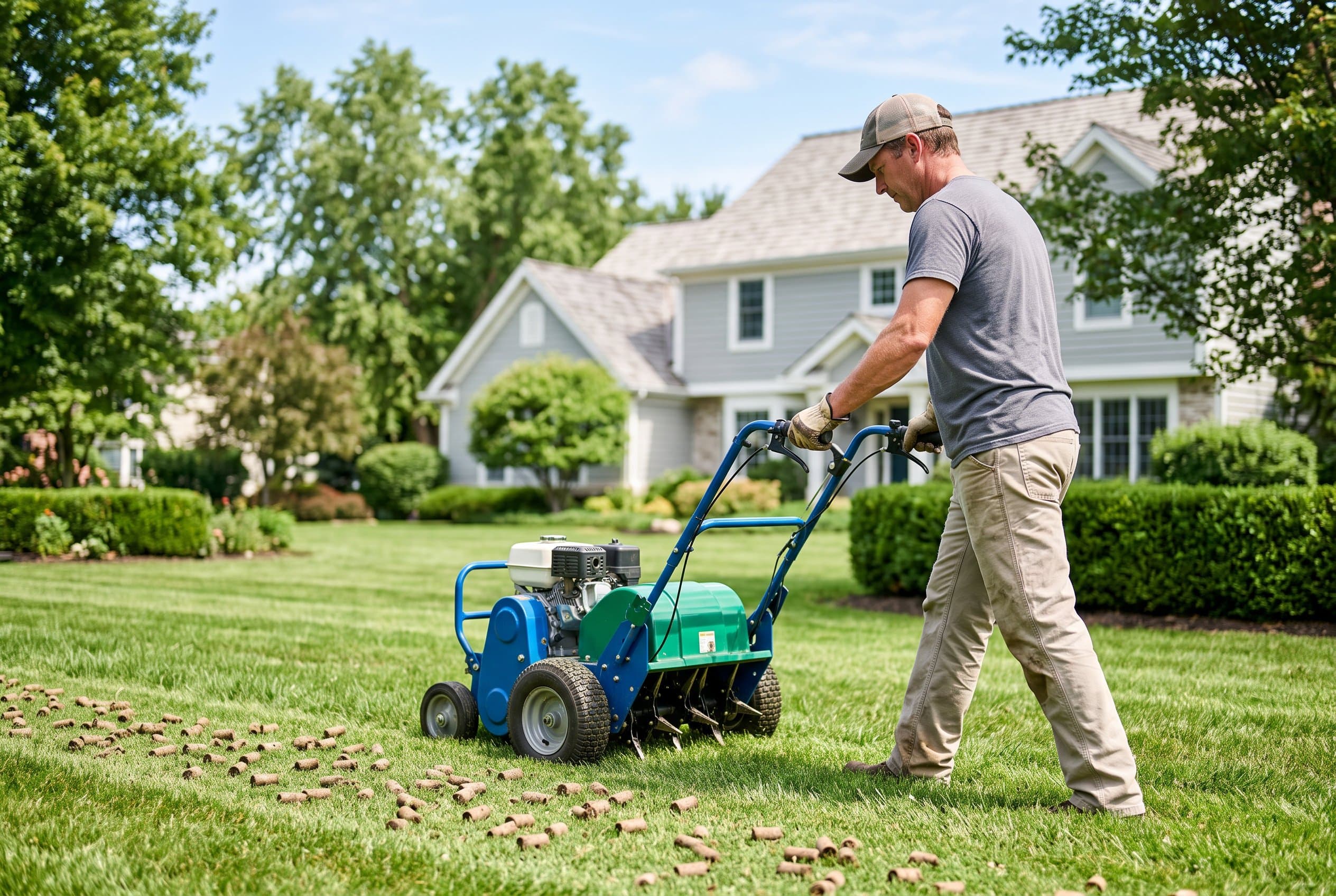
Step 2: Choose the right machine. Rent or buy a core (plug) aerator — the kind that extracts cylindrical plugs of soil. Spike aerators only poke holes and can actually worsen compaction around the holes. Core aerators are available at most equipment rental centers[1].
Step 3: Make multiple passes. Run the aerator over the entire lawn, then make a second pass perpendicular to the first. Aim for 20–40 holes per square foot for meaningful compaction relief.
Step 4: Leave the plugs. Resist the urge to rake up soil cores. They contain beneficial microorganisms and organic matter that break down within 2–4 weeks, returning nutrients to the soil[5].
Step 5: Follow up immediately. Right after aeration is the ideal window to overseed thin areas, apply fertilizer, or top-dress with compost. Open channels allow seed and nutrients to reach the root zone far more effectively[2].
What Tools Do You Need to Aerate?
For most homeowners, renting a walk-behind core aerator from a local equipment rental shop is the most cost-effective approach. Here's a quick comparison:
- Walk-behind core aerator — Best for average-sized lawns (5,000–10,000 sq ft); widely available to rent
- Tow-behind core aerator — Good option if you have a riding mower and a larger lawn
- Manual core aerator — Works for very small patches or spot treatment; labor-intensive for full lawns
- Spike shoes or hand spike tools — Not recommended; they don't remove cores and can compact surrounding soil[4]
For a ½-acre lawn, expect to spend 1–2 hours with a walk-behind unit. Most rental outlets charge $70–$100 for a half-day.
How Do You Get the Best Results After Aerating?
Aeration opens the door — what you do next determines how much your lawn improves.
Overseed thin areas within 48 hours of aerating. Seed-to-soil contact improves dramatically when dropped into open aeration channels. Use a spreader and match your existing grass type[3].
Fertilize within 1 week. Nutrients move directly into the root zone through aeration holes. Apply a balanced or slow-release fertilizer suited to your grass type and the season[5].
Top-dress with compost (optional but highly effective). A thin ¼-inch layer of fine compost raked into the holes improves soil structure over time — especially in sandy or clay-heavy soils[6].
Keep soil moist for the first 2 weeks post-aeration if you've overseeded. Consistent moisture is critical for seed germination and root development.
Conclusion
Lawn aeration is a simple practice that pays significant dividends — better water absorption, deeper roots, and a noticeably denser, greener lawn. Follow these steps: time it to your grass type, use a core aerator, leave the plugs, and follow up with seed and fertilizer while the channels are open. If your lawn feels hard or thin despite regular care, this season is a great time to start.