Quick Answer
To winterize your lawn sprinkler system, shut off the main water supply, then drain or blow out all the water from your pipes and heads before the first hard freeze. Leaving water in the lines can cause pipes and fittings to crack, leading to expensive repairs in spring. Most homeowners complete this process in under two hours using a rented air compressor.

Key Takeaways
- Winterize before overnight temperatures consistently drop below 32°F
- Compressed air blowout is the most thorough method for most systems
- Turn off the controller and backflow preventer before draining
- DIY blowout is possible but renting the right compressor size matters
- Using an undersized compressor may leave water in lines; oversized compressors can damage delicate heads[1]
- Skipping winterization can result in $150–$500 or more in freeze damage repairs
Why Does a Sprinkler System Need to Be Winterized?
Water expands when it freezes — by about 9% in volume. Any water left inside underground pipes, valves, or sprinkler heads can rupture components when temperatures drop hard[2]. Even in mild climates, a single unexpected cold snap can crack PVC pipes or damage brass fittings[3].
Proper winterization protects your investment and ensures the system is ready to run again next spring without costly repairs. In most of the U.S., the ideal window for winterization is mid-September through November, depending on your region[4]. Homeowners in the Mountain West and northern plains states should plan to winterize earlier — often by late September — while those in the southern transition zone may have until late November[5].
Professional winterization services typically cost $75–$150, while the DIY approach using a rented compressor usually runs $30–$60 in equipment costs. The savings are real, but the risk of freeze damage to unprepared systems — running into hundreds of dollars in spring repairs — makes timing and thoroughness essential.
How to Winterize Your Lawn Sprinkler System: Three Methods
There are three accepted methods for draining your irrigation system[6]:
1. Compressed Air Blowout (Recommended)
Forces all water out of lines using pressurized air. Best for systems with no low-lying drain points and most residential installations.
2. Manual Drain Method
Uses manually operated drain valves at the lowest points in the system. Works only if your system was designed with these valves.
3. Automatic Drain Method
Some systems include automatic drain valves that open when pressure drops. These are typically supplemented with a manual blowout for thorough winterization.
This guide focuses on the compressed air blowout method, as it is the most widely applicable and thorough approach[1].
How Do You Blow Out a Sprinkler System Step by Step?
The compressed air blowout method is the most recommended approach for fully evacuating water from irrigation lines[1]. Here's how to do it safely:
What You'll Need
- Air compressor (50–100 CFM for larger systems; 20–25 CFM for small residential zones)
- Blow-out adapter fitting (matches your system's connection port)
- Safety glasses
- Work gloves
Important: Using an undersized compressor (below 20 CFM) may leave water in the lines, inviting freeze damage. Using an oversized compressor (above 100 CFM) can damage or destroy delicate pop-up heads and valve components[1]. Always match the compressor to your system size.
Step-by-Step Process
Step 1: Turn off the main water supply. Locate the shutoff valve for your irrigation system and close it completely. This is usually near the water meter or backflow preventer. Do not skip this step — blowing out a system with the water supply still open can damage the compressor and fittings.
Step 2: Disable the controller. Set your irrigation controller to the "rain" or "off" mode, or use the manual zone activation feature so you can run individual zones during blowout. Do not power the controller completely off yet — you'll need it to activate zones one at a time.
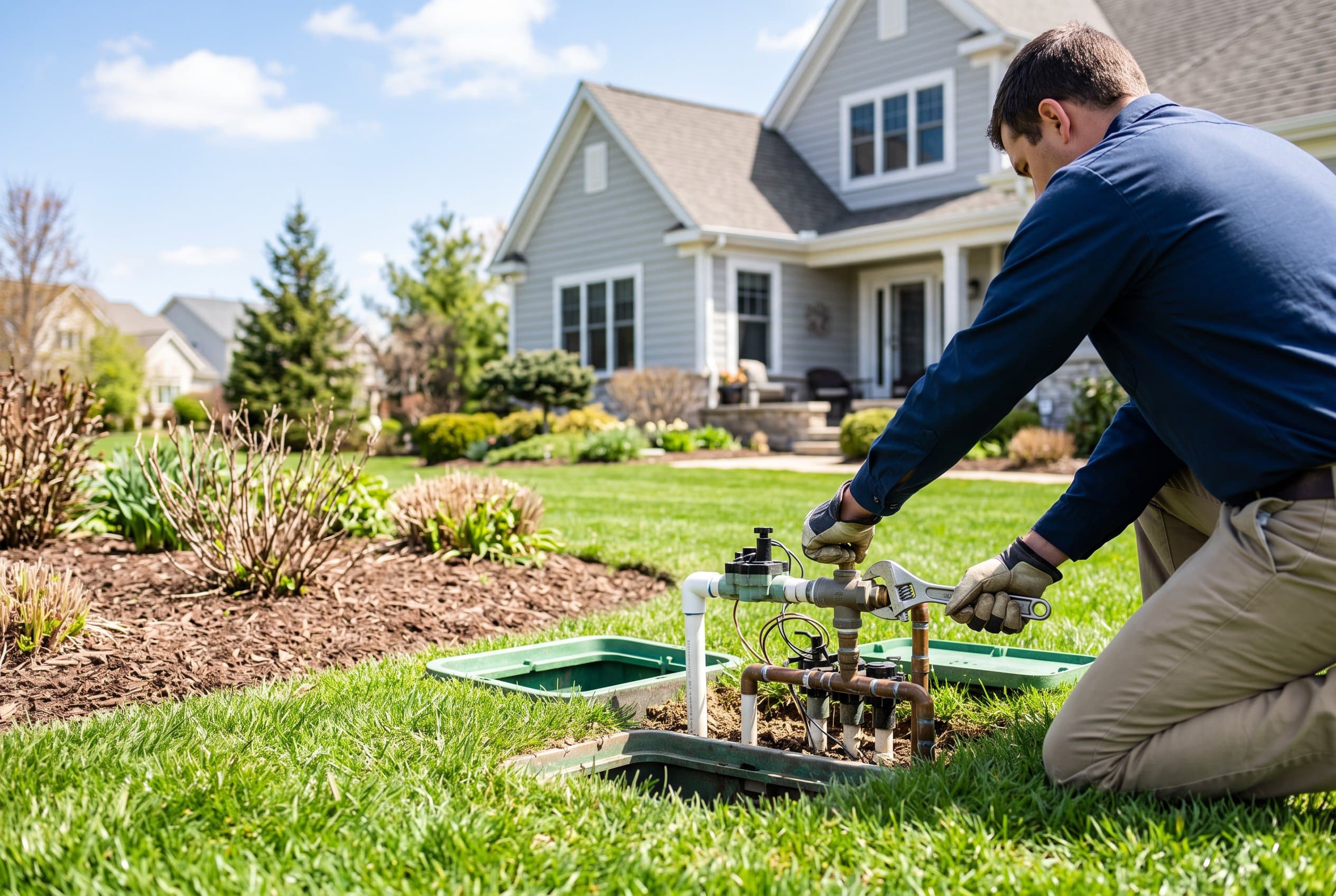
Step 3: Close the backflow preventer. Locate the backflow preventer (typically above ground near the main shutoff). Close both shutoff valves on the preventer — turn the handles perpendicular to the pipe. This protects the backflow device from compressor pressure[2].
Step 4: Connect the air compressor. Attach the blow-out adapter fitting to your system's blow-out port (a threaded plug, usually located near the backflow preventer). Connect the compressor air hose to the adapter. Do not stand over or near any sprinkler heads while the compressor is running.
Step 5: Blow out each zone individually. Activate the farthest zone from the compressor first using your controller's manual setting. Turn on the compressor and allow air to push through until only mist (not water) sprays from the heads — this typically takes 20–30 seconds per zone[6]. Shut off the air, then activate the next zone. Repeat for all zones. Never run the compressor with no zone valve open — this can build dangerous pressure.
Safety Warning: Never stand directly over sprinkler heads during blowout. Wear safety glasses at all times. Keep bystanders and children away from the work area.
Step 6: Repeat each zone 2–3 times. After completing all zones once, run through the sequence again two more times. Water often remains in low spots or side branches after the first pass. Three complete cycles ensures thorough evacuation[1].
Step 7: Drain and winterize the backflow preventer. Once all zones are blown out, open the small test cocks (the small screws or petcocks) on the backflow preventer at a 45-degree angle to drain any remaining water. Some homeowners wrap the preventer with foam pipe insulation for additional protection.
Step 8: Power down the controller. Set your irrigation controller to the "off" setting or activate the seasonal shutdown/hibernate mode if available. Unplug the controller or set it to its lowest power mode. This protects the electronics over winter and avoids unintended activation during a warm spell[1].
Winterization Timing: When Should You Do It?
The right time to winterize your system depends on your climate zone[4]:
- Northern states and Mountain West: Late September through mid-October. Hard freezes can arrive quickly, and soil temperatures drop fast.
- Midwest and Mid-Atlantic: Mid-October through early November. Watch for the first overnight freeze forecast.
- Pacific Northwest and upper South: Late October through November. Milder winters still carry freeze risk in inland areas.
- Deep South and Southwest: Some systems in USDA zones 9–11 may not require full blowout, but backflow preventers and exposed above-ground components should still be protected[5].
A good rule of thumb: winterize when nighttime temperatures are forecast to drop below 32°F consistently for more than a few days[3].
CFM Requirements by System Size
Compressor sizing is one of the most important factors in a successful blowout[1]:
| System Type | Recommended CFM |
|---|---|
| Small residential (1–3 zones) | 20–25 CFM |
| Mid-size residential (4–8 zones) | 40–60 CFM |
| Large residential / light commercial | 75–100 CFM |
Most homeowners will need to rent a compressor, as typical home air compressors (1–5 CFM) are far too small for this application. Equipment rental typically runs $40–$80 per day from hardware retailers.
Troubleshooting Common Blowout Problems
Water Is Still Coming Out After Multiple Cycles
This usually means the system has low spots, long lateral lines, or multiple branch points that trap water. Run additional blowout cycles, and manually tilt or lift heads if accessible. If water continues after five cycles, the system may have a drainage design issue that warrants professional attention.
Sprinkler Head Won't Pop Up During Blowout
A zone that doesn't activate during manual mode may have a faulty solenoid or wiring issue. Test by manually lifting the head or using the manual bleed screw on the valve. If the valve won't open at all, the zone may need professional repair before freeze season.
Air Is Escaping at the Compressor Connection
Check that the blow-out adapter fitting is fully threaded into the port and that the adapter matches your port size (common sizes: ¾" or 1" NPT). Thread seal tape can help achieve a better fit.
Controller Shows Zone Fault After Blowout
Some controllers log a fault if a zone is manually activated and then the water is cut off abruptly. Clear the fault by resetting the controller to its factory default or simply unplugging and replugging. Consult your controller manual if error codes persist.
Backflow Preventer Is Frozen or Stuck
Never force a frozen valve open. Apply gentle heat with a hair dryer or warm towels until the ice melts. If the preventer is already cracked from a prior freeze, replace it before the next season[2].
DIY vs. Professional Winterization: What's the Right Choice?
DIY winterization makes sense for most homeowners with straightforward systems and access to a rental compressor. The main risks are using the wrong compressor size or missing zones[6].
Hire a professional if:
- Your system has more than 10 zones
- You have in-ground drip irrigation mixed with pop-up heads
- You've experienced freeze damage in prior seasons
- Your backflow preventer is in poor condition
- You're unsure of the system layout or lack the blow-out access port
Professional services range from $75–$150 for most residential systems and include a zone-by-zone inspection that can catch problems before they worsen over winter.
Spring Startup Checklist
Once spring arrives, reverse the process before turning your system back on[4]:
- Inspect all sprinkler heads for cracking or misalignment
- Slowly re-open the main shutoff valve (do not open all at once — allow gradual pressure return)
- Test each zone individually and watch for leaks
- Reset the controller schedule for the new season
- Inspect and re-open the backflow preventer test cocks
- Check valve boxes for pest damage or root intrusion