Quick Answer
Protecting your lawn from snow damage requires proper fall preparation including final mowing, fertilizing, and removing debris before the first snowfall. Avoid walking on snow-covered grass, minimize snow pile placement, and use proper snow removal techniques to prevent compaction and ice damage that can kill grass roots.
Key Takeaways
- Cut grass to 2-3 inches before winter to prevent matting under snow
- Apply winter fertilizer 6-8 weeks before first expected frost
- Avoid walking on frozen or snow-covered grass to prevent compaction damage
- Remove heavy snow accumulations over 8 inches to reduce suffocation risk
- Clear debris and leaves before snowfall to prevent fungal diseases
Introduction
Winter weather can wreak havoc on your lawn if you're not properly prepared. Snow damage affects millions of lawns each year, causing everything from unsightly brown patches to complete grass death in heavily trafficked areas[1]. The good news is that most snow damage is preventable with the right preparation and winter maintenance practices.
What Should I Do Before the First Snowfall?
Proper preparation is your lawn's best defense against winter damage. Our guide on preparing your lawn for winter covers every pre-season task in detail. Start by giving your grass a final mowing, cutting it to 2-3 inches in height[2]. Grass that's too long will mat down under snow weight, creating ideal conditions for fungal diseases like snow mold.
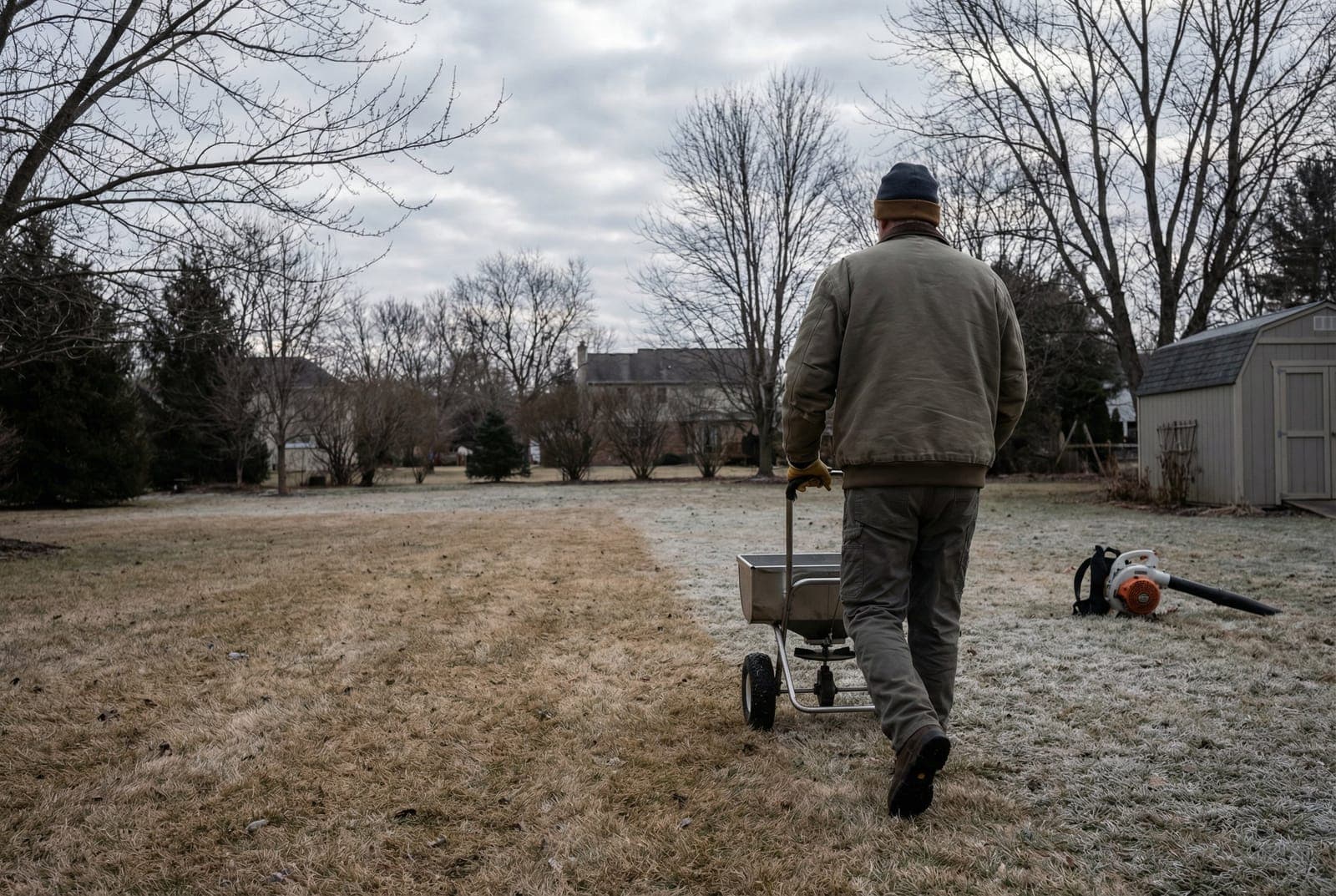
Apply a winter fertilizer high in potassium 6-8 weeks before your area's first expected frost[3]. Potassium strengthens grass cell walls, improving cold tolerance and disease resistance throughout winter months.
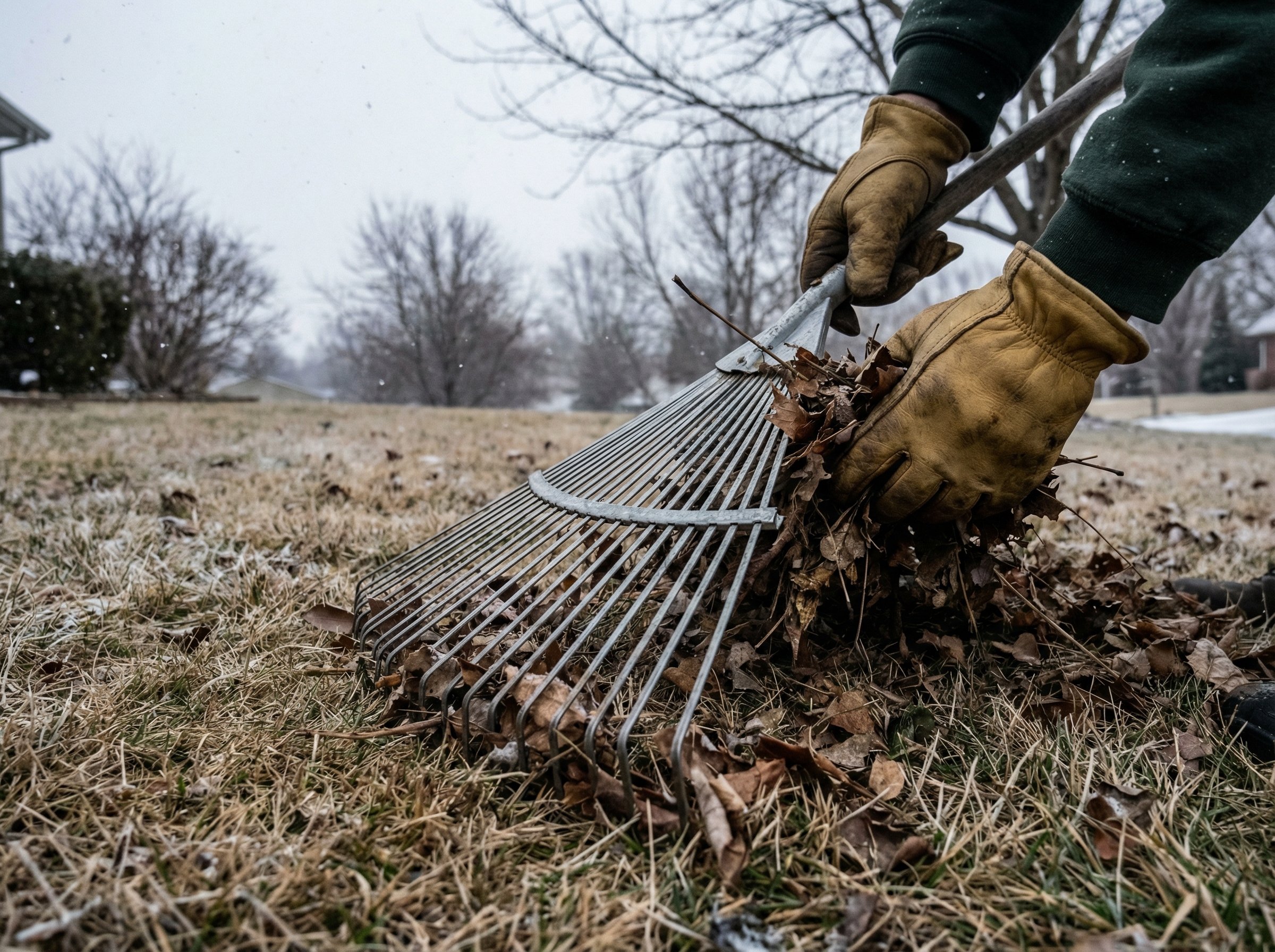
Remove all fallen leaves, branches, and debris from your lawn surface. Organic matter left under snow creates anaerobic conditions that promote harmful bacteria and fungi[1]. Use a leaf blower or rake to ensure your grass has clear access to whatever sunlight penetrates the snow cover.
How Should I Handle Snow Removal and Traffic?
Minimizing foot traffic and machinery on snow-covered grass is crucial for preventing compaction damage. Frozen soil compacts easily under weight, crushing grass crowns and root systems[4]. Create designated walkways using stepping stones or temporary boards to avoid walking directly on grass areas.
When removing snow from driveways and walkways, avoid piling it in the same lawn spots repeatedly. Rotate snow pile locations to distribute the weight load across different areas. Heavy snow piles compress grass underneath and create ice layers that block oxygen flow to roots[2].
For snow accumulations over 8 inches, consider gentle removal from sensitive lawn areas using a snow blower or shovel. Work carefully to avoid scraping the grass surface, and never use metal tools directly on frozen turf[5].
Why Does My Grass Look Damaged After Snow Melts?
Post-winter lawn damage typically results from three main factors: compaction, ice suffocation, and fungal diseases. Compaction occurs when heavy snow or foot traffic crushes grass crowns and compresses soil, preventing proper root growth and water infiltration[4].
Ice layers that form during freeze-thaw cycles create impermeable barriers that suffocate grass roots by blocking oxygen exchange[3]. This condition, known as ice encasement, can kill grass within days if the ice layer persists.
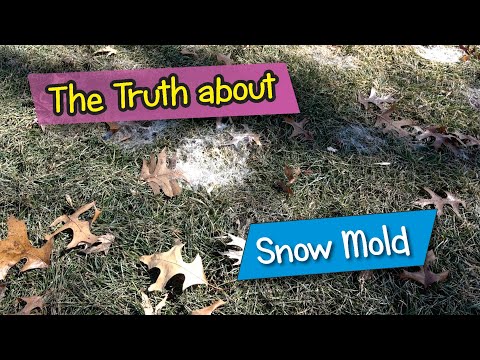
Fungal diseases like gray and pink snow mold thrive under snow cover, especially when grass enters winter in poor condition or with excessive organic matter present[1]. These diseases appear as circular patches of matted, discolored grass when snow melts.
What Steps Help My Lawn Recover in Spring?
Once snow melts completely, assess damage areas and begin recovery efforts. Avoid walking on soggy turf until soil firms up, as wet soil compacts even more easily than frozen ground. Wait until you can walk across grass without leaving deep footprints before starting any maintenance activities[5].
Gently rake matted grass areas to improve air circulation and remove dead material. This process helps prevent continued fungal growth and allows new grass shoots to emerge more easily[2].
Follow our essential spring lawn care tips to jumpstart recovery, and overseed bare or thin spots in early spring when soil temperatures reach 50-55°F consistently. Choose grass seed varieties appropriate for your climate zone and lawn conditions. Apply a starter fertilizer to support new seed germination and established grass recovery[3].
Conclusion
Protecting your lawn from snow damage starts with proper fall preparation and continues with mindful winter practices. Focus on pre-winter mowing, fertilizing, and cleanup — and don't forget to winterize your lawn mower before storage — then minimize traffic and snow pile placement during winter months. Come spring, patient recovery efforts will restore your lawn's health and beauty. Start preparing now - your future spring lawn will thank you for the extra effort you put in today.