Quick Answer
Winter lawn diseases are fungal infections that attack grass during cold, wet, or snow-covered months — the most common being snow mold, pink patch, and Typhula blight. Most can be prevented with proper fall lawn prep, including correct fertilization timing and good drainage. If disease strikes, fungicide treatment and improved cultural practices will help your lawn bounce back in spring.
Key Takeaways
- Snow mold (gray and pink) is the most widespread winter lawn disease in northern climates
- Overfertilizing with nitrogen in late fall significantly increases disease risk
- Good air circulation and drainage are your best natural defenses
- Most winter-damaged lawns recover fully with proper spring care
- Preventive fungicide applied in late fall is the most effective treatment option
Introduction
Winter doesn't give your lawn a complete break from threats. While grass goes dormant, fungal pathogens quietly take hold beneath snow cover or in consistently cold, wet conditions. Understanding which diseases target your lawn — and what triggers them — can mean the difference between a lush spring lawn and large patches of dead grass you're scrambling to repair in March.
What Are the Most Common Winter Lawn Diseases?
Several fungal diseases thrive in cold-season conditions, each with distinct characteristics[1][2]:
Gray Snow Mold (Typhula spp.)
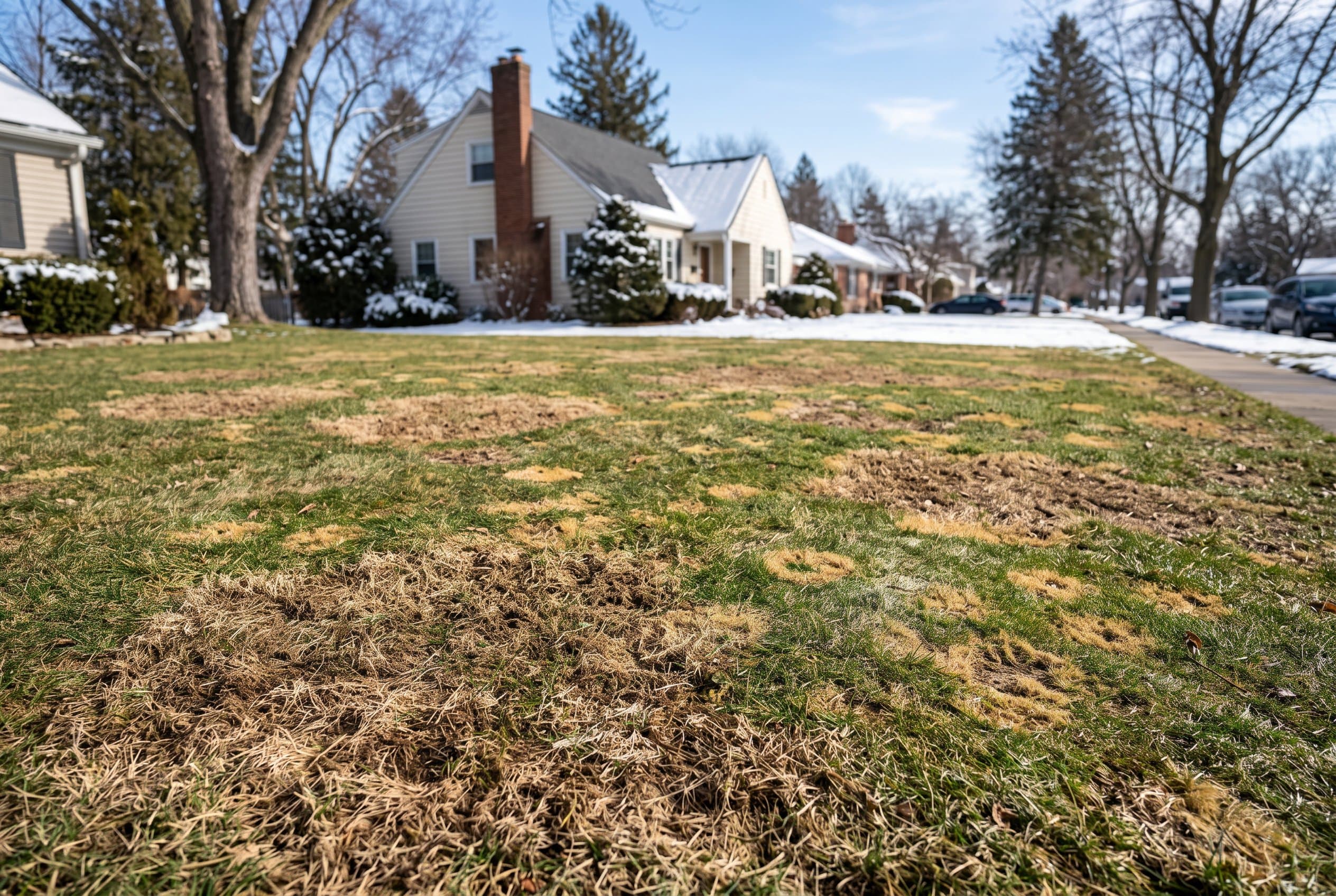
Gray snow mold is the most common winter lawn disease in cold climates. It develops under snow cover and appears as circular, grayish-white patches 3–12 inches in diameter when snow melts. The fungus only damages the leaf tissue, not the crown, so recovery is usually good[1].
Pink Snow Mold (Microdochium nivale)
More aggressive than its gray counterpart, pink snow mold can develop with or without snow cover as long as temperatures stay between 32°F and 60°F. Patches are salmon to pinkish in color and can kill grass crowns and roots, making recovery slower[2].
Pink Patch and Yellow Patch
These diseases appear in cool, wet fall and early winter conditions — often before heavy snow. Yellow patch creates circular areas of yellowed turf, while pink patch leaves a gelatinous pink coating on grass blades. Both are primarily cosmetic and rarely kill turf permanently[3].
How to Identify Winter Lawn Disease Symptoms
Catching a problem early helps you act before widespread damage occurs. Here's what to look for as snow recedes[1][4]:
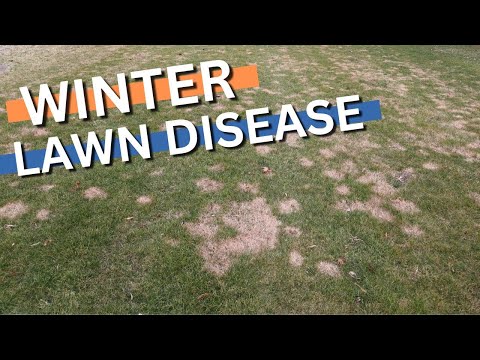
- Circular or irregular patches of matted, discolored grass
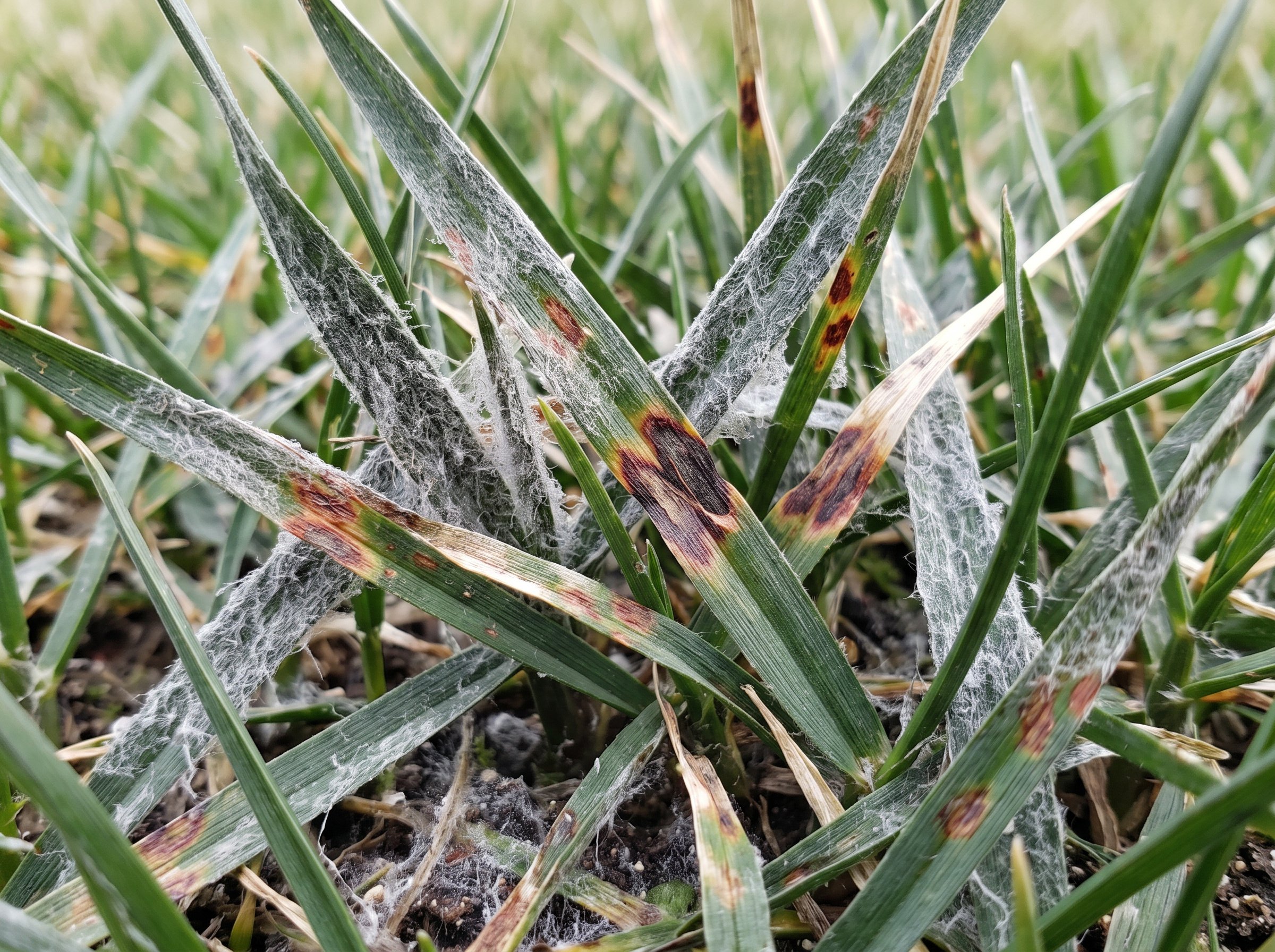
- White, gray, or pink fungal growth on or between grass blades
- Bleached or straw-colored areas that don't green up with surrounding turf
- Slimy or crusty texture on the grass surface when touched
- A musty or earthy odor rising from affected patches
If you're unsure whether you're dealing with disease or simple winter desiccation (drying out), look for fungal threads (mycelium) visible in early morning light. Desiccation damage won't show this sign[2].
Tip: Disease patches are usually circular or oval. Random, irregular dead areas are more likely caused by salt damage, animal urine, or drought stress.
What Causes Winter Lawn Diseases to Spread?
Fungal pathogens are always present in soil, but specific conditions trigger outbreaks[3][5]:
- Late-season nitrogen fertilization — applying high-nitrogen fertilizer after mid-fall stimulates lush, soft growth that's highly susceptible to fungal attack
- Long snow cover duration — extended periods of snow create humid, dark conditions perfect for gray snow mold development
- Poor drainage and compaction — waterlogged soil encourages fungal activity
- Excessive thatch — a thatch layer thicker than ½ inch traps moisture and harbors pathogens
- Mowing too short in fall — scalped turf going into winter is more vulnerable
Cool-season grasses like Kentucky bluegrass, perennial ryegrass, and fine fescues are most susceptible[4]. Warm-season grasses in southern states face different winter challenges, but fungal diseases can still appear during cool, wet spells[5].
How Do You Prevent and Treat Winter Lawn Diseases?
Prevention Strategies (Start in Fall)
- Apply a slow-release, low-nitrogen fertilizer — or a winterizer blend — no later than 6 weeks before your first expected frost[3]
- Keep your final fall mowing height at 2.5–3 inches — not too short, not too tall
- Dethatch if your thatch layer exceeds ½ inch
- Aerate compacted soil to improve drainage and airflow[4]
- Rake leaves promptly — matted leaves mimic snow cover and promote fungal growth
- Avoid piling snow from driveways onto lawn areas
Fungicide Treatment
If your lawn has a history of snow mold, a preventive fungicide application in late fall (just before the ground freezes) is the most effective option[1]. Look for fungicides labeled for snow mold control and follow label directions carefully. Curative applications after winter are less effective — most spring recovery depends on cultural care, not chemicals.
Spring Recovery Steps
- Lightly rake affected areas to remove matted grass and improve airflow
- Apply a balanced starter fertilizer once soil temperatures reach 50°F
- Overseed bare patches with disease-resistant grass varieties
- Avoid heavy foot traffic until new growth is established
Conclusion: Protect Your Lawn Before Winter Hits
The best time to fight winter lawn diseases is before the first snowfall — not after. Focus your fall lawn care on proper fertilization timing, mowing height, thatch management, and drainage. If you've had recurring disease problems, consider a preventive fungicide and overseeding with more disease-resistant grass varieties. A little preparation in October and November pays off with a healthier, faster-recovering lawn every spring.