Quick Answer
Apply winterizer fertilizer in late fall, after your lawn stops actively growing but before the ground freezes — typically between late September and mid-November depending on your region. For cool-season grasses, knowing when to apply winterizer fertilizer is one of the most critical decisions of the lawn care calendar. Warm-season grasses generally do not need a winterizer application.
Key Takeaways
- Apply winterizer fertilizer when soil temperatures drop to around 50°F (10°C) but before a hard freeze
- Cool-season grasses (fescue, bluegrass, ryegrass) benefit most from late-fall fertilization
- Warm-season grasses (bermuda, zoysia, St. Augustine) should NOT be fertilized in late fall
- Timing varies by region: late September in northern states, mid-November in transition zones
- A high-potassium, lower-nitrogen formula supports root development without triggering leafy growth
Why Does Winterizer Fertilizer Matter?
Winterizer fertilizer is designed to prepare your lawn for the stresses of winter and give it a nutritional head start for spring green-up. Unlike spring fertilizers that promote leaf growth, winterizers focus on strengthening roots, improving cold hardiness, and building carbohydrate reserves in the grass plant[1].
When timed correctly, a late-fall application allows cool-season grasses to absorb key nutrients — especially potassium and phosphorus — before the ground freezes. These nutrients support root system activity that continues even when the grass blades stop growing[2]. Skipping this application often leads to a slower, patchier spring recovery.
When to Apply Winterizer Fertilizer: Timing by Soil Temperature
Timing is everything with winterizer fertilizer. Apply too early and you stimulate excessive top growth heading into cold weather. Apply too late and the ground freezes before roots can absorb the nutrients[3].
Target Soil Temperature, Not Calendar Date
The most reliable trigger is soil temperature. Once your soil drops to around 50°F (10°C) at a 4-inch depth, grass blades slow down but roots remain active[1]. This is your optimal window. You can monitor soil temperatures using an inexpensive soil thermometer or check your local cooperative extension's online soil temperature maps.
Regional Timing Guidelines for Winterizer Fertilizer
- Northern states (USDA Zones 3–5): Mid-September to mid-October
- Midwest and mid-Atlantic (Zones 5–6): Early to late October
- Transition zone (Zones 6–7): Late October through mid-November
- Pacific Northwest cool-season lawns: October through early November[4]
Aim to apply at least 2–3 weeks before your area's average first hard frost date. This gives the grass time to uptake nutrients before dormancy sets in[3].
How Should You Apply Winterizer Fertilizer?
Proper application technique is just as important as timing. Follow these steps for even, effective coverage.
Step 1: Test Your Soil First
Before applying any fertilizer, a basic soil test tells you what your lawn actually needs[5]. Many winterizers are high in potassium (the third number on the fertilizer bag), but your soil may already have adequate levels. Over-applying potassium or phosphorus can cause nutrient imbalances and runoff.
Step 2: Choose the Right Winterizer Formula
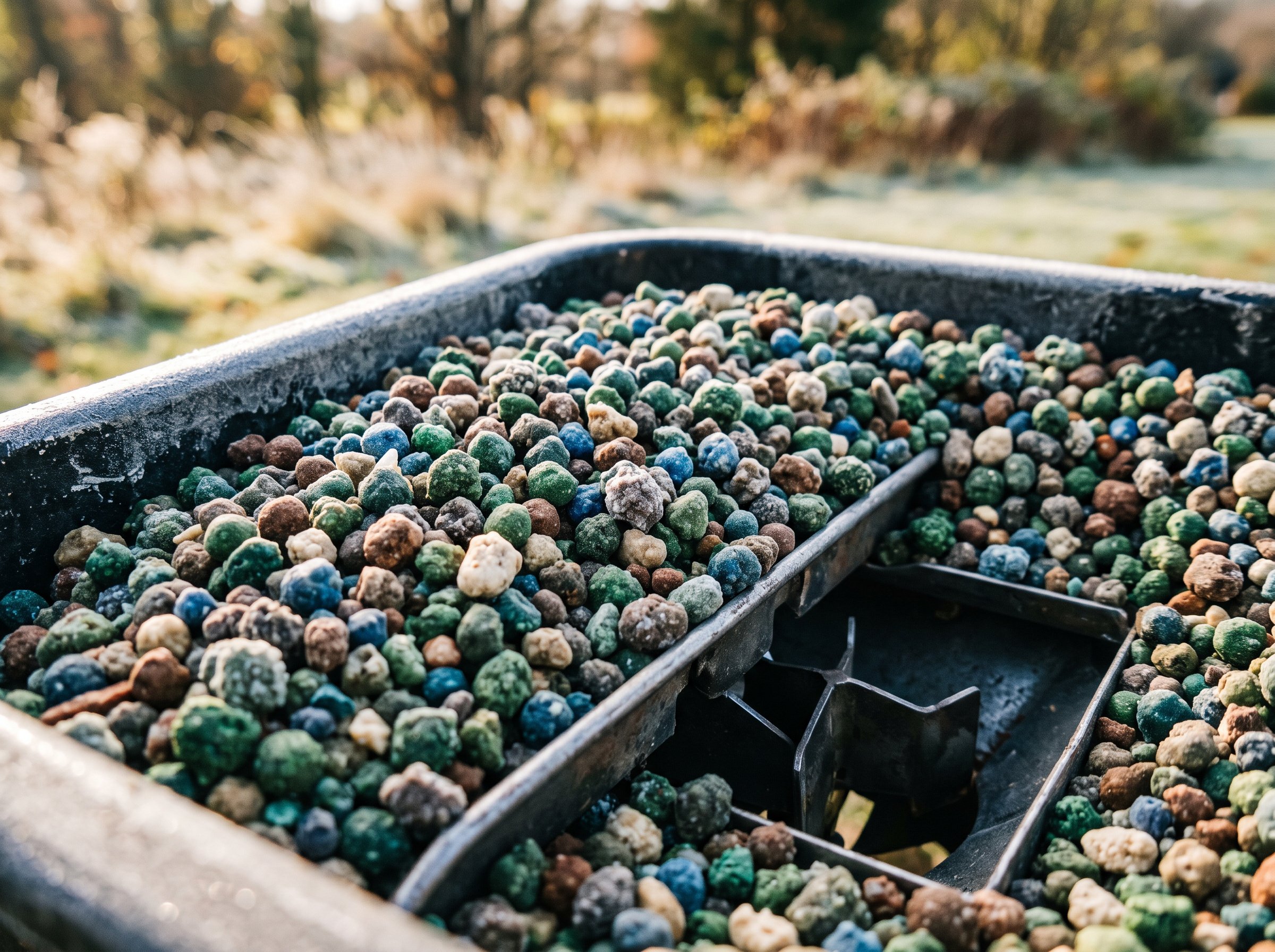
Look for a fertilizer with a lower nitrogen (N) ratio and higher potassium (K) content — something like a 10-0-20 or 12-0-12 analysis. Slow-release nitrogen formulas are ideal because they deliver nutrients gradually without a burst of top growth[2]. Peer-reviewed turfgrass research confirms that carbohydrate accumulation in the crown is directly supported by adequate fall potassium levels[6].
Step 3: Apply with a Broadcast Spreader
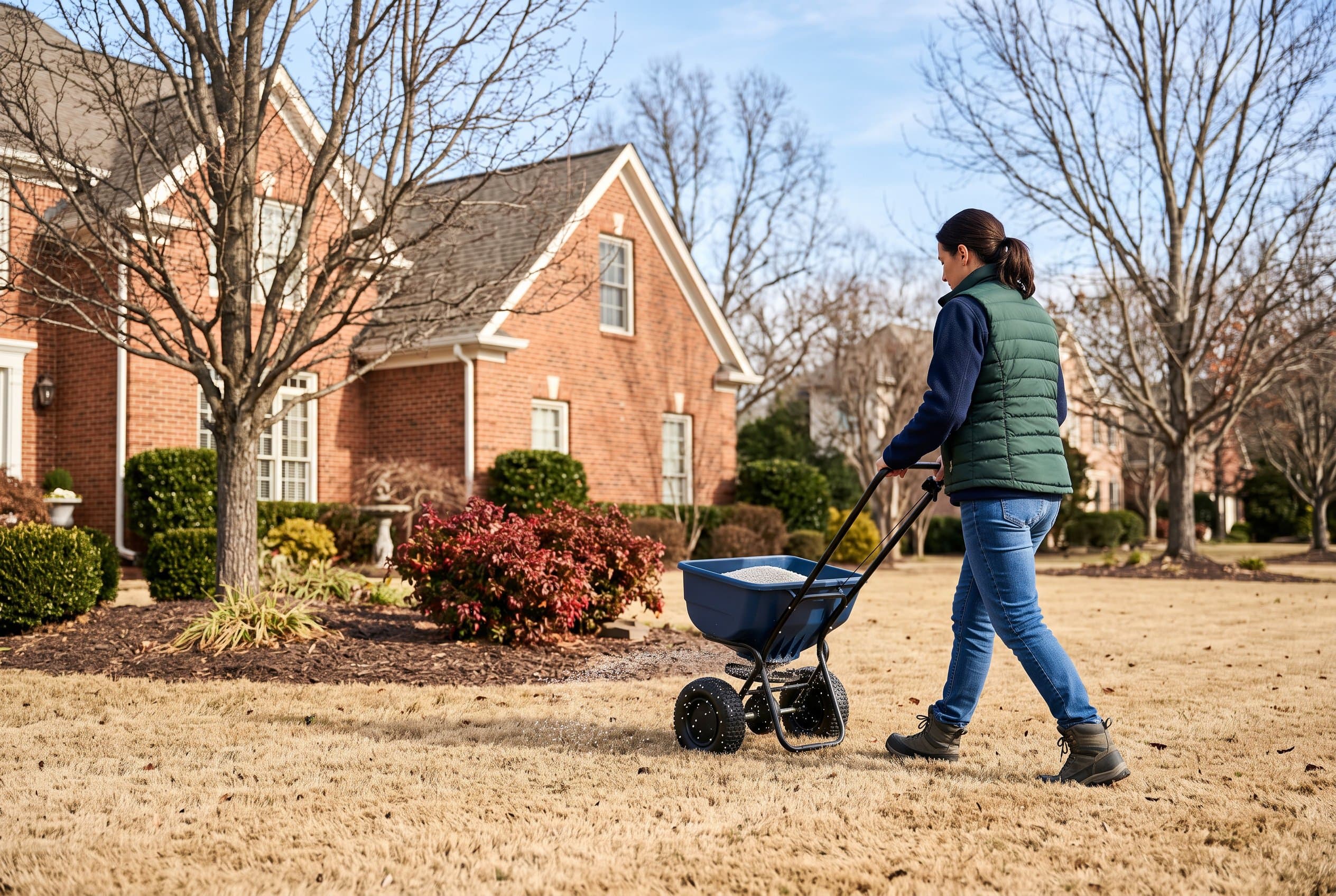
Use a rotary or drop spreader for even coverage. Calibrate your spreader according to the bag's settings, and apply in two perpendicular passes (north-south, then east-west) to avoid stripes. Water lightly after application if no rain is forecast within 24–48 hours.
Step 4: Clean Up Properly
Blow or sweep any fertilizer granules off sidewalks and driveways immediately[6]. Fertilizer on hard surfaces washes into storm drains and contributes to nutrient pollution in local waterways. Proper cleanup is one of the most effective ways homeowners can reduce fertilizer-related stormwater runoff[5].
What Happens If You Miss the Window?
If you miss your ideal timing, it's better to skip the application than to apply fertilizer to frozen or dormant ground. Fertilizer applied to frozen soil won't be absorbed and is highly likely to wash away with snowmelt, wasting money and contributing to environmental runoff[3].
For warm-season grasses, late-fall fertilization can actually cause harm — it may delay dormancy and increase vulnerability to frost damage[1]. If you have bermuda, zoysia, or St. Augustine grass, stop fertilizing 6–8 weeks before your first expected frost[3].
Conclusion: Your Next Steps
Mark your calendar based on your region's typical soil cooling timeline, and pick up a soil thermometer to remove the guesswork. Get a soil test done in late summer so you have results in hand before fall[5]. When soil temperatures hit 50°F and you still have several weeks before a hard freeze, apply your winterizer with a calibrated spreader and water it in. This single application can be the difference between a lawn that limps into spring and one that greens up strong and even.