
Quick Answer
The best fall fertilizer for lawns is a high-nitrogen formula with an NPK ratio like 22-3-11 or 24-0-12 for cool-season grasses, or a balanced winterizer like 12-4-14 for warm-season grasses. Apply in two split applications 4-6 weeks apart — typically early October and early November — for maximum root energy storage and spring green-up[1].

Key Takeaways
- Fall fertilization is the single most important fertilizer application of the year for cool-season grasses
- Use high-nitrogen formulas (22-3-11 or 30-1-2) for cool-season lawns; balanced winterizers for warm-season
- Split into two applications 4-6 weeks apart for better absorption than a single heavy dose
- Northern zones need quick-release nitrogen; transition zones can use up to 20% slow-release
- Always check bags for clumps before purchase — clumped fertilizer is essentially ruined
- Pair with a root stimulant for deeper root growth and better winter survival
Why Fall Fertilization Matters More Than Spring
Fall fertilization is the most critical feeding of the year, especially for cool-season grasses like Kentucky bluegrass, fescue, and ryegrass. While your grass may look like it's slowing down above ground, the root system is working overtime during autumn's cool temperatures[2].
Here's what happens when you fertilize in fall: your grass absorbs nitrogen and stores that energy in its root system throughout winter. When spring arrives, your lawn draws on those reserves to green up faster, grow in thicker, and outcompete early weeds before they establish. Lawns that skip fall fertilization often look thin and pale well into May.
University research consistently shows that if you can only fertilize once per year, fall is the time to do it[1]. A properly timed fall application delivers more long-term benefit than two spring applications combined. For the full picture, see our fall lawn maintenance guide, which covers every autumn task in order.
Understanding NPK Ratios for Fall
NPK stands for nitrogen (N), phosphorus (P), and potassium (K) — the three numbers on every fertilizer bag. For fall, your priorities shift compared to spring.
Nitrogen (the first number) is the star nutrient in fall. High-nitrogen formulas like 22-3-11 or 30-1-2 promote root energy storage rather than blade growth when applied in cool temperatures. The grass channels nitrogen into carbohydrate reserves rather than pushing new top growth[3].
Phosphorus (the middle number) supports root development. Many fall fertilizers contain low phosphorus because most soils already have adequate levels. Only add phosphorus if a soil test confirms a deficiency — some states even restrict phosphorus application without a documented need.
Potassium (the last number) strengthens cell walls and improves cold tolerance. Winterizer fertilizers often have elevated potassium (like 22-0-14) to help grass withstand freeze-thaw cycles. Potassium also improves drought resistance for the following summer[1].
Quick NPK Guide by Grass Type
| Grass Type | Recommended NPK | Best For |
|---|---|---|
| Kentucky Bluegrass | 22-3-11 or 30-1-2 | Northern lawns, USDA zones 3-6 |
| Tall Fescue | 24-0-12 | Transition zone, USDA zones 6-7 |
| Perennial Ryegrass | 22-0-14 | Cool-season blends |
| Bermuda Grass | 12-4-14 | Southern lawns going dormant |
| Zoysia | 15-0-15 | Warm-season winterizer |
| St. Augustine | 12-4-14 | Southern/Gulf Coast lawns |
The Two-Application Schedule That Works Best
Rather than dumping one heavy application, split your fall fertilizer into two lighter doses about 4-6 weeks apart. This approach delivers several advantages[2]:
First Application (Early October): Apply at half the bag rate when soil temperatures are between 55-65°F. This feeds the fall root growth surge and helps grass recover from summer stress. Pairing this first feeding with fall aeration improves nutrient absorption significantly. Your lawn is still actively growing and can immediately use these nutrients.
Second Application (Early-to-Mid November): Apply the remaining half when grass growth has visibly slowed but before the ground freezes. This "winterizer" application gets stored in the root system. It's the fuel that powers spring green-up.
The exact dates depend on your region — monitor soil temperatures rather than the calendar. A soil thermometer takes the guesswork out of timing.
Granular vs. Liquid Fall Fertilizer
Granular fertilizers are the go-to choice for most fall applications. They're easier to apply evenly with a broadcast spreader, provide controlled release over weeks, and are widely available. Look for the SGN (size guide number) on the bag — 240 SGN is the most common and works with standard spreader settings[3].
Liquid fertilizers absorb faster but need more frequent application. They work well as a supplement to granular but aren't ideal as your sole fall feeding because they don't provide sustained release.
Organic options like Milorganite (6-4-0) or compost-based blends release nutrients slowly as soil microbes break them down. They improve soil structure over time but have lower nutrient concentrations, so you'll need more product per 1,000 square feet[5].
Synthetic controlled-release products like polymer-coated urea provide the most precise feeding. They continue releasing nutrients even as temperatures drop, making them excellent for the second (winterizer) application.
How to Apply Fall Fertilizer: Step-by-Step
Step 1: Test Your Soil First
Start with a soil test to confirm what your lawn actually needs. Over-fertilizing is just as harmful as under-fertilizing — excess nitrogen can burn grass and pollute waterways. Most university extension services offer affordable soil testing.
Step 2: Choose Your Day
Pick a calm, dry day with temperatures between 50-70°F. Avoid windy days (fertilizer drifts off target) and days before heavy rain (nutrients wash away before roots absorb them). Light rain 24-48 hours after application is ideal.
Step 3: Mow First
Mow your lawn 2-3 days before fertilizing and bag the clippings. This exposes more soil surface for granules to reach the root zone. Don't fertilize immediately after mowing — give the grass time to recover from cutting stress.
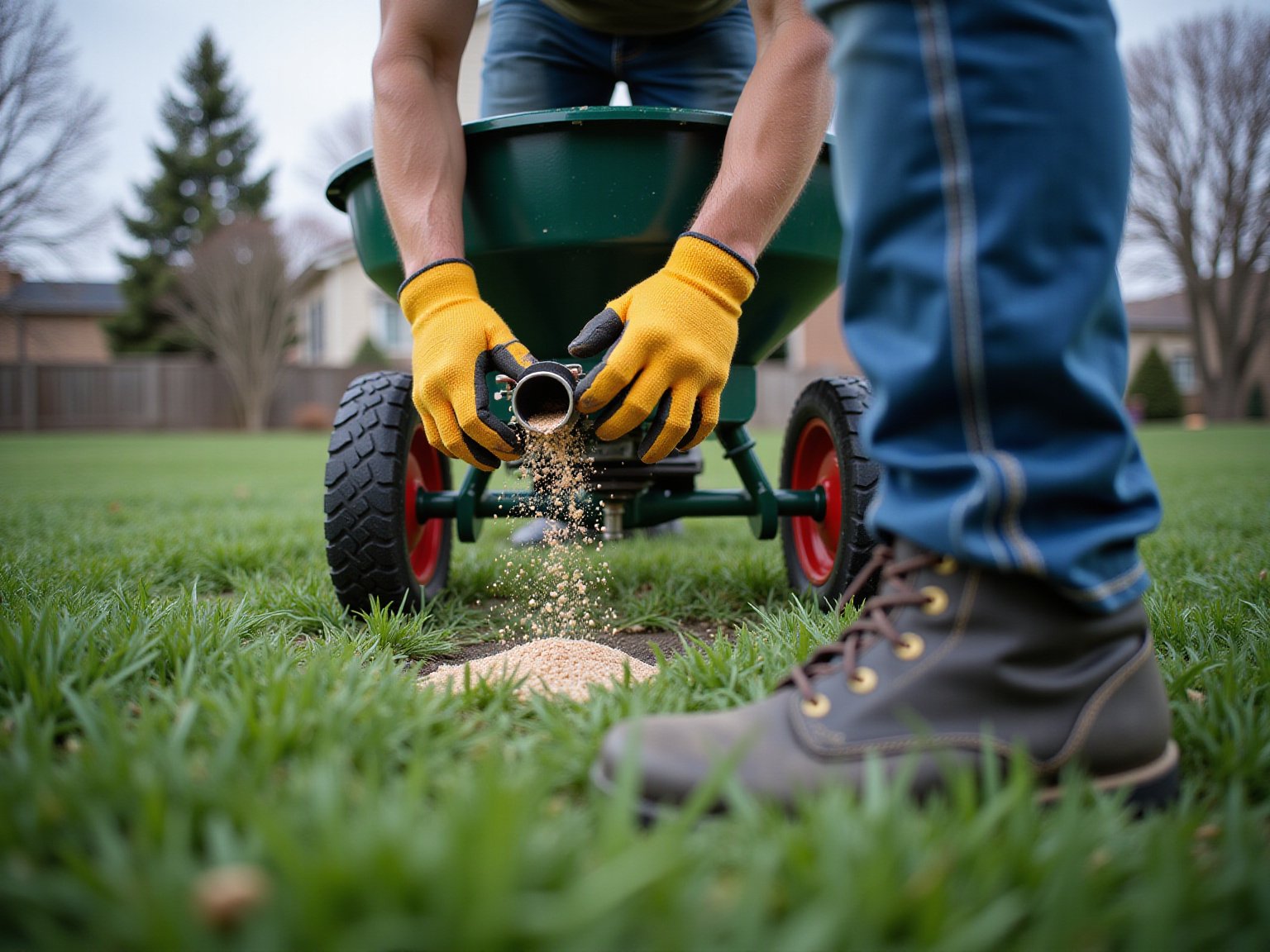
Step 4: Calibrate Your Spreader
Set your spreader according to the fertilizer manufacturer's recommendations — these vary by product and spreader model. Walk at a steady pace. For even coverage, apply half the recommended rate in one direction, then the other half perpendicular to your first pass (a crisscross pattern)[4].
Step 5: Water Within 24 Hours
Water the lawn to deliver about ¼ inch of moisture. This moves granules off grass blades (preventing burn) and into the soil where roots can access nutrients. If natural rainfall provides ¼ inch within 24 hours, skip the manual watering.
Step 6: Pair with Root Stimulant (Optional but Recommended)
Apply a root growth stimulant alongside your fertilizer. Products containing humic acid, kelp extract, or mycorrhizal fungi help roots grow deeper and absorb nutrients more efficiently. Deeper roots mean better heat tolerance the following summer[2].
Regional Timing Guide
Fertilizer timing varies significantly by region. Use soil temperature as your primary guide rather than calendar dates:
Northern Zones (USDA 3-5): First application in mid-September when soil temps drop below 65°F. Second application by late October before ground freezes. Use quick-release nitrogen — slow-release won't break down fast enough before winter.
Transition Zone (USDA 6-7): First application in early October. Second application in mid-November. You can use products with up to 20% slow-release nitrogen since your soil stays warm longer[3].
Southern Zones (USDA 8-10): Warm-season grasses need a different approach. Apply a balanced winterizer (12-4-14) in late August through September as growth slows. Don't fertilize after the grass begins turning brown — it can't absorb nutrients during dormancy.
Common Fall Fertilization Mistakes
Applying too late. If the ground is frozen, fertilizer sits on the surface and runs off with the next rain. Time your last application at least 2-3 weeks before your average hard freeze date.
Using spring fertilizer in fall. Spring formulas push rapid blade growth. In fall, that new growth is vulnerable to frost damage and drains root energy reserves. Use a product specifically formulated for fall or winter.
Skipping the soil test. Many homeowners over-apply phosphorus year after year, leading to nutrient runoff and potential lawn problems. A $15 soil test saves money and produces better results.
Fertilizing drought-stressed grass. If your lawn went dormant during summer drought and hasn't recovered, water it back to active growth for 2-3 weeks before fertilizing. Applying fertilizer to stressed, brown grass wastes product and can cause salt burn.
Ignoring the bag. Always check fertilizer bags for clumps before purchase — feel and shake the bag. Clumped fertilizer has absorbed moisture and won't spread evenly through your spreader. It's essentially ruined product[3].
Where to Buy: Big Box Stores vs. Online
Not all fertilizer is created equal, even within the same brand. Products sitting on big box store shelves may have been exposed to humidity and temperature swings that degrade quality. Online retailers like Amazon often source directly from distributors, resulting in fresher product[3].
When shopping in-store, check the manufacture date and feel for clumps. For specialty products like controlled-release blends or professional-grade formulas, online purchasing typically offers better selection and pricing.
Conclusion
Fall fertilization is your lawn's most important feeding of the year. Choose a high-nitrogen formula matched to your grass type, split it into two applications 4-6 weeks apart, and monitor soil temperatures rather than calendar dates. Your lawn stores this energy all winter and rewards you with faster green-up, thicker growth, and fewer weeds come spring.
Start by testing your soil, then purchase the right product for your region and grass type. The investment of $30-50 in fall fertilizer delivers visible results that last through the entire following growing season. Once you've finished fertilizing, move on to preparing your lawn for winter to lock in those gains.
Sources
- University of Minnesota Extension - Fall lawn fertilization and winterization guidelines
2. Penn State Extension - Turfgrass fertilization best practices and timing
3. Scotts Miracle-Gro Research - Professional lawn care product development and application studies
4. Colorado State University Extension - High-altitude and climate-specific lawn care research
5. USDA Natural Resources Conservation Service - Soil health and sustainable fertilization practices