Quick Answer
A soil test measures your lawn's pH, phosphorus, potassium, and organic matter so you can fertilize and lime with precision instead of guessing. Most homeowners should test every two to three years — annually if the lawn is struggling. A university lab test costs roughly $10–$30 and takes about 15 minutes to sample.
Key Takeaways
- Test every 2–3 years, or yearly while you're correcting a pH or nutrient problem.
- Skip cheap probe meters — only a lab test reliably measures phosphorus and potassium.
- Pull 6–10 random cores 4–6 inches deep, mix them in a clean plastic bucket, and submit about one cup.
- Early fall is ideal for cool-season lawns; late winter works best for warm-season grasses.
- Follow the lab's recommended rates exactly. Over-applying phosphorus wastes money and can harm water quality.
Introduction
Grass rarely fails because it's lazy. It fails because the soil beneath it is too acidic, too compacted, or short on the nutrients grass actually uses. Bagged fertilizer is guesswork: if your soil already holds plenty of phosphorus, adding more wastes money and can run off into local waterways[1]. Soil testing replaces the guess with numbers.
Why Should You Test Your Lawn's Soil?
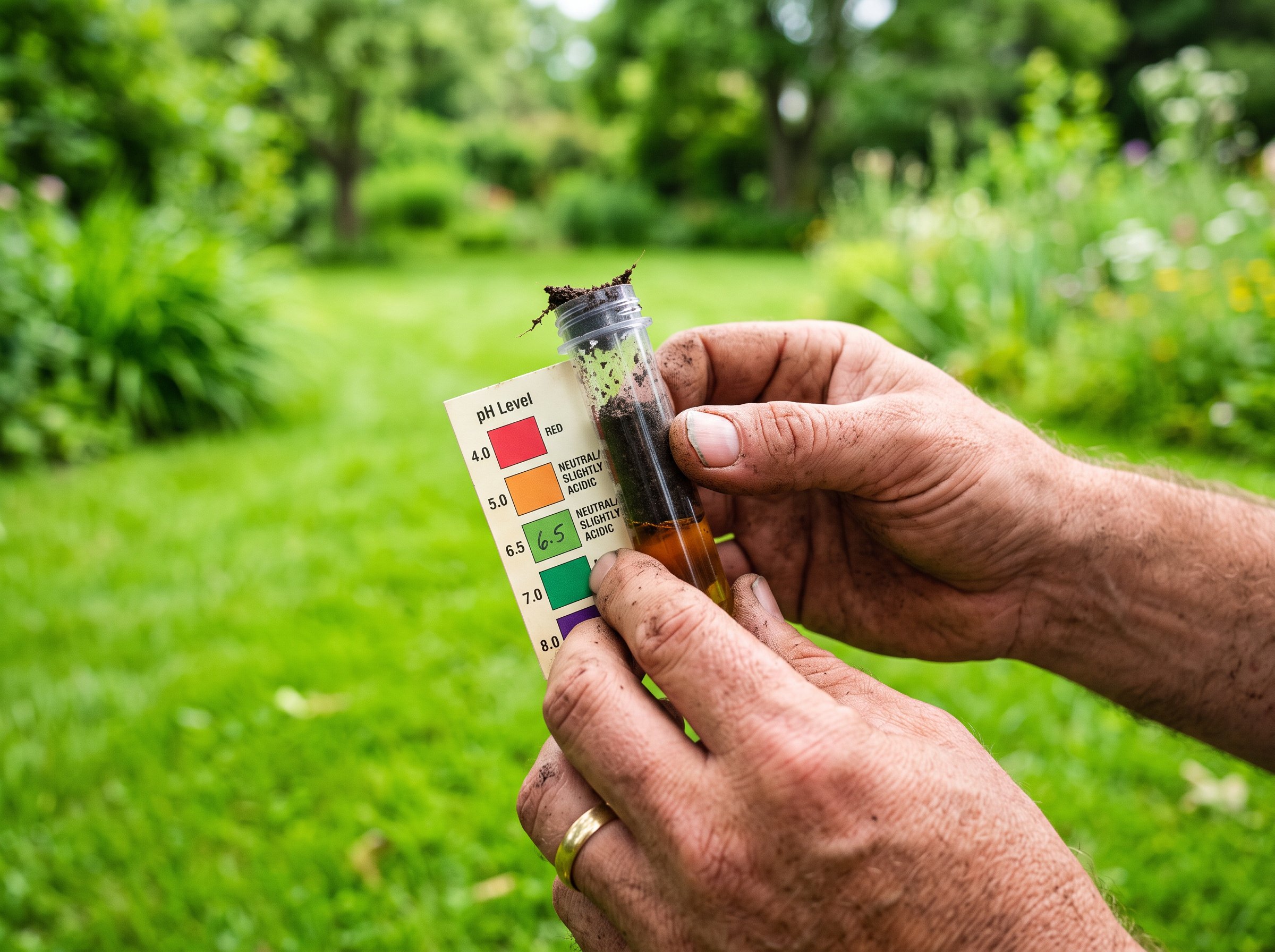
Most turfgrasses grow best at a pH between 6.0 and 7.0, because that's where nitrogen, phosphorus, and potassium are most available to roots[2]. Outside that range, nutrients can be sitting in the soil but chemically locked away from the plant.
A standard lab report gives you:
- Soil pH, plus whether you need lime or sulfur
- Phosphorus and potassium levels in pounds per acre
- Organic matter and cation exchange capacity (CEC), which show how well your soil holds nutrients
Testing protects your budget too. If phosphorus already reads "high" or "very high," you can buy a phosphorus-free fertilizer and save on every application[3].
How Do You Take a Soil Sample Step by Step?
This step decides whether your results are useful.
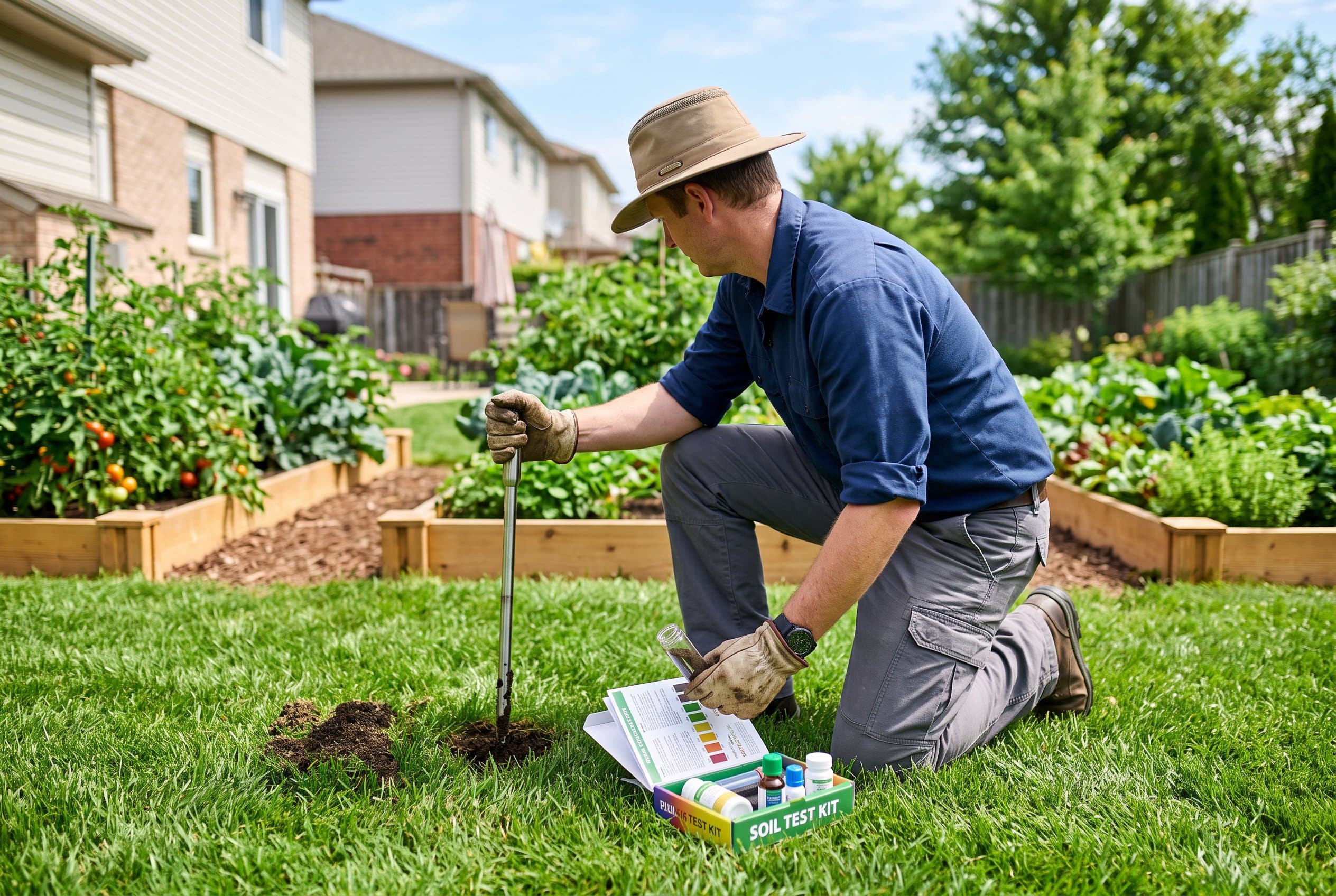
- Gather tools. You need a clean plastic bucket, a trowel or soil probe, and the lab's sample bag. Avoid galvanized or rusty metal, which can skew the zinc reading[4].
- Divide the lawn into zones. Sample separately for areas with different soil, shade, or history — front yard versus back, or a shady slope versus full sun.
- Pull 6–10 cores per zone. Push the tool 4–6 inches deep and take a slice at each spot. A random zigzag pattern beats sampling the same corner every year.
- Mix and reduce. Combine all cores in the bucket, mix thoroughly, and scoop out about one cup.
- Air-dry and label. Spread the sample to dry overnight — never microwave it — then label the bag with your name, the zone, and what you're growing.
- Submit and wait. Turnaround is typically one to two weeks, and most labs email results with a tailored fertilizer schedule[4].
What Do the Test Results Mean?
Follow the lab's recommendations column, not the raw numbers. Key items:
- Lime: If pH falls below 6.0, lime is usually the first fix. Apply in fall so winter freeze-thaw cycles work it into the soil[2].
- Nitrogen: Most tests skip nitrogen because it moves constantly. Use the lab's seasonal rate instead.
- Phosphorus: Skip it unless the report says low or medium. Many states restrict phosphorus fertilizer on established lawns to protect waterways[1].
- Potassium: Often low in sandy soils, and usually corrected with a single application.
Southern labs generally set a slightly lower pH target for bermudagrass and zoysia than northern labs do for bluegrass and fescue[5].
When Is the Best Time of Year to Test Lawn Soil?
Early fall is the sweet spot for cool-season lawns. Lime, sulfur, and phosphorus all move slowly, so applying them in September or October gives them months to react before spring growth[2].
Warm-season lawns are better tested in late winter or early spring, just before green-up, so fertilizer goes down on schedule.
Two timing rules:
- Wait 6–8 weeks after fertilizing, liming, or spreading compost before sampling — fresh amendments skew results.
- Test before overseeding or laying sod so you can correct pH first[6].
Conclusion: Your Next Steps
Download a submission form from your state's university soil lab, sample this week while the weather is mild, and treat the report like a prescription. Retest every 2–3 years, or annually while you're still fixing a pH problem. Once you know your pH and nutrient levels, mowing height, watering depth, and overseeding timing get easier to judge[6].