
Quick Answer
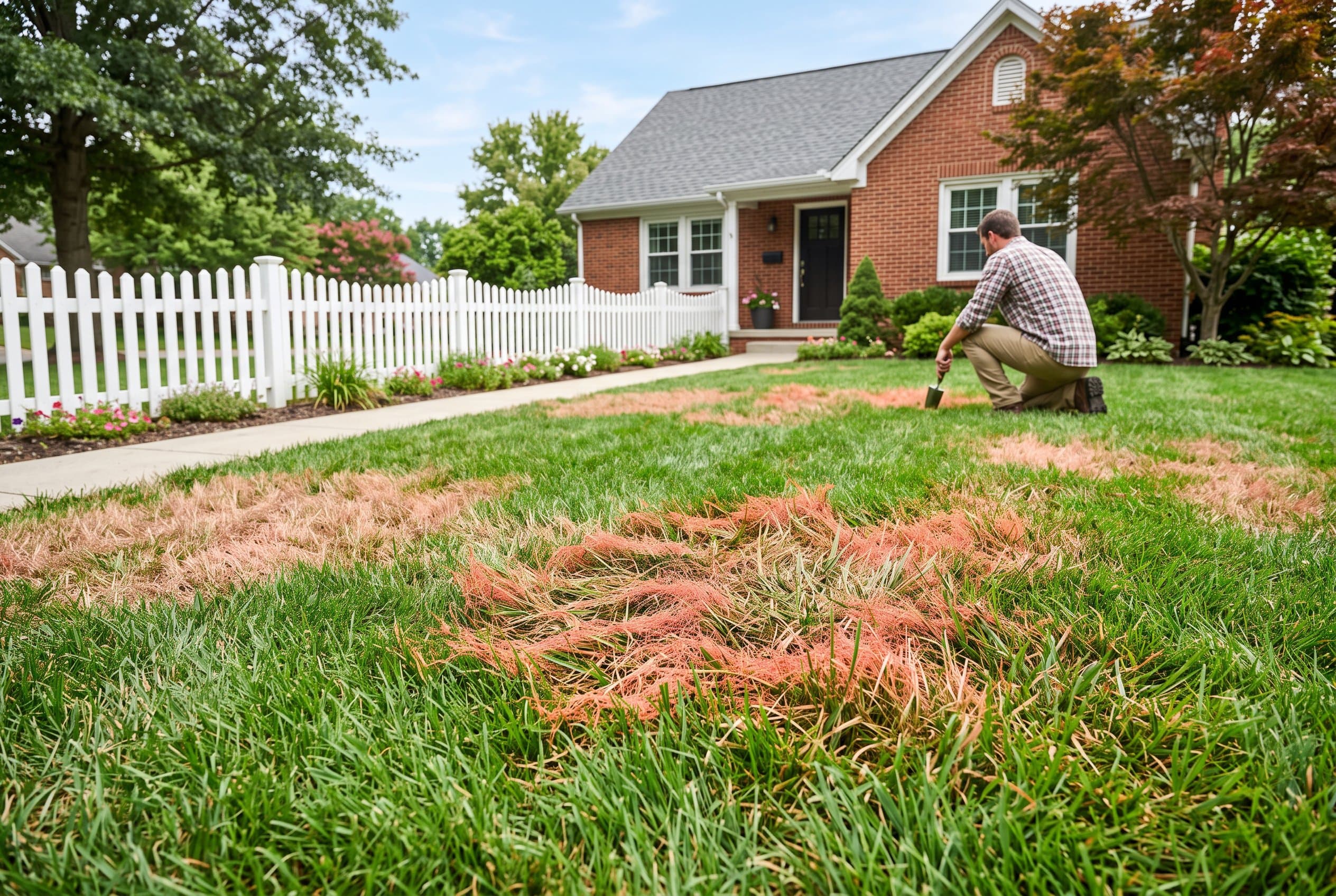
Red thread lawn disease is a common fungal infection that appears as pinkish-red, thread-like strands on grass blades during cool, wet weather. It rarely kills a lawn but thrives on under-fertilized, compacted, or poorly drained turf. The fastest fix is a nitrogen boost combined with better mowing, watering, and thatch management.
Key Takeaways
- Red thread is caused by the fungus Laetisaria fuciformis and shows up in cool (60–75°F), damp conditions[1].
- It's mostly cosmetic — grass crowns and roots usually survive.
- Low nitrogen fertility is the single biggest trigger.
- Fix it with fertilizer, taller mowing, deep morning watering, and dethatching.
- Fungicides are rarely necessary and only worth it on high-value turf.
Introduction
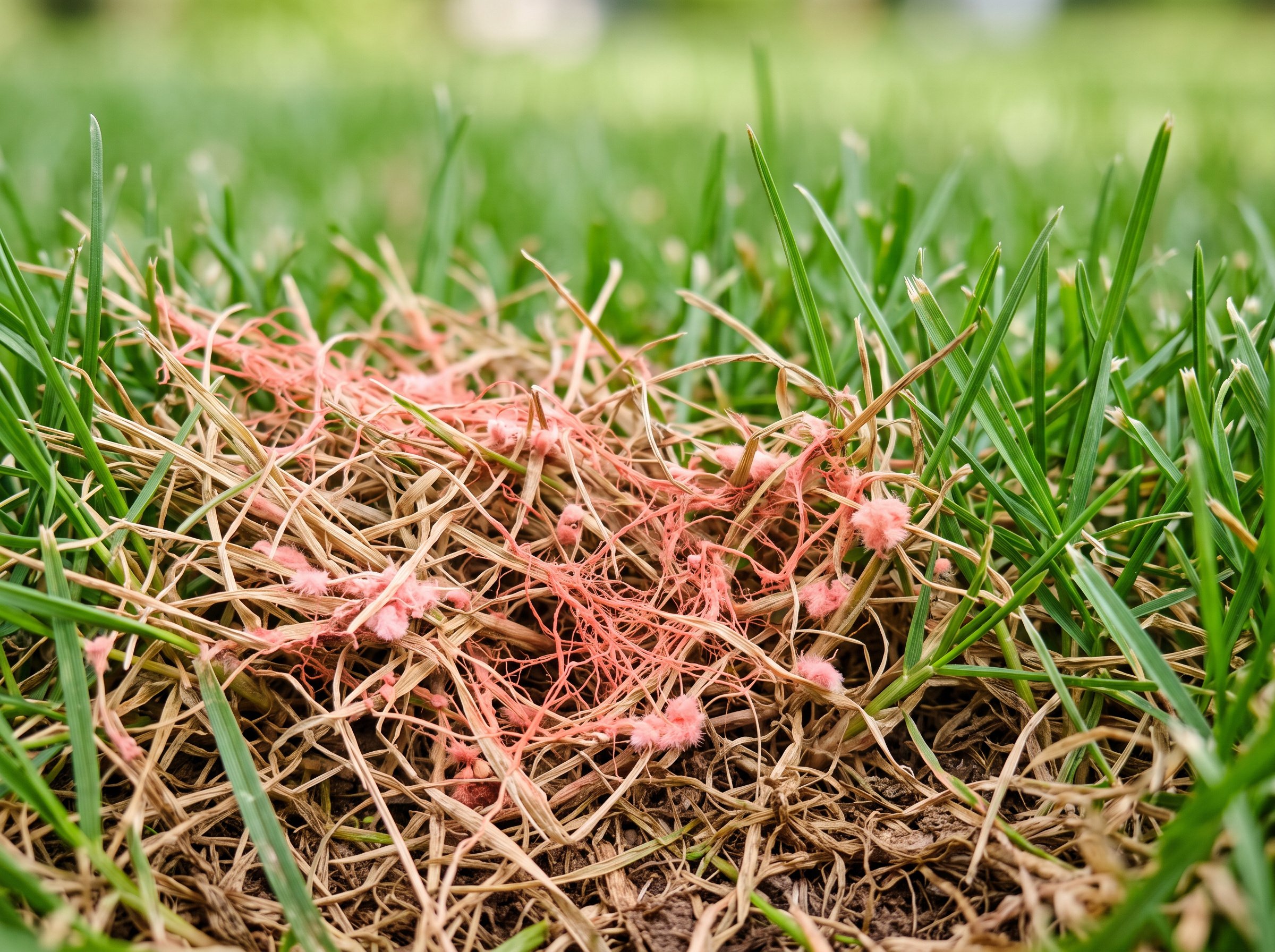
You walk outside after a damp spring morning and your lawn looks like it's been dusted with pink cotton candy. Those antler-shaped red threads are red thread, one of the most recognizable lawn diseases in cool-season turf. The good news: it's rarely fatal, and most homeowners can clear it up without a sprayer full of chemicals. Here's what causes it — and how to get rid of it fast.
What Is Red Thread Lawn Disease and What Causes It?
Red thread is a fungal disease that mainly attacks cool-season grasses, especially perennial ryegrass, fine fescues, and Kentucky bluegrass[1]. It's most active when temperatures sit between 60 and 75°F with prolonged wet, humid weather — classic spring and fall conditions across the Midwest, Northeast, and Pacific Northwest[2].
The telltale sign is the "red thread" itself: pink to coral-red strands (sclerotia) growing on leaf tips. From a distance, patches look bleached, tan, or pinkish, usually in irregular circles a few inches to a couple of feet across.
Four things actually trigger an outbreak:
- Low nitrogen. Underfed lawns are the most common culprit[3].
- Moisture. Long dew periods, frequent light watering, or poor drainage keep leaves wet.
- Thatch and compaction. Thick thatch shelters the fungus and blocks airflow.
- Cool temperatures. Red thread goes dormant in summer heat.
How Do You Fix Red Thread? A Step-by-Step Guide
1. Apply nitrogen fertilizer. This is the fastest fix. Use a slow-release granular fertilizer at roughly 0.5–1 lb of actual nitrogen per 1,000 sq ft. Skip quick-release urea in hot weather — it can burn turf.
2. Raise your mowing height. Set the deck to 3–3.5 inches for cool-season grasses. Taller blades photosynthesize better and dry faster. Never remove more than one-third of the blade at once.
3. Water deeply and infrequently. Aim for 1–1.5 inches per week delivered in one or two early-morning sessions[4]. Morning watering lets leaves dry before evening dew settles.
4. Dethatch if thatch exceeds ½ inch. A rake, power dethatcher, or core aerator opens the canopy and improves airflow. Do this in early fall for cool-season lawns.
5. Test your soil. A soil test tells you whether pH and phosphorus are in range. Red thread often shows up on acidic, nutrient-poor soils[5].
6. Use fungicide only if needed. If the disease is severe or your lawn is high-value, look for products containing azoxystrobin, propiconazole, or myclobutanil. Apply preventively in early spring and fall — not after symptoms peak[6].
Does Red Thread Kill Your Lawn?
Rarely. Red thread attacks leaf blades, not crowns or roots, so most lawns recover once conditions dry out or fertility improves[2]. The damage is largely cosmetic. That said, a chronically thin, weak lawn can be worn down by repeated seasons of infection, so it's worth fixing the underlying cause rather than ignoring it.
When Should You Treat Red Thread — Seasonal Timing?
Timing matters more than products.
- Spring (April–May): Watch for the first pink patches after cool, wet spells. Apply a light nitrogen feeding and mow regularly.
- Summer: Disease pressure drops. Focus on irrigation depth and core aeration.
- Fall (September–October): The second big window. Overseed thin areas with improved ryegrass or fescue cultivars, and keep fallen leaves raked.
- Winter: Avoid late-season nitrogen, which encourages tender growth that invites infection.
How Do You Prevent Red Thread From Coming Back?
Prevention is really about turf vigor:
- Fertilize on a consistent schedule — three to four feedings per year for cool-season lawns[3].
- Water in the morning, not the evening[4].
- Keep mower blades sharp and mow at the tallest recommended height.
- Aerate and dethatch on a one- to two-year cycle.
- Overseed with blends that include red-thread-resistant varieties.
- Fix drainage in low spots — standing water is a fungus magnet.
Conclusion: Your Next Steps
Red thread looks dramatic but responds fast to basic lawn care. Start with a nitrogen application this week, raise your mower deck, and water deeply in the morning. If thatch is thick, plan a fall dethatching or core aeration. Skip the fungicide unless the disease keeps returning despite good cultural care. Most homeowners see color return within two to three weeks.