

Quick Answer
Slice seeding cuts small furrows into the soil for direct seed-to-soil contact, making it the better choice for thin or heavily worn lawns. Overseeding scatters seed across existing turf and works well for maintenance seeding on moderately healthy grass. If your lawn has bare patches or poor density, slice seeding will deliver significantly better germination rates.
Key Takeaways
- Slice seeding achieves superior germination because seed is placed directly in the soil
- Overseeding is faster, cheaper, and ideal for lawns that just need a density boost
- Both methods work best when performed in early fall for cool-season grasses
- Slice seeding requires renting a slit seeder machine; overseeding only needs a broadcast spreader
- Soil preparation and post-seeding watering matter as much as which method you choose
Introduction
A thin, patchy lawn is frustrating — but before you buy seed, you need to decide how you're going to apply it. Slice seeding and overseeding are both effective renovation tools, but they serve different situations. Choosing the wrong method can mean wasted seed, poor germination, and another season of disappointing turf[1].
What's the Difference Between Slice Seeding and Overseeding?
Overseeding is exactly what it sounds like: broadcasting grass seed over your existing lawn. It's a low-effort method that works well when your turf is 60–70% healthy but could use more density[2]. The main limitation is that seed dropped on thatch, mulch, or dry topsoil struggles to germinate — it needs bare soil contact to take hold.
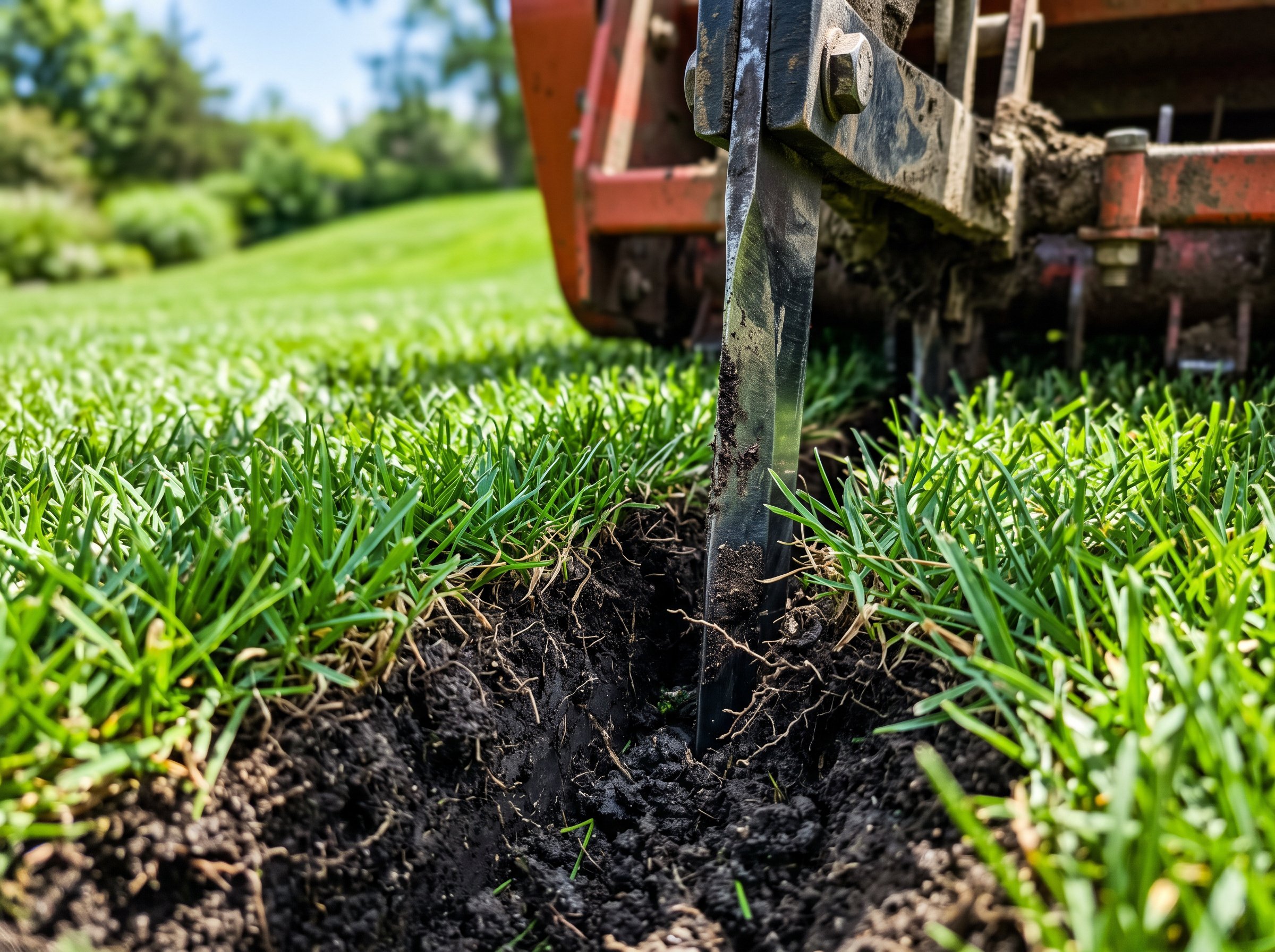
Slice seeding uses a mechanical slit seeder to cut thin grooves (about ¼ inch deep) directly into the soil while simultaneously dropping seed into those channels[3]. This dramatically improves seed-to-soil contact and shields seeds from drying out. Studies consistently show slice seeding produces higher germination and establishment rates than surface broadcasting alone[1].
Slice Seeding vs Overseeding Comparison
| Feature | Slice Seeding | Overseeding |
|---|---|---|
| Germination rate | High (seed in soil) | Moderate (surface exposed) |
| Equipment needed | Slit seeder (rental) | Broadcast spreader |
| Best for | Bare/thin lawns | Density maintenance |
| Cost | Higher | Lower |
| Effort | More labor | Less labor |
How to Do Each Method Step by Step
Overseeding Steps
- Mow your lawn shorter than usual (about 2 inches) and bag the clippings
- Dethatch or rake to expose soil if thatch exceeds ½ inch[4]
- Core aerate to create seed pockets — this improves overseeding results significantly
- Broadcast seed at the recommended rate on the seed bag
- Lightly rake seed in, then water gently twice daily until germination (7–14 days)
Slice Seeding Steps
- Mow low (1.5–2 inches) and remove debris
- Mark sprinkler heads and shallow irrigation lines
- Run the slit seeder in two passes at 90-degree angles for even coverage[3]
- Apply a starter fertilizer immediately after seeding[2]
- Keep the seedbed consistently moist — water lightly 2–3 times daily for the first two weeks
When Should You Choose Slice Seeding Over Overseeding?
Choose slice seeding when:
- More than 40–50% of your lawn is bare or dead
- Previous overseeding attempts failed
- You have heavy thatch (over ½ inch) that blocks seed contact
- You want the fastest recovery possible
Choose overseeding when:
- Your lawn is generally healthy but thin
- You're doing routine seasonal maintenance
- Budget or equipment access is a concern
- You have cool-season grass that just needs a density refresh[5]
Seasonal timing matters for both methods. For cool-season grasses (fescue, bluegrass, ryegrass), early fall — late August through September — is the optimal window[1][4]. Soil is still warm enough for germination, and cooler air reduces heat stress on seedlings. Warm-season grasses like bermuda and zoysia do best when seeded in late spring through early summer[5].
Conclusion: Which Method Is Right for You?
If your lawn is struggling with bare patches, low density, or repeated seeding failures, invest in slice seeding — the improved germination rates are worth the extra cost and effort. If your lawn is mostly healthy and you're maintaining it season to season, overseeding after core aeration is a smart, budget-friendly approach.
Your next steps:
- Walk your lawn and estimate what percentage is bare or thin
- If under 40% bare → overseed after aerating
- If over 40% bare → rent a slit seeder or hire a lawn care company
- Schedule your seeding for early fall (cool-season) or late spring (warm-season)
- Purchase a quality starter fertilizer to apply right after seeding