![How to Get Rid of Fairy Ring [Lawn Fungus & Disease]](https://img.youtube.com/vi/LSADOp8mf_I/hqdefault.jpg)
Quick Answer
Fairy ring is caused by soil-dwelling fungi that break down organic matter underground, producing dark green circles or arcs of grass — sometimes with mushrooms along the edge. Treatment involves a combination of aeration, wetting agents, and fungicide applications, though complete eradication can be difficult. Consistent lawn care and soil improvement are your best long-term strategies.
Key Takeaways
- Fairy rings are caused by fungi decomposing buried organic matter like old tree roots or stumps
- There are three types: those that produce mushrooms, those that cause lush green rings, and those that kill grass outright
- No single treatment is 100% effective — a multi-step approach works best
- Aeration and soil wetting agents dramatically improve treatment success
- Prevention through good lawn nutrition and thatch management reduces recurrence
Introduction
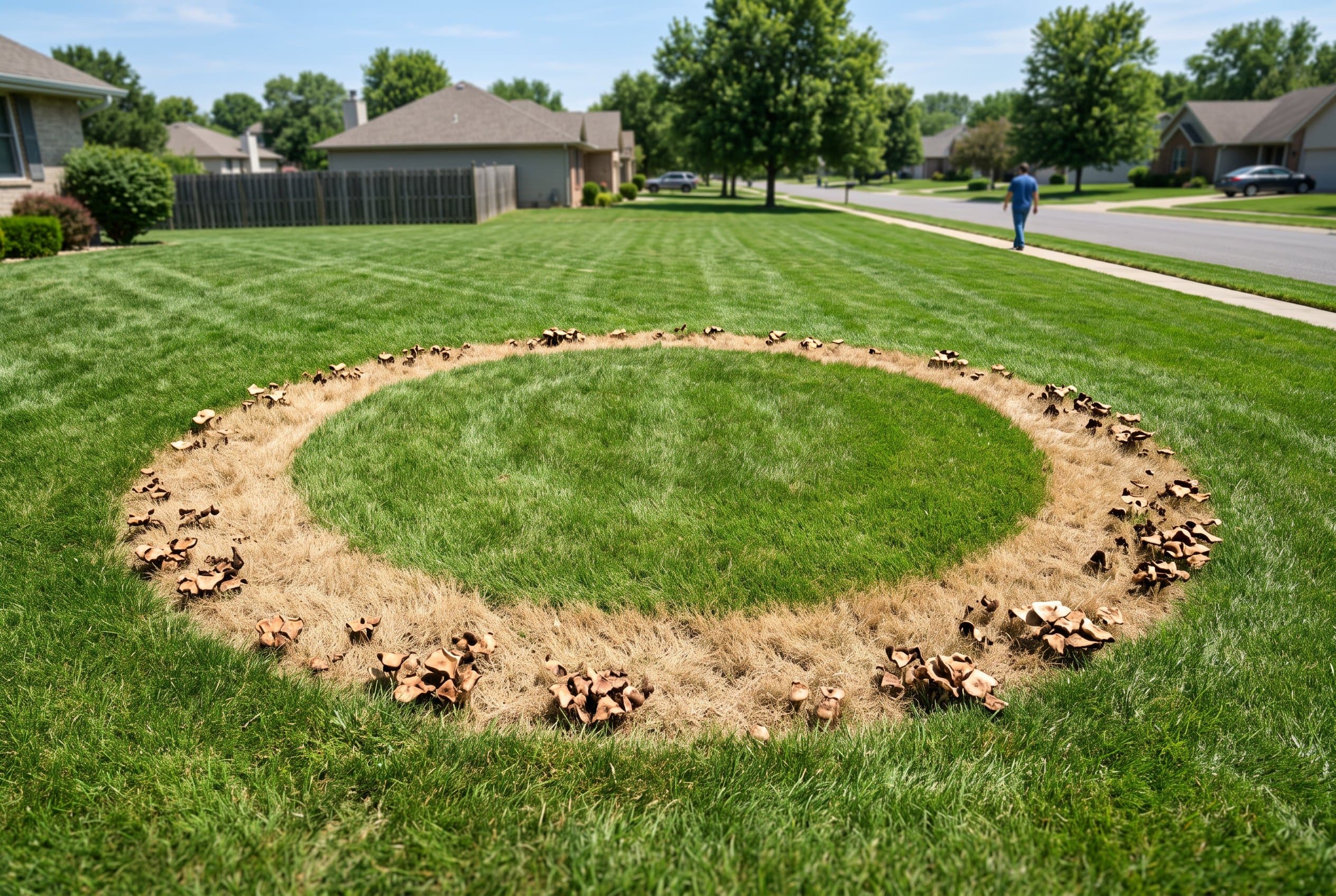
If you've noticed a mysterious dark green ring or arc in your lawn — possibly bordered by mushrooms — you're likely dealing with fairy ring. While the name sounds charming, the reality is less so. This fungal condition affects lawns across North America and can be stubborn to eliminate. The good news is that with the right approach, you can reduce its impact and often suppress it entirely[1].
What Causes Fairy Ring and How Do I Identify It?
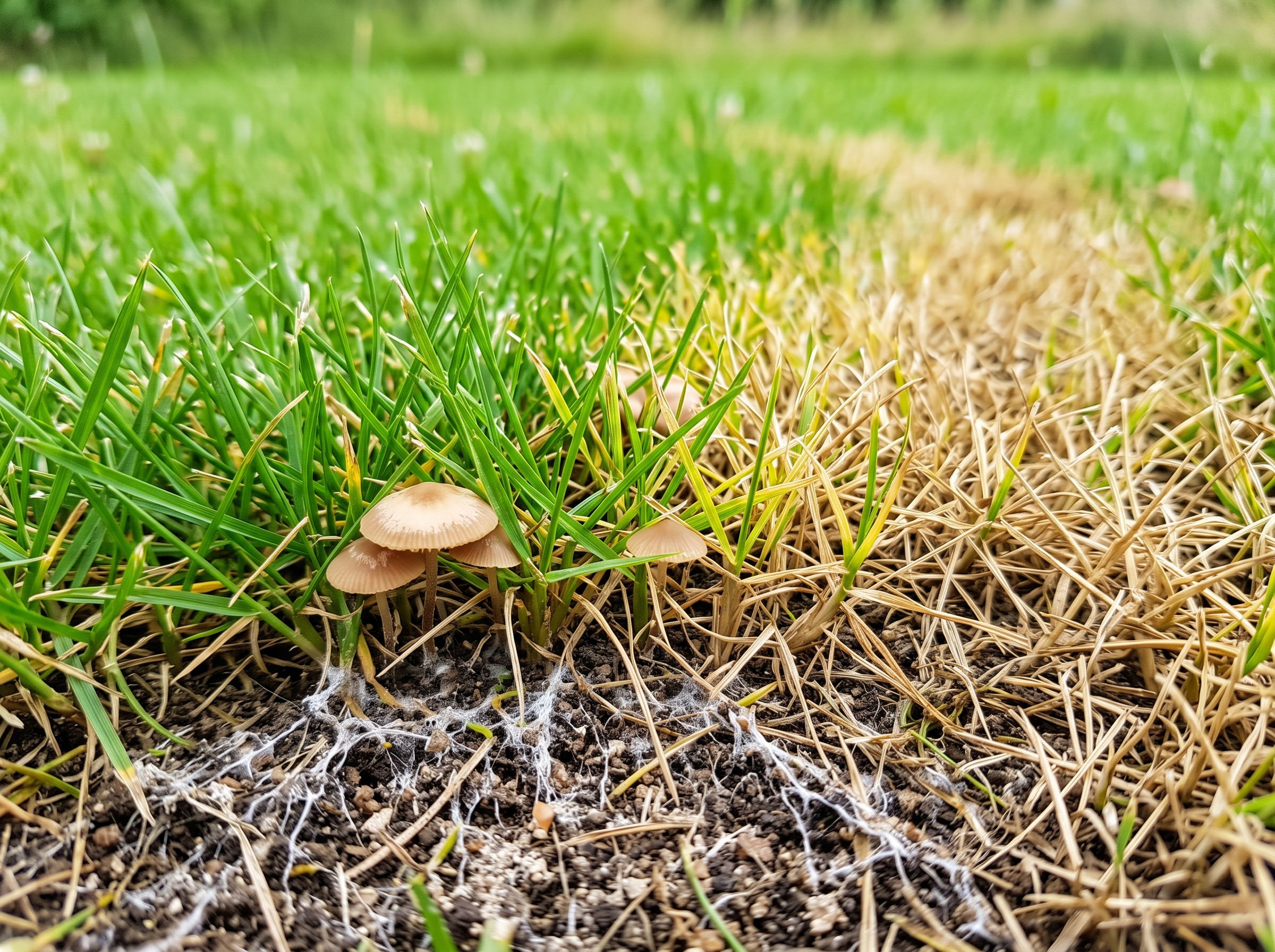
Fairy ring is triggered by dozens of different soil-dwelling fungi, most commonly from the Basidiomycete family. These fungi feed on decaying organic material buried in the soil — old tree stumps, roots, or construction debris[2]. As the fungus spreads outward in a circle, it releases nitrogen, causing the grass above to grow faster and greener than the surrounding lawn.
There are three recognized types:
- Type 1 — Kills grass in a ring or arc, often leaving dead or bare patches
- Type 2 — Produces a ring of stimulated, dark green grass without killing it
- Type 3 — Causes mushrooms or puffballs to appear in a ring with minimal turf damage[3]
Type 1 is the most damaging, as the fungal mycelium forms a water-repellent layer in the soil that prevents moisture from reaching grass roots.
How Do I Treat Fairy Ring Step by Step?
Treating fairy ring requires patience and a layered approach. Here's how to tackle it effectively:
Step 1: Aerate the Affected Area Use a core aerator to perforate the soil in and around the ring, extending at least 2 feet beyond the visible edges. This breaks up the hydrophobic fungal mat and allows water and treatments to penetrate[4].
Step 2: Apply a Soil Wetting Agent Fairy ring creates a water-repellent zone in the soil. A liquid wetting agent (surfactant) applied after aeration helps water penetrate deep enough to reach and disrupt fungal growth. Water deeply after application[1].
Step 3: Use a Systemic Fungicide For persistent or Type 1 fairy rings, apply a systemic fungicide labeled for fairy ring control. Active ingredients to look for include azoxystrobin or flutolanil. Apply according to label directions, typically in spring or early fall when soil temperatures are between 50–70°F[3].
Step 4: Remove Mushrooms Promptly Pick or mow off mushrooms as soon as they appear to prevent spore spread. Bag and dispose of them — do not compost[2].
Step 5: Overseed Damaged Areas Once fungal activity slows, overseed bare or thinned patches to restore turf density.
When Is the Best Time to Treat Fairy Ring?
Timing matters significantly for treatment success. Fairy ring is most active during warm, moist conditions — typically late spring through early fall[3]. Begin treatment as soon as you spot the ring forming in spring.
- Spring — Ideal for aeration and first fungicide application before the ring expands
- Summer — Focus on wetting agents and moisture management; avoid stress on turf
- Fall — A second fungicide application can suppress fungal activity heading into winter[5]
For Type 2 rings that only cause greening, regular fertilization can even out the color difference and make the ring less noticeable until it naturally dissipates.
How Can I Prevent Fairy Ring From Returning?
Prevention is more effective than cure when it comes to fairy ring[4]. Follow these practices:
- Remove stumps, buried wood, and construction debris before laying new turf
- Maintain a thatch layer under ½ inch through regular dethatching
- Aerate annually to improve drainage and reduce organic buildup
- Avoid excessive nitrogen fertilization, which can fuel fungal growth
- Water deeply but infrequently to discourage shallow fungal mats[5]
Conclusion: Your Next Steps
Fairy ring rarely disappears on its own quickly, but it can be managed effectively. Start by aerating and applying a soil wetting agent this weekend, then plan a fungicide application timed to soil temperatures in your region. Remove mushrooms as they appear and overseed any damaged turf in early fall. With consistent lawn care habits, you can suppress fairy ring and prevent it from returning season after season.