
Quick Answer
Fall is the best time to overseed cool-season lawns, ideally 6–8 weeks before your first expected frost. Soil is still warm enough to germinate seed quickly, while cooler air temperatures reduce competition from weeds and heat stress on young grass.
Key Takeaways
- Overseed cool-season lawns (fescue, bluegrass, ryegrass) in late summer to early fall — typically late August through October
- Soil temperature between 50–65°F is the sweet spot for germination
- Mow existing grass short and remove debris before seeding for best seed-to-soil contact
- Keep newly seeded areas consistently moist for 2–3 weeks until seedlings establish
- Skip overseeding warm-season grasses (Bermuda, zoysia) in fall — they go dormant and won't germinate
Introduction
A thin, patchy lawn doesn't have to stay that way. Fall overseeding is one of the most effective and affordable ways homeowners can restore density, fill bare spots, and improve overall turf health. When done at the right time with the right seed, you'll see noticeable results before winter and a stronger lawn the following spring.
When Is the Best Time to Overseed in Fall?
Timing is everything with fall overseeding. For cool-season grasses, the target window is late August through mid-October, depending on your region[1]. The goal is to give new seedlings at least 6 weeks of growing time before hard frost sets in.
Soil temperature matters more than calendar date. Use an inexpensive soil thermometer to check — you want readings between 50–65°F for reliable germination[2]. Air temps in the 60–75°F range are ideal for seedling growth.
Regional Timing Adjustments
- Northern states (Zone 4–5): Target late August to mid-September
- Mid-Atlantic and Midwest (Zone 6–7): Late September through early October
- Transition zones: Check local extension resources for your area's first frost date[3]
Warm-season lawn owners in the South should skip fall overseeding for their permanent turf. However, temporary overseeding with annual ryegrass is a popular option to maintain green color through mild winters[4].
How to Overseed Your Lawn Step by Step
This is where preparation makes all the difference. Rushing through these steps is the most common reason overseeding fails.
Step 1: Mow Low and Clean Up
Mow your existing lawn to 1.5–2 inches — shorter than usual. Bag the clippings and remove any leaves or debris so seed can reach bare soil[1].
Step 2: Dethatch or Aerate
If your lawn has more than ½ inch of thatch, dethatch before seeding. Core aeration is even better — it loosens compacted soil, improves drainage, and creates ideal pockets for seed to settle into[2]. Rent an aerator from your local hardware store if you don't own one.
Step 3: Choose the Right Seed
Match seed type to your existing lawn and climate zone. For most cool-season lawns, a tall fescue or fescue-bluegrass blend works well. Look for seed labeled with a high germination rate (85%+) and minimal weed seed content[5]. Check the tag — it's required by law and tells you exactly what's inside the bag.
Step 4: Spread Seed Evenly
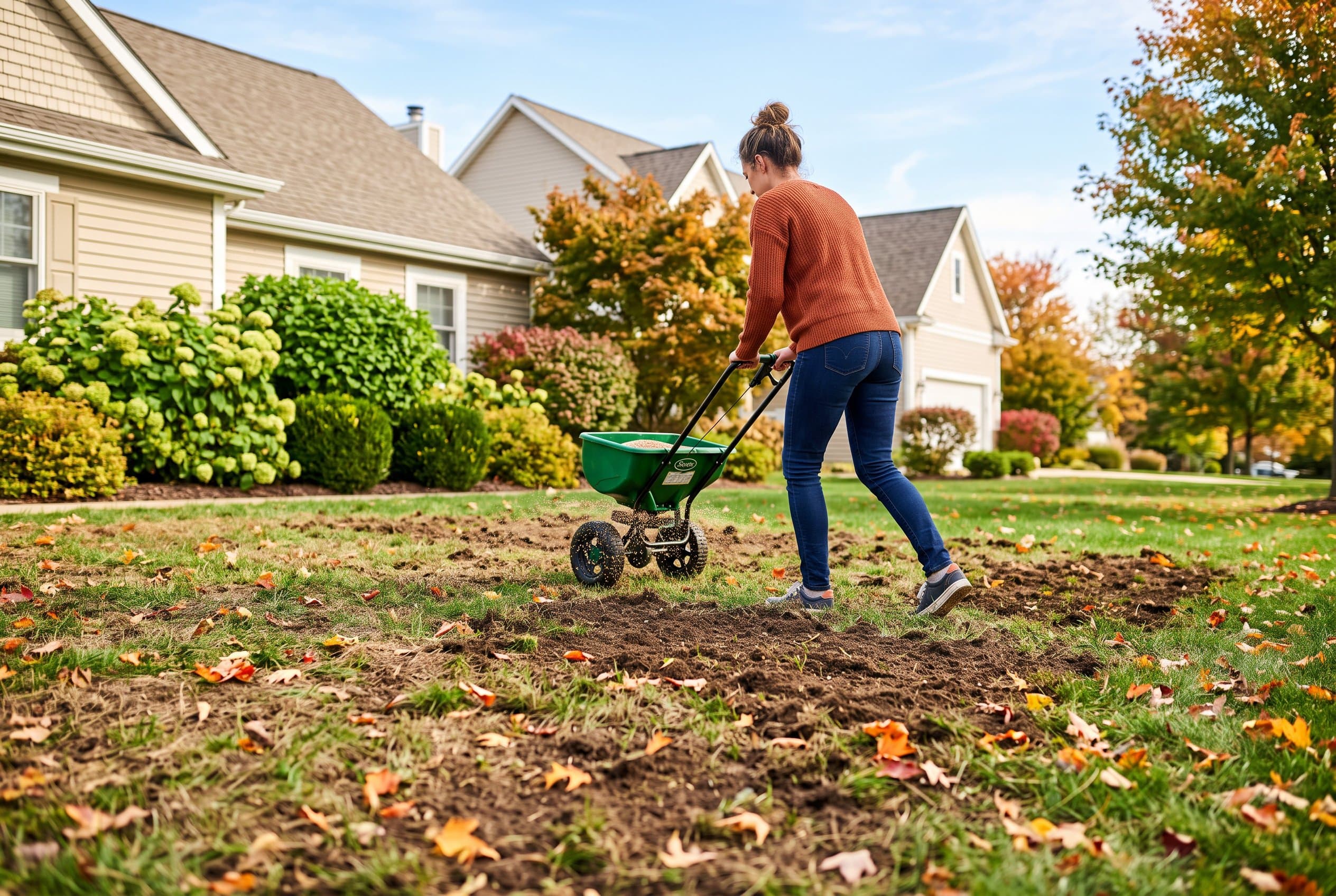
Use a broadcast or drop spreader for even coverage. Apply seed at the rate listed on the label — typically 4–8 lbs per 1,000 sq ft for overseeding (not starting from scratch). Spread in two perpendicular passes for the most uniform coverage.
Step 5: Apply a Starter Fertilizer
A phosphorus-rich starter fertilizer encourages strong root development in new seedlings[5]. Apply immediately after seeding and lightly rake the surface to ensure good seed-to-soil contact.
Step 6: Water Consistently
Keep the top inch of soil moist — water lightly 2–3 times per day for the first 2 weeks. Once seedlings reach 1–2 inches tall, reduce frequency and increase depth to encourage deeper rooting.
What Should You Expect After Overseeding?
Germination timelines vary by seed type[1]:
- Perennial ryegrass: 5–10 days
- Tall fescue: 7–14 days
- Kentucky bluegrass: 14–28 days (slower but spreads by rhizomes)
Avoid mowing new seedlings until they reach 3–3.5 inches tall. When you do mow, don't remove more than one-third of the blade height at once. Expect full establishment by spring after your first overseeding[3].
Common Mistakes to Avoid
- Overseeding too late — frost kills ungerminated seed
- Skipping aeration on compacted lawns
- Letting the seedbed dry out during the first 2 weeks
- Applying crabgrass pre-emergent, which also blocks grass seed germination
Conclusion
Fall overseeding is a straightforward project that pays off with a noticeably thicker, healthier lawn. Check your soil temperature, mow low, aerate, choose the right seed blend, and commit to consistent watering. Start now — your spring lawn will thank you.
Your next steps:
- Check your local first frost date
- Test soil temperature this week
- Pick up seed and a starter fertilizer before the window closes