Quick Answer
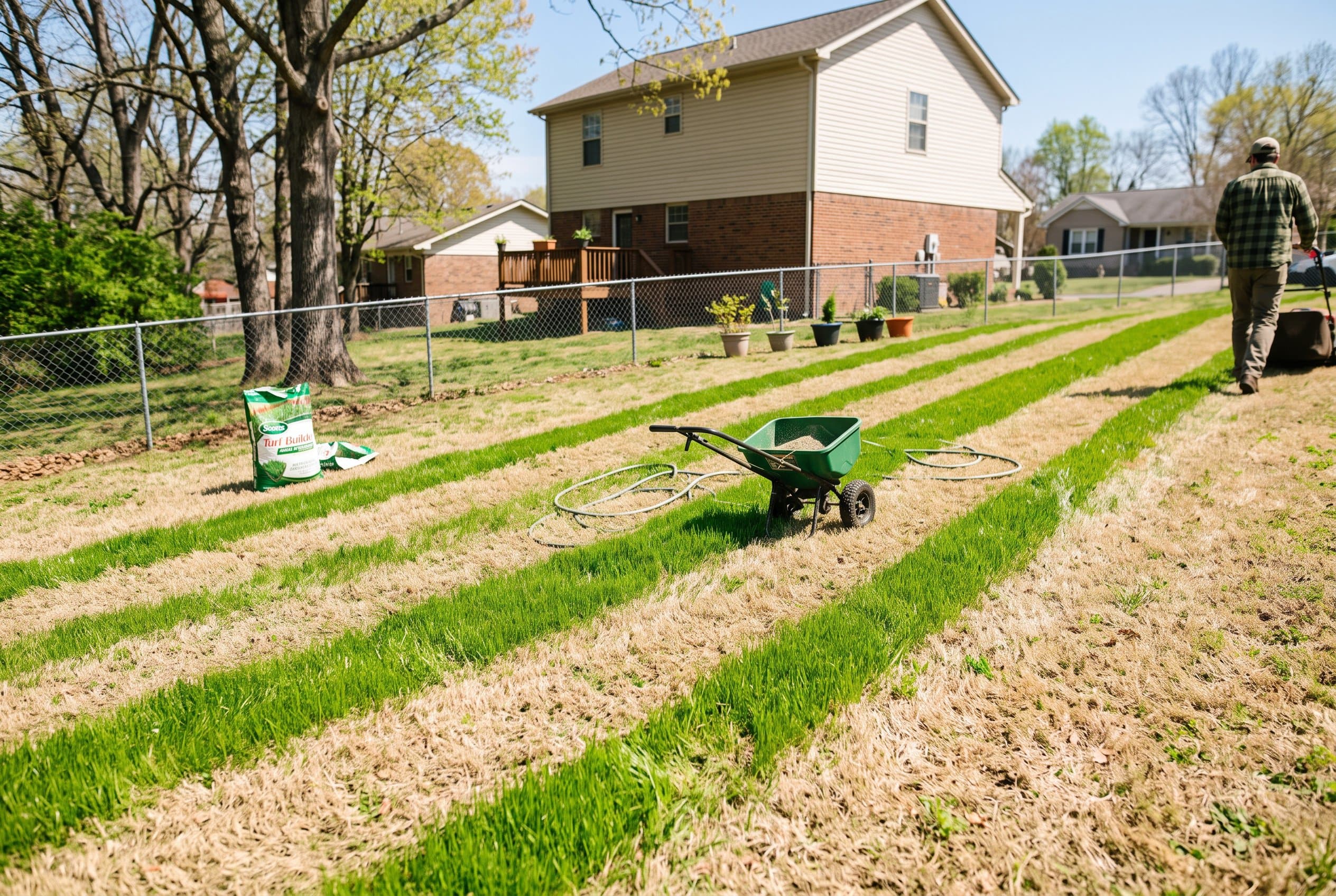
Overseeding bermuda grass with annual or perennial ryegrass in the fall keeps your lawn green through winter when bermuda goes dormant. The best time to overseed is when nighttime temperatures consistently drop to 50–65°F, typically October through November across the South. Apply annual ryegrass seed at 10–15 lbs per 1,000 sq ft, or perennial ryegrass at 8–10 lbs per 1,000 sq ft, for best coverage.
Key Takeaways
- Overseed in fall when bermuda begins going dormant and soil temps drop below 70°F[1]
- Annual ryegrass is cheaper; perennial ryegrass is finer-textured and more attractive[2]
- Scalp your bermuda lawn short (½–1 inch) before seeding to improve seed-to-soil contact[3]
- Water lightly 2–3 times daily after seeding until germination occurs (5–10 days)[4]
- Ryegrass will naturally die off in late spring as bermuda re-emerges from dormancy[1]
Introduction
If you live in the South or Southwest, your bermuda grass lawn looks great in summer — but goes dormant and turns brown once temperatures cool. Overseeding bermuda grass with ryegrass is a popular solution that keeps lawns lush and green all winter long[1]. It's a time-tested technique used by homeowners across the Sun Belt, and with the right approach, it's straightforward to do yourself.
When Is the Best Time to Overseed Bermuda Grass with Ryegrass?
Timing is everything when overseeding bermuda with ryegrass. You want to seed late enough that the bermuda is slowing down, but early enough that ryegrass can establish before cold weather sets in[2].
Target window: Mid-October to mid-November in most Southern states. Aim for soil temperatures between 50–65°F for ideal ryegrass germination[3].
- Too early: Ryegrass competes with still-active bermuda and struggles to establish
- Too late: Cold temperatures slow germination and lead to thin, patchy coverage
A soil thermometer is a worthwhile $10–15 investment to nail the timing. Check soil temperature at a 2-inch depth before you seed.
Annual vs. Perennial Ryegrass: Which Should You Choose?
Choosing the right ryegrass type makes a meaningful difference in how your lawn looks and how smoothly it transitions back to bermuda in spring[2][5].
| Feature | Annual Ryegrass | Perennial Ryegrass |
|---|---|---|
| Germination speed | 5–7 days | 7–10 days |
| Texture | Coarser | Fine, dense |
| Color | Medium green | Dark green |
| Cost | Lower | Higher |
| Spring transition | Aggressive die-off | Smoother transition |
| Best for | Budget-conscious homeowners | Quality appearance |
- Annual ryegrass germinates quickly (5–7 days), costs less, but has a coarser texture and dies off more aggressively in spring
- Perennial ryegrass is finer-textured, darker green, and transitions out more smoothly — it's the preferred choice for most homeowners wanting a quality-looking lawn[5]
For most residential yards, perennial ryegrass at 8–10 lbs per 1,000 sq ft delivers the best visual results.
How to Overseed Bermuda Grass Step by Step
Follow these steps for even germination and a thick winter stand.
Step 1: Scalp Your Bermuda Lawn
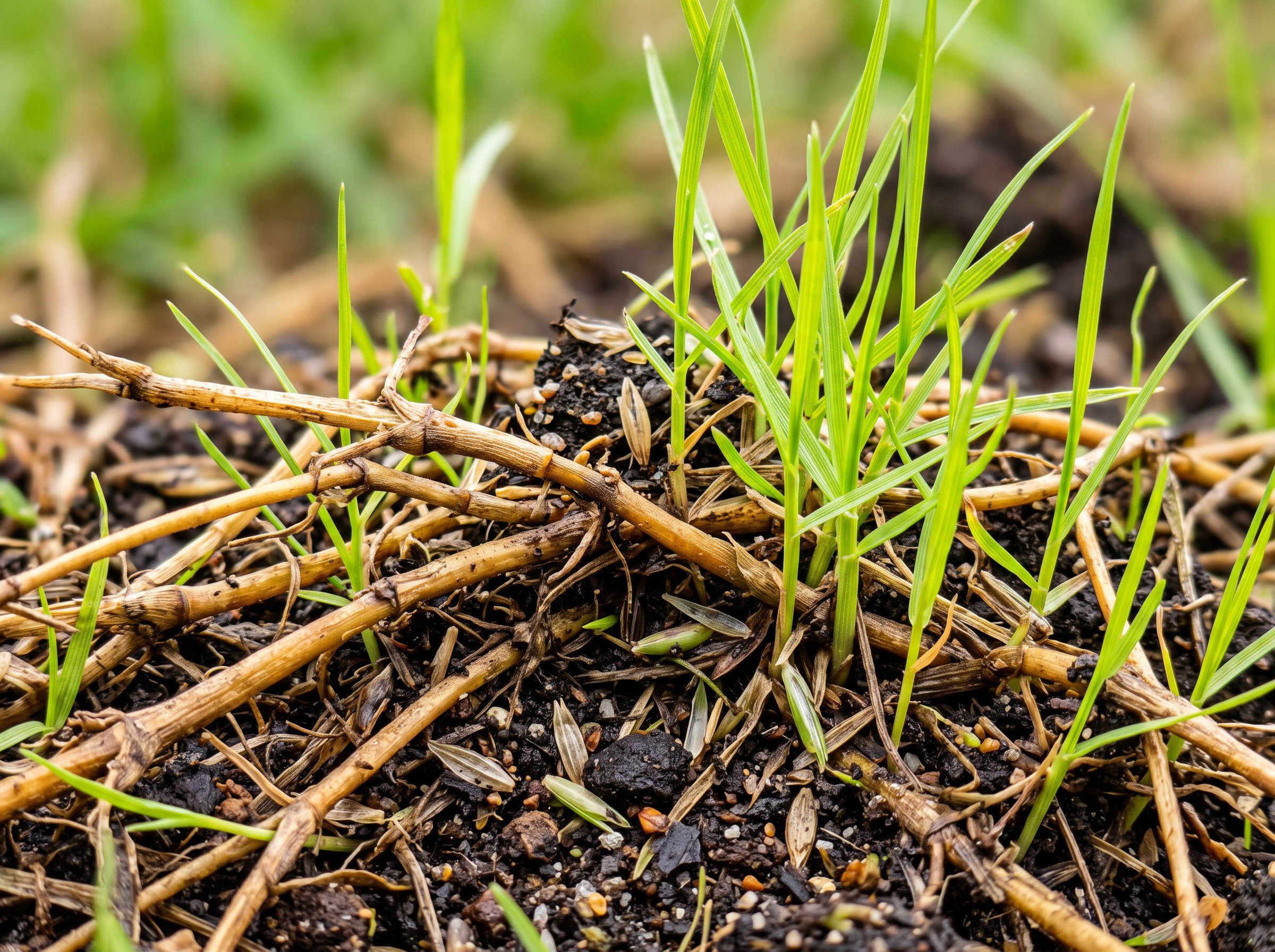
Mow bermuda down to ½–1 inch — much shorter than normal. This removes thatch and dead material so ryegrass seed can reach the soil surface[3]. Bag your clippings.
Step 2: Dethatch and Rake if Needed
If thatch is thicker than ½ inch, use a dethatching rake or power dethatcher to break it up. Good seed-to-soil contact is critical for germination[3].
Step 3: Apply Seed Evenly
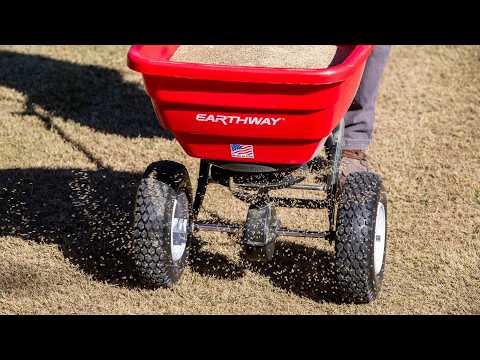
Use a broadcast spreader for uniform coverage. Divide your seed into two equal portions and apply in perpendicular passes to avoid streaking. Recommended seeding rates[1][2]:
- Annual ryegrass: 10–15 lbs per 1,000 sq ft
- Perennial ryegrass: 8–10 lbs per 1,000 sq ft
Step 4: Fertilize at Seeding
Apply a starter fertilizer (high in phosphorus) at seeding to support root development. Avoid high-nitrogen fertilizers at this stage — they push top growth before roots are established[6].
Step 5: Water Consistently
Water lightly 2–3 times per day to keep the seed bed moist until germination (typically 5–10 days)[4]. Once established, reduce to deeper, less frequent irrigation to encourage deeper rooting.
How Do You Manage Ryegrass Through Winter and Spring Transition?
Once your ryegrass is up and growing, regular care keeps it healthy and ensures a smooth transition back to bermuda in spring.
Winter mowing: Keep ryegrass at 1.5–2.5 inches. Avoid scalping — this weakens the stand[5].
Fertilizing: Apply a light nitrogen fertilizer (0.5–1 lb per 1,000 sq ft) in January or February to maintain color and density through the coldest months[6].
Spring transition: As temperatures warm above 80°F consistently, stop fertilizing and irrigating the ryegrass. This stresses it out and helps bermuda re-emerge[1]. You can also scalp the lawn in early spring to speed bermuda green-up.
- Avoid heavy nitrogen applications on ryegrass after March — it delays bermuda's comeback
- Do not apply pre-emergent herbicides in fall if you plan to overseed, as they will prevent ryegrass germination[2]
Conclusion: Your Next Steps
Overseeding bermuda grass with ryegrass is one of the best ways to maintain a green, attractive lawn year-round in warm-season climates. Start by checking your soil temperature in October, scalp your lawn, and apply perennial ryegrass at the recommended rate. With proper watering and light fertilization, you'll have a lush green lawn within two weeks — and bermuda will bounce right back come spring.
Your action checklist:
- Monitor soil temps starting in early October
- Scalp, dethatch, and overseed when temps hit 50–65°F
- Water daily until germination, then shift to deep, infrequent irrigation
- Plan your spring transition to avoid suppressing bermuda recovery