Quick Answer
Leatherjackets are the larvae of crane flies (daddy longlegs) and feed on grass roots just below the soil surface, causing yellow, patchy, dying turf — usually most visible from autumn through spring. Treating in late summer or early autumn when larvae are young gives you the best chance of saving your lawn. Biological controls and good cultural practices are your most effective tools.
Key Takeaways:
- Leatherjackets are grey-brown, legless grubs up to 3–4 cm long that live in the top layer of soil
- Damage appears as yellow or dead patches that lift away easily because roots have been eaten
- Crane flies lay eggs in late summer; larvae are most vulnerable (and easiest to treat) in autumn
- Biological nematode treatments work best when soil is warm and moist (above 12°C / 54°F)
- Birds, foxes, and starlings digging at your lawn are a telltale sign of a heavy infestation
Introduction
If your lawn developed mysterious yellow patches over autumn or winter that seem to spread despite watering and feeding, leatherjackets may be the culprit. These soil-dwelling larvae are one of the most common causes of lawn damage in the UK and cooler parts of North America, and they can devastate a well-maintained turf if left unchecked. Understanding their lifecycle is the key to timing your control efforts effectively[1].
How Do I Know If Leatherjackets Are Damaging My Lawn?
Identifying leatherjackets early saves you time and money. Here's what to look for:
Visual Symptoms
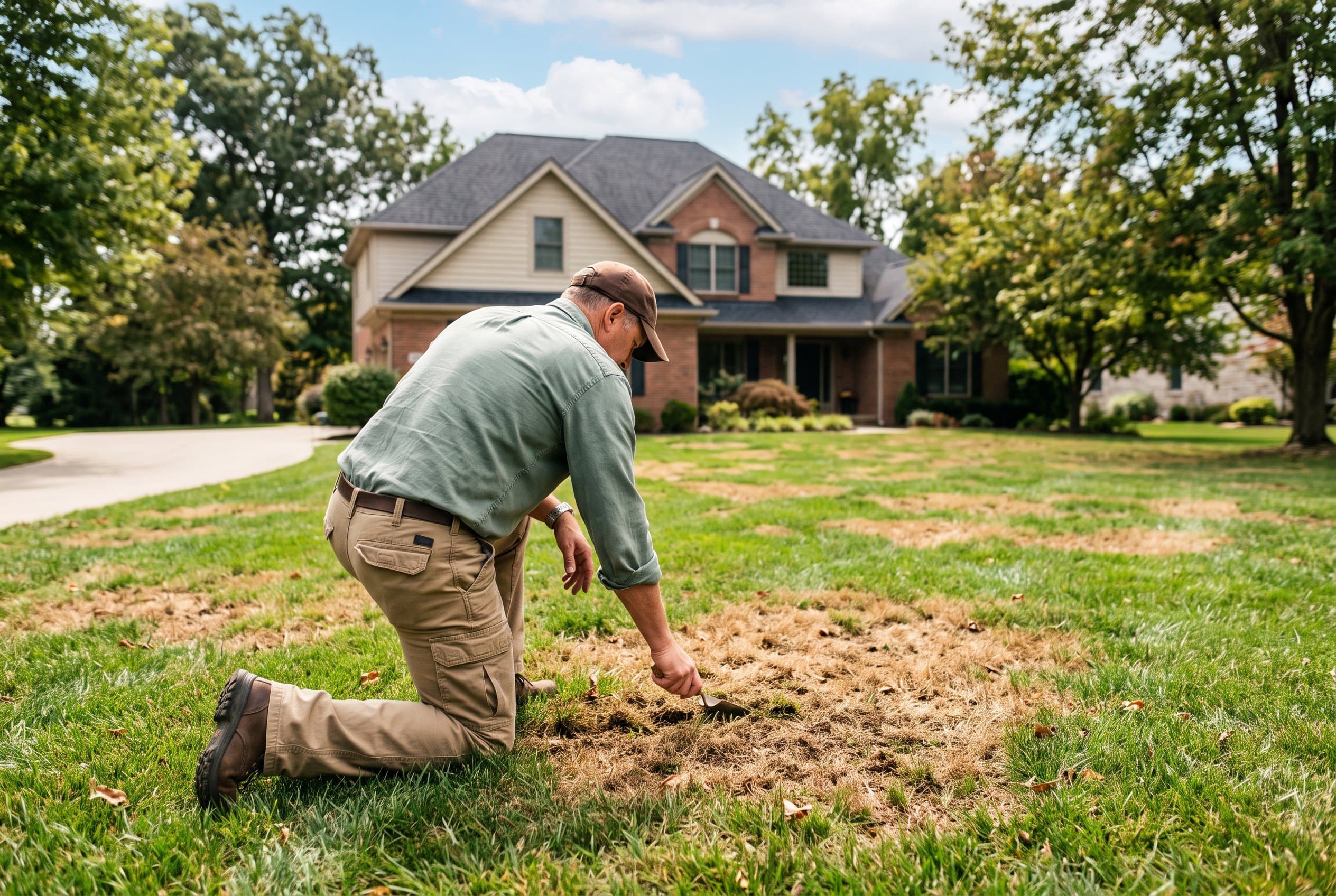
- Yellow or straw-coloured patches that don't respond to watering
- Turf that lifts easily like loose carpet — roots have been severed
- Bird activity — starlings, crows, and rooks probing the lawn are a classic sign[2]
- Spongy or soft turf in areas that feel hollow underfoot
The Bin Bag Test
To confirm leatherjackets, soak an affected patch thoroughly with water, then cover it with black plastic sheeting or a bin bag overnight. In the morning, lift the covering — if leatherjackets are present, they'll have migrated to the surface. Counts of more than 25–30 per square metre indicate a damaging infestation that warrants treatment[3].
Larvae Appearance
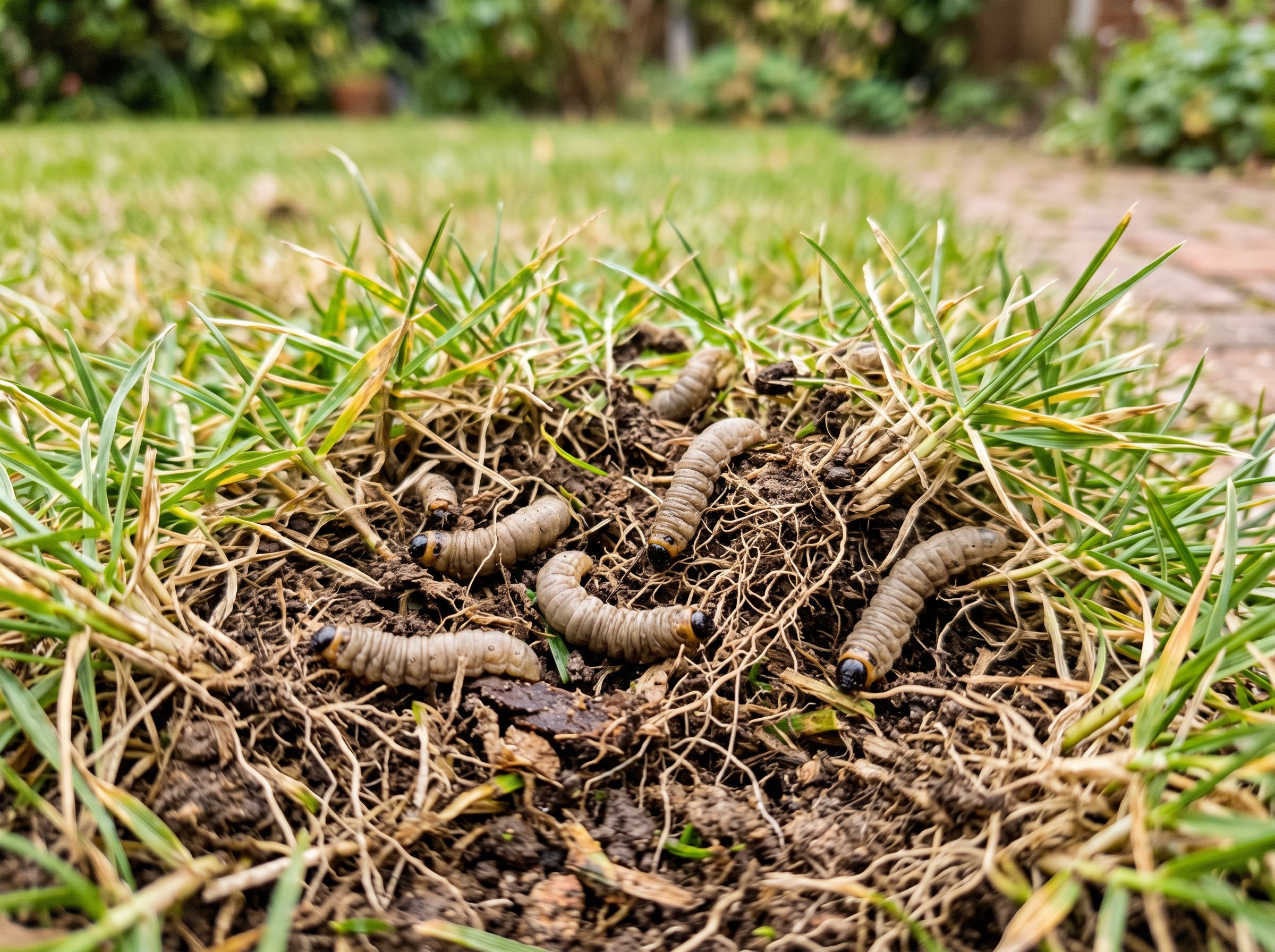
Leatherjackets are grey-brown, legless, and tough-skinned (hence the name). They range from a few millimetres when newly hatched in autumn to around 3–4 cm by spring. They have no distinct head capsule and look almost like a small piece of rubber hose.
What Does Leatherjacket Damage Look Like Through the Seasons?
Understanding the seasonal pattern helps you act at the right moment[1][4].
Late Summer (August–September)
- Adult crane flies emerge and lay eggs in turf
- Eggs hatch within 2–3 weeks
- No visible damage yet — larvae are tiny and just beginning to feed
Autumn (October–November)
- Larvae grow rapidly feeding on roots and thatch
- First yellow patches appear
- Best window for biological nematode treatment
Winter (December–February)
- Larvae burrow deeper to avoid frost
- Damage appears to pause but larvae are still present
- Avoid heavy lawn traffic on affected areas
Spring (March–May)
- Larvae return to the surface and feeding intensifies
- Damage becomes most visible and widespread
- Turf recovery can begin once larvae pupate (May–June)[2]
How Do I Treat and Prevent Leatherjacket Damage?
Biological Nematode Treatment
The most effective and environmentally responsible approach is applying beneficial nematodes (Steinernema feltiae) to the affected lawn[5]. These microscopic roundworms seek out and kill leatherjackets in the soil. For success:
- Apply in early to mid-autumn when soil is still above 12°C
- Water the lawn thoroughly before and after application
- Keep soil moist for at least two weeks post-treatment
- Purchase fresh nematodes from a reputable supplier and use immediately
Nematodes are safe for children, pets, birds, and beneficial insects[5][6].
Cultural Controls
- Aerate compacted lawns in autumn to reduce the moist, thatch-rich conditions leatherjackets prefer
- Avoid over-watering in late summer, which attracts egg-laying crane flies
- Overseed damaged patches in spring once larvae have pupated
- Encourage natural predators — don't deter birds from probing; they're doing useful work
Chemical Controls
Synthetic insecticides approved for leatherjacket control in home lawns are limited in many regions due to environmental concerns. Always check current local regulations before purchasing any pesticide product, and consider biological controls as a first resort[6].
Conclusion: Your Action Plan
Leatherjacket damage is frustrating but very manageable with the right timing. This autumn, act early: confirm the infestation with the bin bag test, then apply beneficial nematodes while soil temperatures are still suitable. Follow up by aerating, overseeding bare patches in spring, and reducing conditions that attract crane flies. A healthy, well-fed lawn with good drainage is naturally more resilient to leatherjacket attack — so long-term lawn care habits are your best prevention strategy.