Quick Answer
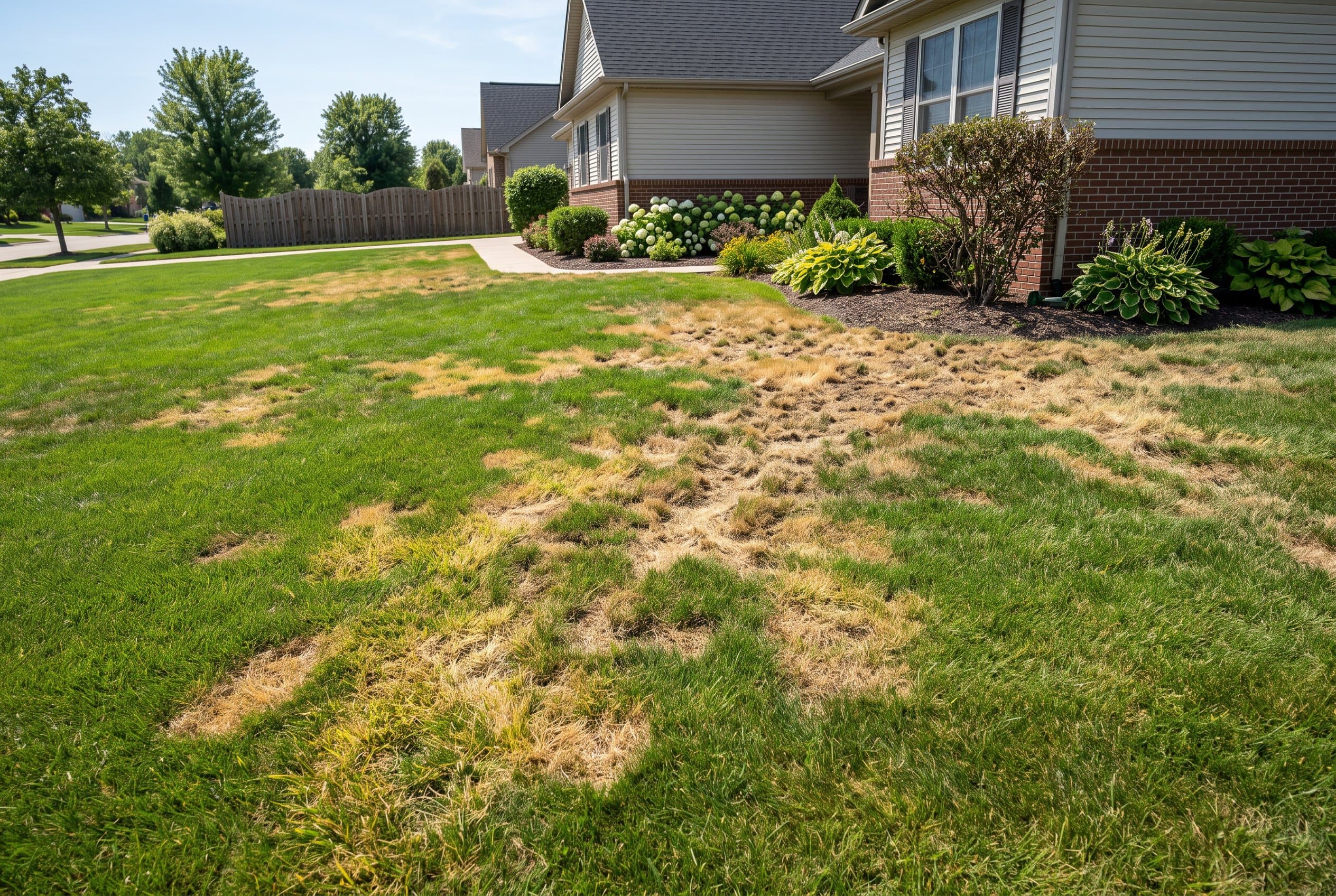
Chinch bug damage looks like irregular patches of grass that turn yellow, then brown and die, usually starting in hot, sunny spots near driveways and sidewalks. Unlike drought stress, it won't green up after you water it. To confirm chinch bugs — not drought or fungus — are the cause, do the flotation test: push a coffee can into the soil at the patch's edge, fill it with water, and watch for insects floating to the surface within five minutes. Early detection and targeted treatment are key to saving your lawn.
Key Takeaways
- Chinch bug damage looks like drought stress but won't recover with watering
- Damage typically starts in sunny, dry spots and spreads in irregular patches
- St. Augustine, zoysia, and centipede grasses are most commonly affected
- The coffee can flotation test is a reliable DIY detection method
- Treat at the first sign of damage — infestations spread quickly in summer heat
Introduction
Few lawn problems are more frustrating than chinch bug damage. Because the dead patches resemble drought stress or fungal disease, many homeowners water more — which doesn't help and can even worsen conditions. Understanding what chinch bugs are, how to find them, and when to act can save you hundreds of dollars in lawn repair.
Chinch Bug Damage Signs
Chinch bug damage starts as small, irregular yellow patches that gradually turn brown and die[1]. Unlike typical drought stress, the damage does not green up after rain or irrigation.
Key visual clues include:
- Yellowing that begins in hot, sunny areas near sidewalks or driveways
- Patches that expand outward as bugs move to healthy grass at the edges
- Turf that pulls up easily with no grub activity underneath
- A visible ring of yellowing grass surrounding dead brown centers
Damage is most intense from late June through August when temperatures are consistently above 80°F and soil moisture is low[2].
Southern Chinch Bug vs. Common Chinch Bug
The southern chinch bug (Blissus insularis) is the primary pest in warm-season lawns across the Southeast and Gulf Coast, particularly in St. Augustine grass[3]. The common chinch bug targets cool-season grasses like Kentucky bluegrass in the Midwest and Northeast. Both cause similar damage but prefer different grass types and climates.
Chinch Bug Damage vs. Drought Stress
Chinch bug damage and drought stress look almost identical at first glance — both show up as yellowing in hot, sunny parts of the lawn. The difference reveals itself at the hose: drought-stressed grass typically regains some green within a day or two of consistent watering, while chinch bug damage does not green up after rain or irrigation[1]. Chinch bug damage also keeps expanding outward in an irregular ring as the insects move into adjacent healthy turf, rather than staying confined like a dry patch would. If watering for several days doesn't bring the grass back, treat it as a pest problem and run the flotation test below before reaching for more water.
How to Confirm a Chinch Bug Infestation
Visual damage alone isn't enough to confirm chinch bugs — you need to find the insects themselves before treating[4].
The Flotation Test (Coffee Can Method):
- Remove both ends from a large metal can (coffee can size works well)
- Push the can 2–3 inches into the soil at the edge of a damaged patch
- Fill the can with water and keep it full for 5 minutes
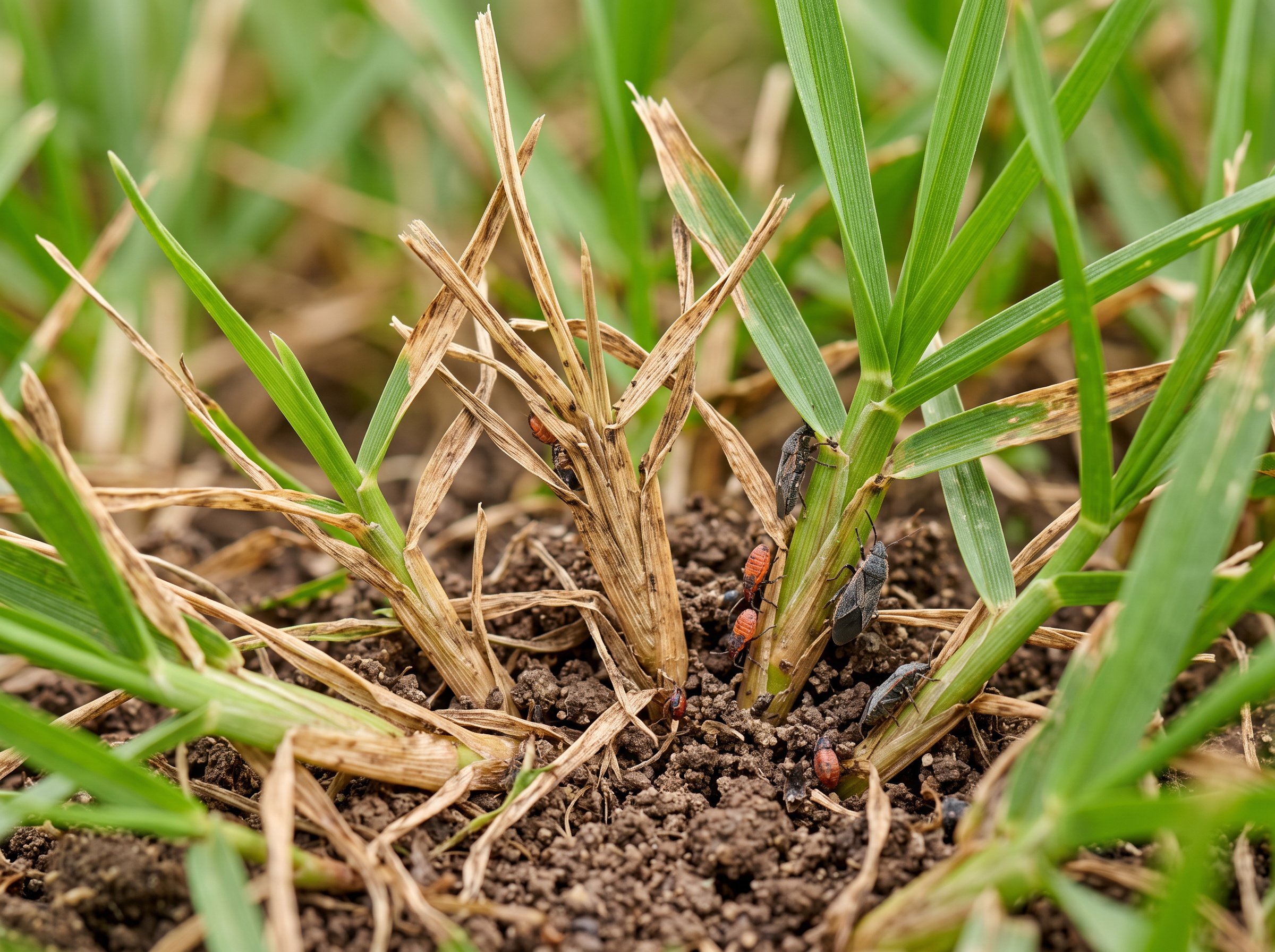
- Chinch bugs float — watch for small red, black, or white insects rising to the surface
- Finding 15–20 or more per square foot confirms a treatable infestation
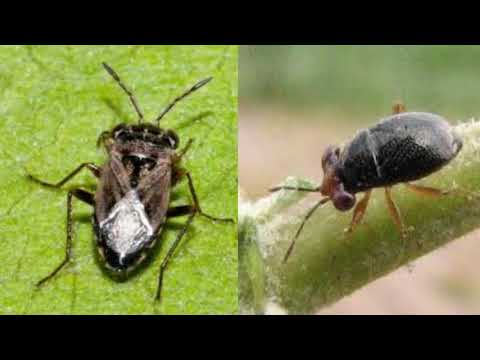
Adult chinch bugs are about 1/6 inch long, black with white wings folded flat across their backs. Nymphs are reddish-orange with a white stripe[1]. Always inspect the transition zone between healthy and dead grass — that's where active feeding occurs.
Chinch Bug Treatment Options
Once confirmed, treatment should happen quickly. A few proven approaches:
Insecticide Applications Granular or liquid insecticides containing bifenthrin, carbaryl, or permethrin are commonly used and effective when applied to the active feeding zone[2]. Water lightly after applying granules to activate them. Avoid treating during peak heat — early morning applications work best.
Reduce Thatch Thick thatch (over ½ inch) shields chinch bugs from insecticides and creates ideal habitat[5]. Dethatching before treatment improves product penetration and reduces harborage.
Improve Irrigation While water alone won't fix damage, consistent moisture makes grass more resilient. Chinch bugs prefer drought-stressed turf, so a proper irrigation schedule limits their advantage[3].
Resistant Grass Varieties For long-term prevention, consider replanting affected areas with chinch bug-resistant cultivars. Several St. Augustine varieties have shown improved resistance in university trials[4].
Repairing Chinch Bug Damage
Dead turf from chinch bugs will not recover on its own. Once insects are controlled:
- Remove dead grass and loosen the soil surface
- Reseed with a compatible grass variety or lay sod patches for faster results
- Water new growth consistently for the first 3–4 weeks
- Avoid heavy foot traffic until the new grass is established
Repair is best done in late summer to early fall for warm-season grasses, giving new growth time to establish before winter[5].
Conclusion: Act Early, Act Smart
Chinch bug damage is easy to misdiagnose but straightforward to treat when caught early. The moment you see irregular brown patches that don't respond to water, perform the flotation test. Confirm the pest, apply the right insecticide to the active zone, address thatch buildup, and repair damaged areas once the population is under control. Early intervention prevents a small problem from becoming a full-lawn replacement project.