Quick Answer
Fall armyworms are caterpillar pests that can strip a lawn of grass blades in just 2–3 days during late summer and early fall. If you spot irregular brown patches spreading rapidly, act immediately with an appropriate insecticide — timing is everything with these pests.
Key Takeaways
- Fall armyworms are most destructive in late August through October, especially in warm-season grass regions
- Look for ragged, chewed grass blades and rapidly expanding brown patches as the first warning signs
- Young (small) armyworms are far easier to kill than mature caterpillars — treat early
- Both synthetic and organic treatment options are available and effective when applied correctly
- Healthy, well-maintained lawns recover more quickly after an infestation
Introduction
Few lawn pests move as fast or cause as much visible damage as fall armyworms. Named for their habit of marching in large groups across turf, these caterpillars can turn a green lawn brown almost overnight. Understanding their life cycle, how to spot them early, and how to respond quickly can mean the difference between a full recovery and a complete lawn reseeding project.
How Do I Know If I Have Fall Armyworms?
Fall armyworms (Spodoptera frugiperda) are the larval stage of a moth that migrates northward from subtropical regions each summer[1]. The moths lay eggs on grass blades and structures near lawns, and hatching caterpillars begin feeding almost immediately[2].
Signs to watch for:
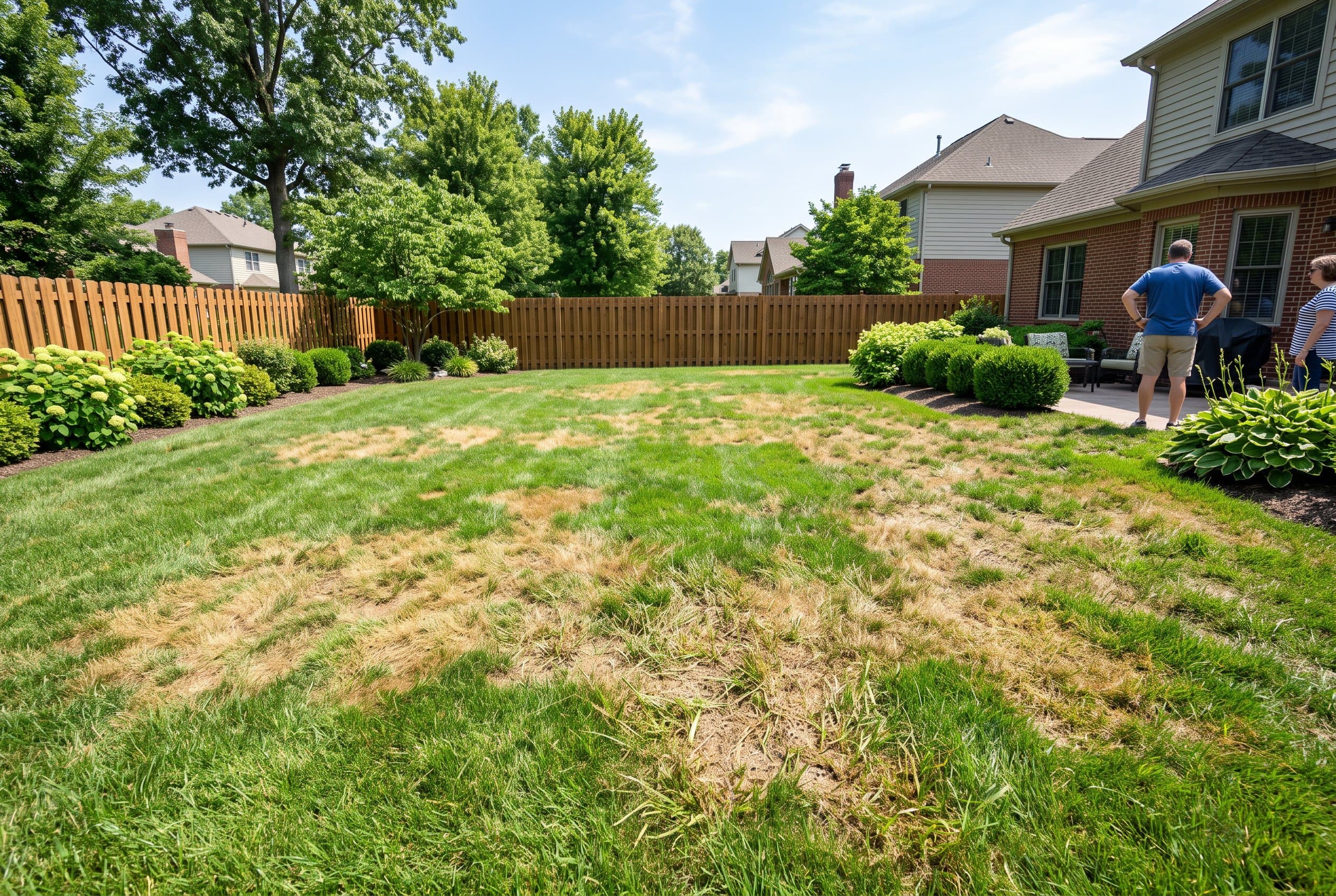
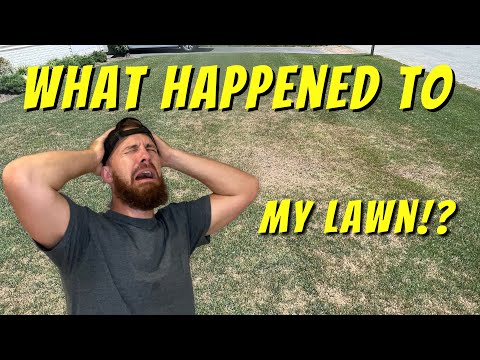
- Irregular brown or tan patches that appear suddenly and expand quickly
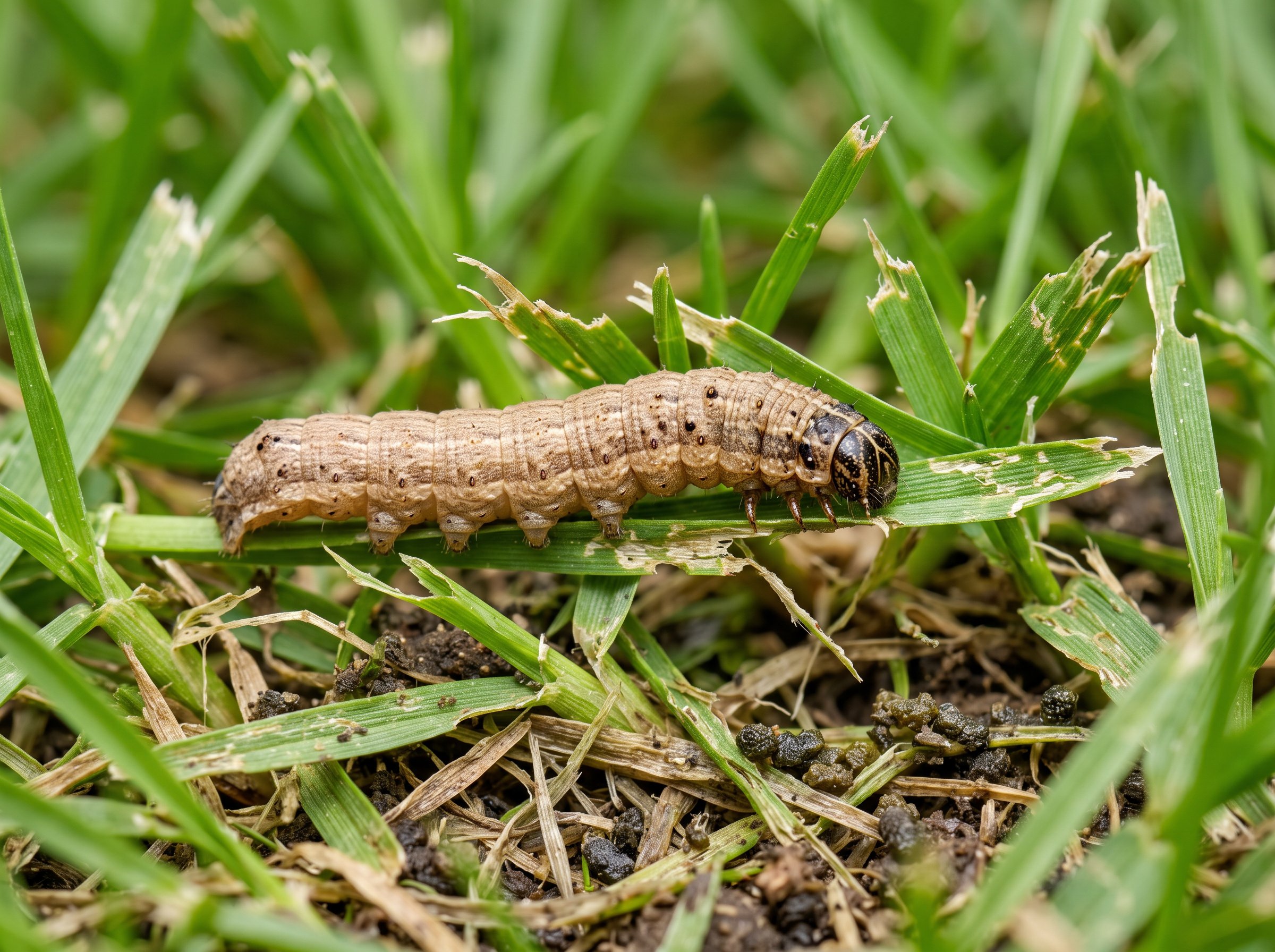
- Grass blades that look ragged, chewed, or skeletonized
- Birds flocking to your lawn — they're hunting caterpillars
- Small green or brown droppings (frass) visible on grass
- Caterpillars active in the grass, especially during cooler morning hours
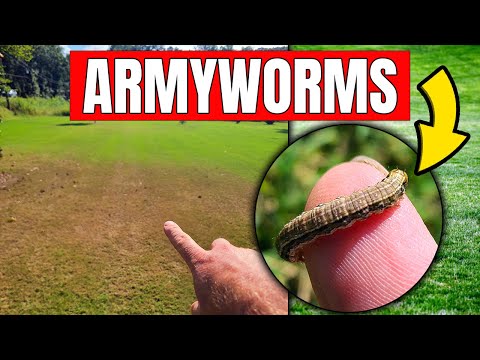
The caterpillars themselves are greenish-brown to gray with a distinct inverted Y-shape on their head and stripes running along their body[1]. Mature larvae reach about 1.5 inches in length. A simple soap flush test — mix 2 tablespoons of dish soap into 1 gallon of water and drench a 1-square-foot area — will cause armyworms to surface within minutes, confirming their presence[3].
What Do Fall Armyworm Infestations Look Like Up Close?
Understanding the visual progression helps you act before peak damage sets in. Infestations typically follow a predictable pattern[2].
Early stage (Days 1–3): You may notice small, circular patches of lighter-colored or thinning grass. Young caterpillars are tiny and feed lightly, scraping the surface of blades rather than devouring them whole.
Mid stage (Days 4–7): Patches expand rapidly and grass blades appear chewed down to the stem. The brown areas may look like drought stress, but the damage boundary is irregular and advances fast.
Late stage (Days 7–14): Large sections of lawn are stripped. Mature caterpillars consume entire grass plants, leaving bare soil. At this point, treatment is harder — large caterpillars require higher insecticide rates and are more resistant[3].
Warm-season grasses like bermudagrass and St. Augustine are favorite targets, though fall armyworms will also attack fescue and ryegrass[4].
What's the Best Way to Treat Fall Armyworms?
Treat as soon as you confirm an infestation — ideally when caterpillars are still small (less than 3/4 inch)[2].
Synthetic insecticide options:
- Products containing bifenthrin, lambda-cyhalothrin, or spinosad are effective and widely available
- Apply in the late afternoon or evening when armyworms are most active
- Do not water for 24 hours after treatment to keep the product on the grass surface
Organic options:
- Bacillus thuringiensis (Bt) is a naturally occurring bacteria that kills young caterpillars without harming beneficial insects[5]
- Spinosad, while listed as organic, is highly effective even on slightly larger larvae
- Beneficial nematodes can help but work best as a preventive measure
Application tips:
- Mow before treating to improve product penetration
- Water lightly before applying to activate soil-applied granules
- Recheck the lawn 3–5 days after treatment for surviving caterpillars
Once armyworms are controlled, overseed bare patches promptly if you're in the fall overseeding window, or wait until spring for warm-season grasses[4].
How Can I Prevent Fall Armyworms Next Year?
While you can't stop moths from migrating, you can make your lawn less hospitable and catch problems earlier[1].
- Inspect weekly from late July through October — walk the lawn and look for early feeding damage
- Maintain proper fertility — avoid excessive nitrogen, which creates the lush, soft growth armyworms prefer
- Mow at the correct height — overly tall grass holds moisture and provides cover for larvae
- Encourage natural predators — birds, parasitic wasps, and ground beetles all prey on armyworms
- Consider preventive insecticide treatments if you had infestations in prior years
Healthy turf with deep roots and proper irrigation practices recovers faster and is better able to tolerate partial defoliation[5].
What to Do Next
If you suspect fall armyworms, do the soap flush test today. If you confirm larvae, purchase an appropriate insecticide and treat the same evening. Monitor closely over the following week and plan to overseed any bare spots before temperatures drop. Acting within 24–48 hours of detection is the most important factor in minimizing damage to your lawn.