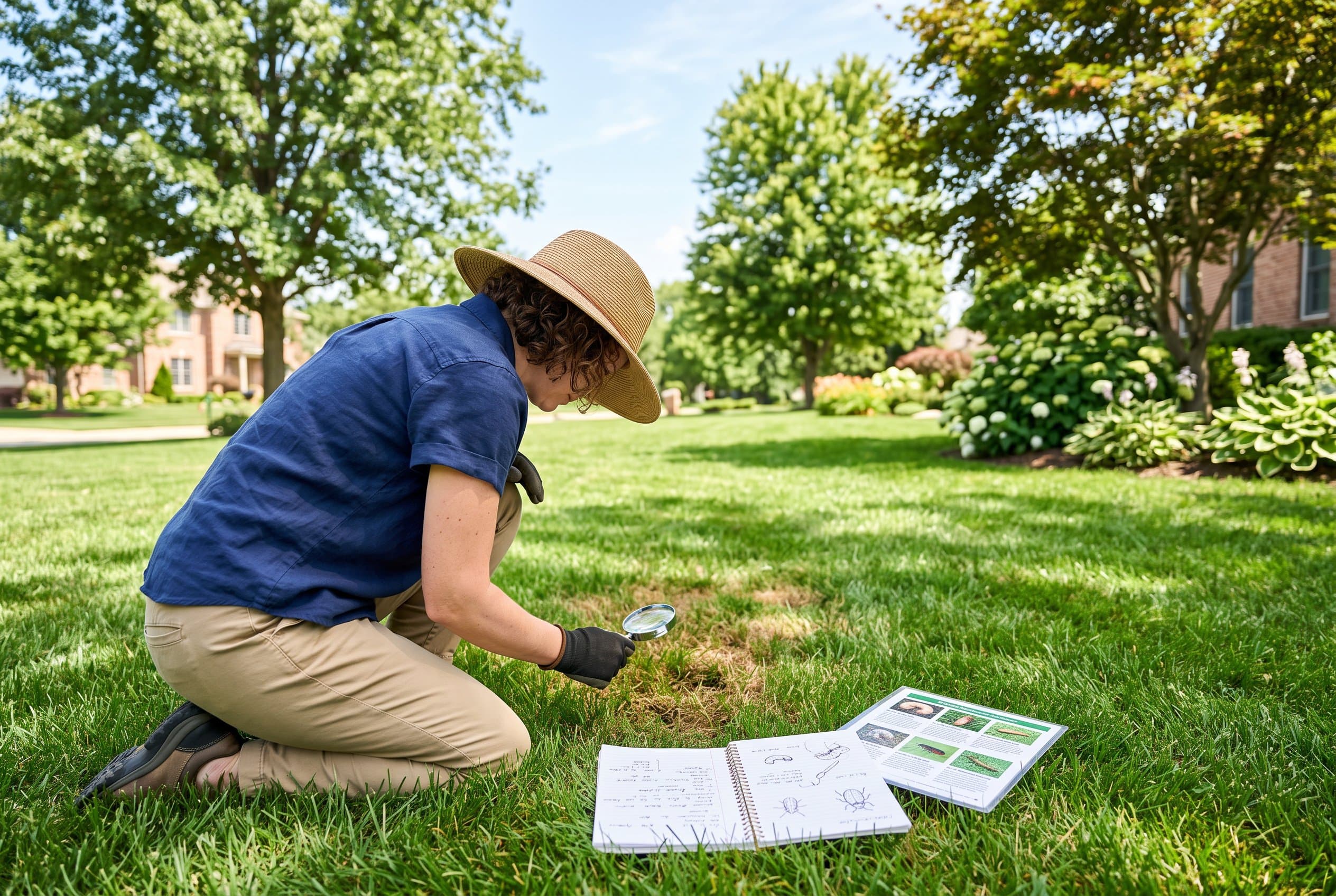

Quick Answer: The most common lawn pests include grubs, chinch bugs, armyworms, sod webworms, and billbugs — each causing distinct damage patterns you can identify by looking closely at your turf and soil. Early identification is key: catching an infestation before it spreads can save your lawn and reduce the need for heavy pesticide use. Knowing what to look for by season puts you ahead of most pest problems[1].
Key Takeaways:
- Different pests leave different clues — brown patches, chewed blades, or spongy turf all point to different culprits
- Timing matters: most damaging pest activity occurs in late spring through early fall
- A simple soap flush test can reveal soil-dwelling pests hiding beneath the surface
- Not every bug you see is a pest — beneficial insects help control harmful populations
- When in doubt, contact your local cooperative extension for free or low-cost pest ID help
Introduction
A brown, thinning, or patchy lawn isn't always a watering or soil problem. Insects are responsible for millions of dollars in lawn damage each year across the U.S., yet many homeowners misdiagnose the issue and waste money treating the wrong thing[2]. This guide walks you through the most common lawn pests, how to spot them, and what action to take.
What Are the Most Common Lawn Pests to Know?
White Grubs
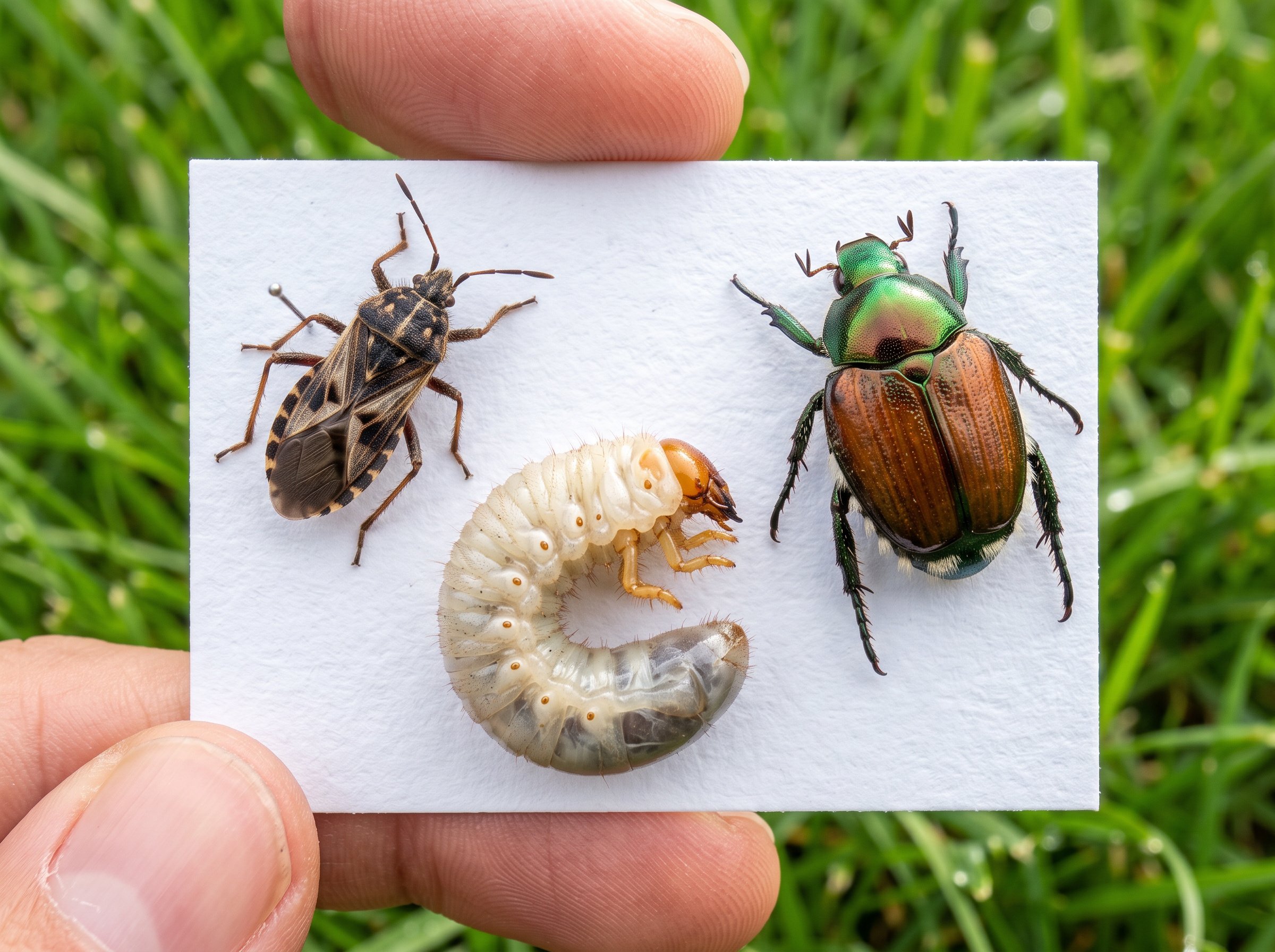
Grubs are the larvae of beetles (Japanese, June, and masked chafer beetles). They live in the soil and feed on grass roots, causing irregular brown patches that peel back like loose carpet[3]. Look for spongy turf and increased bird or skunk activity digging in your lawn — both signs grubs are present underground.
- Peak activity: Late summer through fall
- Damage sign: Turf lifts easily; C-shaped white larvae visible 2–4 inches deep
- Threshold: 6–10 grubs per square foot typically warrants treatment
Chinch Bugs
These tiny (1/6-inch) black-and-white insects suck plant juices from grass stems, injecting a toxin that causes yellowing and death. They thrive in hot, dry conditions and are most problematic in sunny areas with thatch buildup[1].
- Peak activity: Mid-summer
- Damage sign: Yellow-to-brown patches spreading outward from sunny spots
- Test: Part the grass near the damage edge and look for fast-moving tiny bugs
For the full damage-sign checklist and how to tell it from drought stress, see our guide to chinch bug damage.
Armyworms and Sod Webworms
Both are caterpillar-stage pests that chew grass blades. Armyworms feed aggressively in large groups, often overnight. Sod webworms are smaller and leave a ragged, close-cropped appearance to turf[4].
- Peak activity: Late summer
- Damage sign: Chewed blades, birds foraging heavily, grass looks scalped
- Test: Soap flush (see next section)
Billbugs
Billbug larvae feed on grass stems at or below the soil surface. The damage looks similar to drought stress — tan patches that don't recover with watering. Pull affected grass stems: if they break off cleanly with no roots, billbugs may be the cause[2].
How Do You Test Your Lawn for Pests?
Visual clues are helpful, but hands-on testing gives you confirmation before spending money on treatments.
The Soap Flush Test
Mix 2 tablespoons of dish soap into 1 gallon of water. Pour the mixture over a 1-square-foot patch of suspected turf. Wait 2–3 minutes. Surface-dwelling pests like chinch bugs, armyworms, and sod webworms will crawl to the surface[3]. Count what you find and cross-reference with the pest descriptions above.
The Turf Pull Test
Grab a handful of brown or discolored turf and pull gently. Healthy grass resists pulling. Grub-damaged grass lifts away easily because the roots are gone. Billbug damage causes stems to snap cleanly at or below the thatch layer[4].
Soil Dig Inspection
Use a shovel or trowel to cut a 1-square-foot section, 3–4 inches deep, in a damaged area. Flip it over and inspect for larvae. White, C-shaped grubs are the most common find. Presence of 6 or more per square foot is generally the treatment threshold for most turf types[5].
When Should You Treat Lawn Pests by Season?
Timing treatments to pest life cycles dramatically improves results and reduces chemical use[5].
Spring:
- Billbug adults become active; apply preventive treatments if you've had past infestations
- Scout for overwintering grubs that may resume feeding
Summer:
- Peak season for chinch bugs, sod webworms, and armyworms
- Monitor weekly during hot, dry stretches
- Apply curative treatments when pest counts exceed thresholds
Fall:
- Young grubs are near the surface and most vulnerable to treatment
- Best window for curative grub control[3]
- Sod webworm activity winds down as temperatures drop
Winter:
- No active pest treatment needed in most climates
- Review damage from the season; plan preventive strategy for spring
What's the Right Treatment Approach?
Not every pest sighting requires treatment. Beneficial insects, natural predators, and healthy turf can handle low-level pressure on their own[6]. If populations exceed damage thresholds:
- Biological controls: Beneficial nematodes work well against grubs and some caterpillars when soil is moist and warm
- Targeted insecticides: Select products labeled for the specific pest; blanket treatments harm beneficial insects unnecessarily
- Cultural practices: Proper mowing height, reduced thatch, and appropriate watering reduce pest habitat and stress on turf[1]
Always read product labels carefully and follow local regulations regarding pesticide use near waterways or pollinator habitat[6].
Conclusion
Identifying lawn pests early — before damage spreads — is the most effective and cost-efficient approach to pest management. Start with a visual inspection, run a soap flush test if needed, and match what you find to the pest profiles above. Treat only when pest counts cross established thresholds, and favor targeted controls over broad-spectrum applications. When you're unsure, your local cooperative extension office is one of the best free resources available for pest ID and treatment recommendations.