Quick Answer
The most effective Japanese knotweed killer for homeowners is a systemic herbicide containing glyphosate or triclopyr, applied repeatedly during active growth in late summer to early fall. Because knotweed stores energy in deep rhizomes, a single treatment is rarely enough — plan for a multi-year control program. Persistence is the key to success.
Key Takeaways
- Systemic herbicides (glyphosate or triclopyr) are the most reliable chemical control for Japanese knotweed
- Late summer to early fall is the optimal application window when the plant is moving energy to its roots
- Expect to treat for 3–5 years before achieving full control
- Never compost or leave cut knotweed stems on-site — even small fragments can re-root
- Manual removal alone is rarely effective; combine it with herbicide for best results
Introduction
Japanese knotweed (Fallopia japonica) is one of the most aggressive invasive plants in North America and Europe. Its hollow bamboo-like stems can grow up to 10 feet tall, and its underground rhizome network can extend 10 feet deep and 65 feet outward[1]. Left unchecked, it can damage building foundations, drainage systems, and crowd out native vegetation. Fortunately, with the right herbicide strategy and timing, homeowners can bring it under control.
What Herbicide Actually Kills Japanese Knotweed?
Systemic herbicides are the gold standard because they travel through the plant's vascular system down into the root mass — the only way to kill knotweed from the inside out[2].
Glyphosate-Based Herbicides
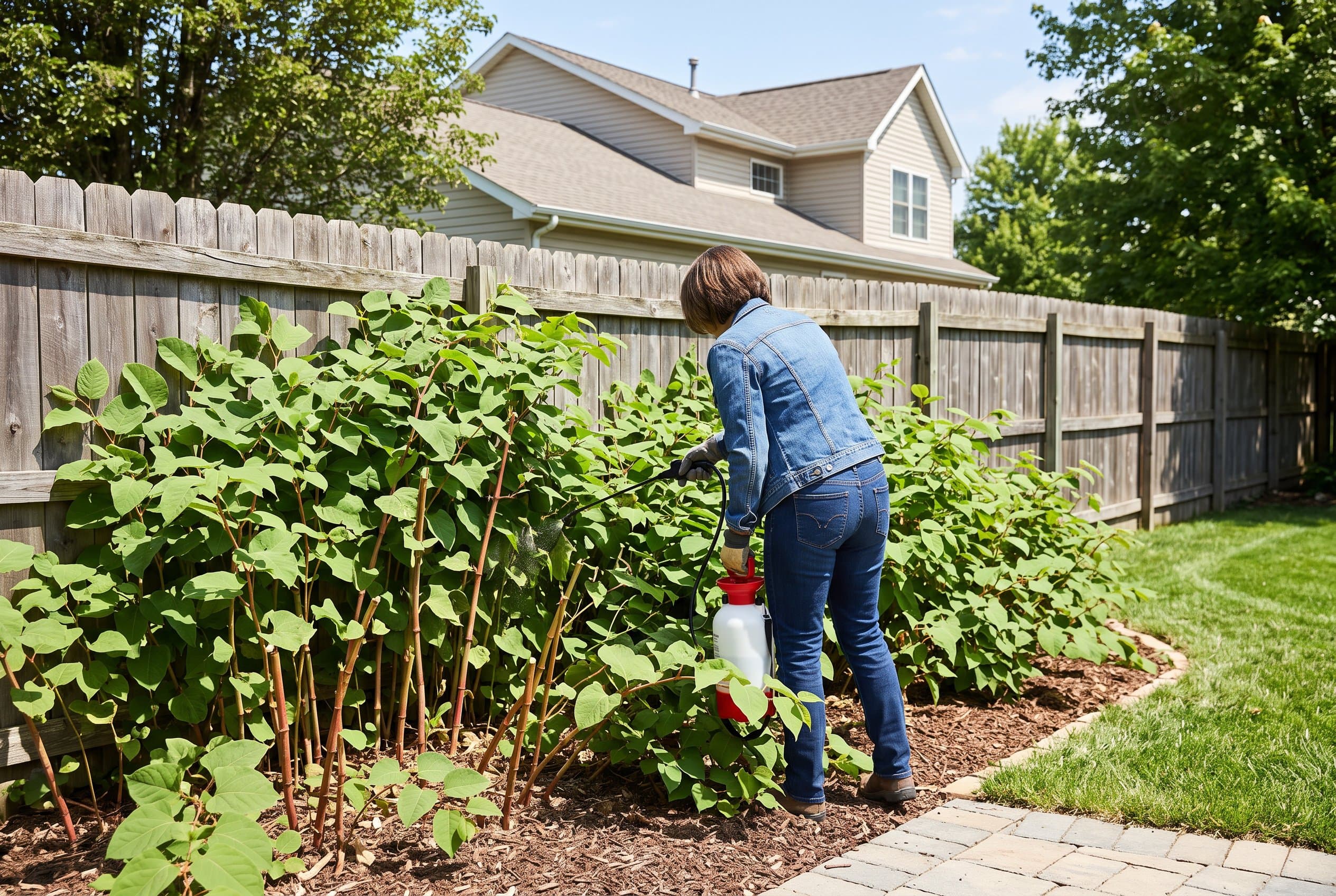
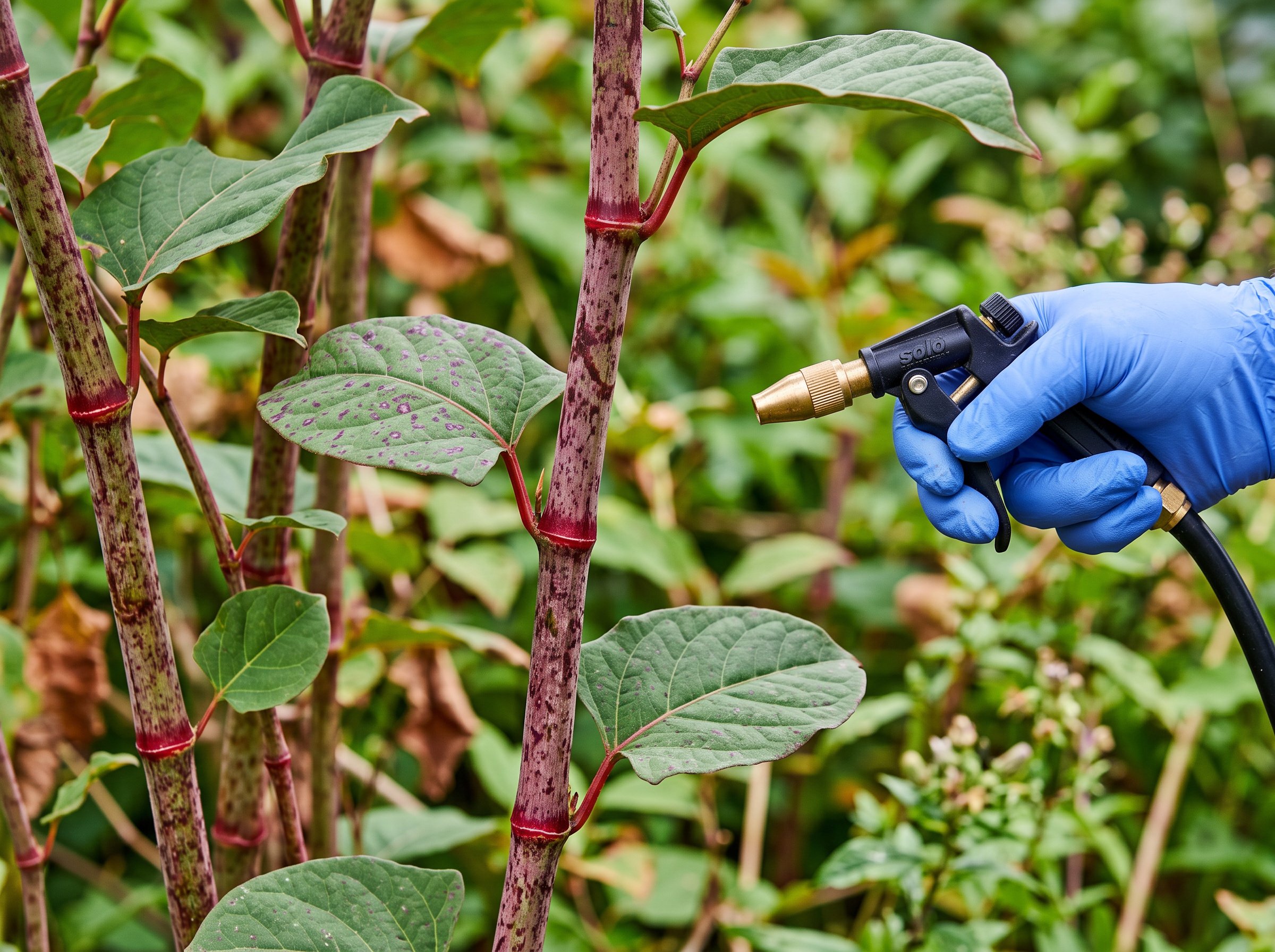
Glyphosate is the most widely recommended active ingredient for knotweed control. Apply it as a foliar spray to actively growing plants, ideally when stems are 5–7 feet tall. For best absorption, apply on a dry, calm day with no rain forecast for 24–48 hours[3].
Triclopyr-Based Herbicides
Triclopyr is a broadleaf-selective herbicide and a strong alternative, especially where glyphosate use near water is restricted. It can also be applied as a stem injection or cut-stem treatment, which reduces off-target spray drift[4].
Cut-Stem Method
For areas near water or sensitive plants, the cut-stem method is highly effective:
- Cut the stem close to the ground
- Immediately apply concentrated herbicide directly into the hollow stem
- Repeat for every stem in the colony
This targeted approach minimizes chemical exposure to surrounding plants and soil[2].
How to Apply Japanese Knotweed Killer Step by Step
Following a structured approach each season dramatically improves your success rate[1][3].
Step 1: Identify and Map the Colony
Walk the property and mark the full extent of the infestation. Knotweed often spreads further underground than it appears above ground.
Step 2: Time Your Application
Target late summer (August–September) when the plant is translocating nutrients to its roots. This carries herbicide deep into the rhizome system, maximizing kill rate[5].
Step 3: Mix and Apply Herbicide
Follow label directions precisely. For foliar sprays, add a surfactant (a drop of dish soap works) to help the herbicide stick to knotweed's waxy leaves. Wear protective gloves, eye protection, and long sleeves.
Step 4: Cut and Dispose
After stems die back in fall, cut them and bag all plant material. Never place knotweed in your compost bin — bag it for landfill disposal[4].
Step 5: Repeat the Following Season
Re-treat any regrowth the following spring or summer. Most infestations require treatment every year for 3–5 seasons[1].
When Is the Best Time to Treat Japanese Knotweed?
Timing is everything with knotweed herbicide applications[5].
- Spring (May–June): Young shoots can be cut to weaken the plant, but herbicide is less effective at this stage
- Late Summer (August–September): Prime window — the plant actively moves sugars to its roots, pulling herbicide with them[3]
- Fall (October+): Treat any remaining green foliage before the first frost; effectiveness drops as temperatures fall below 50°F
- Winter: No treatment possible — wait for spring regrowth
Avoiding herbicide application during flowering (typically July) is also advisable to protect visiting pollinators[6].
Does Cutting or Digging Out Japanese Knotweed Work?
Physical removal alone is rarely successful but serves as a useful companion to herbicide treatment[2]. Rhizome fragments as small as 0.7 inches can regenerate into new plants, making complete excavation extremely difficult without professional equipment[1]. Regular cutting (every 2–3 weeks through the growing season) can exhaust the plant's energy reserves over several years, but this method demands sustained commitment and works best alongside chemical control.
Never rotovate or till a knotweed patch — this spreads root fragments and makes the problem significantly worse.
Conclusion: Your Action Plan
Declaring war on Japanese knotweed requires patience, but you can win with the right approach:
- This season: Apply glyphosate or triclopyr in late August–September using foliar spray or the cut-stem method
- After dieback: Cut and bag all dead stems — no composting
- Next spring: Monitor for regrowth and cut emerging shoots to weaken reserves
- Following summer: Repeat herbicide treatment on any regrowth
- Years 3–5: Continue monitoring and spot-treating until regrowth stops
Stay consistent, dispose of plant material carefully, and never let knotweed flower and set seed. With a multi-year commitment, homeowners can successfully eliminate even large infestations.