
Quick Answer
Yellow nutsedge and purple nutsedge are both warm-season sedge weeds that invade lawns, but they differ in flower color, leaf width, and regional range. Yellow nutsedge is more common across the U.S. and prefers wet, poorly drained soils, while purple nutsedge is more aggressive, thrives in warmer climates, and is harder to control. Both require targeted sedge-specific herbicides — standard broadleaf weed killers won't work.
Key Takeaways
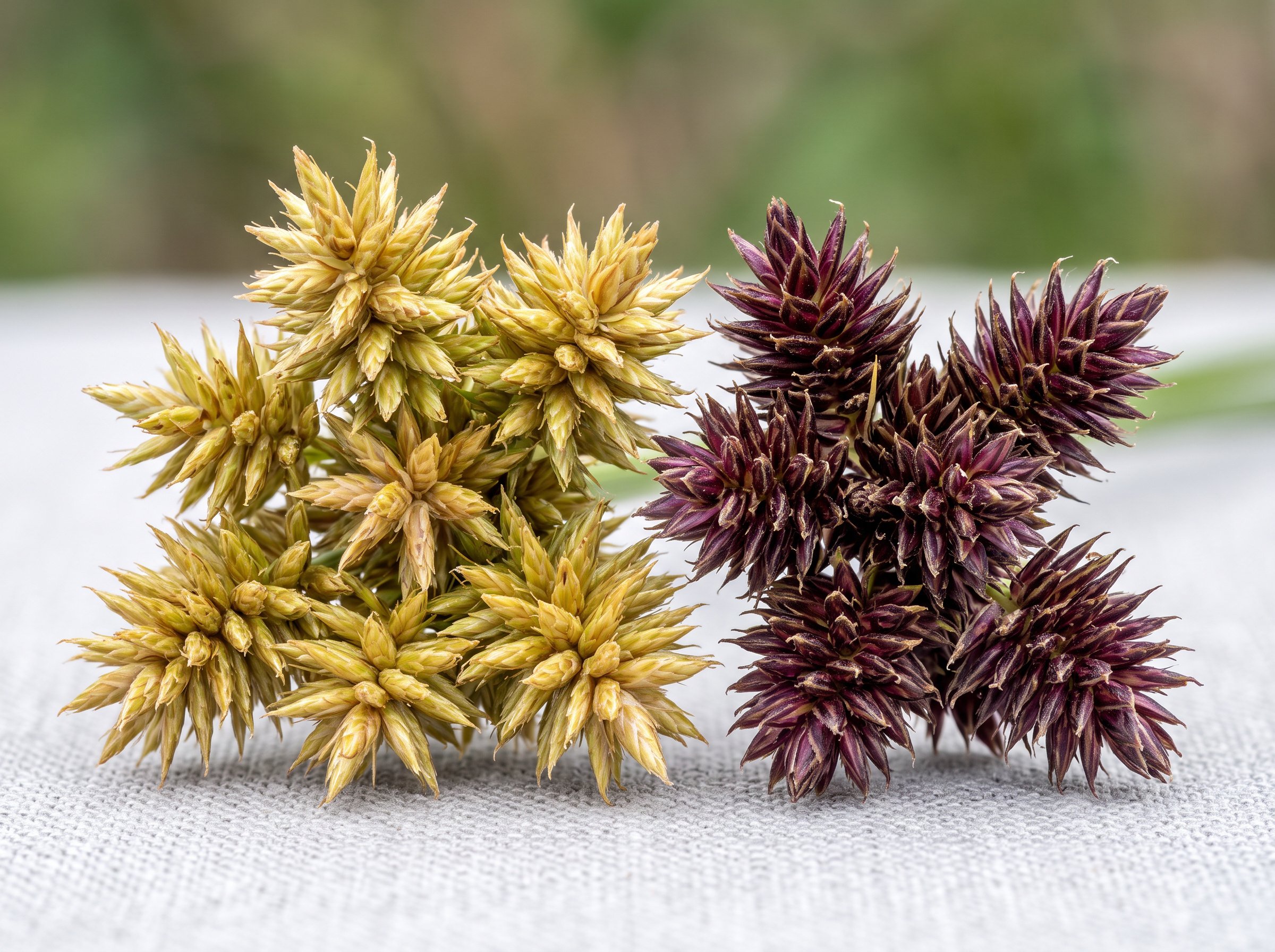
- Yellow nutsedge has yellow-brown seed heads; purple nutsedge has reddish-purple seed heads
- Purple nutsedge is considered one of the world's worst agricultural weeds
- Both spread through underground tubers called nutlets, making hand-pulling largely ineffective
- Standard lawn herbicides skip right past sedges — you need a sulfonylurea-based sedge killer
- Improving lawn drainage is the best long-term prevention for yellow nutsedge
Introduction
If your lawn has fast-growing, light-green clumps that seem to pop up overnight and dull your mower blades, you're likely dealing with nutsedge. Though it looks like a grass, nutsedge is actually a sedge — a completely different plant family requiring different control strategies[1]. Understanding which species you have helps you choose the most effective treatment and know what level of persistence you're in for.
How Do You Tell Yellow and Purple Nutsedge Apart?
Both species share a triangular stem (the old gardener's saying: "sedges have edges"), but several visual clues help you distinguish them quickly[2].
Yellow Nutsedge vs Purple Nutsedge Comparison
| Feature | Yellow Nutsedge | Purple Nutsedge |
|---|---|---|
| Seed Head Color | Yellow-brown | Reddish-purple |
| Leaf Width | Wider, light green | Narrower, darker green |
| Leaf Tip | Tapers gradually | More abrupt tip |
| Nutlet Chains | Single tubers | Chain-like rhizomes |
| Common Range | Nationwide | Southeast, Gulf Coast, Southwest |
| Aggressiveness | Moderate | Very aggressive |
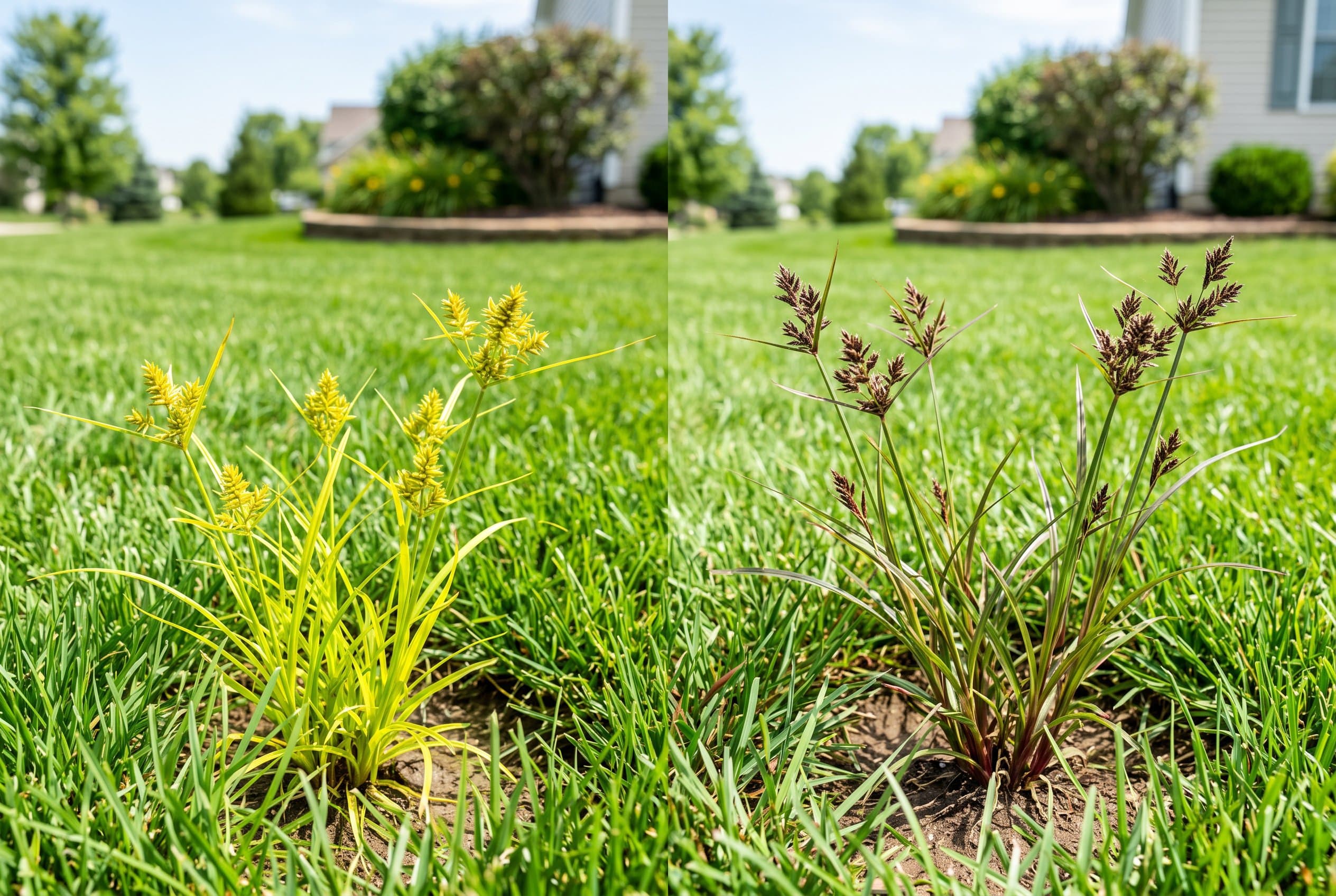
Yellow nutsedge (Cyperus esculentus) typically grows in isolated clumps, especially in low, wet areas of your yard. Purple nutsedge (Cyperus rotundus) spreads in dense patches and produces chains of nutlets underground, making it far more difficult to eliminate[3]. If you're in the Deep South or Gulf Coast region and nutsedge is taking over large sections of lawn, purple nutsedge is the more likely culprit.
What Does Each Weed Look Like Up Close?
Getting familiar with the visual details will help you confirm your identification before buying any product.
Yellow Nutsedge Identification
- Leaves are light yellowish-green, wider than purple nutsedge
- Seed head is golden-brown to straw-colored at maturity
- Grows most aggressively in summer, dies back in fall[4]
- Nutlets are single and found at the end of each rhizome
Purple Nutsedge Identification
- Leaves are darker green, slightly narrower, and glossy
- Seed head turns reddish to deep purple when mature
- Remains more persistent in warm climates year-round
- Underground nutlets form in chains along rhizomes, meaning one plant can have dozens of regrowth points[3]
A quick trick: pull a leaf and look at the base. Purple nutsedge leaves attach in sets of three at the base with a distinct "V" shape; yellow nutsedge has a more gradual taper.
How Do You Control Nutsedge in Your Lawn?
Control requires a two-part strategy: targeted herbicide application plus fixing the conditions that allow nutsedge to thrive[1].
Choose the Right Herbicide
Look for sedge-specific herbicides containing active ingredients like halosulfuron-methyl or sulfentrazone. These are labeled for sedge control and won't harm most turfgrasses when used as directed[5]. Apply when nutsedge is young and actively growing — early summer is ideal. Mature plants and those with extensive nutlet networks will need repeat applications.
- Yellow nutsedge: Often responds after 1-2 applications in a single season
- Purple nutsedge: May require 2-3 seasons of consistent treatment due to chained nutlets[3]
Always read the herbicide label to confirm your grass type is listed as safe — some products are not suitable for St. Augustine or centipede lawns.
Improve Conditions to Prevent Regrowth
Yellow nutsedge in particular loves waterlogged soil[4]. After controlling the weed, address the root cause:
- Aerate compacted areas to improve drainage
- Fix low spots where water pools after rain
- Avoid overwatering and adjust irrigation run times
- Maintain a thick, healthy turf through proper fertilization and mowing height — a dense lawn crowds out sedge seedlings
For purple nutsedge in warm climates, drainage improvements help but won't fully solve the problem. Consistent herbicide applications over multiple seasons are usually necessary[2].
Conclusion
The fastest way to tell these two weeds apart is the seed head: golden-yellow means yellow nutsedge, reddish-purple means purple nutsedge. Both need sedge-specific herbicides — not standard weed killers — applied during active summer growth. Start with one application in early summer, reassess in 4-6 weeks, and repeat as needed. If you're dealing with purple nutsedge, set realistic expectations: full control may take two to three seasons of consistent effort. Pair chemical control with better drainage and a thick, healthy lawn to keep nutsedge from returning.