Quick Answer
Core aeration is almost always the better choice for compacted lawns. It physically removes small plugs of soil, creating real channels for air, water, and nutrients to reach grass roots. Spike aeration only pokes holes without removing any soil, which can actually worsen compaction over time.
Key Takeaways
- Core aeration removes soil plugs; spike aeration just pushes soil aside
- Core aeration is recommended by turf professionals for most compaction problems
- Spike aeration works in limited situations, like very light maintenance on sandy soils
- Cool-season grasses benefit most from fall core aeration; warm-season grasses do best in late spring
- Soil plugs left on the surface after core aeration break down naturally within 2–4 weeks
Introduction
If your lawn looks tired, drains poorly after rain, or feels rock-hard underfoot, compaction is likely the culprit. Aeration is the fix — but not all aeration methods work equally well. Understanding the difference between core and spike aeration helps you choose the right approach and avoid wasting time or making the problem worse[1].
What Is the Difference Between Core and Spike Aeration?
Both methods create openings in the soil surface, but they work in fundamentally different ways.
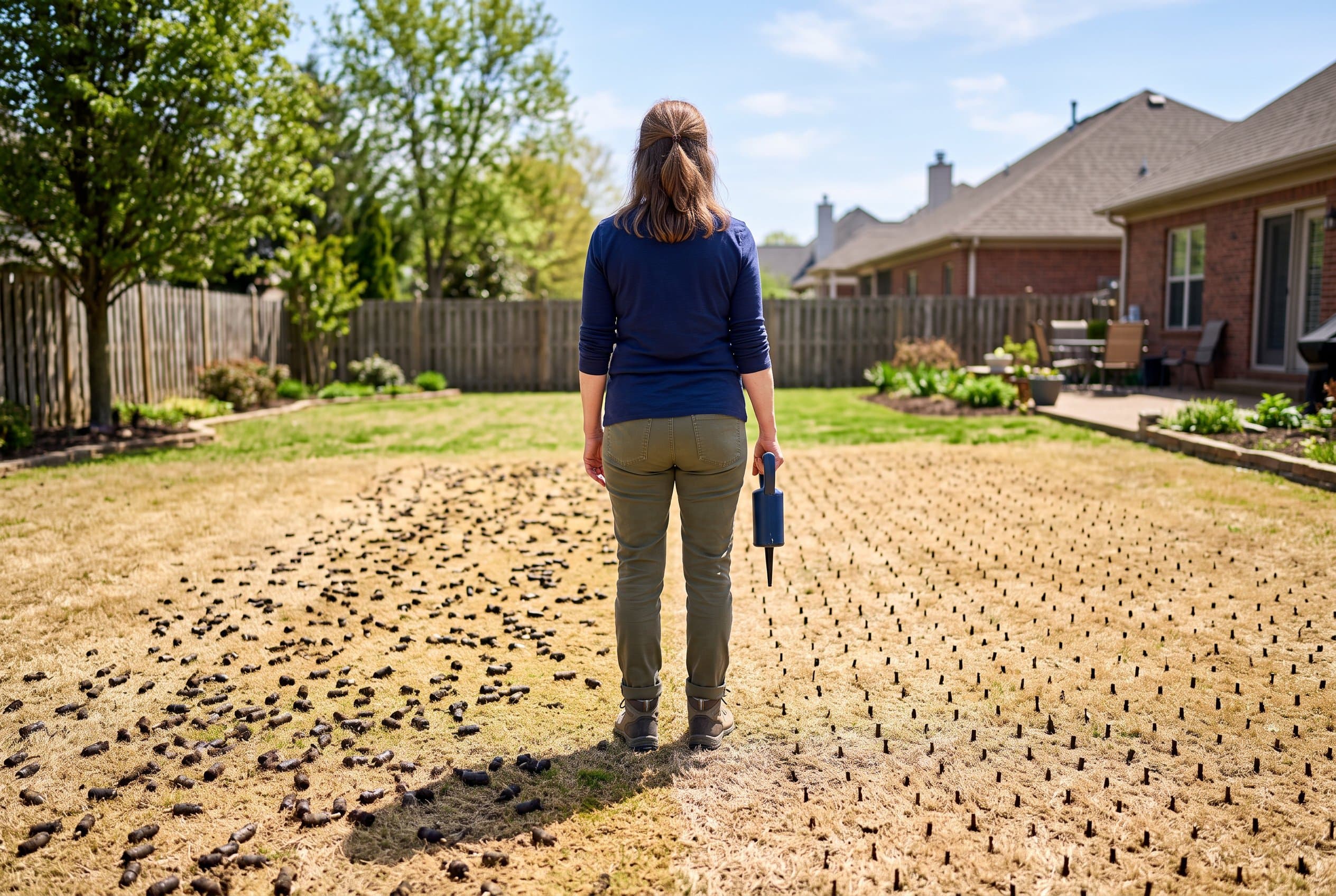
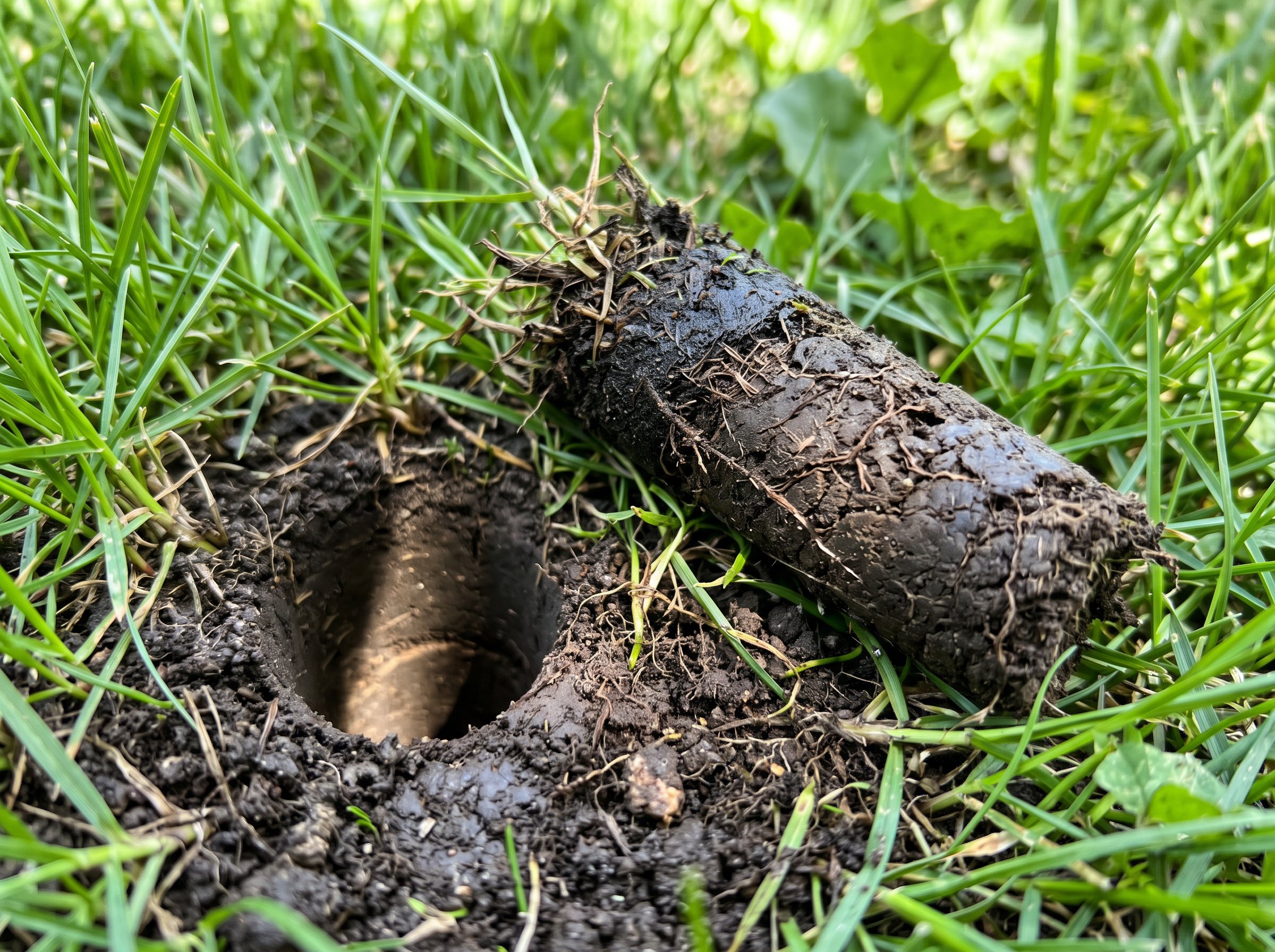
Core aeration (also called plug aeration) uses hollow tines that punch into the soil and pull out cylindrical cores of earth — typically ½ inch in diameter and 2–3 inches deep. These plugs are deposited on the lawn surface. The result: genuine open channels that stay open[2].
Spike aeration uses solid tines or spikes to poke holes in the soil. No material is removed. Instead, soil is displaced sideways and downward — compressing the surrounding soil even more. This can temporarily improve surface drainage but rarely addresses deep compaction[3].
Core vs Spike Aeration Comparison
| Feature | Core Aeration | Spike Aeration |
|---|---|---|
| Soil Removal | Yes — plugs removed | No — soil displaced |
| Compaction Relief | High | Low to none |
| Channel Longevity | Weeks to months | Days |
| Best Soil Type | Clay, compacted soils | Sandy, low-traffic soils |
| Equipment Cost | Higher (rental ~$60–$90/day) | Lower (manual tools available) |
| Frequency Needed | Once or twice per year | Multiple times per season |
How Does Each Method Work in Practice?
Core aeration is typically done with a walk-behind or tow-behind aerator available at most equipment rental shops. For best results, make two passes over the lawn in perpendicular directions to maximize hole coverage[4]. After aeration, leave the plugs on the surface — they'll break down and return organic matter to the soil within 2–4 weeks.
Spike aerators range from strap-on sandal-style tools to rolling drum attachments. They're inexpensive and easy to use, but their benefit is short-lived because the displaced soil quickly shifts back and re-compacts.
Before aerating with either method:
- Mow the lawn slightly shorter than normal
- Water the lawn thoroughly 1–2 days beforehand to soften the soil
- Mark sprinkler heads and underground utilities to avoid damage
- Avoid aerating drought-stressed grass
After core aeration, it's an ideal time to overseed and fertilize, since seeds and nutrients can fall directly into the open channels[5].
When Should You Use Spike Aeration Instead of Core?
Spike aeration isn't completely without merit — it just has a narrow use case. It can work reasonably well when:
- Your soil is naturally sandy and doesn't compact heavily
- You want quick, light maintenance between full core aeration sessions
- You're aerating a small area where renting equipment isn't practical
For lawns with heavy clay soils, high foot traffic, or visible compaction symptoms (standing water, thinning grass, hard surface), core aeration is the clear choice[6].
When Is the Best Time to Aerate?
Timing matters as much as method. Aerating during active growth lets grass recover quickly and take advantage of the open channels.
- Cool-season grasses (tall fescue, Kentucky bluegrass, ryegrass): Aerate in early fall (late August through October) when temperatures are moderate and growth is strong[1]
- Warm-season grasses (bermudagrass, zoysia, centipede): Aerate in late spring to early summer, once the lawn is fully green and actively growing[3]
Avoid aerating during summer heat stress or winter dormancy — the lawn won't recover well and you risk damaging roots.
Conclusion
For most homeowners dealing with compacted soil, core aeration is the right tool. The small investment in renting a core aerator pays off significantly in healthier roots, better drainage, and a thicker lawn. Spike aeration is fine for occasional light maintenance but shouldn't be your primary compaction fix. Aerate at the right time for your grass type, overseed afterward if needed, and your lawn will show the difference within a few weeks.