Quick Answer
The best flea, tick, and ant killer for lawns depends on what you're fighting first. For fast knockdown of pests already active in your yard, a granular pyrethroid product or a bifenthrin concentrate spray is the most reliable choice[1]. If your lawn gets constant pet and kid traffic, a plant-based cedar oil yard spray is the lower-risk option[2]. On a large lawn with a tight budget, one granular application that lists all three pests on its label covers the most ground.
Key Takeaways
- Granules win for whole-lawn coverage and prevention; sprays win for fast knockdown and edge work.
- Match the active to the pest: contact pyrethroids for adult fleas, ticks, and ants; cedar oil for a minimum-risk, pet-friendly option[2].
- Grub killers are not flea, tick, or ant products — different actives, different target insects.
- Keep pets and kids off treated grass until it's dry, or for the label's re-entry interval[1].
- Fall applications interrupt flea and tick life cycles; spring and summer applications knock back active ant colonies[3].
A lawn hosting fleas, ticks, and ants at once has a coverage problem, not just a pest problem. All three live and travel in the top layer of your yard — thatch, soil surface, mulch edges, shaded borders — so the same surface-active insecticides can handle all three in one pass[4][5]. The trick is choosing the right format and the right active ingredient.
Granules vs. Spray: Which Is Better for Your Yard?
Granules: coverage and prevention
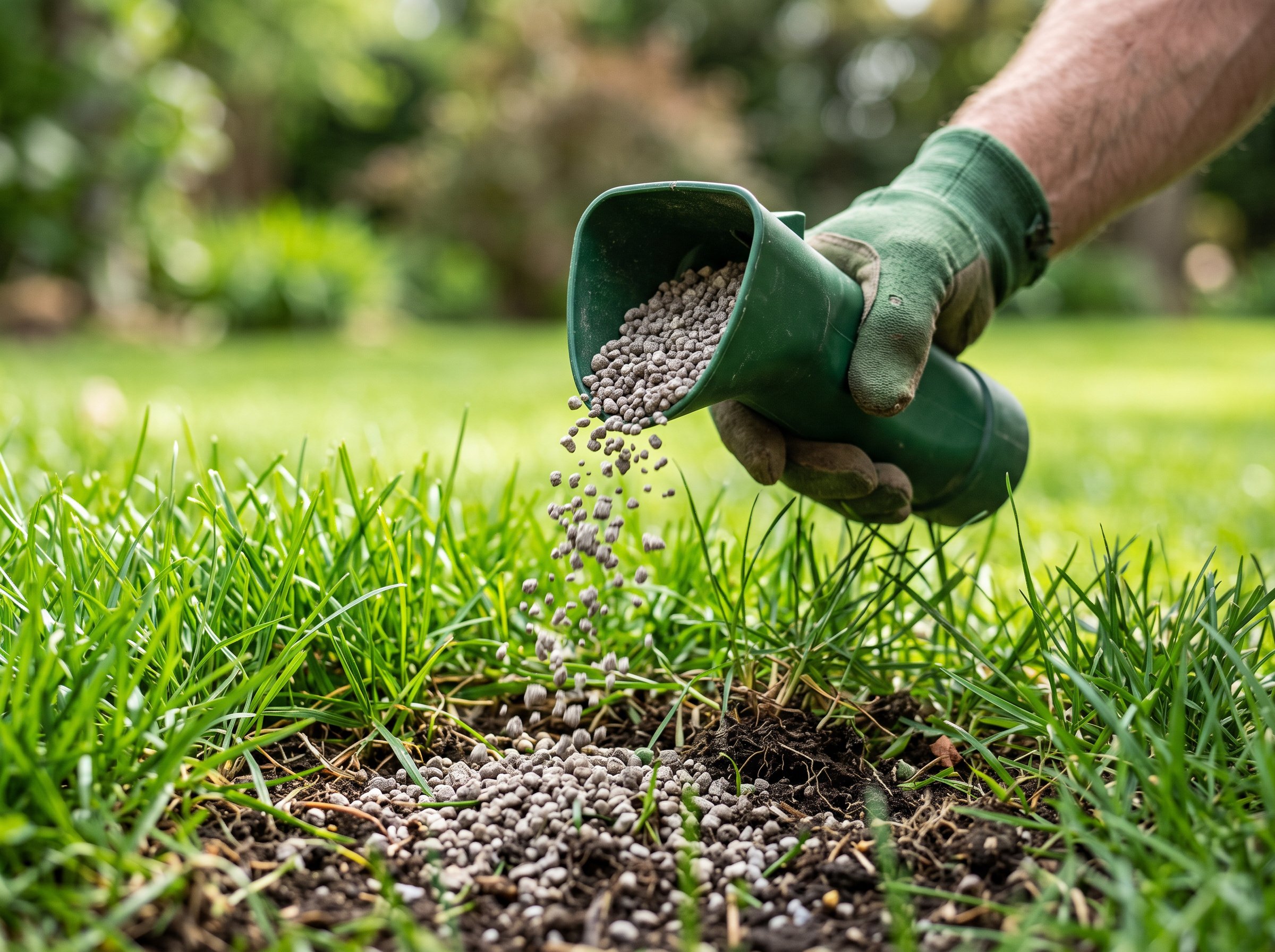
Granular products are broadcast with a spreader and watered in, settling the active ingredient into the thatch and topsoil where fleas and ants live[5]. They're the practical choice for a whole lawn, and the better buy when you're preventing next month's population rather than fighting today's. Follow-up timing depends on the product and pest pressure — the label on your specific product is the authority on how often to reapply[1].
Sprays: speed and precision
A concentrate mixed in a pump sprayer contacts adult fleas and ticks faster and lets you target fence lines, foundations, under decks, and shaded bedding areas where ticks and ant trails concentrate[4]. Ready-to-use cedar oil sprays do the same job with a plant-based active[2]. Reapplication frequency varies by product during peak season — check the label for the specific interval[1].
Rule of thumb: spray for knockdown, granulate for coverage.
How Do You Apply Flea, Tick, and Ant Killer Step by Step?
- Read the label first. Re-entry intervals, watering instructions, and pet warnings vary by product, and the label is the legal authority on how to use it[1].
- Prep the yard. Mow a couple of days ahead so product reaches the soil, and pick up toys, bowls, and pet waste.
- Apply evenly. Granules go down with a broadcast spreader, overlapping passes slightly. Sprays go on with a pump sprayer at the label's mix rate, working backward so you don't walk through wet product.
- Hit the edges harder. Fence lines, foundations, mulch beds, and shaded borders are where ticks and ant trails concentrate[4].
- Water in if directed. Many granules need irrigation to activate; cedar oil sprays just need to dry.
- Keep everyone off until dry. Pets, kids, and bare feet stay off until the surface is dry or the re-entry interval passes, then repeat at the label's interval — one application rarely ends a flea cycle[3].
What Active Ingredients Kill Fleas, Ticks, and Ants — and What Won't?
Outdoor flea, tick, and ant products fall into three groups: contact pyrethroids (gamma-cyhalothrin, bifenthrin, beta-cyfluthrin) that kill on contact with good surface residual; systemic soil actives like imidacloprid; and plant-based minimum-risk actives like cedar oil, which carries no EPA registration number and is the lower-risk pick for yards with frequent pet contact[2].
The trade-off is durability. Cedar oil and other minimum-risk actives generally break down faster than synthetic pyrethroids, so expect shorter residual control and more frequent reapplication — check the product label for its specific interval — compared with the multi-week residual of a bifenthrin or gamma-cyhalothrin application[2].
| Product | Active ingredient(s) | Format | Label pest highlights |
|---|---|---|---|
| Spectracide Triazicide Insect Killer For Lawns Granules | Gamma-cyhalothrin 0.05% | Granules | Ants (many labels exclude pharaoh and harvester ants), fire ants, fleas, ticks, chinch bugs, grubs, sod webworms |
| BioAdvanced Complete Insect Killer for Soil & Turf | Imidacloprid 0.15% + beta-cyfluthrin 0.05% | Granules | Ants, fleas, ticks (including deer ticks), white grubs, chinch bugs, mole crickets |
| Wondercide Flea & Tick Yard Spray | Organic cedar oil 22.50% | Ready-to-use spray | Fleas, ticks, mosquitoes, ants, chiggers, chinch bugs, gnats, no-see-ums |
| Bifen IT Insecticide | Bifenthrin 7.9% | Concentrate | Ants (including carpenter and imported fire ants), fleas, ticks, mosquitoes, chinch bugs, spiders |
Every pest listed in that table appears on the product's EPA-registered label — never assume broader control than the label documents[1].
Why grub killers don't do this job
Grub products are built for residual soil activity against beetle larvae — a different use case entirely. If grubs are your problem, use a dedicated grub treatment instead (see our guide to the best grub killer for lawns).
Where labels also cover chinch bugs and mosquitoes
All four products above list chinch bugs, but mosquitoes appear only on the bifenthrin concentrate and cedar oil spray labels. Don't assume broader control than the label documents[1].
Is It Safe for Pets and Kids — and When Should You Treat?
Pet and kid re-entry
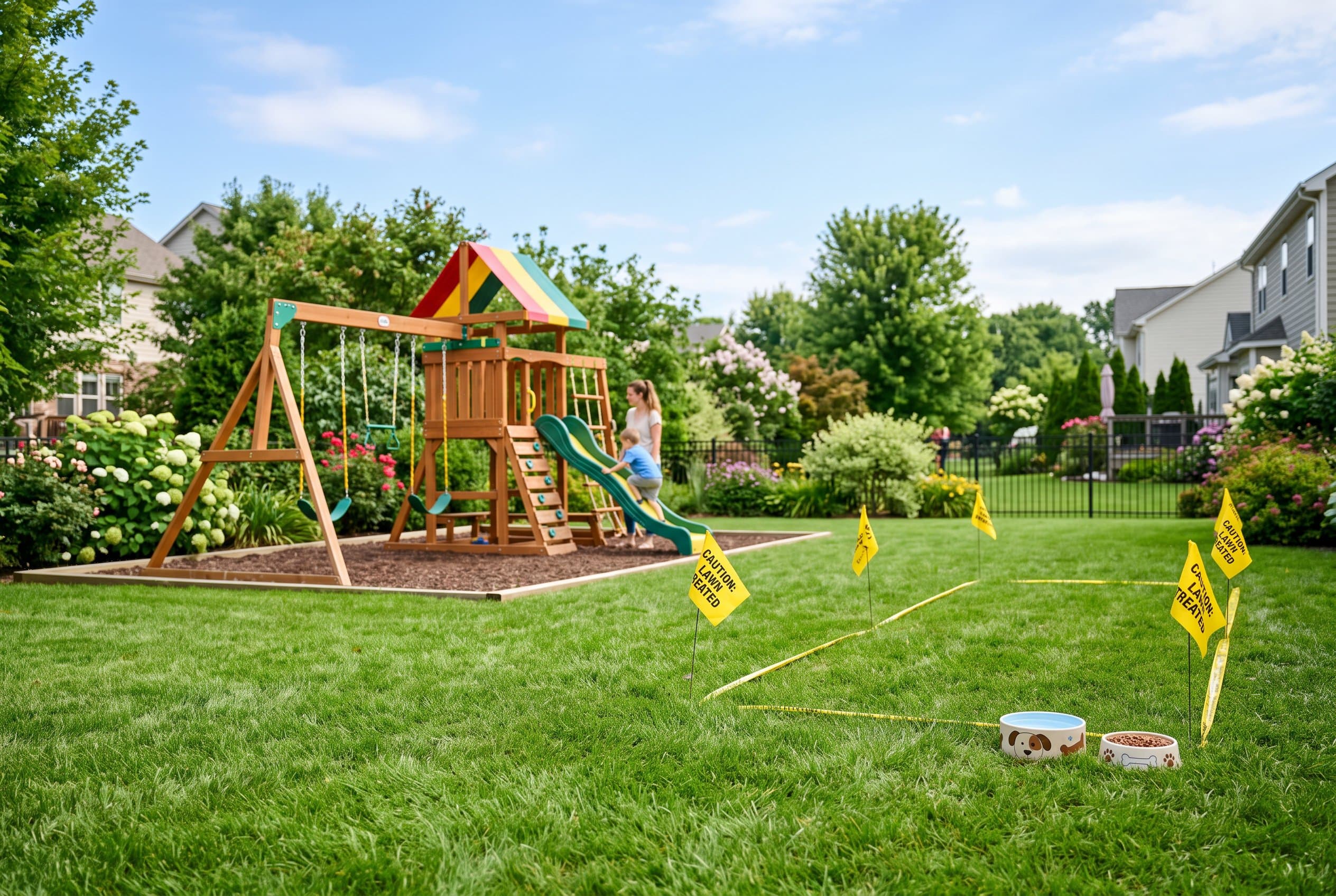
Treated areas are safe once they're dry, or after the product's stated re-entry interval — whichever is longer. Follow the specific product label rather than a general guideline[1][2]. Cedar oil products are marketed as pet- and kid-safe when dry, making them the lower-risk choice for yards with constant four-legged traffic — just remember they need more frequent reapplication[2].
Fall vs. spring timing
Fall applications interrupt flea and tick activity before adults overwinter, while spring and early-summer treatments knock back ant colonies when they're actively foraging[3][4]. In warm southern climates, ants and fleas stay active much of the year, so a late-summer follow-up is often worth it[4].
Protect pollinators while you treat
Skip blooming clover, dandelion, and flowering groundcover, and apply in early morning or late evening when bees and butterflies aren't foraging[6].
The Bottom Line
Pick your format first — granules for whole-lawn prevention and value, sprays for fast knockdown and edge work. Then pick your active: a contact pyrethroid for tough infestations, cedar oil when pets and kids rule the backyard[1][2]. Read the label, water in as directed, keep everyone off until dry, and plan a follow-up application.