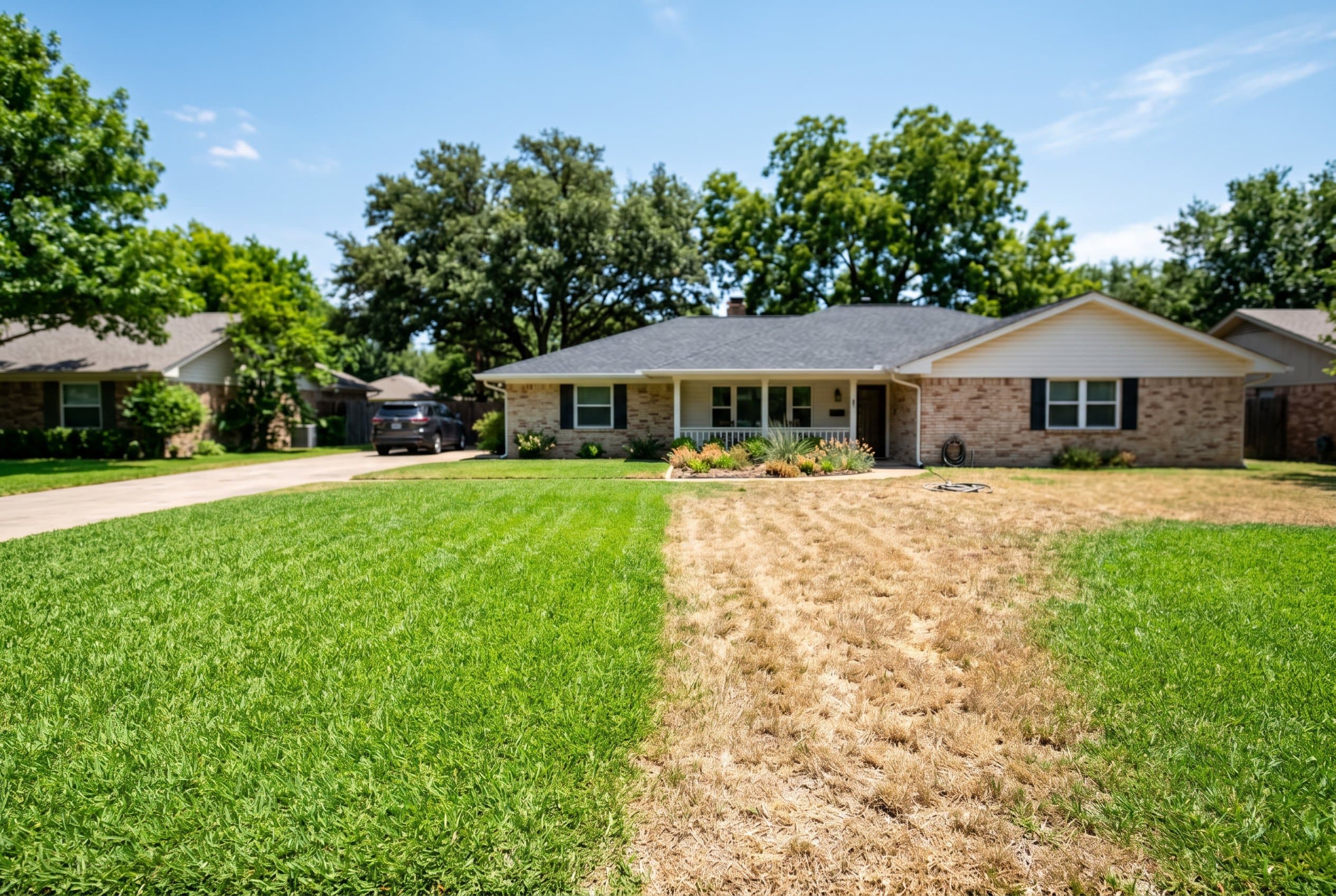
Quick Answer: The most drought tolerant grass types include buffalograss, bermudagrass, zoysia, and tall fescue — each suited to different climates. Warm-season grasses generally survive drought better by going dormant, while certain cool-season varieties like tall fescue have deep root systems that access soil moisture more effectively. Choosing the right type for your region is the most important factor.
Key Takeaways
- Warm-season grasses (bermudagrass, zoysia, buffalograss) are the most drought tolerant overall
- Tall fescue is the best drought-tolerant option for cool-season climates
- Most drought-tolerant grasses survive dry spells by going dormant — they turn brown but bounce back
- Deep, infrequent watering encourages the deep roots that improve drought resistance
- Matching your grass to your climate zone is more important than picking any single "best" variety
Drought stress is one of the leading causes of lawn decline across the country, and water restrictions are becoming more common in many regions. The good news is that selecting a drought-tolerant grass variety can dramatically reduce your irrigation needs while keeping your yard healthy. Whether you live in the arid Southwest, the humid Southeast, or somewhere in between, there's a grass type built to handle dry conditions in your area.
Which Grass Types Are the Most Drought Tolerant?
Drought tolerance varies significantly by grass species — and even by cultivar within a species. Here's a breakdown of the top performers[1][2]:
Buffalograss
Buffalograss is native to the Great Plains and is arguably the most drought tolerant turfgrass available. It thrives on as little as 15–25 inches of annual rainfall and requires minimal irrigation once established[3]. It's a warm-season grass that goes dormant in winter and performs best in low-rainfall, low-humidity regions.
Bermudagrass
Bermudagrass is widely used across the South and transition zone. It handles heat and drought exceptionally well, recovering quickly after dry periods. It's aggressive, spreads via stolons and rhizomes, and bounces back from full dormancy when rains return[4]. Not ideal for shaded yards.
Zoysia
Zoysia offers a middle ground — moderate drought tolerance with better shade performance than bermudagrass. It's slower to establish but forms a dense, traffic-resistant turf. Once rooted, it needs significantly less water than cool-season alternatives[4].
Tall Fescue
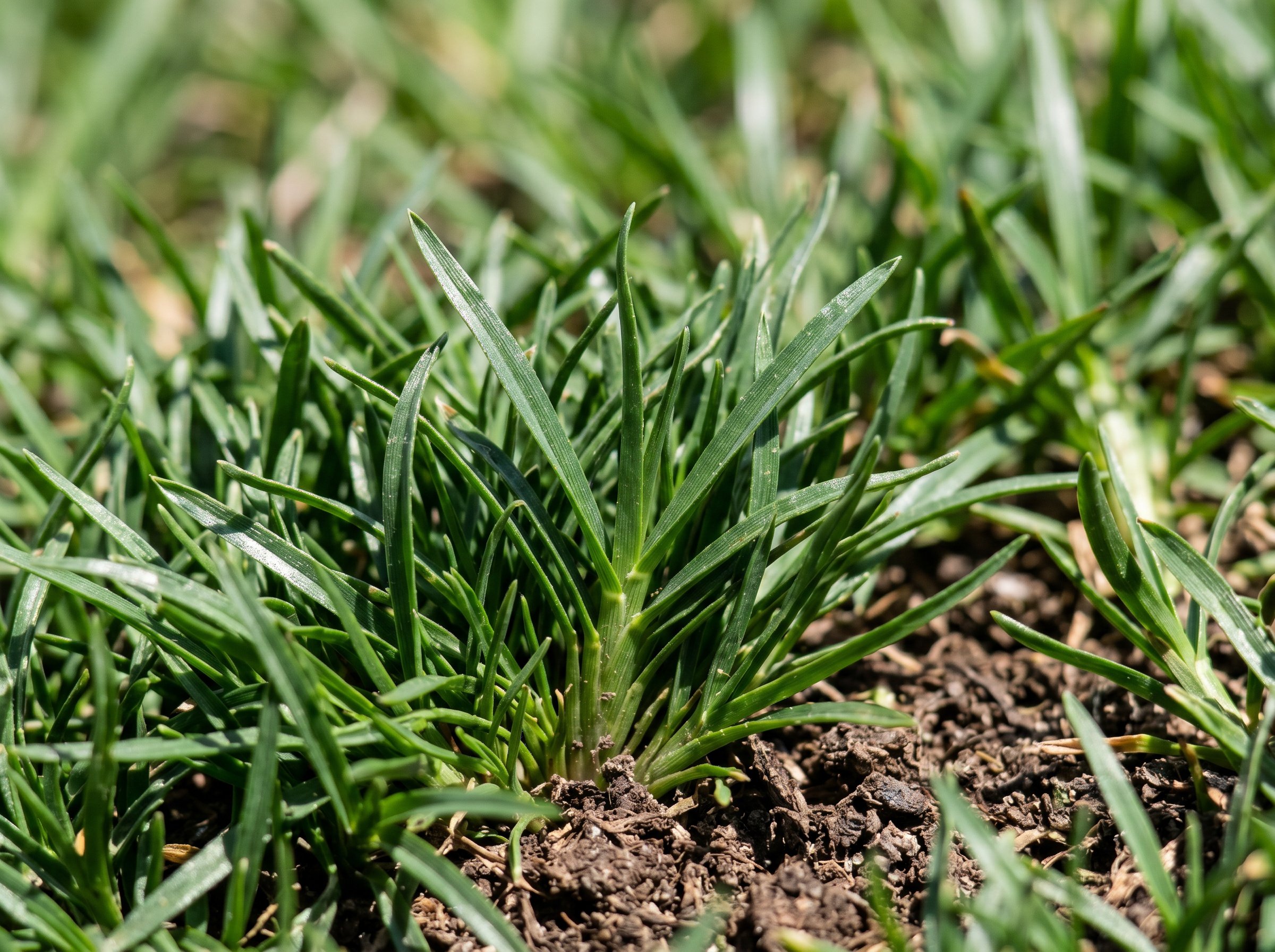
For homeowners in the North or transition zone, tall fescue is the top drought-tolerant cool-season choice. Its deep root system — often reaching 2–3 feet — allows it to access soil moisture that shallower grasses can't reach[1]. It stays green longer into drought conditions than Kentucky bluegrass or perennial ryegrass.
Centipede Grass
Centipede grass performs well in the Southeast under low-input conditions. It's not as drought tolerant as bermuda or zoysia, but it requires less fertilizer and maintenance, and survives mild dry spells with minimal irrigation[4].
How to Choose the Right Drought-Tolerant Grass for Your Yard
This is the most practical decision you'll make — and it comes down to your USDA hardiness zone, annual rainfall, and sun exposure[2][3].
Warm climates (South, Southwest, transition zone):
- Bermudagrass — best for full-sun, high-traffic areas
- Zoysia — better in partial shade or where a finer texture is preferred
- Buffalograss — ideal for low-maintenance, low-water western lawns
- Centipede — best for the Southeast with minimal inputs
Cool climates (Northeast, Midwest, Pacific Northwest):
- Tall fescue — the clear drought-tolerant winner
- Fine fescue blends — excellent for shaded or low-maintenance settings
Also consider your soil type. Sandy soils drain quickly and amplify drought stress, while clay soils hold moisture longer but can compact. A basic soil test will help you understand your starting point before seeding or sodding[5].
What Can You Do to Improve Any Lawn's Drought Resistance?
Even the toughest grass benefits from good cultural practices during dry conditions[1][5]:
- Water deeply and infrequently. Aim for 1 inch of water once a week rather than light daily watering. This trains roots to grow deeper.
- Raise your mowing height. Taller grass shades the soil, reduces evaporation, and photosynthesizes more efficiently. Set your mower to the upper end of the recommended range for your grass type.
- Don't over-fertilize in summer. Excess nitrogen pushes lush growth that demands more water. Ease off fertilizer applications during peak heat.
- Let dormant grass rest. If your warm-season grass goes brown, resist the urge to overwater. Dormancy is a survival mechanism — not a death sentence.
- Consider a smart irrigation controller. Weather-based controllers adjust watering schedules automatically based on rainfall and evapotranspiration rates, cutting water use significantly[6].
Conclusion: Start With the Right Grass, Then Manage Smart
Choosing a drought-tolerant grass type is the single most effective long-term strategy for a low-water lawn. Start by identifying your climate zone and sun conditions, then match your grass selection from the options above. If you're reseeding or laying sod, spring or early fall are the best times to establish new turf — giving roots time to develop before summer heat arrives.
Once your grass is established, pair it with deep watering habits, proper mowing height, and a light fertilization schedule. These simple practices can cut your irrigation needs by 30–50% compared to a lawn that's poorly matched to its climate.