Quick Answer
Florida law prohibits HOAs from outright banning artificial turf, but local governments and water management districts may still regulate its installation. Before laying synthetic grass, homeowners must check county ordinances, HOA rules, and any deed restrictions that apply to their property.
Key Takeaways
- Florida's 2009 legislation limits HOA power to ban Florida-Friendly landscaping, which can include artificial turf in some contexts
- Local municipalities still have authority to regulate or restrict synthetic grass installations
- Many Florida counties require permits for artificial turf, especially over large areas
- Proper drainage planning is critical — poorly installed turf can create flooding and code violations
- HOAs may still regulate the appearance of artificial turf even if they can't ban it entirely
Introduction
Florida homeowners are increasingly turning to artificial turf to escape the never-ending battle against heat, drought, and high water bills. Understanding the artificial turf laws in Florida is essential before you rip out your St. Augustine grass and roll out synthetic lawn. Florida's rules are a patchwork of state law, local ordinances, and HOA regulations — and getting it wrong can mean costly fines or mandatory removal.
What Florida State Law Says About Artificial Turf
Florida Statute § 373.185 and related legislation promote "Florida-Friendly Landscaping" — a program designed to encourage water-wise yard choices[1]. Under this framework, HOAs face significant restrictions on prohibiting or penalizing low-water landscaping alternatives[2]. Florida Statute Chapter 720, which governs homeowners' associations, reinforces these protections by limiting an HOA's ability to reject landscaping changes made for water-conservation purposes[3].
However, artificial turf occupies a gray area. The law doesn't explicitly list synthetic grass as a protected Florida-Friendly choice in all circumstances. What it does do is prevent HOAs from imposing rules that are "unreasonable or prohibitive" when a homeowner is trying to conserve water[3].
Key points about state law:
- HOAs cannot create blanket bans on water-conservation landscaping
- HOAs can set reasonable aesthetic standards (color, pile height, border treatments)
- State law does not override county or city zoning codes
- Some Water Management Districts have specific guidance on synthetic surfaces and stormwater runoff[4]
How to Check What Artificial Turf Laws Apply to Your Property
This is the most actionable step you can take before spending a dime on installation. Rules vary dramatically between counties, and even between neighborhoods in the same city.
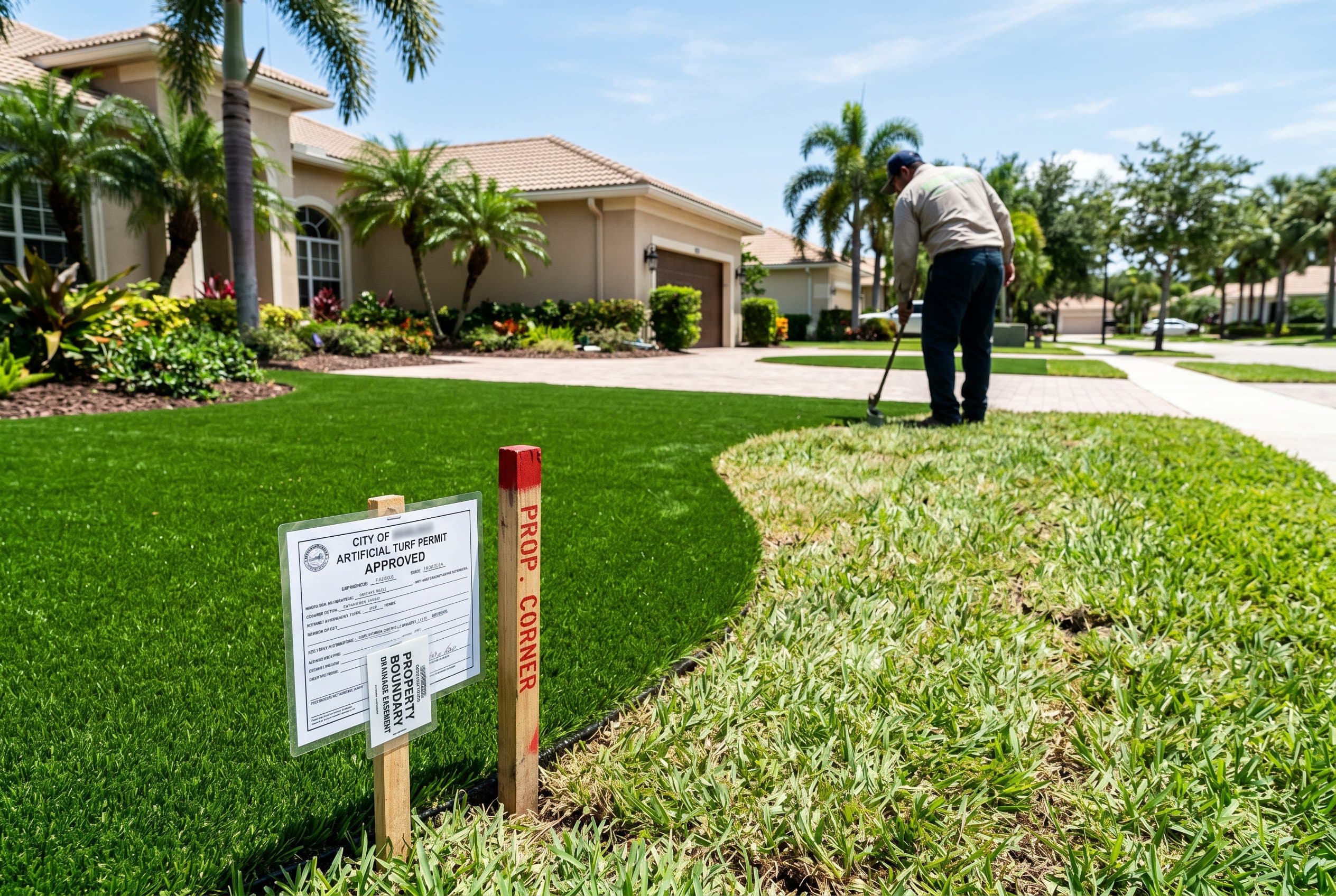
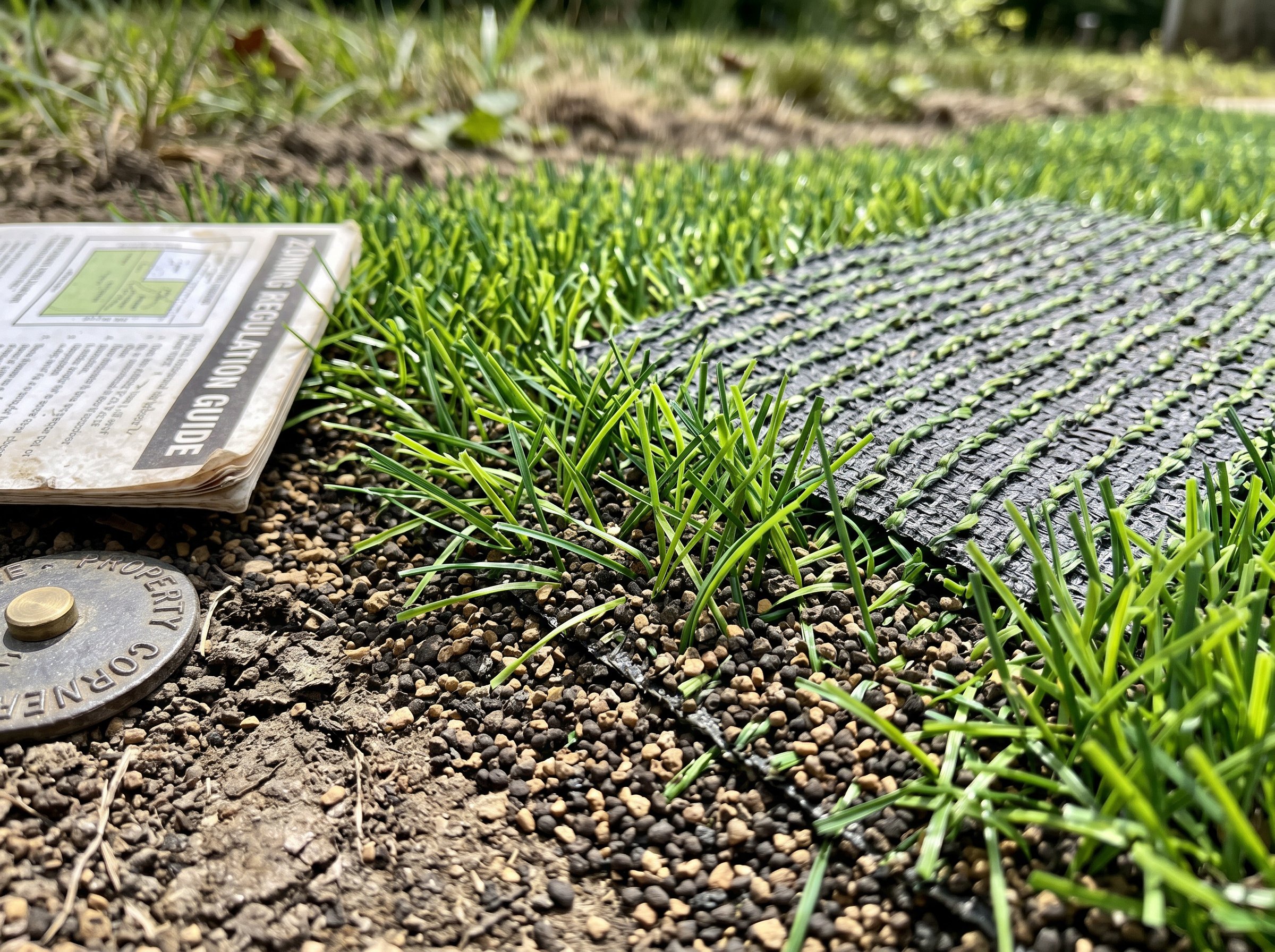
Step 1: Check your county's zoning or land development code Search your county's official website for terms like "synthetic turf," "artificial grass," or "impervious surface" (surfaces that don't absorb water, like concrete or asphalt). Miami-Dade, Broward, and Orange County all have specific provisions — for example, Miami-Dade's land development code addresses synthetic turf under its landscaping and stormwater management sections[4].
Step 2: Contact your local building department Many Florida counties require a permit for artificial turf installations over a certain square footage — commonly 200 sq ft or more. Ask specifically whether your project triggers an impervious surface calculation, which affects stormwater fees and runoff compliance[4][5].
Step 3: Review your HOA governing documents Read your CC&Rs (Covenants, Conditions & Restrictions — the binding rules that govern your community) carefully. Even if state law limits outright bans, your HOA may require architectural review board approval before installation[3].
Step 4: Check deed restrictions Older deed restrictions — separate from HOA rules — can still legally limit landscaping materials. These are harder to challenge than HOA rules and are not overridden by Florida's Florida-Friendly Landscaping statute.
Most Common Compliance Issues with Florida Artificial Turf Installations
Even homeowners who do their homework run into problems. Here are the most frequent pitfalls[4][5]:
Drainage and stormwater Artificial turf is often classified as an impervious or semi-impervious surface (meaning water flows over it rather than soaking in). Poor drainage design can redirect stormwater onto neighboring properties — a code violation and a neighbor relations disaster. Always install a permeable base layer and plan for water flow carefully[5].
Heat island concerns Some municipalities are beginning to scrutinize artificial turf due to its heat-absorbing properties. Florida summers mean synthetic turf surface temperatures can exceed 150°F, raising both comfort and environmental concerns[6]. Water-wise alternatives like drought-tolerant sod varieties are sometimes recommended alongside or instead of synthetic turf[7].
Front yard restrictions Some Florida cities specifically limit or prohibit artificial turf in front yards for aesthetic reasons, even when allowing it in backyards. Always check front-yard rules separately.
Installation without permits Unpermitted installations can trigger stop-work orders, fines, and required removal — wiping out your investment entirely.
Conclusion: Check First, Install Second
Artificial turf can be a smart, low-maintenance choice for Florida homeowners — but only if you navigate the legal requirements correctly. Before purchasing materials or hiring a contractor, complete these steps:
- Pull your county's land development code and search for synthetic turf rules
- Call your local building department to ask about permit requirements
- Request written confirmation from your HOA board if approval is needed
- Hire an installer familiar with Florida stormwater and drainage requirements
- Keep all permits and approvals on file in case of future disputes
Taking these steps upfront protects your investment and keeps you on the right side of Florida's artificial turf laws.