
Quick Answer
The best time to dethatch your lawn is during its active growing season — early fall for cool-season grasses and late spring for warm-season grasses. Dethatching during peak growth gives your lawn the best chance to recover quickly. Avoid dethatching during summer heat, drought stress, or dormancy.
Key Takeaways:
- Cool-season grasses (fescue, bluegrass, ryegrass) should be dethatched in early fall (August–September)
- Warm-season grasses (bermuda, zoysia, St. Augustine) do best when dethatched in late spring (May–June)
- Dethatch only when thatch exceeds ½ inch thick — thinner layers aren't a problem
- Always water and fertilize after dethatching to support recovery
- Never dethatch a stressed, drought-affected, or newly seeded lawn
Introduction
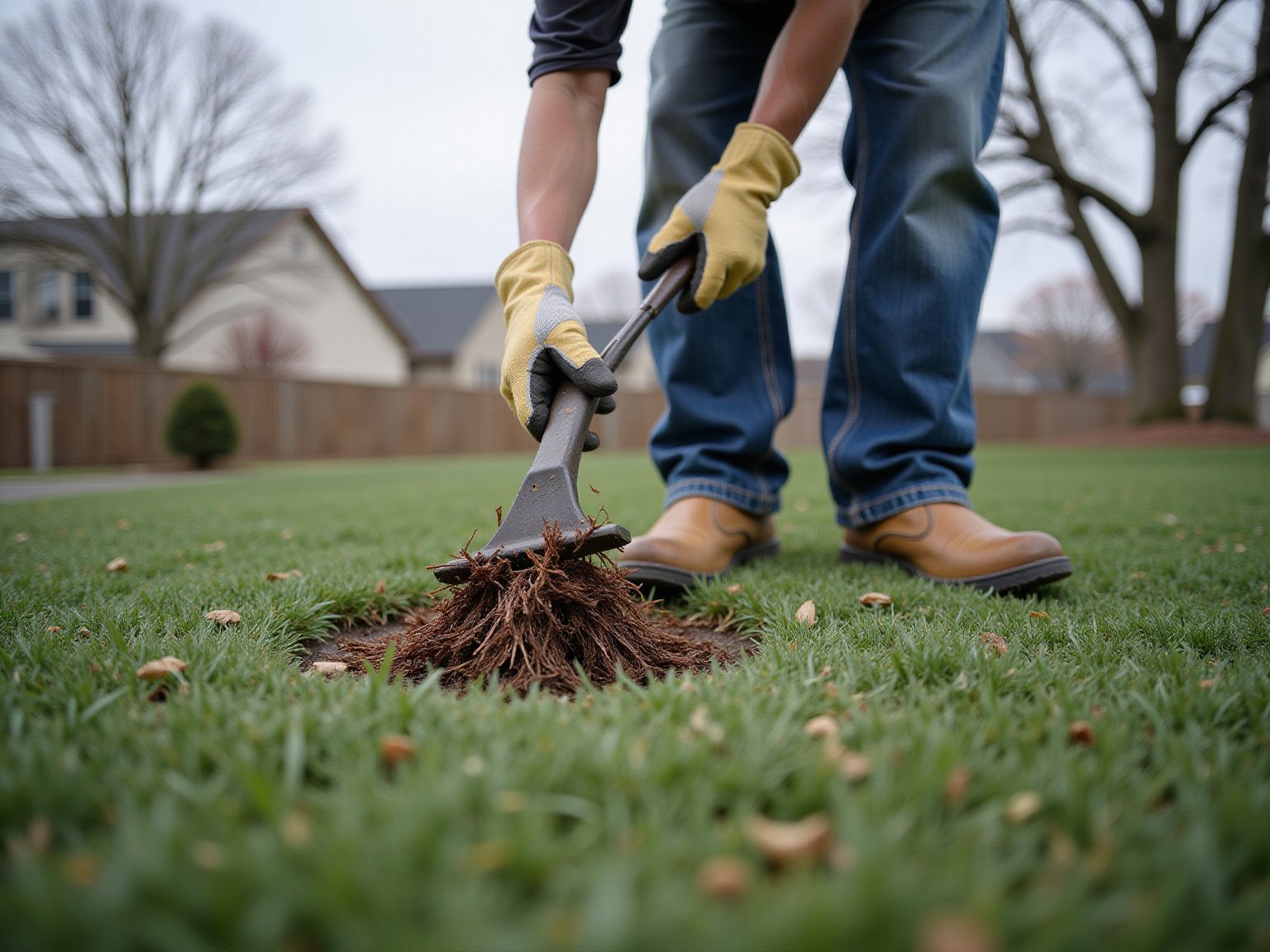
Thatch — the layer of dead grass, roots, and organic matter between soil and turf — is normal in small amounts. But when it builds up beyond half an inch, it blocks water, air, and nutrients from reaching roots[1]. Dethatching removes this excess layer, but timing is everything. Done at the wrong time, it can damage your lawn more than the thatch itself.
What's the Best Time to Dethatch Based on Grass Type?
Your grass type is the single most important factor in choosing when to dethatch[2].
Cool-Season Grasses
Grasses like tall fescue, Kentucky bluegrass, and perennial ryegrass thrive in cooler temperatures and grow most aggressively in spring and fall. Early fall (late August through September) is the ideal window[3]. Soil is still warm, roots recover quickly, and there's no summer heat stress. Spring dethatching is a secondary option but runs the risk of damaging grass before it's fully vigorous.
Warm-Season Grasses
Bermudagrass, zoysiagrass, centipedegrass, and St. Augustinegrass grow actively in warm weather. Late spring to early summer (May–June) is the prime window — after the grass has greened up fully but before the hottest part of summer[4]. Dethatching too early in spring when the grass is just waking up can set it back significantly.
Transition Zone Grasses
If you're in the mid-Atlantic or Midwest transition zone with a mix of grass types, consult your local extension service for regional timing guidance[5].
How to Tell If Your Lawn Actually Needs Dethatching
Before you rent a power dethatcher, confirm your lawn actually needs it. Not every lawn does — and unnecessary dethatching causes real damage[1].
Check thatch thickness with a simple test:
- Use a garden trowel or knife to cut a small plug from your lawn (about 3 inches deep)
- Look at the cross-section — the thatch layer sits between the green grass and the soil
- Measure the spongy brown layer with a ruler
What the measurement means:
- Less than ½ inch: No action needed — this is healthy
- ½ to 1 inch: Consider dethatching this season
- Over 1 inch: Dethatch as soon as conditions and timing allow[2]
Other signs you may need to dethatch: water pools on the lawn after rain, the lawn feels spongy underfoot, or grass looks thin and stressed despite regular care[3].
What Should You Do Before and After Dethatching?
Timing matters, but so does preparation and follow-through. Dethatching without proper care before and after wastes the effort.
Before You Dethatch
- Mow your lawn slightly shorter than usual (about one-third lower than your normal height)
- Water the lawn 1–2 days before so the soil is moist but not soggy — this makes the thatch easier to pull up
- Mark sprinkler heads and shallow irrigation lines to avoid damaging them
Choosing Your Equipment
- Dethatching rake: Best for small lawns or light thatch buildup
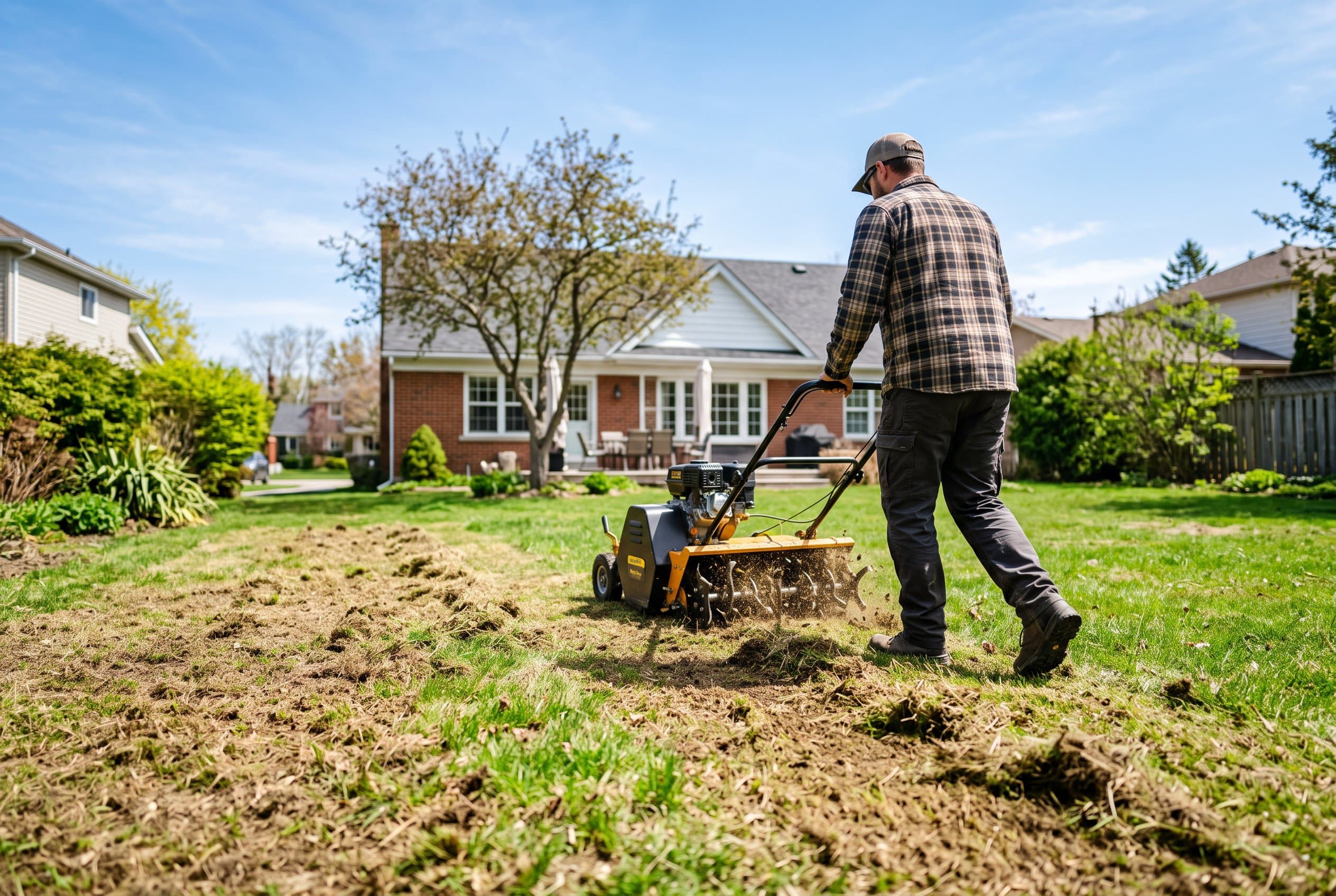
- Power dethatcher (vertical mower): Better for larger areas or heavy thatch; available at most equipment rental shops[4]
- Set the blade depth so tines just penetrate the soil surface — going too deep damages roots
After Dethatching
- Rake and remove all debris — leaving it on the lawn blocks sunlight and air
- Overseed bare or thin spots immediately while soil is exposed
- Apply a balanced fertilizer to support regrowth[5]
- Water deeply for the first week to help roots re-establish
Conclusion: Time It Right for a Healthier Lawn
Dethatching is a powerful lawn care tool — but only when done at the right time and for the right reasons. Focus on your grass type first: early fall for cool-season turf, late spring for warm-season varieties. Always confirm thatch thickness exceeds half an inch before dethatching, and plan to overseed and fertilize immediately after. Done correctly, dethatching opens up your soil, improves drainage, and gives your grass the fresh start it needs to thrive[1][3].
Your next steps:
- Check your thatch thickness this week with a soil plug test
- Identify your grass type and mark the right timing window on your calendar
- Reserve a power dethatcher from a local rental shop ahead of time — they book up quickly in fall