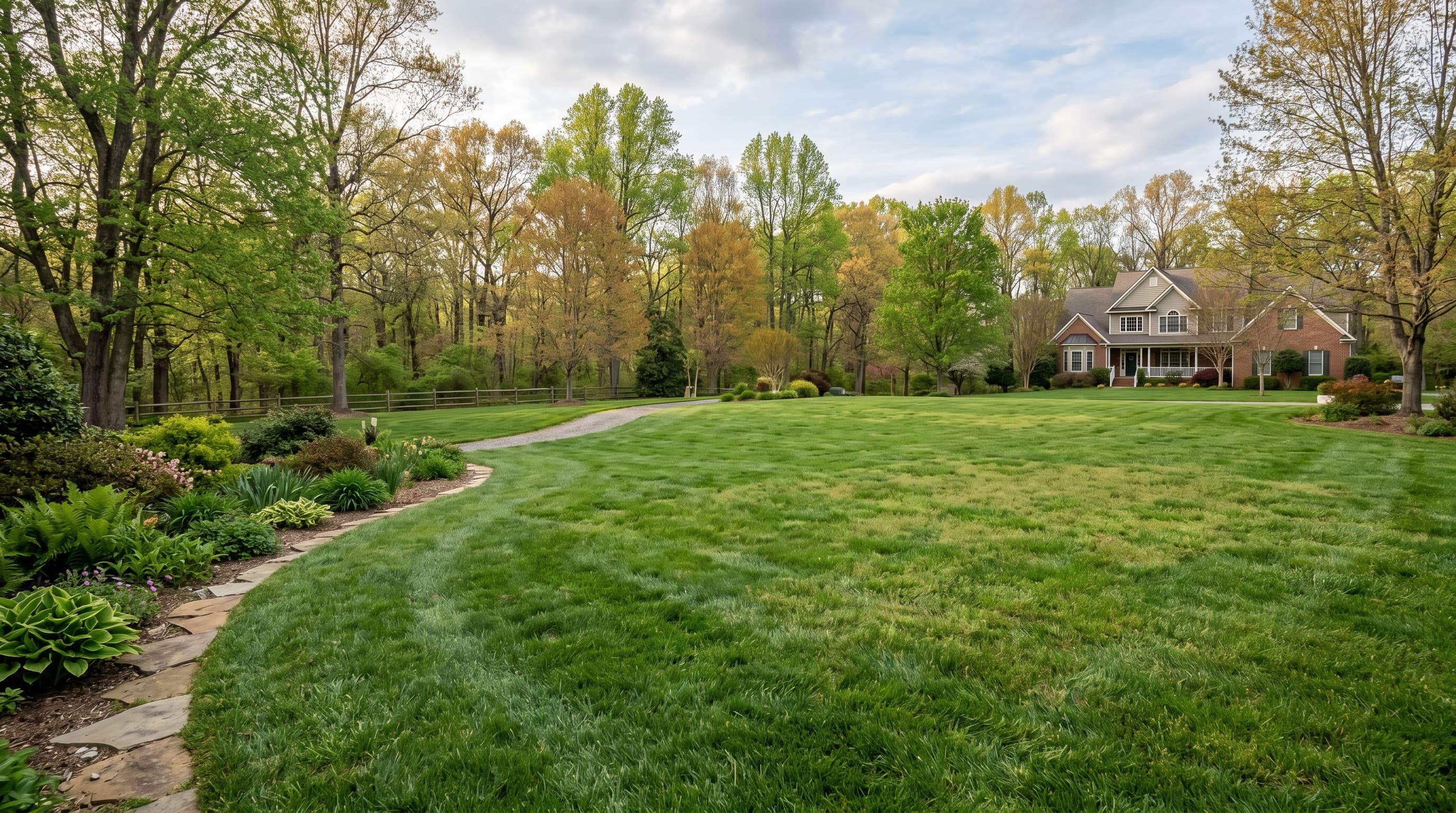
Quick Answer
Maintaining a healthy lawn in Virginia comes down to matching your turf practices to lawn care in Virginia's transition-season grass climate and USDA zone 6a-8a[1]. First-fall frost lands somewhere between Oct 15 – Nov 5; last-spring frost between Apr 1 – Apr 22. Tall Fescue, Kentucky Bluegrass, Bermudagrass, and Zoysiagrass are the species that earn their keep here[4], and the local calendar tracks the transition-season growth cycle. Pests like White grubs and Fall armyworms are the recurring problems to watch[4].
Key Takeaways
- USDA zone 6a-8a puts Virginia in transition-season grass territory[1].
- The default grass for most Virginia lawns is Tall Fescue; secondary picks: Kentucky Bluegrass, Bermudagrass, and Zoysiagrass[4].
- Frost window: first-fall Oct 15 – Nov 5; last-spring Apr 1 – Apr 22[2].
- Recurring local pressure: White grubs and Fall armyworms[4].
Virginia Climate and Grass Zone
USDA zones 6a-8a define the Virginia growing climate, which puts the state in transition-zone climate — summers hot enough to stress cool-season turf (summer highs around 87°F) and winters cold enough to push warm-season grasses into dormancy (winter lows near 28°F). Annual rainfall averages 44" and most of it falls outside peak summer.[2]
Within zones 6a-8a, microclimates matter: foothill counties run cooler than valley floors and coastal humidity shifts pest pressure[1].
Best Grass Types for Virginia
Local extension services recommend Tall Fescue, Kentucky Bluegrass, Bermudagrass, and Zoysiagrass[4].
The right choice depends on how much shade, traffic, and irrigation a lawn gets. In Virginia, the safest default is the first grass listed — it's what local sod producers grow the most of, and it's the type your nursery is most likely to have in stock[3].
Seasonal Calendar
The Virginia lawn-care year tracks the local climate:
- Pre-emergent — March (when forsythia blooms)
- First mow — March
- Fertilize — March (cool-season) / May (warm-season) through November (cool-season) / September (warm-season)
- Aeration / overseeding — Sept-Oct (cool-season) / May-June (warm-season)
- Last mow — November
- Dormancy — Warm-season: Nov-Mar; Cool-season: minimal
These windows shift a few weeks north-to-south inside Virginia[2]. The city guides below carry tighter dates.
Mowing and Soil
In transition-zone Virginia, mowing height depends on which grass dominates your lawn. Cool-season Tall Fescue runs best at 3"–4", while warm-season turf (Bermuda or Zoysia) prefers 1.5"–2.5". Either way, weekly mowing during active growth and the one-third rule on blade removal apply. Keep mower blades sharp — clean cuts heal faster and reduce disease pressure across both grass families.[4]
Soil type across Virginia varies from county to county, but two practices apply almost everywhere: core aerate during the dominant grass's active-growth window, and run a soil test every two or three years. Aeration relieves compaction and gives water, oxygen, and fertilizer a path to the root zone. The soil test reveals pH and nutrient levels — the data behind sensible lime or sulfur applications instead of guessing.[3]
Common Lawn Challenges in Virginia
What goes wrong in Virginia lawns is predictable:
- Transition-zone compromise — neither cool-season nor warm-season grasses thrive year-round, so homeowners pick a tradeoff between summer browning and winter dormancy
- White grubs pressure — the dominant turf pest in Virginia requires monitoring on a seasonal schedule
- Brown patch risk — humid summers and irrigation cycles favor this disease across most of Virginia
Disease pressure to watch: Brown patch, Dollar spot, Red thread[4]. The Virginia Cooperative Extension publishes IPM updates each season — see their resources[3].
Cities in Virginia
City-level guides for Virginia:
Related Lawn Care Reading
- Crabgrass Pre-Emergent: When to Apply
- Tall Fescue vs Kentucky Bluegrass
- Best Grass for the Transition Zone
Sources
- USDA Plant Hardiness Zone Map — referenced for the claims marked [1] above.
- NOAA Climate Normals 1991–2020 — referenced for the claims marked [2] above.
- Virginia Cooperative Extension — referenced for the claims marked [3] above.
- Virginia Cooperative Extension Turf Program — referenced for the claims marked [4] above.