
Quick Answer
Knowing when to aerate your lawn in Virginia depends entirely on your grass type. Cool-season grasses like tall fescue should be aerated in September through October, while warm-season grasses like Bermudagrass and Zoysiagrass should be aerated in May through June. Timing your aeration to match your grass type's active growing season ensures the fastest recovery and the greatest long-term benefit.
Key Takeaways:
- Tall fescue and Kentucky Bluegrass lawns should be aerated in early fall (September–October) in Virginia
- Bermudagrass and Zoysiagrass lawns are best aerated in late spring (May–June)
- Virginia's clay-heavy soils and 44 inches of annual rainfall make compaction a common and serious problem
- Aeration before overseeding in September dramatically improves seed-to-soil contact on fescue lawns
- Avoid aerating during drought stress, extreme heat, or when soil is waterlogged
Why Aeration Matters So Much in Virginia
Virginia's climate is genuinely complex. Sitting in the transition zone between USDA Hardiness Zones 6a and 8a, the state experiences hot, humid summers along the coast and cooler conditions in the Blue Ridge Mountains. Annual rainfall averages 44 inches, and moderate-to-high humidity creates conditions where soil compaction builds up fast[1]. Many Virginia yards also feature clay-dominant soils — common throughout the Piedmont and Northern Virginia regions — that compact under foot traffic, heavy rain, and lawn equipment[2].
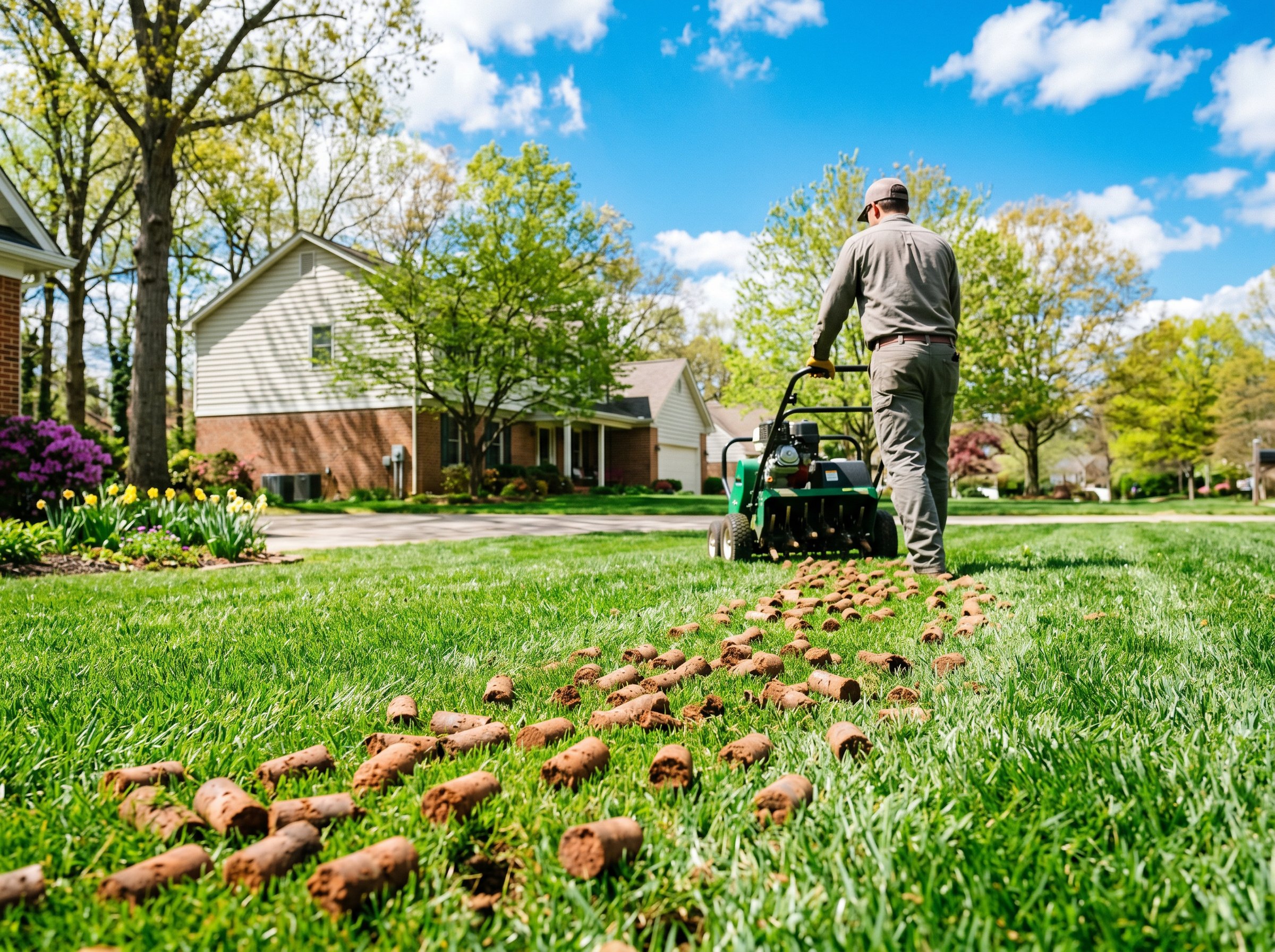
Compacted soil restricts oxygen, water, and nutrient movement to grass roots, making your lawn more vulnerable to Brown patch, Dollar spot, and opportunistic weeds like crabgrass and nutsedge. Core aeration — the process of pulling small plugs of soil from the lawn — breaks up that compaction and gives roots room to grow[1][3].
When to Aerate Your Lawn in Virginia: Cool-Season Grasses
If your lawn is primarily tall fescue, Kentucky Bluegrass, or fine fescue (common shade grass in Virginia), aerate in September through mid-October[1]. Here's why that window works so well:
- Soil temperatures are still warm enough to support fast root recovery
- Air temperatures are cooling down, reducing heat stress on the grass
- Fall is also Virginia's overseeding window for fescue lawns, and aerating first dramatically improves germination by giving seed direct contact with loosened soil[4]
- Cool-season grasses are entering their strongest growth phase of the year, so they recover from aeration quickly
Avoid aerating cool-season lawns in summer. Virginia's average summer highs of 87°F, combined with high humidity, put fescue lawns under significant stress — aerating during this period can cause more damage than benefit[2].
A note on Northern Virginia vs. Coastal Virginia: In the cooler western regions (Zone 6a), complete aeration by early October to ensure adequate recovery before the first frost. Along the coast and Hampton Roads area (Zone 8a), mid-October aeration is still viable[1].
When to Aerate Your Lawn in Virginia: Warm-Season Grasses
For Bermudagrass and Zoysiagrass — both popular in Virginia's warmer zones — aerate in late May through June, when these grasses are actively growing and can recover quickly[1][5]. The timing is completely different from cool-season grass, and getting it wrong can set your lawn back significantly.
Bermudagrass Aeration Timing
- Aerate after the lawn has fully greened up and soil temperatures are consistently above 65°F
- May through early June is the sweet spot in central and eastern Virginia
- Bermudagrass spreads aggressively via stolons and rhizomes, so it fills in aeration holes fast[5]
Zoysiagrass Aeration Timing
- Zoysia is slower-growing than Bermuda and more sensitive to timing
- Late May to June is ideal; avoid aerating after August when the grass begins preparing for dormancy
- Zoysiagrass enters dormancy from roughly November through March in Virginia, so fall aeration gives it no time to recover[1]
Do not aerate warm-season grasses in fall or winter. Both Bermudagrass and Zoysiagrass go dormant in Virginia's winters, and disturbing the soil during or just before dormancy stresses the root system without any recovery benefit[5].
How Do You Know If Your Virginia Lawn Actually Needs Aeration?
Not every lawn needs annual aeration. Here are the clearest signs your Virginia lawn is ready[2][3]:
- The screwdriver test: Push a screwdriver into moist soil. If it doesn't penetrate 6 inches easily, your soil is compacted
- Water runoff: Rain or irrigation water pools or runs off instead of soaking in
- Thatch over ½ inch thick: Visible thatch buildup blocks water and fertilizer from reaching roots
- Heavy foot traffic zones: Areas where kids play, dogs run, or people walk regularly compact fastest
- Lawn looks thin or off-color despite proper fertilizing: Compaction blocks nutrient uptake
Virginia's white grubs — larvae of Japanese beetles and other scarab beetles — also damage root systems in ways that mimic compaction symptoms[4]. If you suspect grub damage, inspect the soil before attributing thinning to compaction alone.
Core aeration is generally recommended every 1–2 years for most Virginia lawns, but lawns with heavy clay soil or high foot traffic may benefit from annual aeration[1][3].
What to Do Right After Aerating Your Virginia Lawn
Aeration is most effective when paired with complementary lawn care tasks[1][4]:
- Cool-season lawns: Overseed immediately after aerating in September–October. Tall fescue seed dropped into open aeration holes has dramatically better germination rates
- All grass types: Apply a starter fertilizer or your seasonal fertilizer right after aeration — nutrients move directly into the root zone through the holes
- Water consistently: Keep the soil moist for 2–3 weeks after aeration to support root recovery and, if overseeding, germination
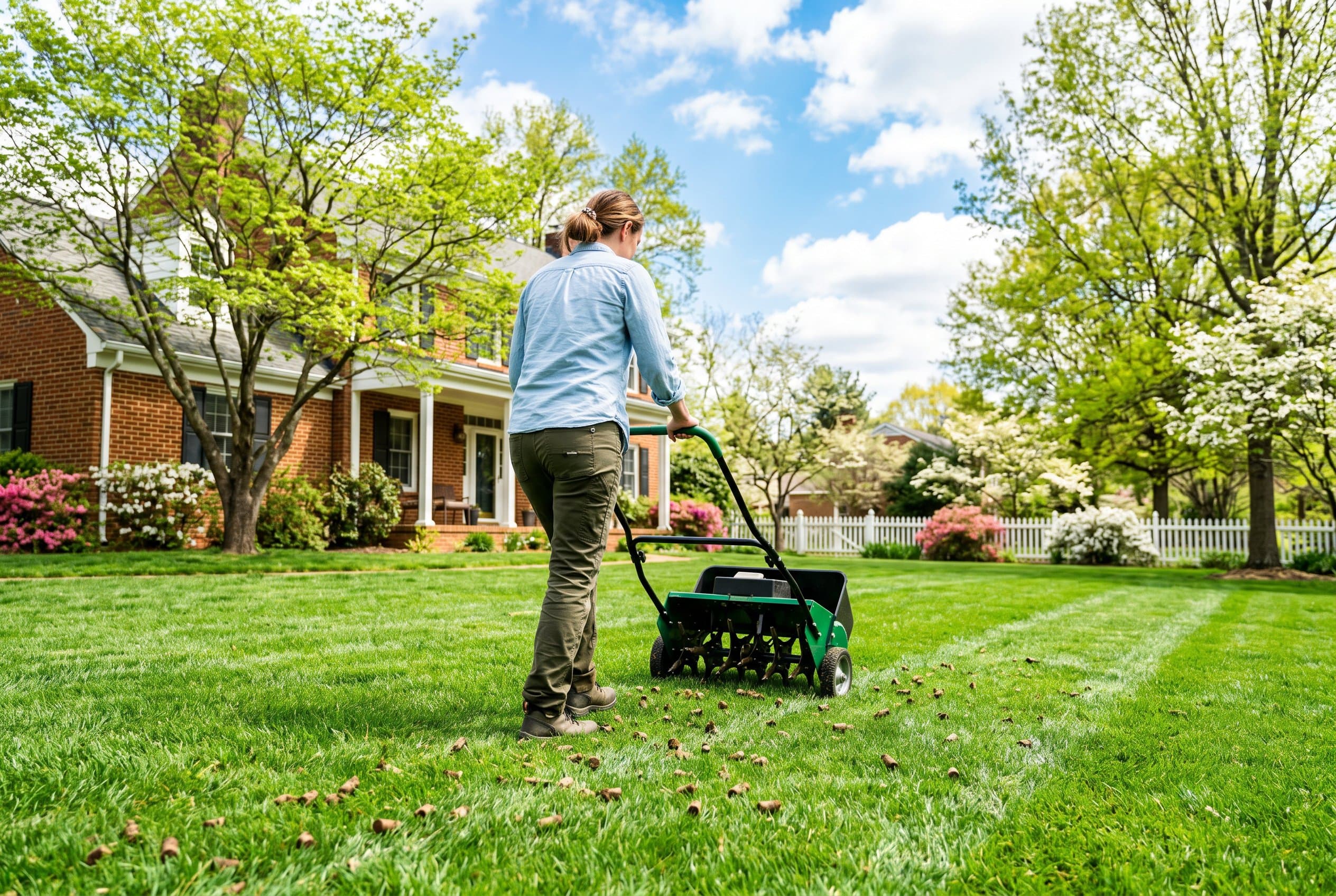
- Leave the plugs: Soil cores left on the surface break down naturally within 2–3 weeks and return organic matter to the lawn
- Avoid heavy foot traffic for at least 2–3 weeks after aeration
Conclusion: Match Your Timing to Your Grass Type
Aerating at the right time in Virginia comes down to one core principle: aerate when your grass is actively growing and can recover fast. For tall fescue and other cool-season grasses, that means September through October. For Bermudagrass and Zoysiagrass, that means May through June.
Virginia's clay soils, humid summers, and heavy rainfall make compaction nearly inevitable — but timely aeration keeps your lawn resilient against Brown patch, crabgrass pressure, and thin, struggling turf.
Your next steps:
- Identify your grass type (cool-season or warm-season)
- Schedule your aeration during the correct window for Virginia
- If you have a fescue lawn, plan to overseed immediately after
- Consider a soil test through the Virginia Cooperative Extension to pair aeration with the right fertilization plan