Quick Answer
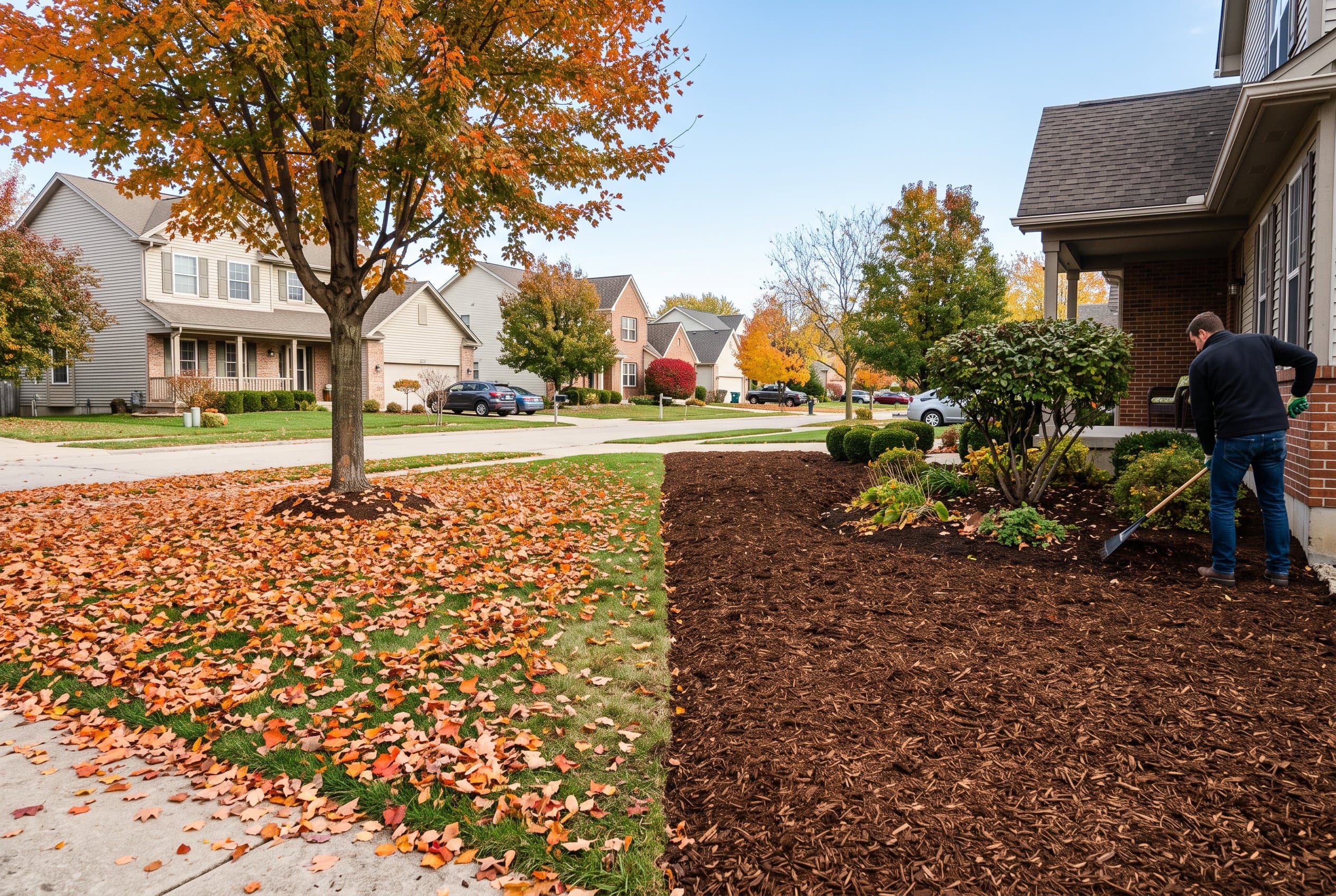
For most homeowners, mulching leaves back into the lawn is the better choice — it returns nutrients to the soil, saves time, and reduces yard waste. However, leaf removal is necessary when leaf coverage is too thick or when disease pressure is a concern. The right method depends on your leaf volume, grass type, and lawn health.
Key Takeaways:
- Mulching leaves with a mower returns valuable nutrients like nitrogen and phosphorus to the soil
- Thick leaf layers left whole can smother grass and promote fungal disease
- Leaf removal is best when leaves cover more than 20–30% of the lawn surface after mulching
- Mulching works best when leaves are dry and chopped into dime-sized pieces or smaller
- Both methods can be used together — mulch light layers, remove heavy accumulations
Why Does Leaf Management Matter for Your Lawn?
Fall leaves are more than a cosmetic issue. A thick, matted layer of whole leaves blocks sunlight, traps moisture, and can suffocate your grass over winter[1]. Left unmanaged, heavy leaf cover creates ideal conditions for snow mold and other turf diseases, especially on cool-season lawns like Kentucky bluegrass and fescue[2].
At the same time, leaves are a free source of organic matter. Decomposing leaf material feeds soil microbes, improves soil structure, and can meaningfully reduce the amount of fertilizer you need to apply[3]. The goal is to capture those benefits without letting leaves create problems.
How Does Each Method Actually Work?
Leaf Removal vs Mulching at a Glance
| Feature | Leaf Removal | Mulching |
|---|---|---|
| Time required | High (raking, bagging) | Low (one mower pass) |
| Soil benefit | None | Returns nutrients to soil |
| Cost | Low (rakes) or moderate (blowers) | Requires mulching mower blade |
| Best for | Heavy leaf coverage | Light to moderate leaf coverage |
| Waste produced | Yes (bags to dispose) | None |
Mulching: Attach a mulching blade or plug to your mower and mow over the leaves. The mower chops them into fine pieces that fall between grass blades and decompose quickly[4]. For best results, mow when leaves are dry and aim for fragments no larger than a dime. Multiple passes may be needed for dense accumulations.
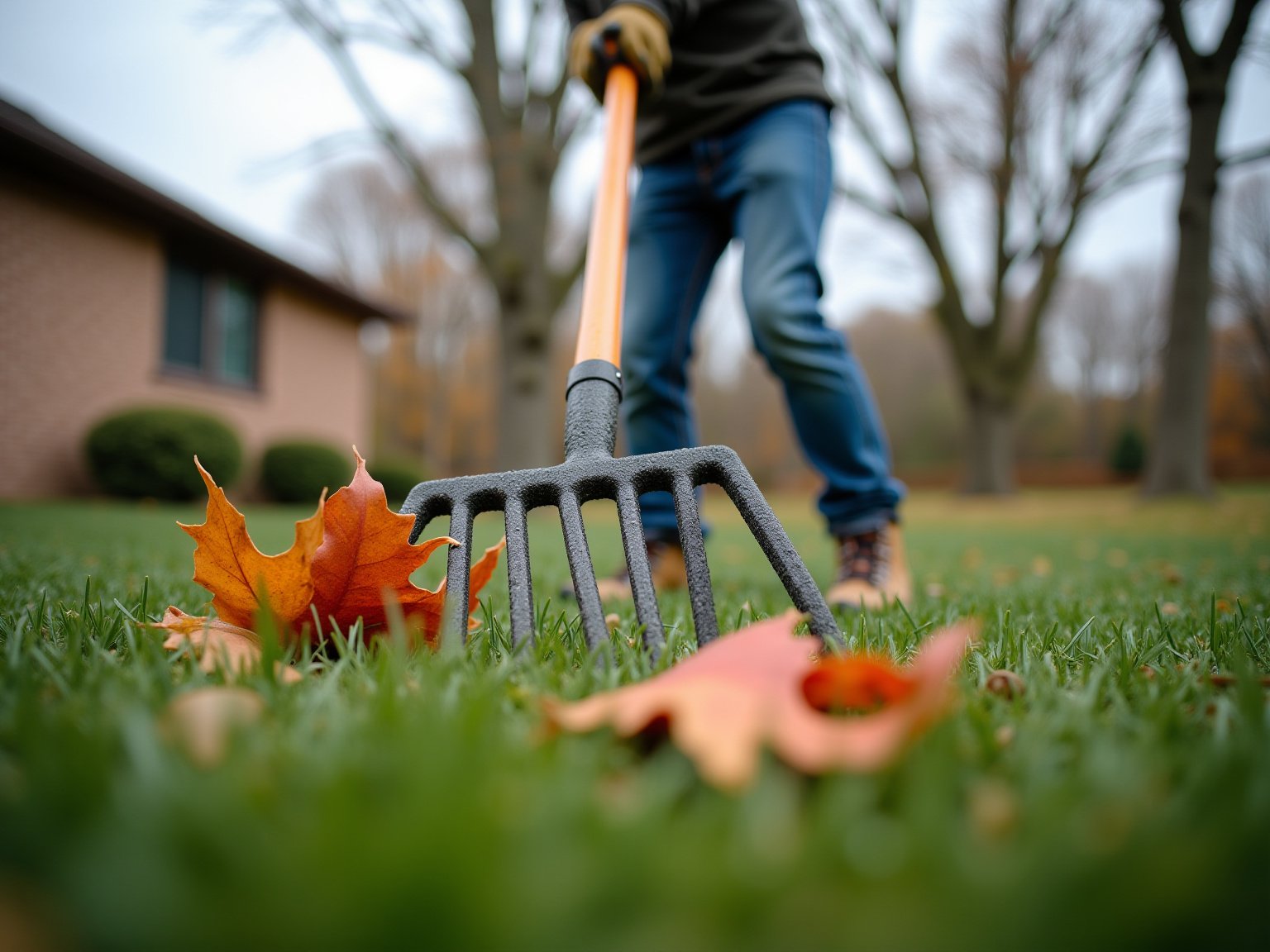
Leaf removal: Use a rake, leaf blower, or lawn vacuum to gather leaves and remove them from the lawn. Collected leaves can be composted, used as garden mulch in beds, or bagged for curbside pickup. This is the right call when leaves have matted down or when you're dealing with disease-prone turf[2].
Combination approach: Many homeowners get the best results by mulching early in the season when leaves are sparse, then switching to removal as leaf drop peaks. This balances soil benefit with practical lawn protection.
When Should You Choose Leaf Removal Over Mulching?
Mulching has clear advantages, but there are situations where removal is the smarter play[1][5]:
- Heavy leaf accumulation: If you can't see your grass through the leaves, mulching alone won't break them down fast enough before winter.
- Wet or matted leaves: Wet leaves clump and don't mulch evenly. Raking first is often more effective.
- Disease history: If your lawn had fungal issues last year, removing leaves reduces the chance of overwintering spores.
- Large-leafed trees: Leaves from oaks or maples can be slow to break down. These benefit from shredding or composting rather than direct mulching.
- Late-season neglect: If leaves have been sitting for weeks, removal is often faster and safer than trying to mulch a thick mat.
For pollinators and beneficial insects, consider leaving some leaf litter in garden beds rather than bagging everything. Leaf piles provide overwintering habitat for native bees and beneficial insects[6].
What's the Most Efficient Way to Handle Fall Leaves?
Timing and technique make a big difference in your results[3][4]:
- Mulch early and often: Don't wait for all the leaves to fall. Mulch in multiple passes as leaves accumulate — smaller batches are easier to process.
- Mow at the right height: Keep your mower at its normal cutting height (typically 3–4 inches for cool-season grasses) while mulching. Don't scalp the lawn.
- Check your coverage: After mulching, you should still be able to see the grass beneath. If the lawn looks more brown than green, you've got too many leaves for mulching alone.
- Compost the extras: Bagged or raked leaves make excellent compost. A simple pile turned a few times will yield usable compost by spring.
- Finish before first frost: Aim to have your lawn clear of heavy leaf cover before the ground freezes to prevent matting and disease over winter.
Conclusion: Which Method Should You Use?
For most lawns, mulching is the default best choice — it's faster, costs nothing extra, and improves your soil naturally. Switch to leaf removal, or use a combination approach, when leaves pile up too thick to mulch effectively. The simplest rule: if you can still see your grass, mulch it. If you can't, remove enough first, then mulch the rest.
This fall, try mulching your first few rounds of leaves and save the rake for the heavy drops later in the season. Your lawn — and your back — will thank you.