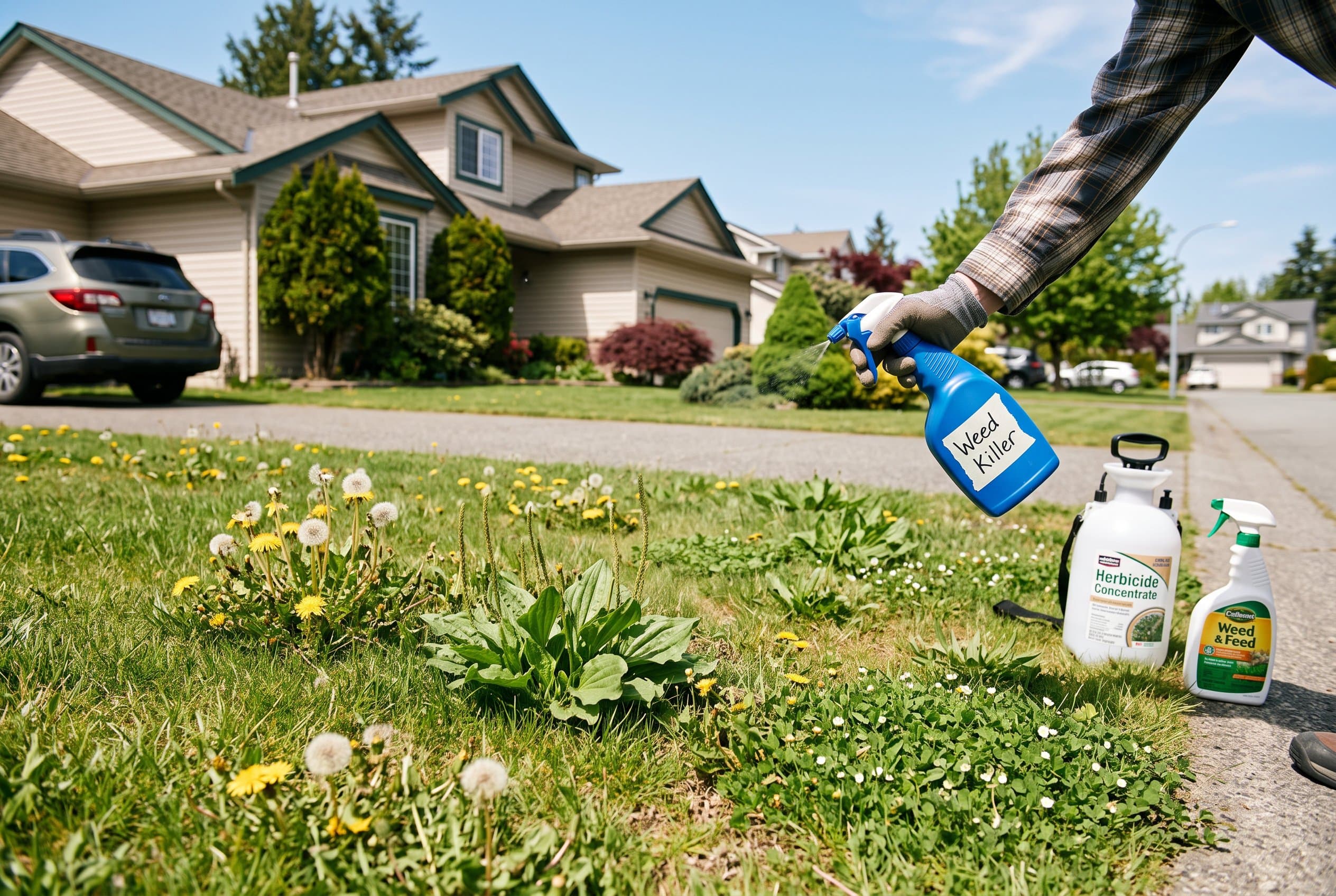
Quick Answer: The best broadleaf weed killer depends on your lawn type, the weeds you're targeting, and whether you prefer liquid or granular formulas. Selective broadleaf herbicides containing 2,4-D, MCPP, or dicamba are the most effective for controlling common weeds like dandelions and clover without harming grass. For most homeowners, a ready-to-spray liquid formula offers the best balance of convenience and targeted control.
Key Takeaways
- Selective broadleaf herbicides kill weeds without harming most grass types when used correctly
- Liquid formulas work faster; granular options are easier to apply over large areas
- Three-way herbicide mixes (2,4-D + MCPP + dicamba) tackle the widest range of broadleaf weeds
- Always read the label — some formulas are not safe for St. Augustine, centipede, or newly seeded lawns
- Spring and fall are the best times to apply broadleaf weed killers for maximum effectiveness
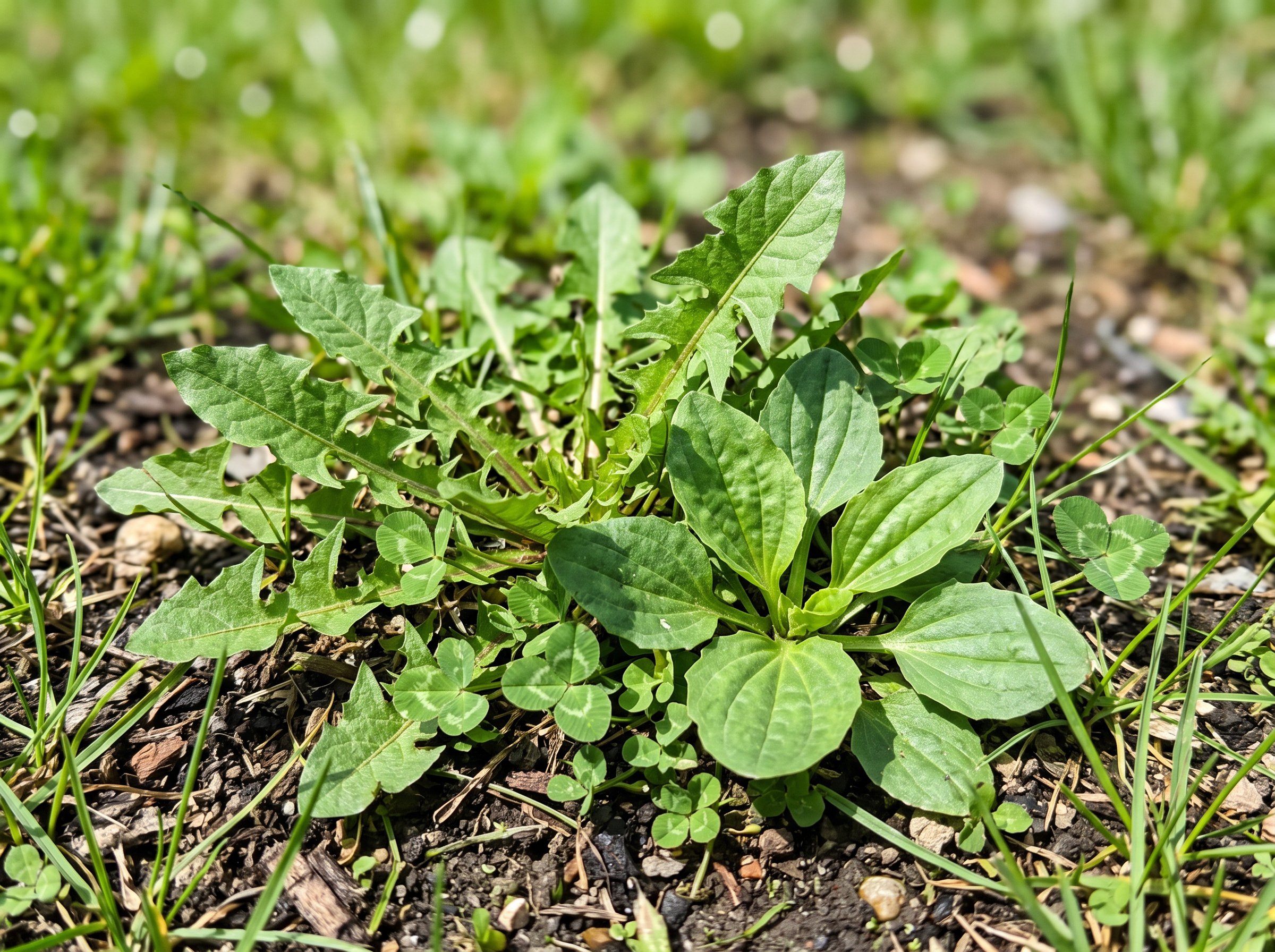
Broadleaf weeds like dandelions, clover, chickweed, and plantain can take over a lawn quickly if left unchecked. With dozens of products on the market, choosing the right herbicide can feel overwhelming. This guide breaks down the key differences so you can make a confident, informed choice for your yard.
What Are the Main Types of Broadleaf Weed Killers?
Broadleaf herbicides fall into two main categories: selective and non-selective. For lawn use, you almost always want a selective formula — one that targets broadleaf plants while leaving your grass unharmed[1].
Within selective herbicides, you'll choose between:
- Liquid concentrates – Mix with water and apply with a sprayer; fast-acting and precise
- Ready-to-use sprays – Pre-mixed for convenience; best for spot treatments
- Granular formulas – Applied with a spreader, often combined with fertilizer ("weed and feed")
- Weed and feed products – Combine fertilizer with herbicide; efficient but require specific timing[2]
Key Active Ingredients to Know
Most effective broadleaf weed killers rely on one or more of these active ingredients[3]:
- 2,4-D – The most widely used broadleaf herbicide; controls dandelions, clover, and plantain
- MCPP (Mecoprop) – Targets clover and chickweed; often paired with 2,4-D
- Dicamba – Effective on woody and hard-to-kill weeds; use carefully near trees and garden beds
- Triclopyr – Good for clover and ground ivy; safe on most cool-season grasses
Three-way mixes combining 2,4-D, MCPP, and dicamba offer the broadest weed control for typical residential lawns[1].
How Do Liquid and Granular Formulas Compare?
Broadleaf Weed Killer Format Comparison
| Feature | Liquid (Concentrate/RTU) | Granular / Weed & Feed |
|---|---|---|
| Application speed | Fast — works within days | Slower — needs watering in |
| Ease of use | Moderate (needs sprayer) | Easy (broadcast spreader) |
| Coverage area | Better for spot treatment | Better for whole-lawn coverage |
| Cost per sq ft | Lower (concentrates) | Varies; often higher |
| Timing flexibility | Apply anytime weeds are active | Must coordinate with fertilizing |
| Grass safety | High when applied correctly | High; follow label rates |
Liquid formulas absorb through weed leaves, making them faster-acting[4]. Granular products need moisture to activate, so they work best when applied before rain or irrigation. If you're treating scattered weeds, a ready-to-use spray is the most practical choice. For a full-lawn treatment in spring, a granular weed and feed can save time[2].
Which Formula Is Safe for Your Grass Type?
This is one of the most important factors to check before buying[5]. Not all herbicides are safe for all grass types:
- Cool-season grasses (Kentucky bluegrass, tall fescue, ryegrass) – Tolerate most 2,4-D-based products well
- Warm-season grasses (Bermuda, zoysia) – Generally tolerant of selective broadleaf herbicides
- St. Augustine and centipede grass – Sensitive to dicamba and high 2,4-D rates; look for label-specific approval[3]
- Newly seeded lawns – Avoid all broadleaf herbicides until after the third mowing
Always check the product label for your specific grass species before applying. The label is the law[5].
Seasonal Timing Matters
Broadleaf herbicides work best when weeds are actively growing[4]:
- Spring (April–May): Target young, actively growing weeds before they set seed
- Fall (September–October): The most effective window — weeds pull herbicide into roots as they prepare for winter
- Summer: Avoid applying in heat above 85°F, which can stress grass and reduce effectiveness
- Winter: Skip application; weeds are dormant and won't absorb the product
Conclusion: How to Choose the Right Product
Here's a simple decision path for homeowners:
- Identify your weeds — dandelions and clover are common; ground ivy and wild violet need stronger formulas
- Know your grass type — check the label for safety on warm-season grasses especially
- Choose your format — spot treatment? Use a liquid spray. Full lawn? Consider granular or concentrate
- Time it right — fall applications deliver the best long-term results
- Read the label — follow rates, re-entry intervals, and rain-free windows exactly[5]
For most homeowners with cool-season lawns and common broadleaf weeds, a three-way liquid herbicide (2,4-D + MCPP + dicamba) applied in early fall will deliver the best results with the least effort.