
Quick Answer
Milky spore is a slow, multi-year biological that kills only Japanese-beetle grubs. Chemical grub killers act in days and hit all common grub species. For most homeowners with a confirmed Japanese-beetle problem, the honest pick is both — a curative chemical application in year one to stop active damage, plus a milky-spore inoculation that same year to build the long-term defense.
Quick take (TL;DR)
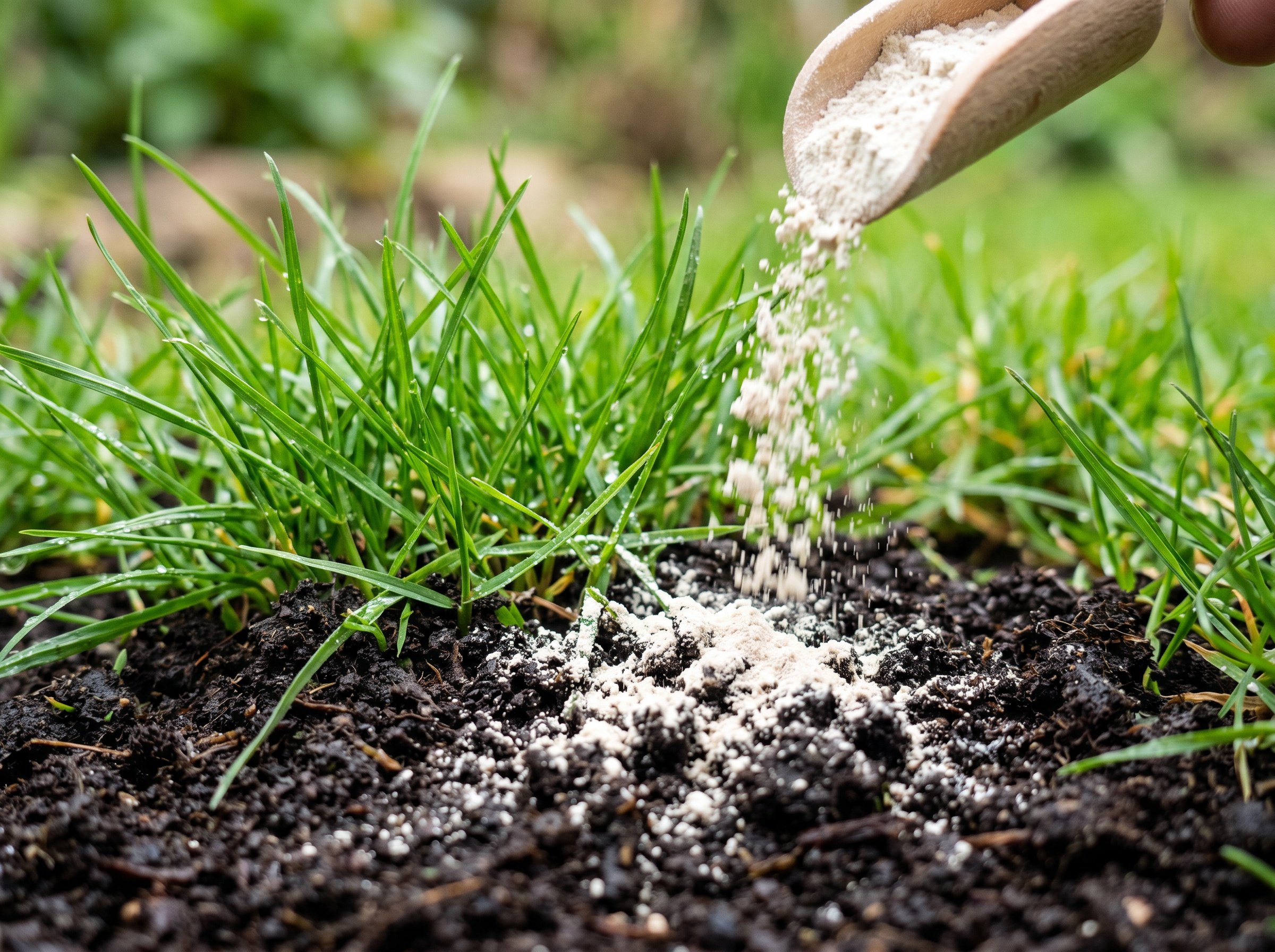
- Milky spore is a naturally occurring bacterium (Paenibacillus popilliae) that infects and kills grubs from the inside. It is slow to build up, but once established it can suppress grub populations for many years.
- Chemical grub killers (imidacloprid, trichlorfon, chlorantraniliprole) kill within days to weeks. They have to be reapplied every season or two.
- The catch most articles skip: milky spore only reliably kills Japanese beetle grubs (Popillia japonica). If your grubs are European chafer, masked chafer, Asiatic garden beetle, or oriental beetle, milky spore will not save your lawn. Confirm it's grubs (and not sod webworms) with our grub vs sod webworm ID guide, then verify the species before you commit to a multi-year program.
Decision matrix: which one is right for you?
| If this describes you… | Choose |
|---|---|
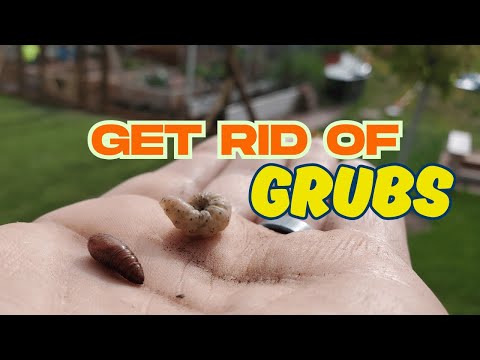
| You have confirmed Japanese-beetle grubs (C-shaped, ~1 inch, brown rear end), and you can wait 1–3 seasons for full effect. | **Milky spore** |
| You want low-toxicity treatment that is safe around kids, pets, pollinators, and earthworms. | **Milky spore** |
| You see active grub damage *right now* and need it to stop this season. | **Chemical** |
| You do not yet know which grub species you have. | **Chemical** (or [confirm it's grubs first](/articles/grub-vs-sod-webworm)) |
| Your soil is very acidic (pH < 5.5) or very alkaline (pH > 7.5). | **Chemical** — milky spore establishes poorly outside pH 6.0–7.0 |
| You rent, or plan to move within 2 years. | **Chemical** — milky spore's payoff is a multi-year horizon |
| You want a long-term, set-and-forget biological approach for a yard you own. | **Milky spore** (paired with a one-time curative the first year) |
The honest answer for most homeowners with a confirmed Japanese-beetle problem is both: a curative chemical application this season to stop the current damage, then a milky-spore inoculation that same year to build the long-term defense. We will explain the layered approach below.
Side-by-side comparison
| Factor | Milky Spore | Chemical Grub Killer |
|---|---|---|
| **What it is** | Naturally occurring bacterium (*Paenibacillus popilliae*) | Synthetic insecticide (imidacloprid, trichlorfon, chlorantraniliprole) |
| **Speed to first kill** | Slow — measurable suppression in 1–3 seasons (longer in northern soils) | Fast — trichlorfon curatives kill grubs in 1–3 days; carbaryl takes 2–3 weeks |
| **Residual effect** | Decades once established (manufacturer claim 10–20+ years; field studies show variable persistence in cooler climates) | One season per application; must reapply yearly |
| **Species controlled** | **Japanese beetle grubs only** (well-documented limitation) | All common turf-damaging grub species |
| **Application frequency** | One inoculation course (3 applications across 1 year) | Annual or biennial |
| **Pollinator risk** | None | Varies by active ingredient — imidacloprid (a neonicotinoid) carries documented pollinator concerns; chlorantraniliprole is much lower-risk |
| **Pet/kid re-entry** | Immediate after dust settles | Read label — most require watering in and at least drying time before re-entry |
| **5-year homeowner cost (¼-acre lawn)** | ~$120–200 one-time, then nothing | ~$150–250 over five seasons (one $25–50 bag per year) |
Speed-of-kill: when do you actually see results?
Chemical grub killers do what they say on the bag. A curative product containing trichlorfon, used in early fall when grubs are actively feeding near the surface, can knock down 80–90% of grubs within two to three weeks. Preventives like imidacloprid and chlorantraniliprole are applied earlier (May–July, before egg hatch) and kill the next generation before it ever damages your lawn. See our hub on grub-killer timing for the exact application window in your region.
Milky spore is the opposite story. After you spread the powder or granular product, spores need actual living Japanese-beetle grubs to feed on them. The infected grubs die in the soil, rupture, and release billions of new spores. That cycle takes one to three years — and in cooler northern soils (Zone 5 and colder), research from University of Kentucky entomology and others has found establishment can be even slower, or in some cases incomplete. Translation: do not expect a visible turf recovery in milky spore's first season.
Residual effect: how long does each last?
This is where the math starts to favor milky spore. A chemical treatment protects roughly one season. To stay grub-free for ten years using a chemical-only program, you reapply ten times.
A successful milky-spore inoculation can suppress Japanese-beetle grubs for a decade or longer — the manufacturer commonly cites 10–20+ years, and some long-term Northeastern lawns treated in the 1990s still show suppression today. Caveat: the establishment-failure rate in cool soils is real, and a failed inoculation buys you nothing. Soil temperature, pH, and a sustained host population (you actually need some grubs around for the bacteria to multiply) all matter.
Cost over five years (the real apples-to-apples view)
For a typical quarter-acre residential lawn:
- Milky spore program (years 1–5): ~$120–200 total. You apply three times in year 1 to seed the population, then nothing.
- Chemical-only program (years 1–5): ~$150–250 total. One bag a year, every year, plus labor.
Lifetime cost is similar at year five. But milky spore's curve keeps going flat after that, while chemical costs continue. By year ten, a chemical-only program costs roughly twice the milky-spore alternative — if the milky-spore inoculation took.
Environmental profile and pollinator impact
This is where the natural option wins decisively — when it works.
Milky spore is a host-specific bacterium. It does not affect bees, butterflies, earthworms, beneficial soil microbes, songbirds, pets, or kids. The EPA classifies it as a microbial pesticide with no significant non-target effects.
Chemical grub killers vary widely:
- Imidacloprid (a neonicotinoid, very common in big-box "grub control" bags) is restricted in the EU for outdoor use and has documented sublethal effects on bees foraging on lawn clover and treated flowering weeds. Mow flowering weeds before application to reduce exposure.
- Trichlorfon (the curative most homeowners reach for in fall) is an organophosphate. It breaks down in days but is acutely toxic during that window — keep pets and kids off until the lawn is fully dry.
- Chlorantraniliprole is a newer chemistry with markedly lower pollinator and mammalian toxicity. If you must go chemical, this is the modern pick.
Safety around kids, pets, and beneficial wildlife
Milky spore needs no re-entry interval. The granular product is dusty, so wear a mask while applying, but kids and pets can be on the lawn the same hour.
Chemical labels vary. Most require the lawn to be watered in (¼ to ½ inch of irrigation) and fully dry before re-entry — typically a few hours. Always read the specific product label. If pollinators are visiting your lawn (clover, dandelion flowers), either mow first or pick chlorantraniliprole over imidacloprid.
How soil conditions affect milky spore (don't skip this)
The single biggest reason milky-spore inoculations fail is hostile soil. The bacterium establishes best in:
- Soil pH 6.0–7.0. Below 5.5, establishment drops sharply.
- Soil temperature 60°F+ at time of application. Cold-soil applications can wait years to multiply.
- Sustained presence of Japanese-beetle grubs. No host = no propagation.
Before you spend on a multi-year program, run a basic soil test to confirm pH. A $15 test can save you from spending $150 on a treatment that will not establish.
Our two product picks (Amazon-only this cycle)
We link the SKUs we would actually recommend to a friend. Both are widely stocked, well-reviewed, and available on Amazon with Prime shipping.
- Milky spore option: St. Gabriel Organics Milky Spore Powder, 10 oz — covers ~2,500 sq ft per application; three applications over the first year complete the inoculation.
- Chemical comparable: BioAdvanced 24-Hour Grub Killer Plus (trichlorfon) — curative; apply in late August through early October when grubs are feeding near the surface.
If you want a deeper roundup of curative and preventive grub-killer SKUs (including the chlorantraniliprole option), see our best grub killer for lawns guide. If you would rather go all-natural but faster than milky spore, see our beneficial nematodes guide — nematodes work in one season and hit a broader range of grub species.
Bottom line
If you have a confirmed Japanese-beetle problem and you plan to stay in your home for at least three to five more years, milky spore is the better long-term investment — paired with a curative chemical treatment in year one to stop active damage while the bacterial population establishes.
If you do not know your grub species, your soil is hostile to milky spore, or you need results this season, go chemical. The newer chlorantraniliprole formulations give you fast results with markedly lower pollinator and mammalian toxicity than imidacloprid or trichlorfon.
Either way, get the timing right. Our hub guide on when to apply grub killer walks through the exact window for your region. And once the grubs are down — whether by milky spore over multiple seasons or by a chemical curative in one — the patches they ate through need their own recovery plan. See how to fix bare spots in lawn for the soil prep, seed selection, and watering cadence that brings those dead zones back.