
Quick Answer
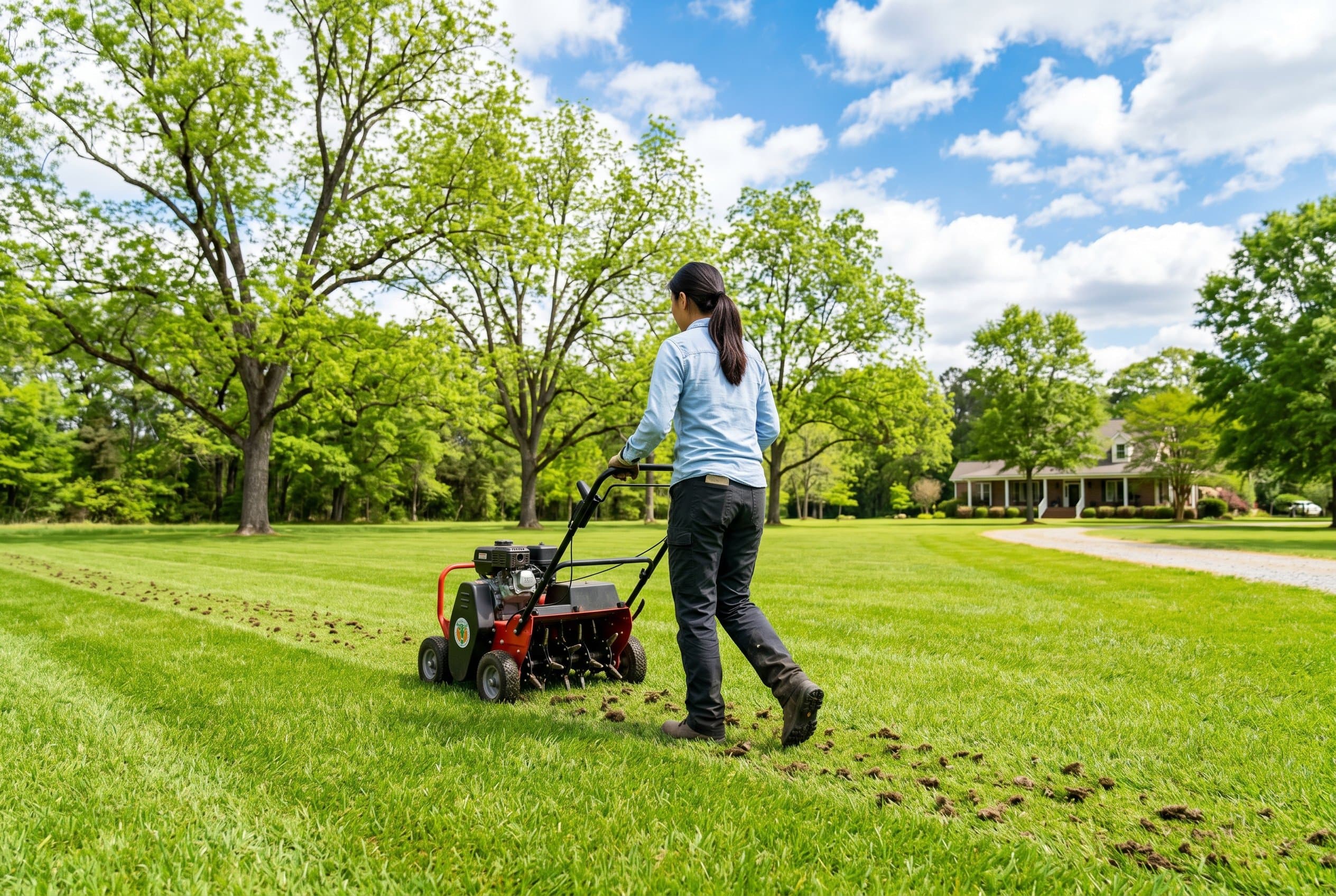
Georgia homeowners should aerate their lawns between May and July, with late May to early June being optimal for most warm-season grasses like Bermudagrass and Zoysiagrass[1]. This timing allows your grass to recover quickly during the peak growing season in Georgia's humid subtropical climate. Cool-season grasses like tall fescue in northern Georgia mountains should be aerated in early fall instead.
Key Takeaways
- Prime aeration window: May through July for warm-season grasses
- Best timing: Late May to early June when soil temperatures reach 65-70°F
- Fall aeration (September-October) works better for tall fescue in north Georgia
- Avoid aerating during Georgia's peak summer stress (August-September)
- Core aeration works best for Georgia's clay-heavy soils
Introduction
Georgia's unique combination of clay soils, high humidity, and intense summer heat creates specific challenges for lawn aeration. With USDA hardiness zones ranging from 7a in the mountains to 9a in the south, timing your aeration correctly can mean the difference between a thriving lawn and stressed grass struggling to recover[2]. Understanding when your specific grass type needs aeration in Georgia's climate will help you maintain a healthier, more resilient lawn.
What's the Best Month to Aerate Georgia Lawns?
The optimal aeration timing in Georgia depends on your grass type and location within the state. For the majority of Georgia lawns featuring warm-season grasses, late May through early July provides the best results[1].
Warm-season grass timing:
- Bermudagrass: Late May to mid-June
- Zoysiagrass: Early to mid-June
- Centipedegrass: Late May to early June
- St. Augustinegrass: Early June to early July
Cool-season grass timing:
- Tall fescue (north Georgia): Early September to mid-October
This timing aligns with when soil temperatures consistently reach 65-70°F and your grass enters its peak growing phase[3]. Georgia's average annual rainfall of 50 inches means soil moisture is typically adequate during these periods, making aeration more effective.
How Do I Know If My Georgia Lawn Needs Aeration?
Georgia's clay-heavy soils are particularly prone to compaction, especially with the state's high humidity and frequent rainfall. Several signs indicate your lawn needs aeration:
Soil compaction indicators:
- Water pools on the surface after irrigation or rain
- Difficulty inserting a screwdriver 3-4 inches into soil
- Thinning grass in high-traffic areas
- Increased weed pressure from crabgrass or nutsedge
Thatch buildup signs:
- Spongy feel when walking on the lawn
- Thatch layer exceeding ½ inch thick
- Increased susceptibility to large patch or brown patch diseases[4]
Georgia homeowners dealing with fall armyworms or mole crickets may also benefit from aeration, as compacted soil makes grass more vulnerable to pest damage[1].
What's the Best Aeration Method for Georgia Soils?
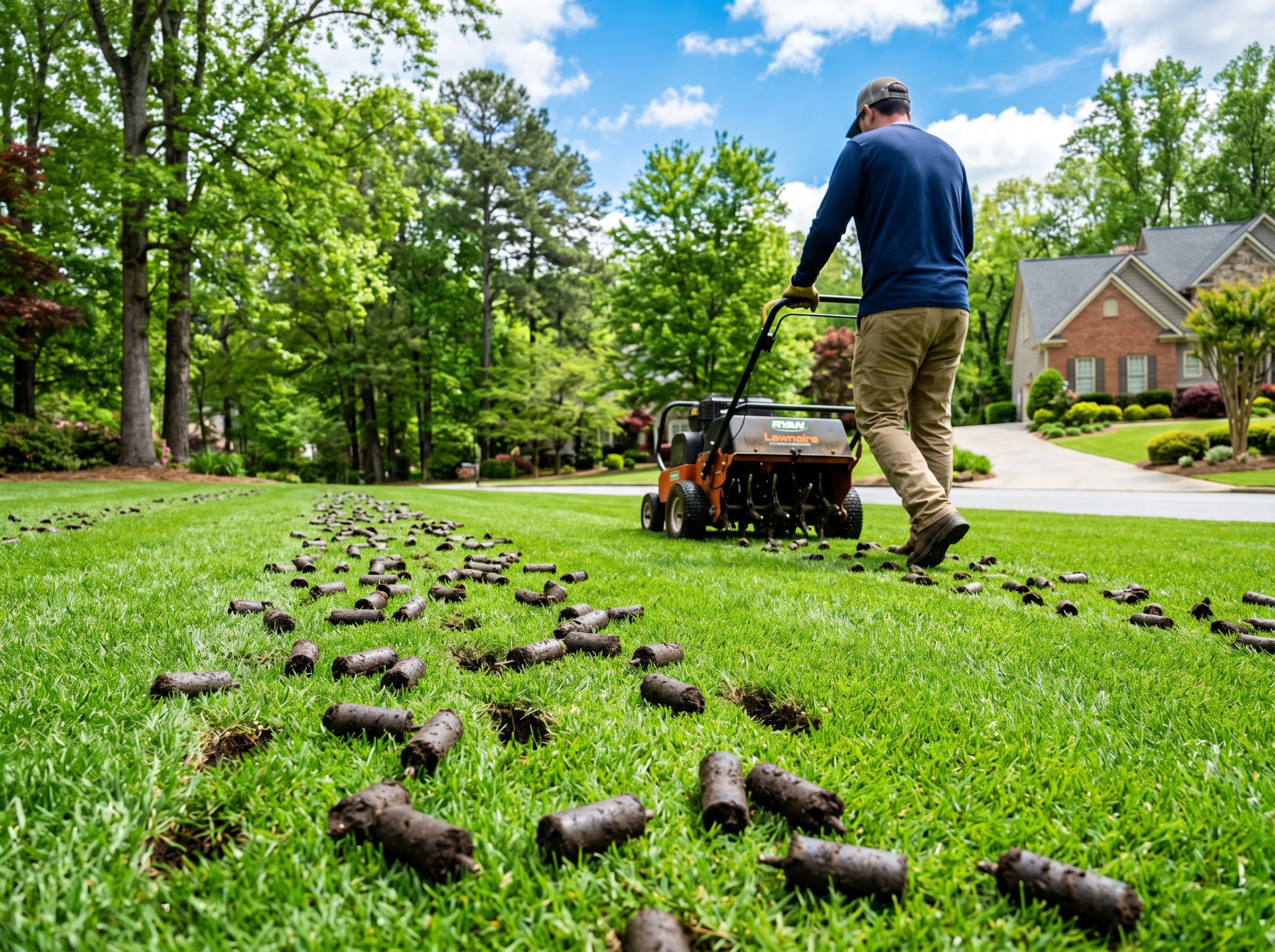
Georgia's predominantly clay soils require core aeration rather than spike aeration for best results. Core aeration removes actual plugs of soil, providing immediate relief from compaction issues common in the state[5].
Pre-aeration preparation:
- Water your lawn 1-2 days before if soil is dry
- Mark sprinkler heads and shallow utility lines
- Mow grass to normal height (don't scalp)
- Apply pre-emergent herbicide 2-3 weeks before aeration if treating crabgrass
Aeration technique:
- Make 2-3 passes in different directions
- Aim for 20-40 holes per square foot
- Leave soil plugs on the surface to decompose
- Consider overseeding immediately after aeration
Post-aeration care:
- Apply fertilizer within 48 hours of aeration
- Water lightly but frequently for the first week
- Avoid heavy foot traffic for 2-3 weeks
The UGA Cooperative Extension recommends following aeration with appropriate fertilization based on soil test results[1].
Should I Aerate Before or After Treating Common Georgia Lawn Problems?
Timing aeration around Georgia's common lawn issues requires strategic planning. Since Georgia lawns face specific challenges like fall armyworms, large patch disease, and aggressive weeds, coordination is essential.
Disease management timing:
- Aerate before peak large patch season (fall/early spring)
- Avoid aerating during active brown patch outbreaks
- Allow 2-3 weeks between fungicide applications and aeration[4]
Pest control coordination:
- Apply grub control products before aeration
- Treat fire ant mounds after aeration when soil access improves
- Time aeration to precede fall armyworm season (August-September)[6]
Weed control strategy:
- Apply pre-emergent crabgrass control in late February, then aerate in May
- Treat existing dollarweed and Virginia buttonweed before aerating
- Post-emergent treatments work better after aeration improves herbicide penetration
Conclusion
Successful lawn aeration in Georgia requires understanding your specific grass type and local growing conditions. Focus on the May through July window for warm-season grasses, while northern Georgia homeowners with tall fescue should target early fall. Remember that Georgia's clay soils and humid climate create unique challenges that proper timing and technique can address. Plan your aeration around other lawn treatments, and always follow up with appropriate fertilization and watering to maximize results.
Start by testing your soil for compaction this spring, then schedule core aeration during your grass type's optimal growing period for the healthiest Georgia lawn possible.