
Quick Answer: Fall lawn care in Georgia focuses on preparing warm-season grasses like Bermuda and Zoysia for dormancy while managing fall armyworms and overseeding with ryegrass for winter color. The optimal window runs from September through November, with specific timing varying across Georgia's USDA zones 7a-9a.
Key Takeaways
- Stop fertilizing warm-season grasses by late September to encourage proper dormancy
- Apply fall pre-emergent herbicide in October to prevent winter weeds like Poa annua
- Overseed with perennial ryegrass in October for winter lawn color
- Monitor and treat fall armyworm infestations, which peak in September-October
- Adjust watering as temperatures cool and rainfall increases
Fall presents unique challenges for Georgia lawns as warm-season grasses prepare for winter dormancy while cooler-season weeds and pests become active[1]. Georgia's humid subtropical climate and high annual rainfall of 50 inches create conditions where proper fall lawn care in Georgia management determines spring lawn health[2].
What Should I Do First for My Georgia Lawn in Fall?
Begin fall lawn care by conducting a thorough inspection of your grass type and current condition. Bermudagrass, Zoysiagrass, Centipedegrass, and St. Augustinegrass—Georgia's primary warm-season varieties—require different fall approaches than the tall fescue found in north Georgia mountains[3].
Start with soil testing through your local UGA Extension office to determine pH and nutrient levels. Georgia's naturally acidic soils often require lime applications every 2-3 years, and fall provides an ideal application window[1].
Next, assess pest pressure. Fall armyworms typically emerge in late August through October, causing rapid damage to warm-season grasses[4]. Look for brown patches and small caterpillars feeding in early morning or evening hours.
When Should I Apply Fall Treatments in Georgia?
Timing varies significantly across Georgia's climate zones. In north Georgia (zone 7a), begin fall treatments in early September, while south Georgia (zones 8b-9a) can wait until mid-to-late September[5].
September Tasks:
- Apply final fertilizer application to warm-season grasses by September 30th
- Begin fall armyworm monitoring and treatment if needed
- Start reducing irrigation as temperatures moderate
October Tasks:
- Apply fall pre-emergent herbicide targeting Poa annua and winter weeds
- Overseed with perennial ryegrass for winter color (optimal soil temperature: 65-70°F)
- Continue mowing at regular height until growth slows
November Tasks:
- Final mowing before dormancy (typically mid-to-late November)
- Apply lime if soil test indicates need
- Winterize irrigation systems in north Georgia
The UGA Cooperative Extension recommends monitoring soil temperatures rather than calendar dates, as Georgia's variable fall weather can shift optimal timing by several weeks[1].
How Do I Handle Georgia Fall Pests and Diseases?
Fall armyworms pose the greatest pest threat to Georgia lawns during autumn months. These caterpillars can destroy large areas within days, particularly in Bermudagrass and Centipedegrass lawns[4].
Fall Armyworm Management:
- Monitor weekly from August through October
- Apply targeted insecticide when 3-4 larvae per square foot are detected
- Focus treatment on newly damaged areas rather than broadcast applications
Mole crickets remain active through fall, particularly in south Georgia's warmer zones[6]. Apply appropriate baits in September when soil temperatures exceed 60°F for optimal control.
Disease Prevention: Large patch disease becomes problematic as warm-season grasses weaken before dormancy. Reduce nitrogen fertilization and improve air circulation through proper mowing practices[7]. Avoid excessive irrigation during Georgia's naturally high-humidity fall months.
Fire ants often increase activity during fall's moderate temperatures. Treat individual mounds with approved baits rather than broadcast treatments to protect beneficial insects[2].
Should I Overseed My Georgia Lawn in Fall?
Overseeding depends entirely on your grass type and aesthetic preferences. Warm-season grasses naturally enter dormancy from November through March, turning brown regardless of health status[3].
Perennial ryegrass overseeding provides winter color but requires additional maintenance and resources. The practice works best on Bermudagrass and Zoysiagrass, while Centipedegrass and St. Augustinegrass don't compete well with overseeded grasses[8].
Overseeding Guidelines:
- Timing: October when soil temperatures reach 65-70°F
- Seeding rate: 5-10 pounds per 1,000 square feet
- Preparation: Light dethatching and topdressing with compost
- Watering: Daily light irrigation until germination
North Georgia homeowners in mountainous regions with existing tall fescue should focus on thickening existing stands rather than overseeding warm-season areas[5].
Skip overseeding if you prefer low-maintenance lawns or want to minimize spring competition when warm-season grasses resume growth.
Preparing Your Georgia Lawn for Winter Success
Fall preparation sets the foundation for vigorous spring growth. Focus on strengthening root systems while avoiding practices that delay dormancy[9].
Reduce mowing frequency as growth slows but maintain regular height until the final cut. Raising mowing height slightly provides additional winter protection without encouraging disease[1].
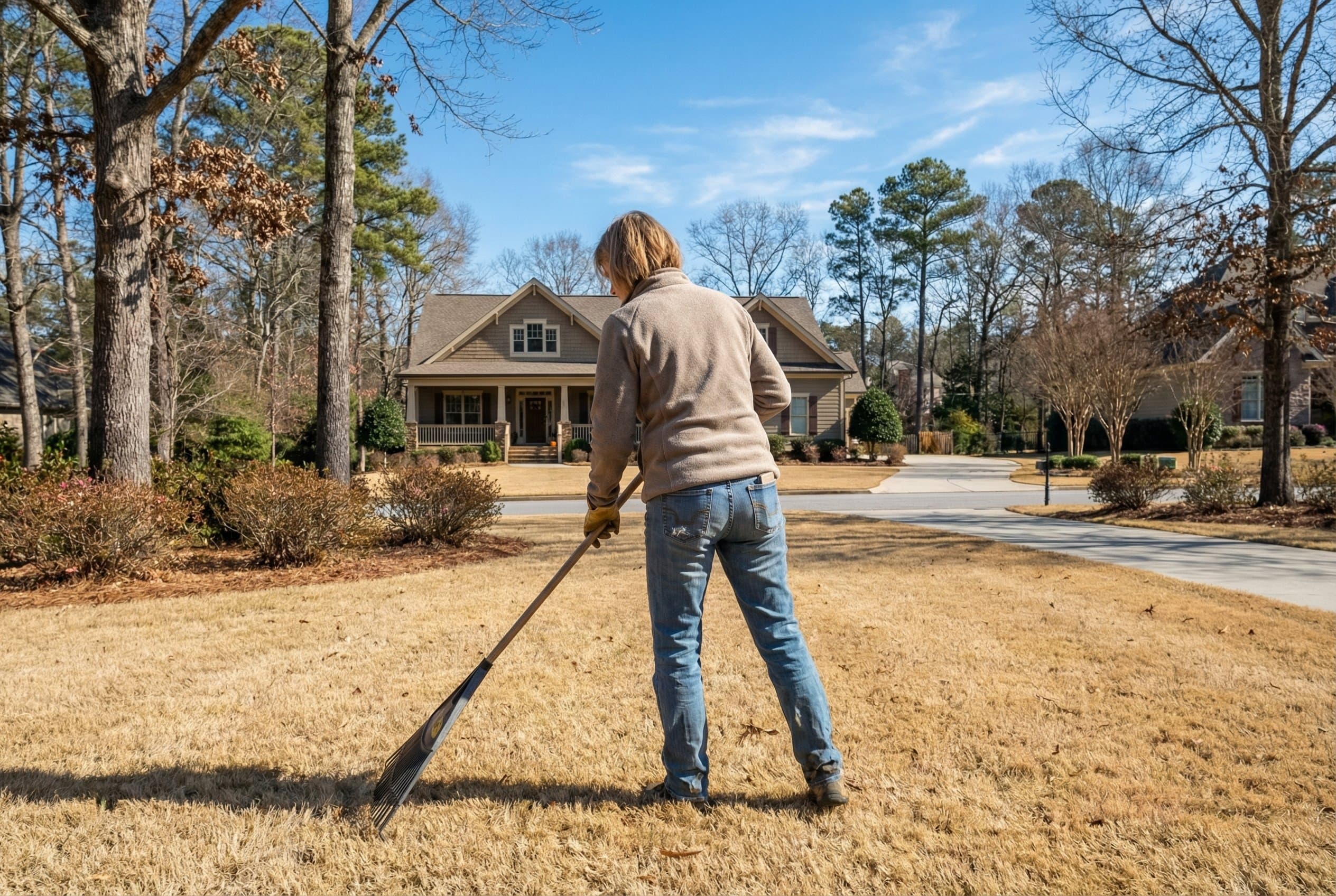
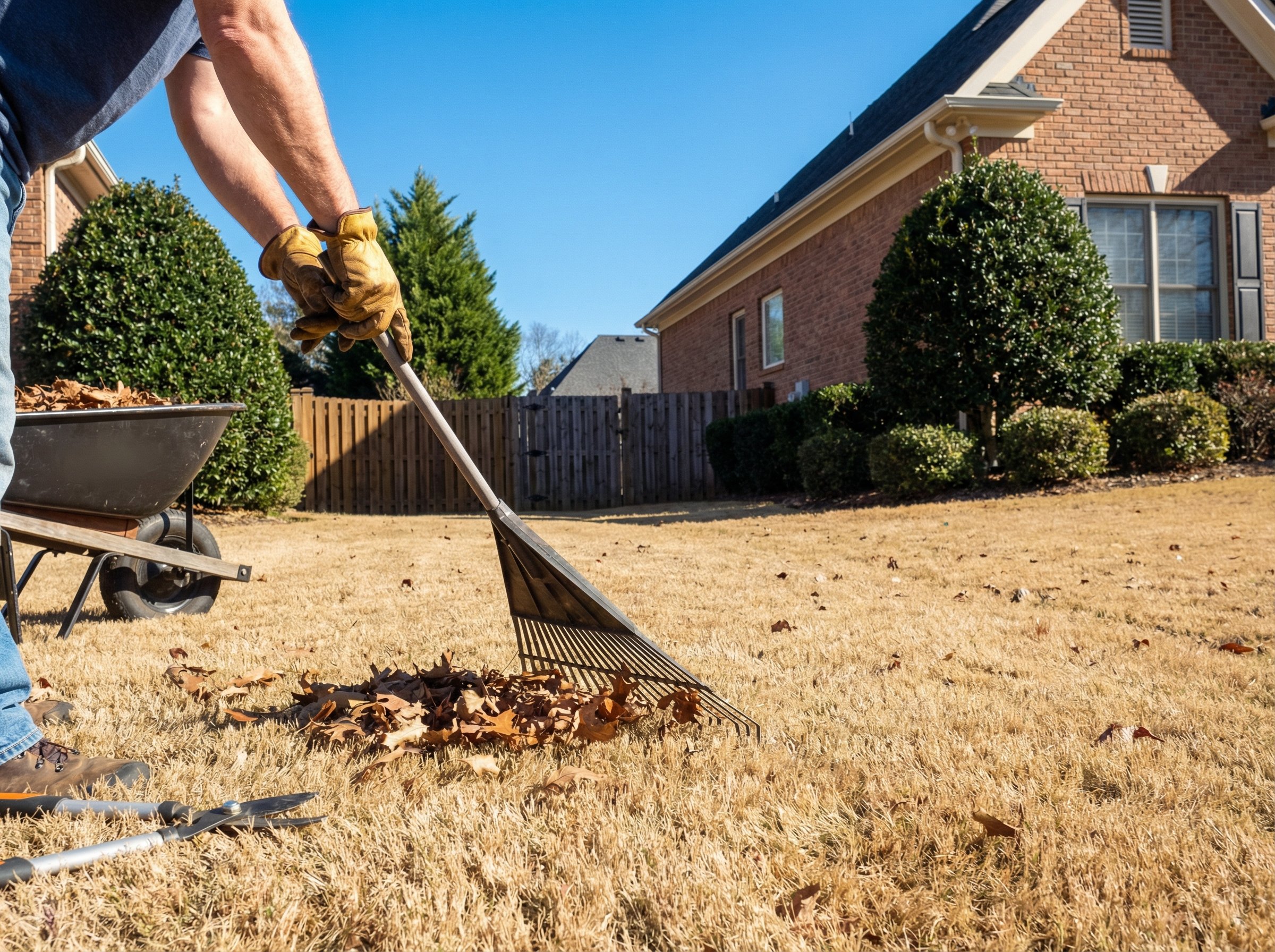
Clear fallen leaves promptly to prevent smothering grass and creating disease-favorable conditions. Georgia's diverse tree population often creates heavy leaf loads requiring weekly removal through November[2].
Adjust irrigation systems for reduced water needs but maintain soil moisture during extended dry periods. Georgia's variable fall precipitation patterns may require supplemental watering even as temperatures cool[10].
By following these Georgia-specific fall lawn care practices, you'll ensure healthy dormancy and robust spring recovery for your warm-season grass.