Quick Answer
During drought conditions in Georgia, focus on deep, infrequent watering (1-1.5 inches weekly), raise your mowing height by 25-50%, and prioritize maintaining Bermudagrass and Zoysiagrass which handle drought better than Centipedegrass and St. Augustinegrass. Most warm-season grasses in Georgia's zones 7a-9a will survive drought by going dormant and recover when normal rainfall returns.
Key Takeaways
- Water early morning (5-10 AM) to minimize evaporation in Georgia's high humidity
- Bermudagrass and Zoysiagrass are most drought-tolerant for Georgia lawns
- Raise mowing height to 3-4 inches during drought to protect grass crowns
- Apply light nitrogen fertilizer only if watering regularly during drought
- Consider temporary dormancy as a survival strategy for warm-season grasses
Introduction
Georgia drought lawn care becomes essential when the state's humid subtropical climate fails to deliver its typical 50 inches of annual rainfall[1]. With summer temperatures averaging 90°F across zones 7a-9a, Georgia homeowners need targeted strategies to help their warm-season grasses survive extended dry periods[2]. The key is understanding how Bermudagrass, Zoysiagrass, Centipedegrass, and St. Augustinegrass each respond to drought stress.
How Should I Water My Georgia Lawn During Drought?
Proper watering technique becomes critical during Georgia drought conditions. Water your lawn deeply but infrequently, applying 1 to 1.5 inches per week including any rainfall[3]. The best time to water in Georgia is early morning between 5-10 AM, which reduces water loss from evaporation while taking advantage of the state's naturally high humidity levels[4].
Use the "screwdriver test" to check soil moisture - if you can't easily push a screwdriver 6 inches into the soil, it's time to water[1]. Focus watering efforts on high-traffic areas and slopes where grass experiences additional stress.
For established warm-season grasses in Georgia, water every 3-4 days rather than daily light watering[5]. This encourages deeper root growth, which helps grass access moisture during extended dry periods. If water restrictions are in effect, prioritize watering newly seeded or sodded areas first.
Many Georgia municipalities implement outdoor watering restrictions during drought, typically allowing irrigation only on specific days based on your address[6]. Atlanta, Augusta, and Savannah commonly restrict watering to every other day or specific weekday schedules during Level 2 drought conditions.
What Grass Types Handle Georgia Droughts Best?
Among Georgia's primary grass types, Bermudagrass demonstrates the highest drought tolerance, followed closely by Zoysiagrass[2]. These grasses have extensive root systems that can reach deep soil moisture even during extended dry periods.
Bermudagrass will enter dormancy during severe drought but typically recovers quickly when moisture returns[7]. Zoysiagrass maintains better color during moderate drought stress and requires less water than other warm-season options.
Centipedegrass and St. Augustinegrass show more drought stress symptoms, including browning and thinning[3]. St. Augustinegrass, in particular, may require supplemental irrigation during drought to prevent permanent damage. In north Georgia's mountainous regions where Tall Fescue is common, this cool-season grass often goes dormant during hot, dry summer periods.
If you're considering lawn renovation after drought damage, Bermudagrass or Zoysiagrass offer the best long-term drought resilience for Georgia's climate zones[5].
How Should I Adjust Mowing and Fertilizing During Drought?
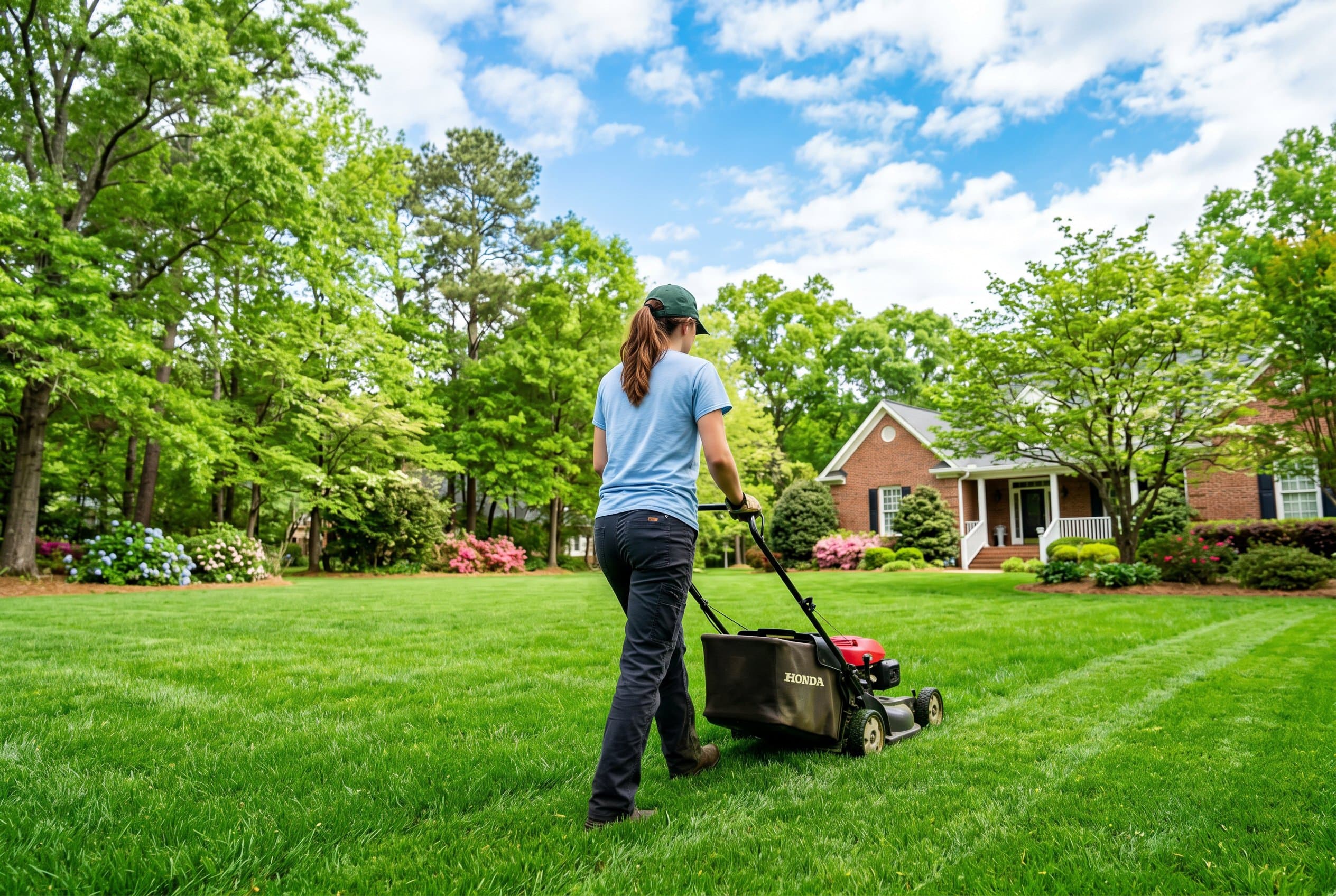
Modify your mowing practices significantly during drought periods in Georgia. Raise your mowing height by 25-50% above normal - this means cutting Bermudagrass at 2-3 inches instead of the typical 1-2 inches[1][8]. Taller grass shades the soil, reducing water evaporation and protecting grass crowns from heat stress.
Keep mower blades sharp to prevent tearing, which increases water loss through damaged leaf tissue[4]. Consider mowing less frequently during drought - only when grass grows enough to maintain the one-third rule.
Fertilizer application requires careful timing during Georgia droughts. Avoid high-nitrogen fertilizers unless you can provide consistent irrigation, as nitrogen promotes growth that increases water demand[3][7]. If you must fertilize during drought, use a light application of slow-release fertilizer with iron to maintain color without forcing excessive growth.
Suspend fertilization entirely if your grass has entered dormancy. Resume normal fertilization practices in late summer when drought stress subsides and fall growth begins[5].
When Should I Let My Georgia Lawn Go Dormant?
Allowing warm-season grasses to enter drought dormancy is often the most practical approach for Georgia homeowners during severe water restrictions. Bermudagrass and Zoysiagrass can survive 4-6 weeks of dormancy without permanent damage[2][8].
Dormant grass appears brown but remains alive at the crown level. Avoid walking on dormant turf as much as possible, since stressed grass is more susceptible to damage. Most importantly, don't overseed dormant warm-season grass with cool-season varieties during summer drought - wait until the normal October overseeding window[1].
Monitor dormant areas for weed invasion, particularly crabgrass and nutsedge, which thrive in stressed turf conditions. Spot-treat weeds carefully to prevent them from establishing before your grass recovers[6].
When drought conditions end, gradually resume normal watering and mowing practices. Most warm-season grasses in Georgia recover within 2-3 weeks of receiving adequate moisture[7].
Conclusion
Georgia drought lawn care requires a strategic approach that works with your grass type's natural drought tolerance. Focus on deep, early morning watering, raise your mowing height, and don't hesitate to let warm-season grasses enter temporary dormancy during severe drought. Bermudagrass and Zoysiagrass owners have the advantage of naturally drought-tolerant varieties, while Centipedegrass and St. Augustinegrass may need extra attention. Remember that most drought damage in Georgia is temporary - with proper recovery practices, your lawn will return to its healthy state when normal rainfall resumes.