

Quick Answer
California homeowners should aerate cool-season grasses like tall fescue and Kentucky bluegrass in September-October, while warm-season grasses like Bermudagrass and St. Augustinegrass should be aerated in June-July[1]. The timing varies across California's diverse climate zones (USDA 5a-11a), with coastal areas having more flexibility than inland valleys where extreme summer heat limits the aeration window.
Key Takeaways
- Cool-season grasses (tall fescue, Kentucky bluegrass): Aerate September-October during active growth
- Warm-season grasses (Bermudagrass, St. Augustinegrass): Aerate June-July at peak growing season
- Coastal zones have extended windows due to milder Mediterranean climate
- Inland valleys require stricter timing due to temperature extremes
- Aerate when soil moisture is adequate but not waterlogged
California's unique transition-zone climate and diverse geography create specific challenges for lawn aeration timing. With zones ranging from 5a in mountain areas to 11a in desert regions, understanding your local climate and grass type is crucial for successful aeration that improves root development and reduces common issues like brown patch and dollar spot diseases[2].
What's the Best Time to Aerate Cool-Season Grasses in California?
Cool-season grasses like tall fescue and Kentucky bluegrass thrive in California's moderate climate zones and should be aerated during their peak growing periods in September through October[1]. This timing aligns with California's natural rainfall patterns and cooler temperatures, allowing grass to recover before winter dormancy.
In coastal areas with Mediterranean climates, you have more flexibility extending into early November if temperatures remain moderate. However, inland valleys like the Central Valley should stick to the September-October window due to potential early frost and temperature swings[3].
The soil should be moist but not saturated - typically 24-48 hours after watering or light rainfall. California's average annual rainfall of 22 inches means most areas will need supplemental irrigation before aeration to achieve proper soil moisture conditions.
When Should I Aerate Warm-Season Grasses in California?
Warm-season grasses including Bermudagrass, St. Augustinegrass, and drought-tolerant UC Verde Buffalograss should be aerated during their peak growing season from June through July[1]. This timing ensures the grass can quickly recover and fill in aeration holes before potential stress periods.
In California's hotter inland valleys where summer temperatures average 85°F or higher, early June provides the best conditions before extreme heat stress. Desert regions in Southern California should focus on early to mid-June to avoid the intense July heat that can stress even warm-season varieties[4].
Bermudagrass, while drought-tolerant, responds exceptionally well to June aeration followed by deep watering, which helps combat common pests like white grubs and sod webworms that thrive in compacted soil conditions[2].
How Does California's Climate Affect Aeration Timing?
California's diverse climate zones significantly impact optimal aeration timing across the state. Coastal areas benefit from stable Mediterranean conditions with minimal temperature extremes, allowing for extended aeration windows. The moderate humidity and consistent temperatures create ideal conditions for grass recovery[5].
Inland valleys face greater temperature swings and lower humidity, requiring more precise timing. These areas often experience rapid transitions between seasons, making the recommended windows critical for success[3].
Mountain zones (USDA 5a-7a) have shorter growing seasons, so timing becomes even more crucial. These areas should aerate at the beginning of recommended windows to maximize recovery time before dormancy periods[6].
California's irregular rainfall patterns also influence timing. During drought years, ensure adequate soil moisture through irrigation 1-2 days before aeration. In wet years, wait for soil to reach proper moisture levels rather than aerating waterlogged ground.
What Signs Indicate Your California Lawn Needs Aeration?
California lawns typically show specific signs that indicate aeration timing, regardless of grass type. Compacted soil from foot traffic, especially common in areas with clay soil composition, creates poor drainage and increases susceptibility to diseases like brown patch and fusarium patch[2].
Puddling water after irrigation or rainfall indicates compaction issues, particularly problematic given California's water conservation needs. Aerating compacted soil improves water infiltration and reduces runoff, maximizing irrigation efficiency[1].
Thinning grass areas often coincide with soil compaction, creating opportunities for weeds like crabgrass and annual bluegrass to establish. Proper aeration timing helps maintain dense turf that naturally resists weed invasion[4].
If your lawn feels spongy or has excessive thatch buildup (common with California's moderate decomposition rates), combine aeration with dethatching for optimal results.
Conclusion
Successful lawn aeration in California depends on matching timing to your specific grass type and local climate zone. Cool-season grasses perform best with September-October aeration, while warm-season varieties thrive with June-July timing. Consider your location within California's diverse climate zones, current soil moisture conditions, and grass health indicators when planning aeration.
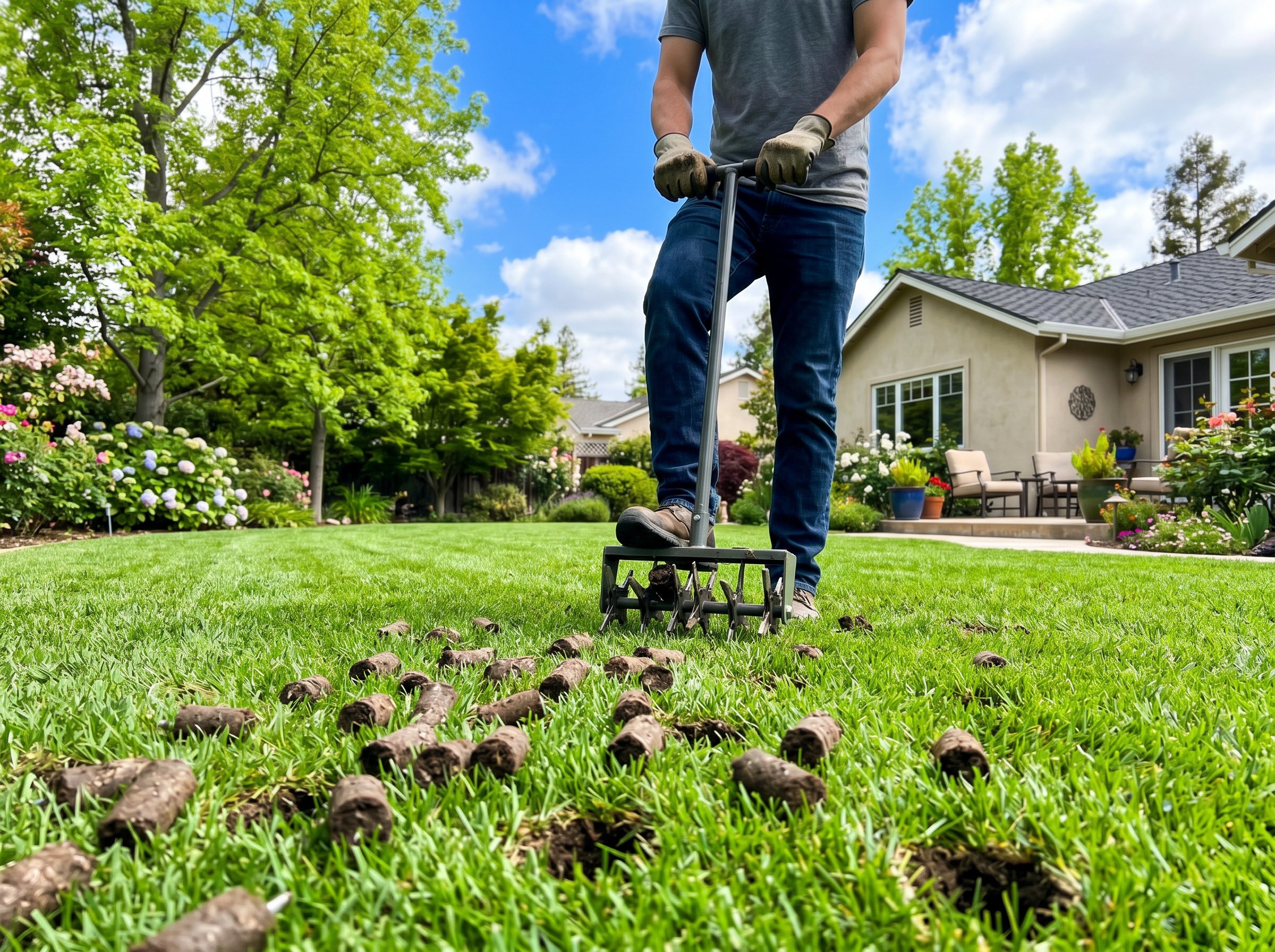
For best results, rent a core aerator, ensure proper soil moisture, and follow up with appropriate overseeding for cool-season grasses or fertilization for warm-season varieties. Monitor weather forecasts and adjust timing based on your specific microclimate conditions.
Sources
- UC Agriculture and Natural Resources - California lawn care and turf management guidelines
2. University of Arizona Cooperative Extension - Turfgrass disease management in transition zones
3. Colorado State University Extension - Lawn aeration timing for variable climate zones
4. Texas A&M AgriLife Extension - Warm-season grass management practices
5. USDA Natural Resources Conservation Service - Soil health and aeration principles
6. Professional Grounds Management Society - Regional turf management best practices
