
Quick Answer
California's diverse climate zones (5a-11a) require tailored lawn care approaches, with Bermudagrass and Tall Fescue dominating most regions. Success depends on choosing drought-tolerant varieties, timing fertilization between March-October, and managing water efficiently due to the state's average 22 inches of annual rainfall.
Key Takeaways:
- Choose climate-appropriate grasses: Bermudagrass for hot inland areas, Tall Fescue for cooler coastal regions
- Apply pre-emergent herbicides in February-March to prevent crabgrass and annual bluegrass
- Fertilize cool-season grasses March-October, warm-season grasses May-September
- Aerate cool-season lawns September-October, warm-season lawns June-July
- Monitor for white grubs, sod webworms, and brown patch disease year-round
California homeowners face unique lawn care challenges due to the state's dramatic climate variations, from Mediterranean coastal conditions to hot inland valleys and mountain zones[1]. With humidity ranging from low to moderate and diverse USDA hardiness zones, successful lawn maintenance requires understanding your specific microclimate and choosing appropriate grass varieties[2].
What Grass Types Work Best in California Lawn Care?
California's transition-season dominant grass region supports several primary grass types, each suited to different climate zones[3]. Bermudagrass thrives in hot inland valleys with summer highs averaging 85°F, offering excellent drought tolerance and heat resistance. Tall Fescue performs well in cooler coastal areas and provides year-round color with minimal dormancy periods.
Kentucky Bluegrass works in northern California's cooler zones (5a-7a) but requires more water than drought-tolerant alternatives[4]. St. Augustinegrass suits southern California's warmer zones but needs consistent moisture. For maximum water conservation, consider UC Verde Buffalograss or Zoysiagrass, which require significantly less irrigation than traditional varieties[5].
Coastal homeowners should prioritize salt-tolerant varieties, while inland residents need heat and drought-resistant options. Mountain zone residents (zones 5a-6b) should focus on cold-hardy cool-season grasses that can handle temperature fluctuations[6].
When Should I Fertilize and Maintain My California Lawn?
Timing fertilization correctly maximizes grass health while conserving resources in California's varied climate zones[7]. Cool-season grasses (Tall Fescue, Kentucky Bluegrass) should receive their first fertilization in March, with subsequent applications through October. Warm-season grasses (Bermudagrass, St. Augustine) benefit from fertilization starting in May through September when active growth occurs.
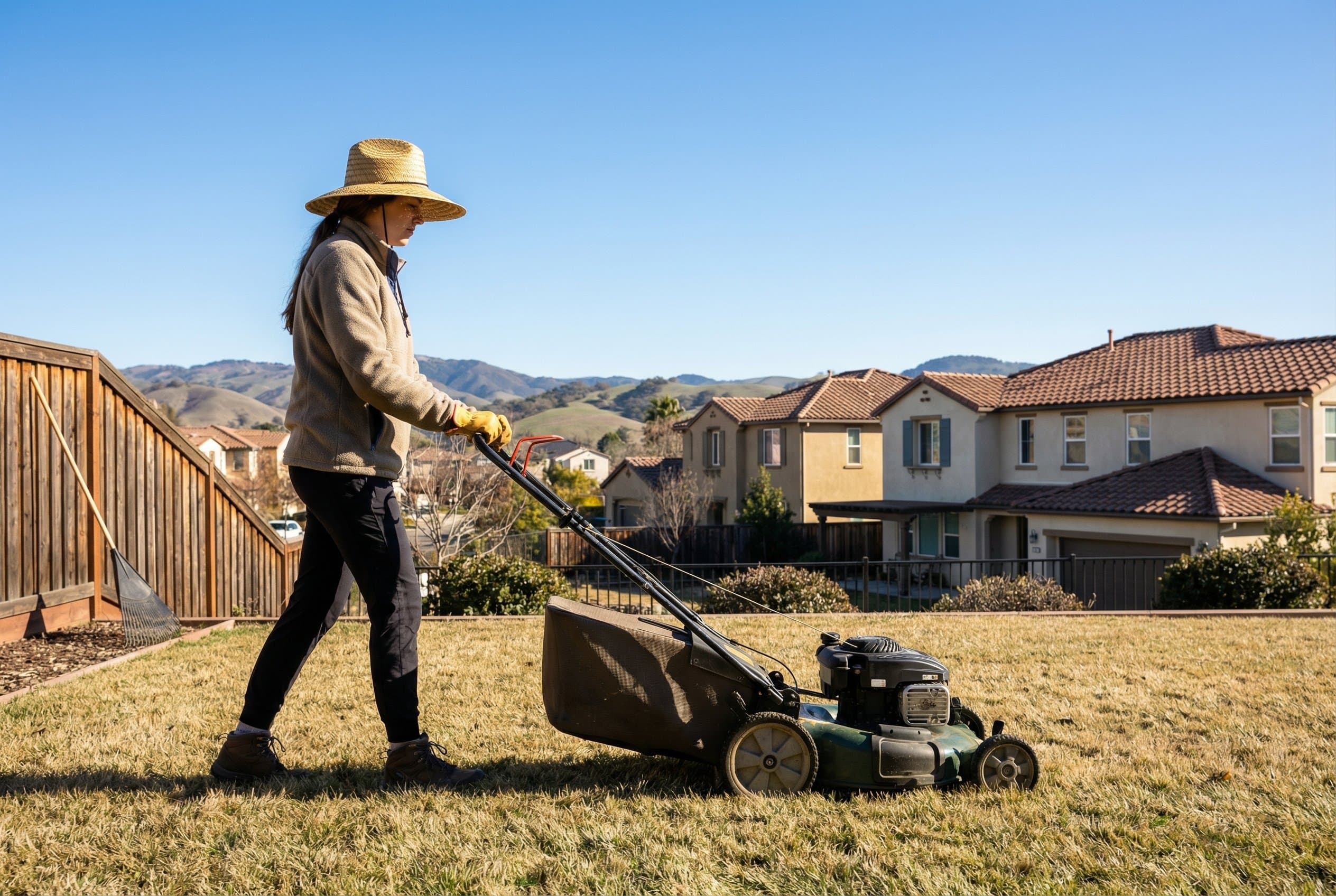
Mowing schedules vary significantly across the state. Begin mowing in February-March as temperatures warm, continuing through November-December before winter dormancy. Warm-season grasses enter dormancy December-February, while cool-season varieties maintain growth with minimal dormancy periods.
Aeration timing depends on grass type: cool-season lawns need aeration September-October when temperatures cool, while warm-season varieties should be aerated June-July during peak growing season[8]. Overseeding cool-season lawns works best September-October when soil temperatures favor germination.
How Do I Manage Common California Lawn Care Pests and Diseases?
California lawns face specific pest and disease pressures requiring targeted management strategies[9]. White grubs damage root systems, particularly in warm inland areas, while sod webworms create brown patches during hot summer months. Billbugs and crane flies also cause significant damage if left uncontrolled.
Disease management focuses on brown patch, which thrives in California's moderate humidity conditions, and dollar spot, common during warm, moist periods[10]. Fusarium patch affects cool-season grasses during cooler months, while spring dead spot impacts Bermudagrass in transition zones.
Preventive measures include proper irrigation timing (early morning), adequate soil drainage, and avoiding over-fertilization with nitrogen. Apply fungicides preventively during high-risk periods, typically spring and fall when temperature and moisture conditions favor disease development.
Weed control centers on preventing crabgrass and annual bluegrass through pre-emergent herbicide applications in February-March[11]. Oxalis and spurge require post-emergent treatments during active growing seasons. Bermudagrass becomes a problematic weed in Tall Fescue lawns, requiring selective herbicides for control.
What Watering Strategies Work Best in California's Dry Climate?
Efficient water management is crucial for California lawn success, given the state's average 22 inches of annual rainfall and ongoing drought concerns[12]. Deep, infrequent watering encourages deep root development and improves drought tolerance. Most California grasses need 1-1.5 inches of water weekly, including rainfall.
Irrigation timing should occur early morning (4-8 AM) to minimize evaporation and disease pressure. Avoid evening watering, which promotes fungal diseases in California's moderate humidity conditions. Install soil moisture sensors to prevent overwatering and ensure compliance with local water restrictions.
Drought-tolerant grass selection significantly reduces water requirements. UC Verde Buffalograss uses 50-75% less water than traditional varieties while maintaining acceptable appearance. Tall Fescue varieties with improved drought tolerance offer good color retention with reduced irrigation needs.
California homeowners should also consider lawn alternatives in high-traffic or difficult-to-irrigate areas. Native groundcovers and drought-resistant landscaping reduce overall water consumption while maintaining property appeal.
Conclusion
Successful California lawn care requires understanding your specific climate zone and selecting appropriate grass varieties for local conditions. Focus on drought-tolerant options like UC Verde Buffalograss or improved Tall Fescue varieties to conserve water while maintaining lawn quality.
Start implementing these region-specific practices: apply pre-emergent herbicides this February-March, choose your fertilization schedule based on grass type, and establish efficient watering patterns. Monitor for common California pests like white grubs and diseases such as brown patch, addressing issues promptly with targeted treatments. Your lawn's success depends on working with California's unique climate rather than against it.