
Quick Answer
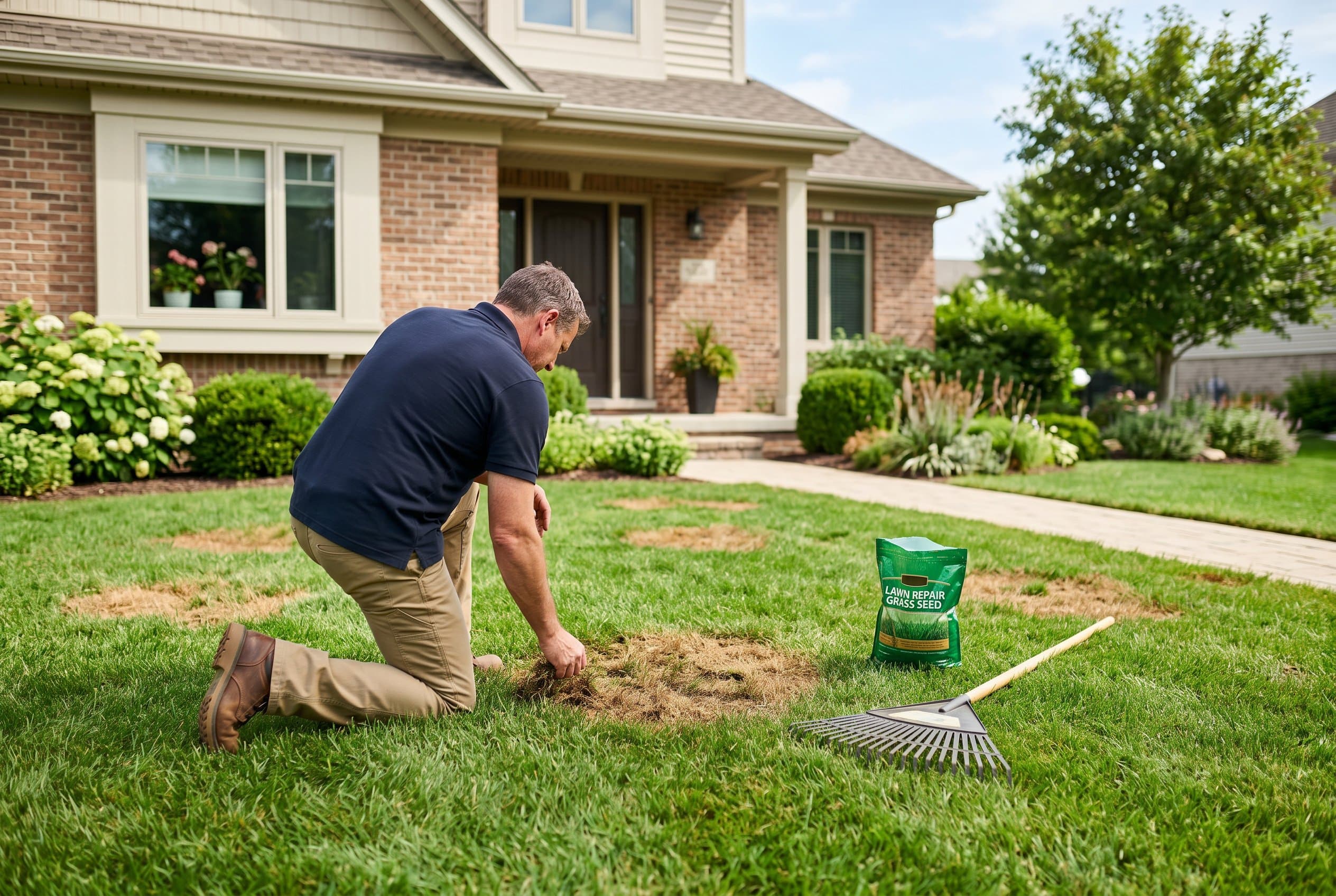
Brown patches in lawns are typically caused by fungal diseases, pet urine, over-fertilization, or drought stress. Fix them by identifying the root cause, removing dead grass, improving soil drainage, reseeding or sodding the area, and adjusting your watering and fertilization practices to prevent recurrence.
Key Takeaways
- Most brown patches result from fungal diseases, pet damage, chemical burns, or environmental stress
- Proper diagnosis is crucial - look at patch patterns, timing, and surrounding conditions
- Treatment involves removing damaged grass, improving soil conditions, and replanting
- Prevention through proper watering, fertilization, and lawn care is more effective than treatment
- Different grass types and seasons require specific repair approaches
Introduction
Nothing ruins a beautiful lawn quite like unsightly brown patches scattered across your green space. Whether you're dealing with circular dead spots, irregular brown areas, or widespread discoloration, these eyesores can make even the most well-maintained yard look neglected. The good news is that most brown patches are fixable with the right approach and a little patience.
Understanding what causes patchy grass and how to properly address it will not only restore your lawn's appearance but also prevent future problems. Let's explore the most effective methods to diagnose, treat, and prevent brown patches in your lawn.
Common Causes of Brown Patches
Fungal Diseases
Fungal infections are the leading cause of brown patches, especially during humid summer months. Brown patch disease creates circular areas of dead grass with a distinctive "smoke ring" pattern around the edges. Dollar spot fungus causes smaller, silver-dollar-sized brown circles throughout the lawn.
These diseases thrive in warm, humid conditions with poor air circulation. Knowing the best time to apply fungicide can stop outbreaks before they spread. Over-watering, especially in the evening, creates ideal conditions for fungal growth.
Pet Damage and Chemical Burns
Dog urine contains high levels of nitrogen that literally burn grass, creating circular brown spots with darker green rings around the edges. Cat waste can cause similar damage. Chemical burns from over-fertilization, gasoline spills, or harsh chemicals create irregular brown patches that appear suddenly.
Environmental Stress
Drought stress, heat damage, and compacted soil all contribute to brown patch development. Poor drainage creates waterlogged conditions that suffocate grass roots, while compacted soil prevents proper water and nutrient absorption.
Step-by-Step Brown Patch Repair Process
Step 1: Remove Dead Grass
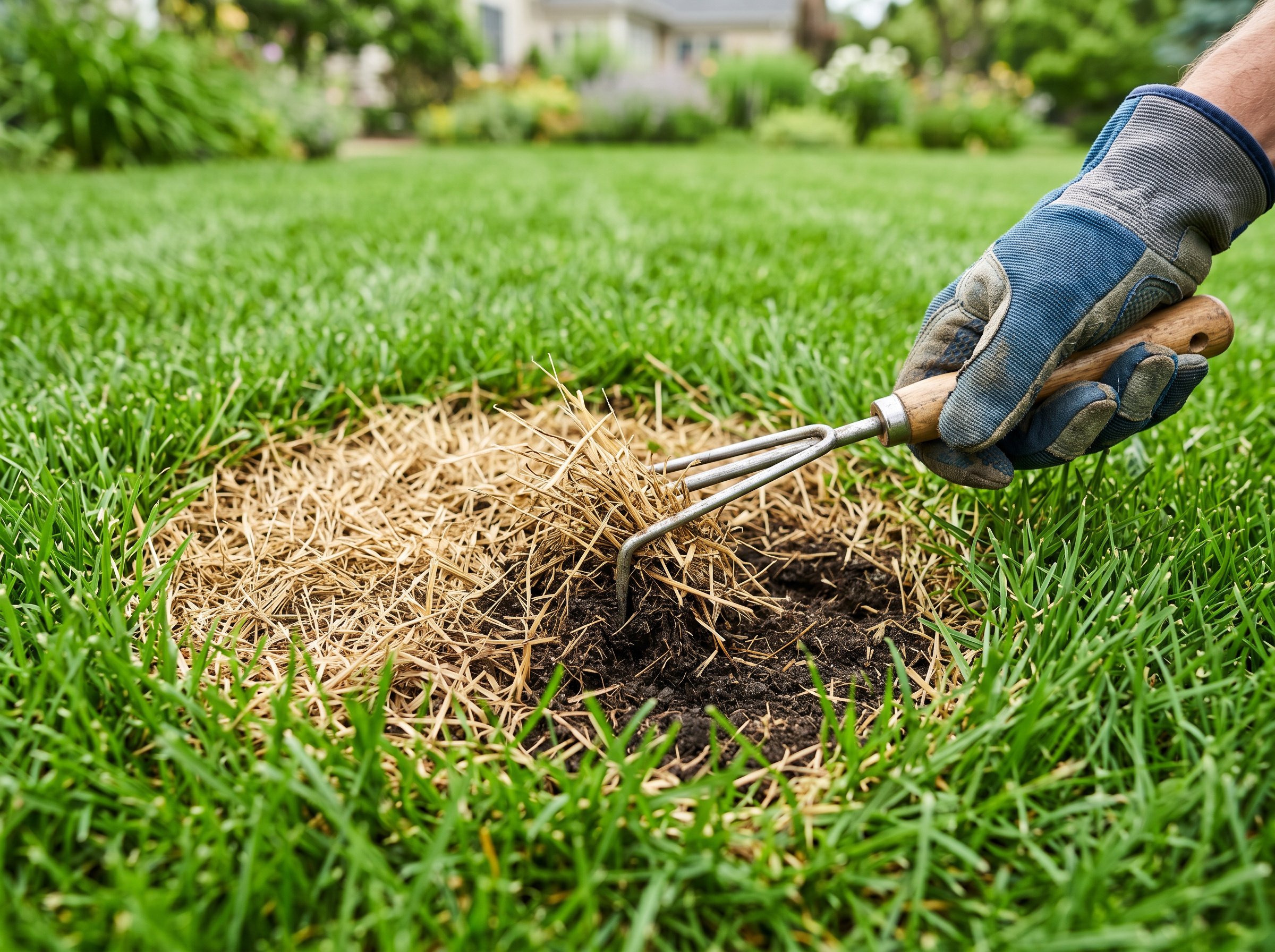
Use a rake or dethatcher to remove all dead, brown grass from the affected area. Be thorough - leaving diseased material can reinfect new grass. For small patches, hand-pulling works well. Larger areas may require a power rake.
Step 2: Test and Improve Soil
Test soil pH using a simple soil test kit. Most grass varieties prefer slightly acidic to neutral soil (6.0-7.0 pH). Add lime to raise pH or sulfur to lower it based on test results.
Loosen compacted soil by aerating the area with a garden fork or core aerator. Work in 1-2 inches of quality compost to improve drainage and soil structure.
Step 3: Choose Your Repair Method
Seeding: Best for larger areas and budget-conscious repairs. Choose grass seed that matches your existing lawn type. Cool-season grasses (fescue, bluegrass) should be seeded in early fall or spring. Warm-season varieties (Bermuda, Zoysia) are best seeded in late spring.
Sodding: Provides instant results for high-visibility areas. More expensive but eliminates the waiting period for germination. Ensure sod variety matches your existing grass.
Patching: For small areas, use pre-seeded repair patches that combine seed, fertilizer, and mulch in one product.
Step 4: Plant and Establish
Spread seed evenly at the recommended rate (typically 2-4 pounds per 1,000 square feet). Lightly rake to ensure good seed-to-soil contact. Apply a thin layer of straw mulch to retain moisture and protect seeds.
Water gently but frequently - keep soil consistently moist but not waterlogged. New grass typically germinates within 7-14 days depending on variety and conditions.
Prevention and Long-Term Care
Proper Watering Techniques
Water deeply but infrequently to encourage deep root growth. Following a proper lawn watering schedule — 1-1.5 inches per week, including rainfall — is essential. Water early morning to reduce evaporation and prevent overnight moisture that encourages fungal growth.
Install rain gauges to monitor natural precipitation and adjust irrigation accordingly. Avoid evening watering which creates ideal conditions for disease development.
Fertilization Best Practices
Follow a regular fertilization schedule based on your grass type. Cool-season grasses benefit from spring and fall feeding, while warm-season varieties prefer summer fertilization.
Use slow-release fertilizers to prevent burning and provide consistent nutrition. Avoid over-fertilizing, especially with high-nitrogen products that can encourage disease.
Maintenance Habits
Improve air circulation by pruning nearby shrubs and trees. Ensure proper lawn mower maintenance - sharp blades create clean cuts that heal quickly, while dull blades tear grass and create entry points for disease.
Dethatch annually if thatch buildup exceeds half an inch. Overseed thin areas before they become problem spots.
Seasonal Considerations
Spring Repairs
Spring is ideal for repairing winter damage and preparing for growing season. Focus on overseeding thin areas and addressing drainage issues before summer stress periods.
Summer Management
During hot weather, focus on proper watering and avoid major lawn renovations. Treat fungal issues promptly before they spread.
Fall Recovery
Fall offers the best conditions for major lawn repairs. Cooler temperatures and increased moisture create ideal growing conditions for most grass types.
Conclusion
Fixing brown patches in your lawn requires patience and the right approach, but the results are worth the effort. Start by accurately diagnosing the cause, then follow our step-by-step repair process to restore your lawn's health and appearance.
Remember that prevention is always easier than treatment. Implement proper watering, fertilization, and maintenance practices to keep your lawn healthy and resilient. With consistent care and attention, you can maintain a lush, green lawn that's resistant to brown patch development.
Take action today by examining your brown patches closely, identifying the likely cause, and beginning the repair process. Your lawn will thank you with improved health and beauty throughout the growing season.
