
Quick Answer
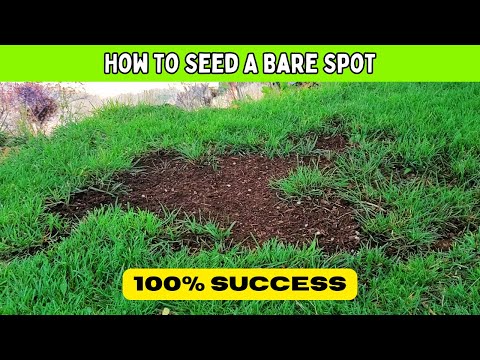
To fix bare spots in your lawn, remove dead grass and debris, loosen the soil, apply grass seed appropriate for your lawn type, cover lightly with soil or mulch, and water consistently for 2-3 weeks. The best time for repairs is during your grass's peak growing season - spring or early fall for cool-season grasses, late spring through early summer for warm-season varieties[1].
Key Takeaways
- Prepare the soil by removing debris and loosening compacted earth before seeding
- Choose grass seed that matches your existing lawn type and climate zone
- Keep newly seeded areas consistently moist but not waterlogged for 14-21 days
- Time repairs during peak growing seasons for best germination rates
- Expect visible results in 7-14 days with full establishment in 4-6 weeks
Bare spots in your lawn can result from heavy foot traffic, pet damage, disease, drought stress, or winter kill. While unsightly, these patches are completely repairable with the right approach and timing. Success depends on proper soil preparation, seed selection, and consistent care during the establishment period.
What Causes Bare Spots in Lawns?
Understanding the root cause helps prevent future problems. Common culprits include soil compaction from heavy traffic, which prevents grass roots from accessing nutrients and water[2]. Pet urine creates nitrogen burns that kill grass in circular patterns, while fungal diseases like brown patch or dollar spot can create irregular dead zones[3].
Lawn pests are another frequent driver: white grubs sever grass roots below the soil so patches lift away like loose carpet, and sod webworms chew the blades at the thatch line. If you suspect a pest cause before reseeding, run the diagnostic checks in our grub vs sod webworm guide and treat the underlying pest first — otherwise a fresh seed bed will get eaten again. For grub-driven patches specifically, time the treatment using our hub on when to apply grub killer so the curative is down before you reseed the recovery zones below.
Drought stress and winter damage are seasonal factors. Cool-season grasses may suffer heat stress in summer, while warm-season varieties can experience winter kill in transition zones. Identifying the cause helps you choose appropriate prevention strategies alongside your repair efforts.
How Do You Repair Bare Spots Step-by-Step?
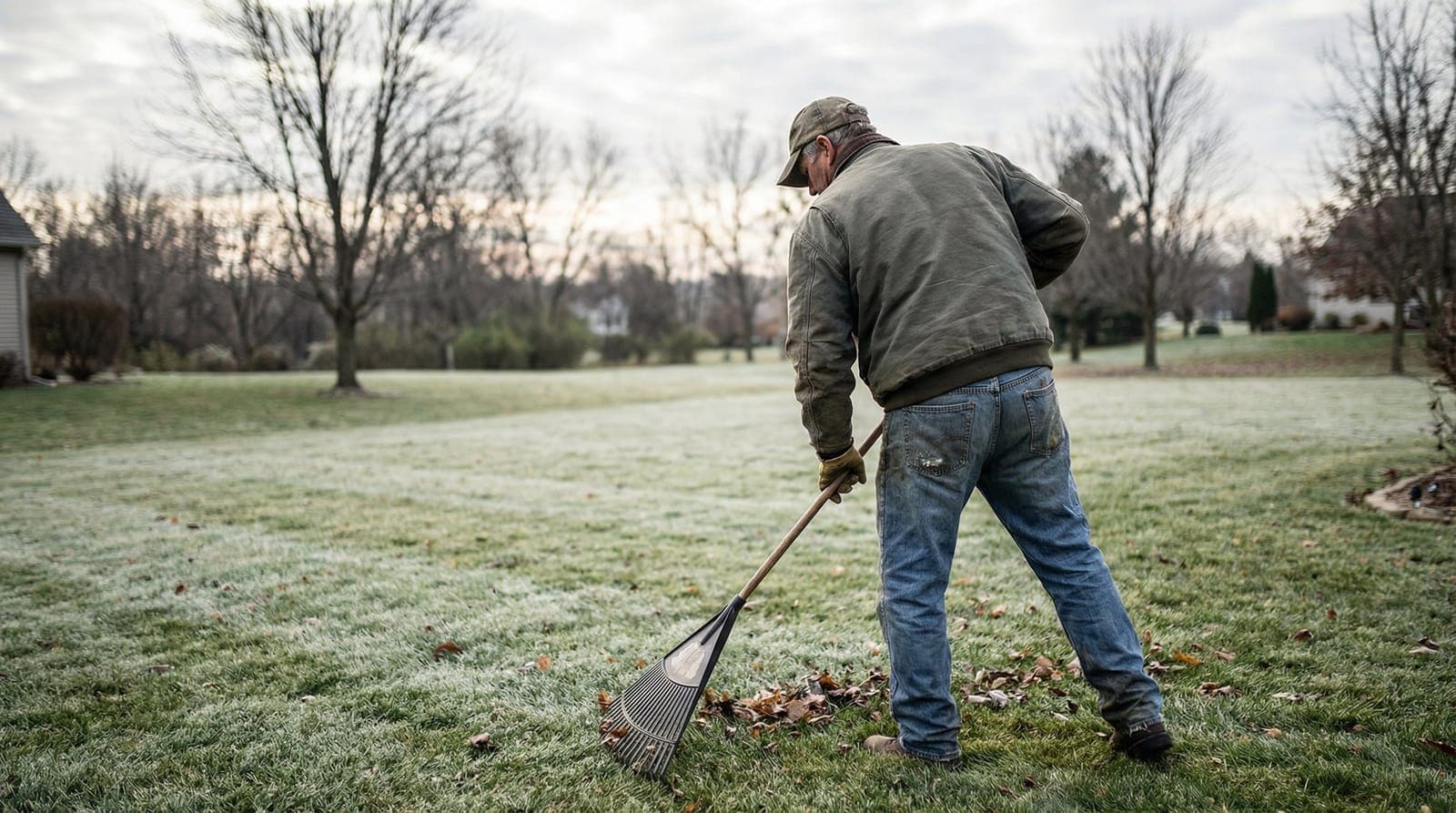
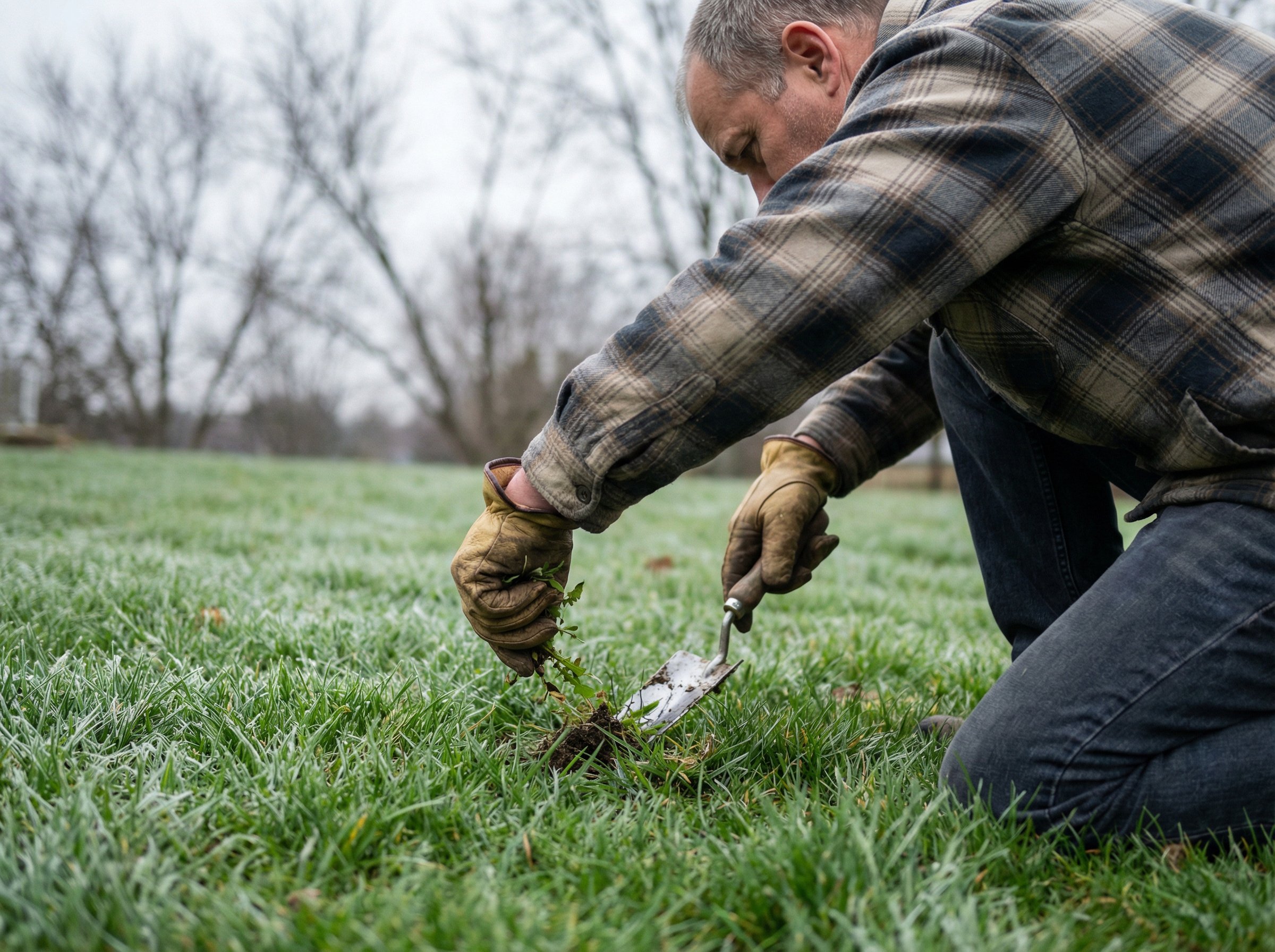
Start by removing all dead grass, weeds, and debris from the affected area using a rake or hand tools. Loosen the soil to a depth of 2-3 inches using a garden fork or cultivator - this breaks up compaction and creates an ideal seedbed[4].
Select grass seed that matches your existing lawn. Cool-season options include tall fescue for durability, perennial ryegrass for quick establishment, or fine fescue for shade tolerance. Warm-season choices include bermuda grass for high traffic areas or zoysia for moderate climates[1].
Spread seed at the recommended rate on the package - typically 2-4 pounds per 1,000 square feet for new seeding. Rake lightly to ensure good seed-to-soil contact, then cover with a thin layer of topsoil or seed starter mulch. Water gently but thoroughly, soaking the soil without creating puddles[5].
When Should You Fix Bare Spots?
Timing is crucial for successful grass establishment. Cool-season grasses (fescue, bluegrass, ryegrass) germinate best when soil temperatures range from 50-65°F, typically in early fall (September-October) or spring (March-May)[2].
Warm-season grasses (bermuda, zoysia, St. Augustine) prefer soil temperatures of 65-70°F or higher, making late spring through early summer (May-July) ideal for repairs. Fall seeding of warm-season grasses is generally not recommended as seedlings may not survive winter[3].
Avoid seeding during temperature extremes, drought conditions, or when heavy rains are forecasted. Consistent moisture is essential during germination, so plan repairs when you can maintain regular watering schedules.
How Long Until You See Results?
Germination timing varies by grass type and conditions. Fast-germinating varieties like perennial ryegrass can sprout in 5-10 days, while slower types like Kentucky bluegrass may take 14-21 days[4]. You'll notice the first green shoots appearing as tiny grass blades breaking through the soil surface.
Full establishment takes 4-8 weeks depending on grass type, weather conditions, and care quality. During this period, maintain consistent moisture and avoid heavy foot traffic on newly seeded areas. Light, frequent watering (2-3 times daily for 5-10 minutes) works better than deep, infrequent watering during germination[5].
Once grass reaches 2-3 inches tall, gradually transition to deeper, less frequent watering to encourage root development. Your repaired areas should blend seamlessly with existing grass within 6-8 weeks of proper care.
Conclusion
Successful bare spot repair requires attention to timing, proper soil preparation, and consistent aftercare. Start by identifying and addressing the underlying cause, then follow the step-by-step process during your grass's optimal growing season. With proper technique and patience, you can restore a thick, healthy lawn that will resist future damage. Remember to maintain adequate soil moisture during the critical first three weeks, and your lawn will reward you with lush, green coverage.