
Quick Answer
Knowing when to aerate your lawn in North Carolina depends primarily on your grass type. Cool-season lawns like tall fescue should be aerated in September through October, while warm-season grasses like bermudagrass and zoysiagrass perform best with aeration in May through June. Timing aeration to coincide with each grass type's active growing season ensures faster recovery and the best results.
Key Takeaways:
- Tall fescue lawns — the most common cool-season grass in the NC Piedmont and mountains — should be aerated in early fall, ideally before overseeding
- Bermudagrass and zoysiagrass lawns thrive with late spring aeration once soil temperatures consistently exceed 65°F
- North Carolina's clay-heavy soils compact quickly, making annual aeration more important here than in many other states
- Aeration timing differs across NC's climate zones — mountain homeowners (USDA Zone 6a) should aim for the earlier end of each window
- Always aerate when the lawn is actively growing and soil is moist but not waterlogged
Introduction
North Carolina's lawns face a unique set of challenges. From the humid subtropical heat of the eastern coastal plain to the cooler mountain elevations in the west, the state spans USDA Hardiness Zones 6a through 8b — meaning one-size-fits-all lawn advice rarely applies[1]. Add in the region's notoriously dense clay soils, 46 inches of annual rainfall, and high summer humidity, and soil compaction becomes a serious, recurring problem for homeowners.
Compacted soil restricts water infiltration, limits root depth, and leaves grass vulnerable to diseases like brown patch and pests like white grubs. Core aeration is one of the most impactful things you can do to keep your lawn healthy, but only if you do it at the right time[2].
When to Aerate Lawn in North Carolina by Grass Type
North Carolina is a transition-zone state, which means both cool-season and warm-season grasses are common depending on where you live and your lawn's microclimate. Getting the timing right starts with knowing which grass you have.
| Grass Type | NC Region | Optimal Aeration Window | Recovery Notes |
|---|---|---|---|
| Tall Fescue | Piedmont, Mountains | September–October | Overseed immediately after aeration |
| Fine Fescue | Mountains, Shade Areas | Early September | Aerate at the earlier end of the window |
| Bermudagrass | Piedmont, Eastern NC | May–June | Wait until fully greened up |
| Zoysiagrass | Piedmont, Eastern NC | May–June | Soil temps should exceed 65°F |
| Centipedegrass | Eastern NC Coastal Plain | May–June (every 2–3 yrs) | Very sensitive — only aerate when compaction is confirmed |
Best Time to Aerate Tall Fescue in North Carolina: September–October
Tall fescue is by far the most widely planted cool-season grass in North Carolina, especially across the Piedmont and mountain regions. Fine fescue is also found in shaded yards[1]. These grasses grow most vigorously in fall when soil temperatures drop below 70°F — typically mid-September through October in most of NC.
Aerating during this window gives tall fescue time to fill in aeration holes before winter dormancy sets in. It also sets the stage perfectly for overseeding, which should happen immediately after aeration for the best seed-to-soil contact[3]. Avoid aerating cool-season grasses in summer — heat stress combined with open aeration channels creates an open invitation for crabgrass and other opportunistic weeds.
Best Time to Aerate Bermudagrass in NC: May–June
Bermudagrass and zoysiagrass dominate lawns across the NC Piedmont and eastern regions. Centipedegrass is also common in eastern NC's sandy coastal plain soils[1]. These warm-season grasses hit peak growth in late spring and summer, making May through June the ideal aeration window.
Aerating warm-season turf after it has fully greened up — but before the intense heat of July and August — allows the grass to recover quickly and fill in bare spots. Aerating too early while the grass is still transitioning out of dormancy can stress the turf unnecessarily[4].
A note on centipedegrass: This species is particularly sensitive to aeration stress and does not recover as readily as bermudagrass or zoysiagrass. Unlike most warm-season grasses, centipedegrass may only need aeration every two to three years, and only when soil compaction is confirmed through testing. Consult your local NC State Extension office before aerating centipede lawns routinely[1].
What Does Core Aeration Actually Do for a North Carolina Lawn?
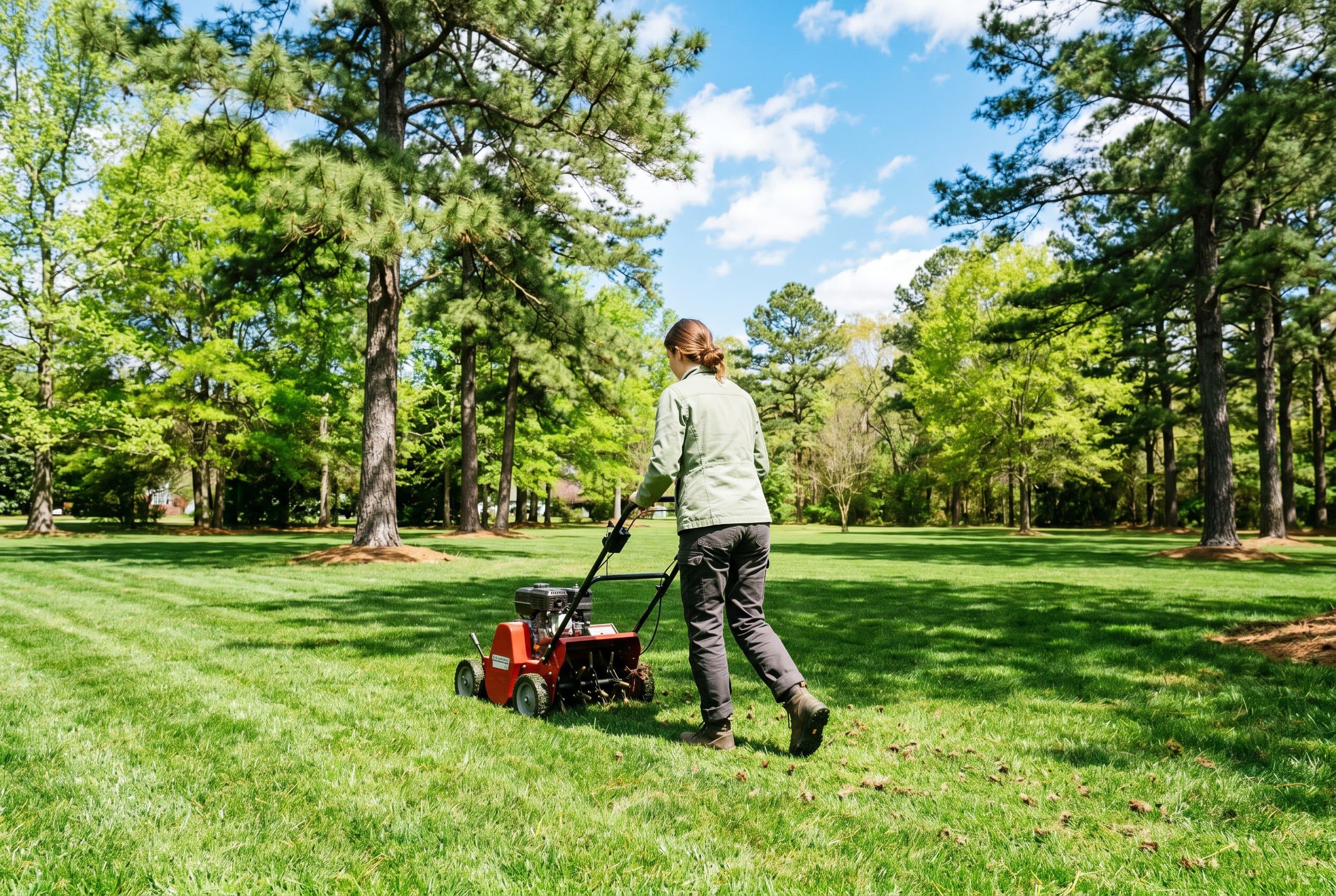
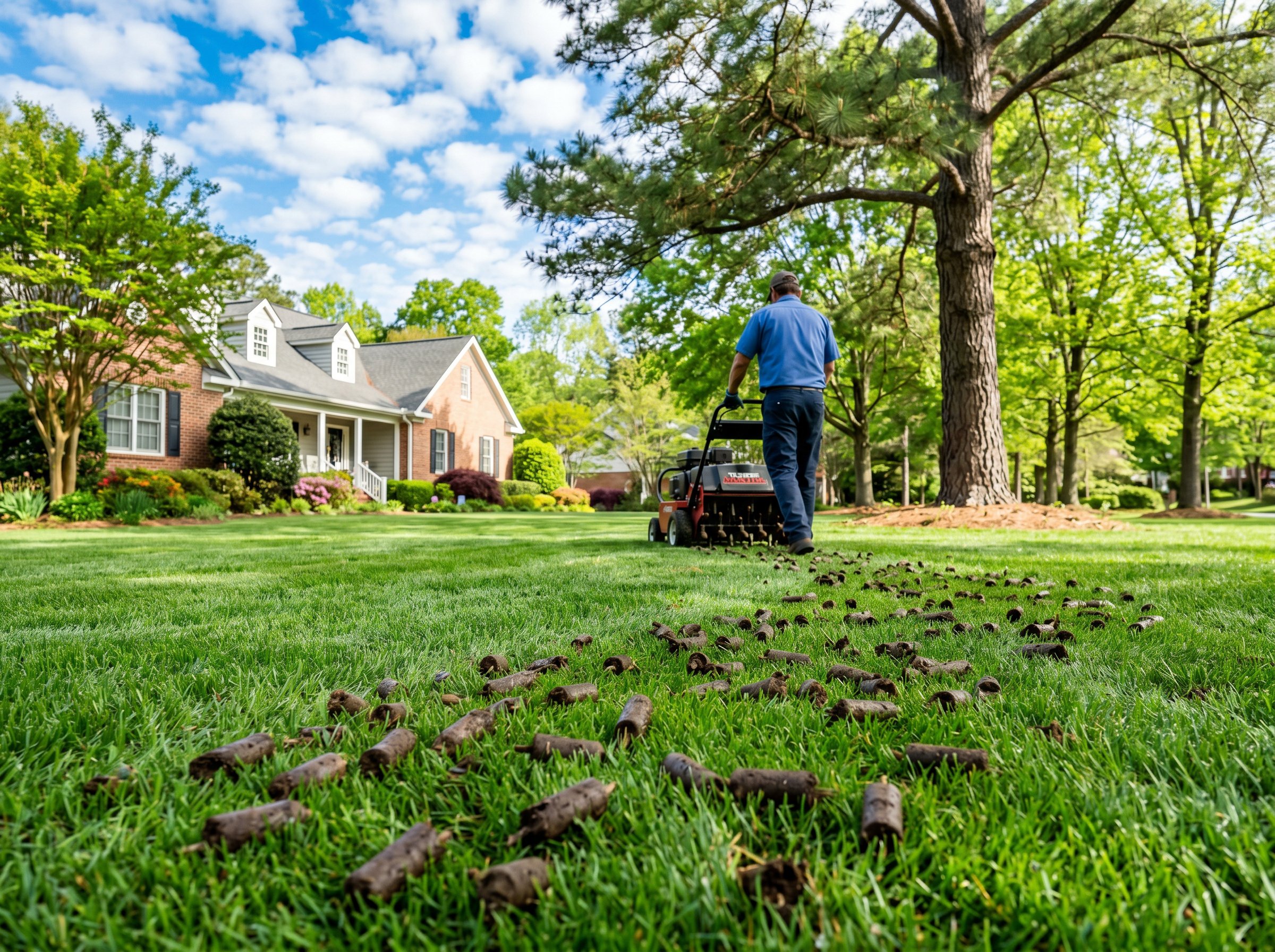
Core aeration involves removing small plugs of soil — typically 2–3 inches deep — across the lawn surface. This directly addresses the compaction issues that plague North Carolina's clay-rich soils, which compact under foot traffic, heavy rainfall, and repeated mowing[5].
Here's what aeration accomplishes for NC lawns specifically:
- Improves water infiltration — With 46 inches of annual rainfall, NC lawns need soil that can absorb water efficiently rather than letting it run off[5]
- Reduces thatch buildup — Bermudagrass and zoysiagrass are especially prone to thatch accumulation in NC's warm, humid climate[2]
- Boosts fertilizer effectiveness — Nutrients reach the root zone more efficiently after compaction is relieved
- Supports disease resistance — Compacted, poorly drained soil is a breeding ground for brown patch and dollar spot, two of the most common fungal diseases in NC lawns[2]
- Aids pest management — Loosening soil disrupts white grub habitats and makes it easier for beneficial organisms to control larvae near the surface[6]
Leave the soil cores on the lawn — they'll break down within two to four weeks depending on weather conditions, returning organic matter to the soil surface. Cooler fall temperatures in mountain NC may slow this process compared to warmer Piedmont and coastal conditions[5].
How Do I Know If My North Carolina Lawn Needs Aeration?
Not every lawn needs aeration every single year, but most North Carolina lawns benefit from it annually due to clay soil and heavy rainfall[1]. Here's how to tell if your lawn is overdue:
- The screwdriver test — Push a standard screwdriver 6 inches into moist soil. If it requires significant force, your soil is compacted
- Water pooling — If you notice standing water or runoff after rain, soil compaction is likely limiting drainage
- Thin, struggling turf — Compaction prevents root development; if your tall fescue or bermudagrass looks thin despite proper fertilization, aeration may be the missing piece[3]
- Heavy thatch — More than half an inch of thatch on warm-season grasses signals it's time to aerate
- High-traffic areas — Kids, pets, and foot traffic compact soil faster in these zones
If your lawn was established within the last year, hold off on aeration — new grass needs time to develop a root system before being disturbed[3].
Zone-Specific Aeration Timing for North Carolina
North Carolina's geographic diversity means timing varies considerably across the state. Understanding your climate zone helps you choose the right week within each seasonal window[1][7].
- Mountain NC (Zone 6a–6b): Aim for the earlier end of aeration windows — early September for fescue, mid-May for warm-season grasses. Shorter growing seasons leave less recovery time, and soil core breakdown will take closer to three to four weeks in cooler fall temperatures.
- Piedmont NC (Zone 7a–7b): The standard windows apply well — September–October for fescue, May–June for bermudagrass and zoysia. This is also the zone where clay soils are most problematic, making annual aeration especially worthwhile.
- Coastal and Eastern NC (Zone 8a–8b): Warm-season grasses here benefit from aeration from late April through June. Centipedegrass should be aerated conservatively — only when compaction is confirmed — as it's a slow-recovering grass that doesn't handle cultivation stress as well as bermudagrass[1].
For the most precise timing in your county, NC State Extension's TurfFiles database provides localized recommendations based on specific soil types and microclimates found throughout the state[1].
Conclusion: Your Next Steps for Aeration in North Carolina
Aerating at the right time is one of the simplest ways to give your North Carolina lawn a competitive edge against compaction, disease, and drought stress. If you have a tall fescue lawn, mark your calendar for September — then follow up immediately with overseeding and a starter fertilizer application. If you're managing bermudagrass or zoysiagrass, plan your aeration for late May once your turf is fully active[4].
For personalized guidance based on your specific county and soil type, NC State Extension's local cooperative extension offices offer free soil testing and lawn care recommendations tailored to your exact location[1]. A soil test before aeration will also tell you if lime or targeted amendments are needed — a smart move before investing in any lawn improvement project.