Quick Answer: North Carolina's transition zone climate (USDA zones 6a-8b) requires specific lawn care strategies for tall fescue, Bermudagrass, and zoysiagrass lawns. Success depends on timing fertilization from March-November, applying pre-emergent in February-March, and managing humidity-related diseases like brown patch through proper watering and fungicide applications[1].
Key Takeaways
- Tall fescue dominates North Carolina lawns but requires fall overseeding (September-October) for best results
- Pre-emergent herbicide application in February-March prevents crabgrass before North Carolina's warm spring weather
- Brown patch and dollar spot diseases thrive in North Carolina's humid conditions, requiring preventive fungicide treatments
- Cool-season grasses need aeration in September-October, while warm-season grasses perform best with May-June aeration
- White grubs and fall armyworms are primary pest threats requiring targeted treatment timing
North Carolina's unique position in the transition zone creates both opportunities and challenges for homeowners. The state's humid subtropical climate in eastern regions and cooler mountain temperatures in the west mean lawn care strategies must adapt to local microclimates while managing the stress that comes with four distinct seasons.
What Grass Types Work Best for North Carolina Lawn Care?
North Carolina's transition zone climate supports both cool and warm-season grasses, with tall fescue leading as the most popular choice statewide[1]. This cool-season grass tolerates North Carolina's hot summers better than Kentucky bluegrass while maintaining year-round color.
Bermudagrass dominates in eastern North Carolina's warmer regions, particularly in zones 7b-8b where winter temperatures rarely drop below 20°F[2]. This warm-season grass goes dormant from November through March but provides excellent drought tolerance during North Carolina's occasional dry spells.
Zoysiagrass offers a premium option for homeowners willing to invest in slower establishment. It thrives in North Carolina's humidity while requiring less water than Bermudagrass[3]. Centipedegrass works well in eastern North Carolina's acidic soils, requiring minimal fertilization compared to other warm-season options.
For shaded areas under North Carolina's abundant oak and pine trees, fine fescue varieties provide the best coverage where tall fescue struggles in low-light conditions[4].
When Should You Fertilize in Your North Carolina Lawn Care Schedule?
Fertilization timing in North Carolina depends entirely on grass type and the state's extended growing season. Cool-season grasses like tall fescue begin active growth in March when soil temperatures reach 45-50°F in most regions, though mountain areas may delay until mid to late March[1].
Tall fescue lawns need three to four applications: early March for spring green-up (late March in mountain regions), late May after the spring growth surge, early September for fall root development, and optional late November for winter preparation. Use a fertilizer with a 3-1-2 or 4-1-2 nitrogen-phosphorus-potassium ratio for optimal results in North Carolina soils[5].
Warm-season grasses require different timing aligned with their growth patterns. Begin fertilizing Bermudagrass and zoysiagrass in May when they break dormancy and nighttime temperatures consistently stay above 65°F[2]. Coastal regions may start in late April, while mountain areas should wait until mid-May. Apply fertilizer monthly through August, then stop to allow proper winter hardening before North Carolina's first frost typically arrives in late October to early November.
Avoid fertilizing warm-season grasses after September 1st, as late-season nitrogen applications can delay dormancy and increase winter injury risk during North Carolina's variable fall weather patterns[6].
How Do You Control Common Problems in North Carolina Lawn Care?
North Carolina's 46 inches of annual rainfall combined with high humidity creates ideal conditions for fungal diseases that plague lawns statewide[7]. Brown patch disease appears as circular brown patches 6 inches to several feet in diameter, particularly affecting tall fescue during hot, humid nights when temperatures exceed 80°F.
Prevent brown patch through proper watering practices: water deeply but infrequently in early morning hours, and ensure adequate air circulation by avoiding over-fertilization with nitrogen during summer months[1]. Apply preventive fungicide treatments in June before disease pressure peaks, with coastal areas potentially needing earlier application in May.
Dollar spot creates silver dollar-sized brown spots across North Carolina lawns, especially during cool, wet spring weather. This disease indicates nitrogen deficiency, making proper fertilization the primary prevention strategy[4].
Crabgrass prevention requires pre-emergent herbicide application by March 15th in most North Carolina locations, earlier in southeastern counties where soil temperatures warm faster[8]. Mountain regions can often wait until late March or early April. Apply when forsythia begins blooming, a reliable natural indicator across the state's diverse climate zones.
White grubs damage North Carolina lawns from July through September, creating brown patches that peel back like carpet. Apply grub control products containing beneficial nematodes or chemical treatments in late May through June for best results against Japanese beetles and other grub species common in North Carolina[9].
Fall armyworms can devastate lawns practically overnight during late summer and early fall. These caterpillars prefer Bermudagrass and create irregular brown patches with visible insect damage. Treat immediately with appropriate insecticides when detected, as populations can explode rapidly in North Carolina's warm fall weather[3].
What's the Best North Carolina Lawn Care Maintenance Schedule?
North Carolina's extended growing season demands year-round attention with specific timing for optimal results. Begin mowing tall fescue in February when growth resumes in eastern regions, or March in mountain areas, maintaining a 3-4 inch height to promote deep root development and summer stress tolerance[1].
Spring tasks (March-May) include pre-emergent application, first fertilization, and aeration for warm-season grasses in May-June when soil conditions are optimal. Overseed thin tall fescue areas in early March if fall seeding was missed, though September-October remains the preferred timing[10].
Summer maintenance (June-August) focuses on disease prevention and proper watering practices. Monitor for brown patch symptoms and apply fungicide as needed. Mow weekly during peak growth periods, never removing more than one-third of grass blade length[2].
Fall represents the most critical season for North Carolina lawn care. September through October provides ideal conditions for tall fescue overseeding, cool-season grass fertilization, and aeration. Core aerate compacted areas and overseed thin spots with certified tall fescue varieties adapted to North Carolina's climate stresses[5].
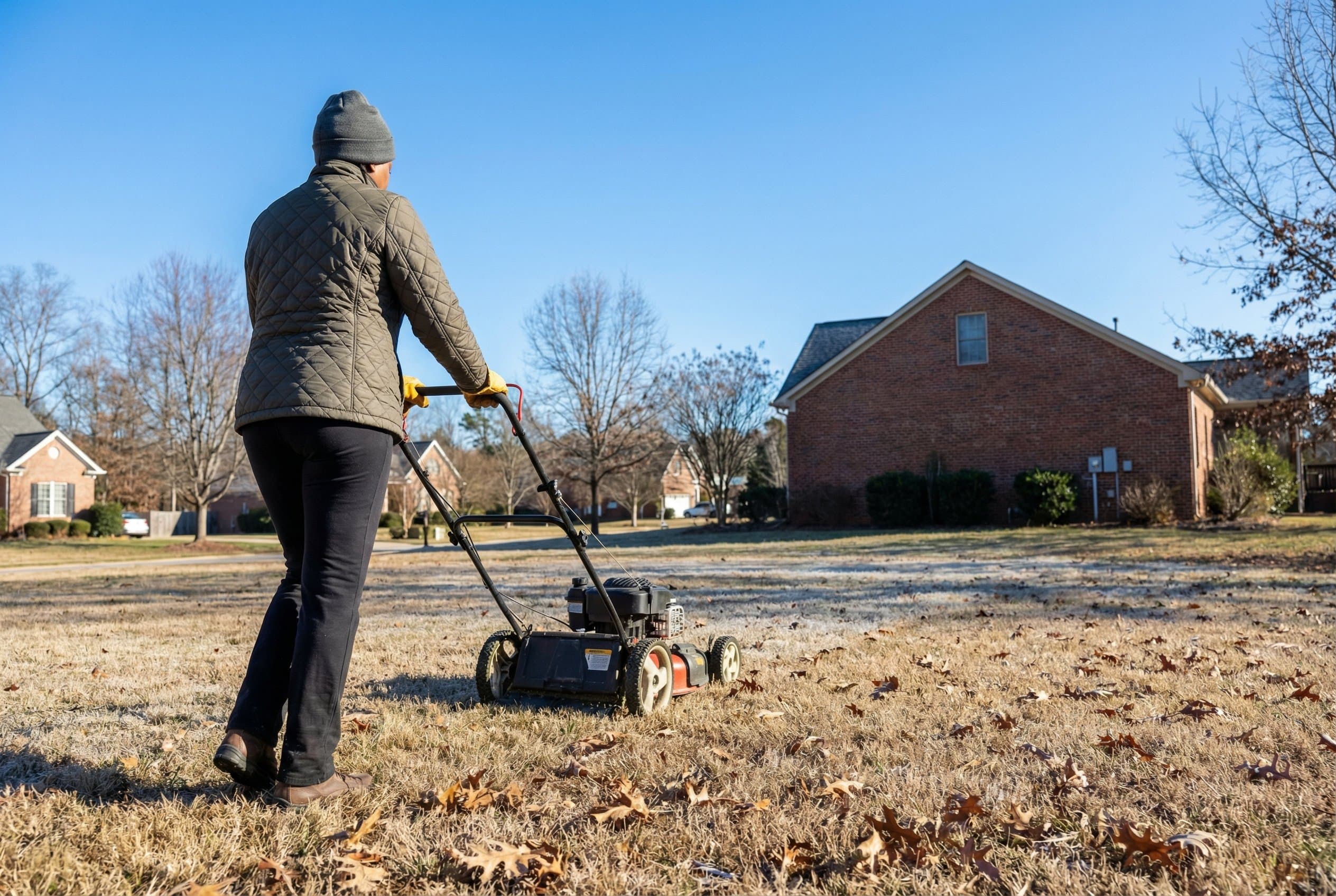
Winter preparations include final mowing in late October through November, depending on grass type and location within the state. Continue mowing until growth stops completely, maintaining proper height going into dormancy[11].
Taking Action for North Carolina Lawn Care Success
Success with North Carolina lawns requires understanding your specific location within the state's diverse climate zones and selecting appropriate grass types for your conditions. Start by identifying your current grass type and implementing the fertilization schedule that matches its growth pattern.
Focus immediate attention on pre-emergent herbicide application if spring is approaching, and plan fall overseeding for tall fescue lawns showing thin areas. Regular soil testing through your local NC State Extension office ensures fertilization programs meet your lawn's specific nutrient needs rather than following generic recommendations[12].
Consider your lawn's unique challenges, whether that's shade from mature trees, clay soil common in the Piedmont region, or sandy coastal conditions in eastern counties. Each situation requires modified approaches to achieve the thick, healthy lawn that thrives in North Carolina's transition zone climate.