Quick Answer
Lawn drainage problems can be fixed through aerating compacted soil, installing drainage systems like French drains, creating surface grading to redirect water flow, and amending soil with organic matter. Most homeowners can solve minor drainage issues with aeration and topdressing, while severe problems may require professional drainage installation.
Key Takeaways
- Core aeration is the fastest solution for mild drainage problems caused by soil compaction
- French drains effectively handle persistent wet spots and redirect water away from problem areas
- Proper grading should slope water away from your home at a 2-3% grade
- Adding organic matter like compost improves soil structure and water infiltration
- Spring and fall are the best seasons to implement drainage solutions
Poor lawn drainage creates more than just soggy grass - it leads to fungal diseases, root rot, and bare patches that ruin your yard's appearance. Standing water after rain, persistently muddy areas, and yellowing grass are clear signs your lawn needs drainage help[1].
Fortunately, most drainage problems stem from common issues like soil compaction, poor grading, or clay-heavy soil that you can address with the right approach. Whether you're dealing with minor wet spots or major water pooling, these proven solutions will help restore proper water flow to your lawn.
What Causes Poor Lawn Drainage?
Soil compaction is the primary culprit behind most drainage issues. Heavy foot traffic, lawn equipment, and natural settling compress soil particles, reducing pore space needed for water infiltration[2]. Clay soils naturally drain poorly due to tiny particle size, while areas with high organic matter typically drain well.
Improper grading also creates drainage problems. Your lawn should slope away from structures at 2-3% grade (about 2-3 inches per 100 feet) to prevent water pooling[3]. Low-lying areas, depressions from settled soil, or flat terrain all contribute to standing water.
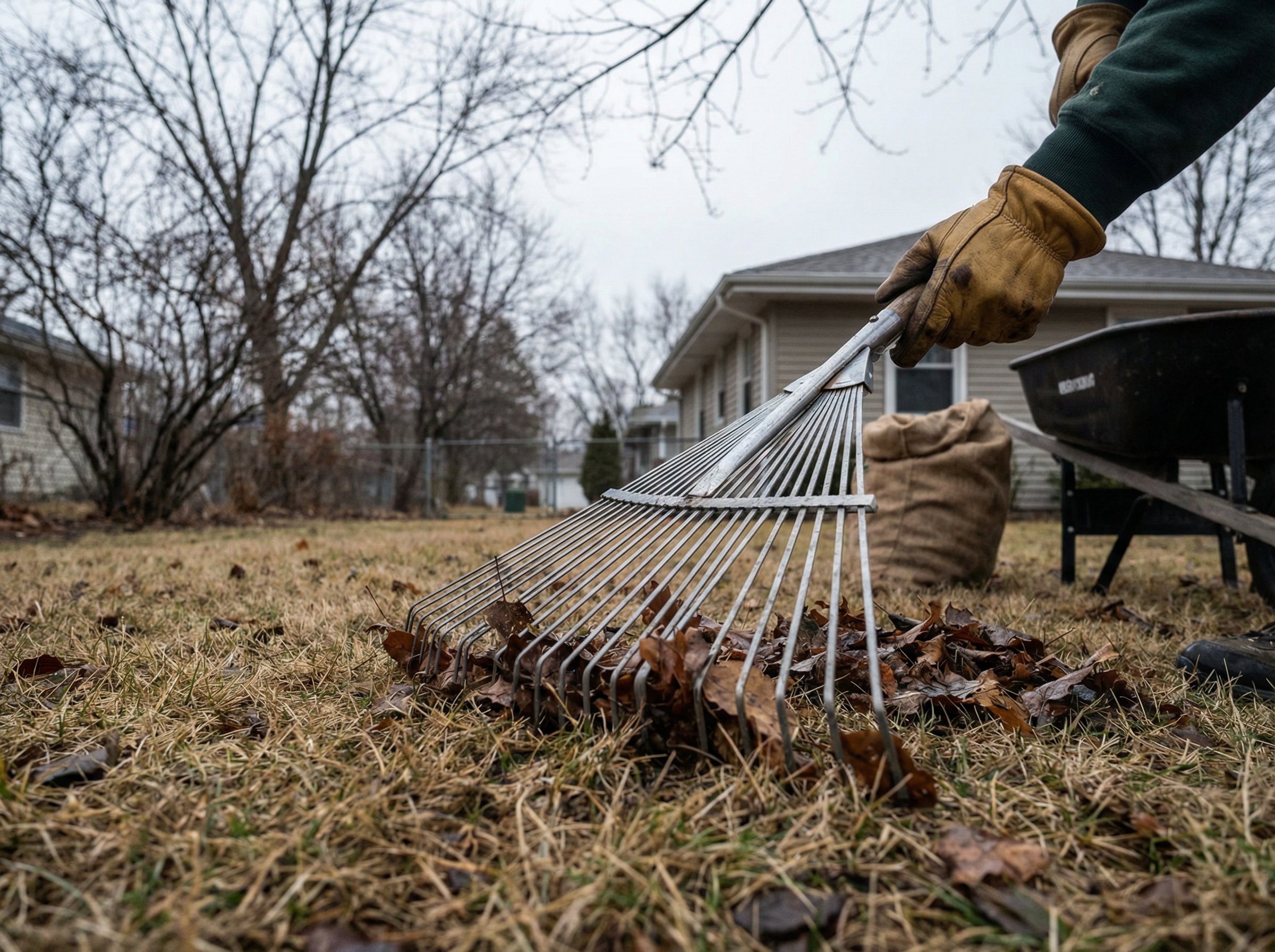
Thatch buildup over half an inch thick can also block water penetration. This layer of dead grass and organic debris acts like a barrier, forcing water to run off rather than soak into soil.
How Do You Fix Drainage Problems Step-by-Step?
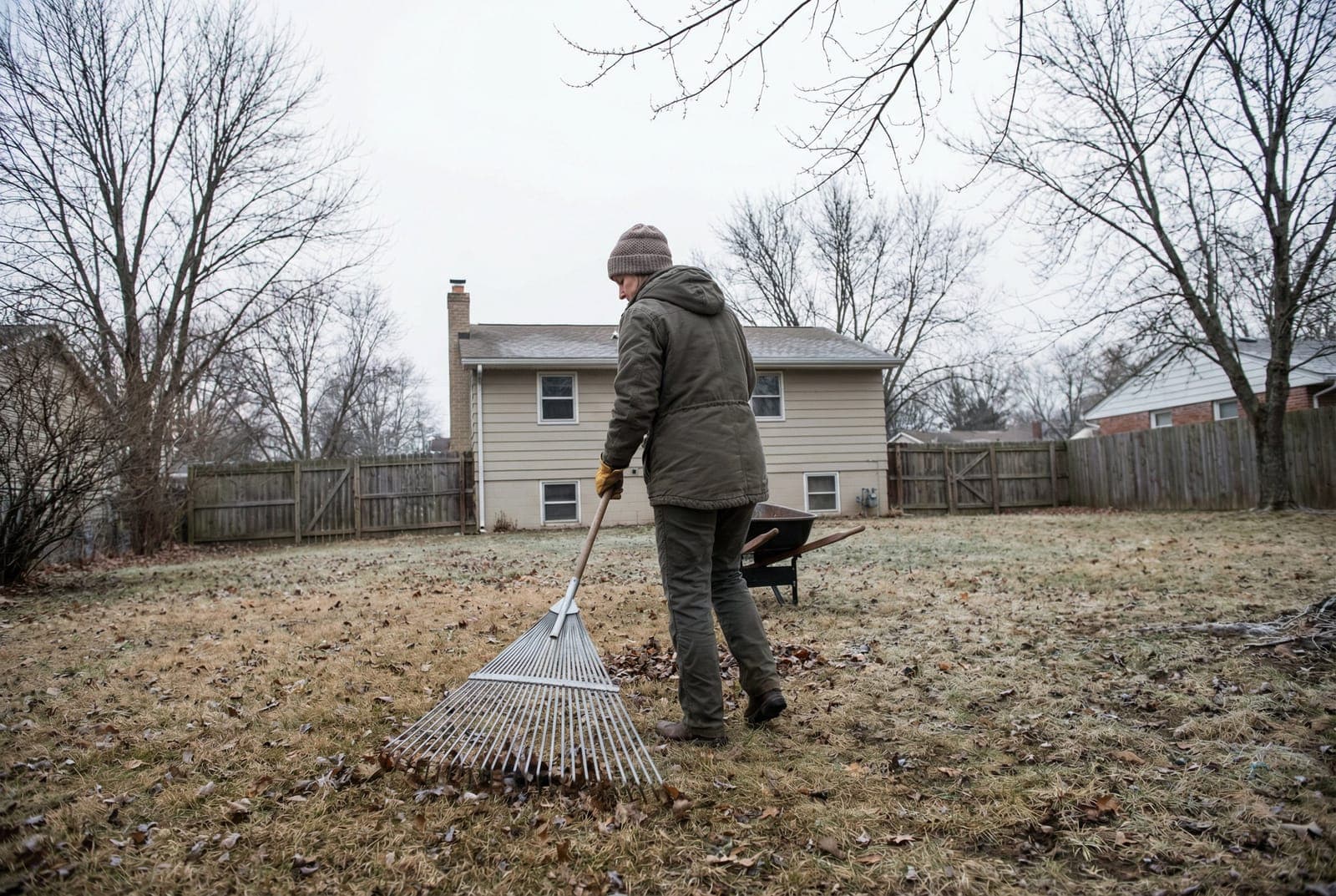
Start with core aeration for compacted soil. Rent a core aerator and make passes over wet areas when soil is slightly moist but not muddy. Check our guide on the best time to aerate for optimal timing. This removes plugs of soil, creating channels for water infiltration. Fall aeration works best as it allows winter freeze-thaw cycles to further break up soil[4].
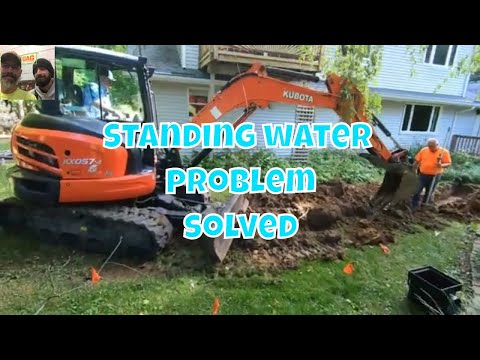
For persistent wet spots, install a French drain system. Dig a trench 12-18 inches deep sloping toward a drainage outlet at 1% grade. Line with landscape fabric, add 3-4 inches of gravel, place perforated drain pipe, cover with more gravel, then replace soil and sod[1].
Amend clay soils by spreading 1-2 inches of compost over problem areas and working it into the top 6 inches of soil. Organic matter improves soil structure and creates better drainage over time. Avoid adding sand to clay soil, as this creates concrete-like conditions.
Create surface drainage by regrading problem areas. Build up low spots with quality topsoil, ensuring water flows toward drainage areas. Topdressing with compost can also improve soil structure over time. Consider creating swales - shallow channels that direct water flow naturally across your landscape[5].
When Should You Install Drainage Systems?
Install drainage systems during dry periods when you can properly assess problem areas and work with stable soil conditions. Spring installation allows new systems to handle summer storms, while fall installation prepares your lawn for winter wet weather.
Consider professional drainage installation for:
- Standing water that persists more than 48 hours after rain
- Large areas (over 500 square feet) with drainage issues
- Problems near your home's foundation
- Slopes greater than 15% grade
DIY solutions work well for smaller wet spots, compacted areas under 200 square feet, and situations where simple aeration and soil amendment can solve the problem[2].
What Maintenance Prevents Future Problems?
Regular core aeration every 2-3 years prevents soil compaction from recurring. Focus on high-traffic areas and previously problematic spots. Spring aeration works for cool-season grasses, while warm-season grasses benefit from late spring to early summer aeration[4].
Maintain proper thatch levels through annual dethatching when buildup exceeds half an inch. Overseed with grass varieties suited to your soil conditions - some cultivars handle wet conditions better than others.
Keep drainage systems clear by removing debris from drain outlets and checking that surface water flows follow intended paths. Topdress problem areas annually with compost to continue improving soil structure.
Conclusion
Fixing lawn drainage problems requires identifying the root cause and applying the right solution. Start with simple approaches like aeration and soil amendment for minor issues, progressing to French drains or regrading for persistent problems. Time your improvements for optimal weather conditions, and maintain your solutions through regular aeration and organic matter addition. With these proven methods, you can transform soggy, problematic areas into healthy, well-draining lawn space.